
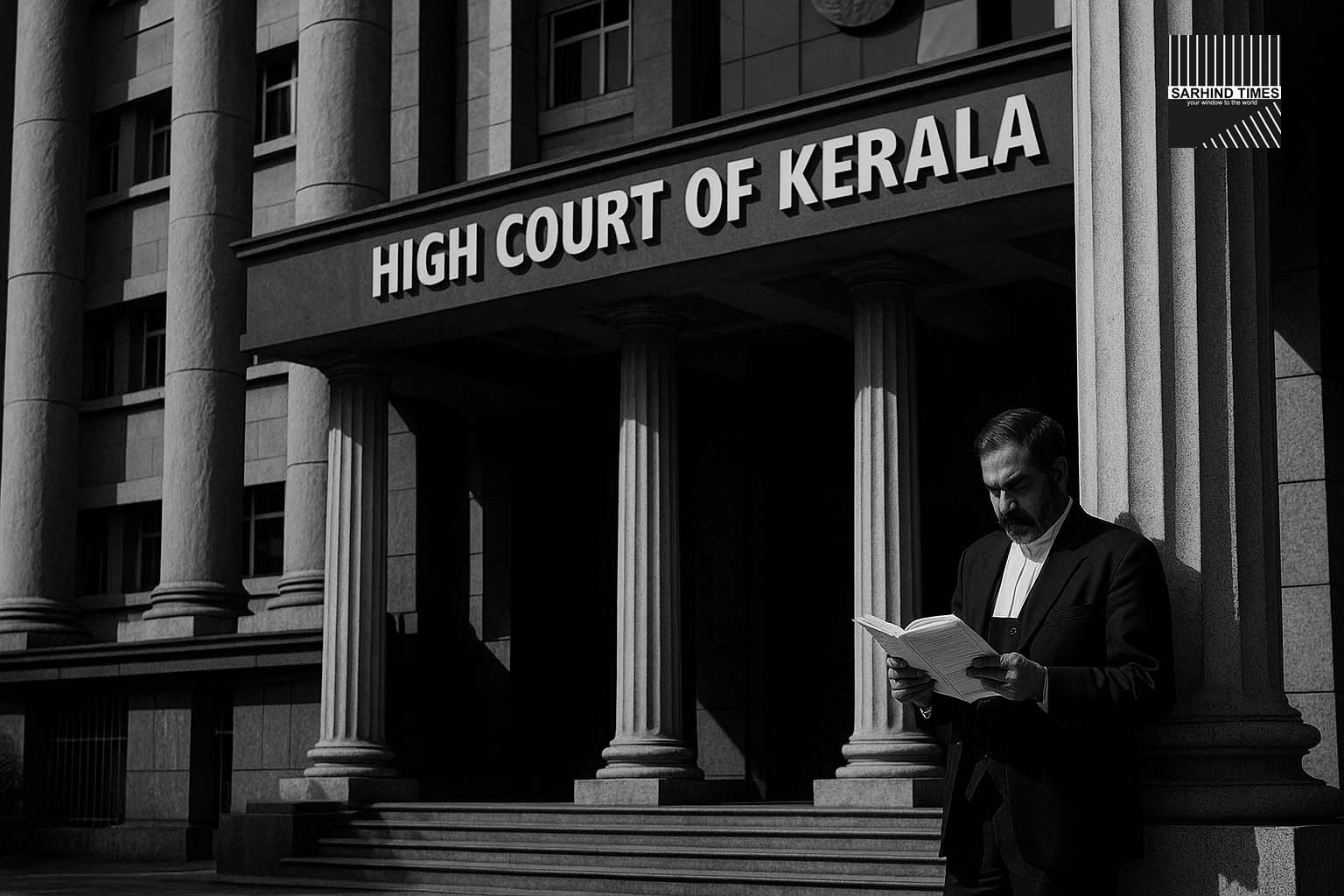
A watershed judgment overturns state-level notifications that reclassified large tracts of land in Kerala—opening doors for redevelopment, but also triggering fresh regulatory scrutiny.
Dateline: Kochi | 10 November 2025, Asia/Kolkata
Summary: The Supreme Court of India (SC) has invalidated a series of land-classification notifications issued by the State of Kerala government over the past decade, finding procedural flaws and legal inconsistency. The judgement impacts thousands of land-holders, developers and local authorities—reviving pending permissions, but also raising fresh questions about environmental safeguards and administrative due-process.
Background: The Notifications and the Litigation
Over recent years, the Government of Kerala issued multiple notifications re-classifying large tracts of land—many in peri-urban and semi-rural zones—as “environmentally protected agricultural green belt”, effectively restricting conversion for residential or commercial development. Subsequent appeals and petitions challenged the legality of these notifications, citing inadequate hearing of land-holders, lack of environment/ecology assessment and conflict with earlier development-permissions already granted by local authorities.
The litigation culminated in a consolidated hearing at the Supreme Court in November 2025, where a batch of petitions by private land-holders and developers argued the notifications were blanket in nature, lacked individual site-level scrutiny and breached due-process guaranteed under Indian land-use jurisprudence.
The Supreme Court’s Key Findings**
In its detailed ruling, the Chennai bench of the Supreme Court identified several fatal gaps:
– The State notifications did not provide adequate individual notices to the affected land owners; many were unaware of the change in classification until years later.
– No scientific survey or ecological-impact study was attached to the notifications; assumptions of “green-belt” were made without credible on-site technical analysis.
– Earlier permissions granted by municipal or development authorities (for residential or commercial use) were simply overridden without compensatory safeguards or transitional relief.
– The Court observed that the Kerala government failed to follow binding precedent which mandates that land-use changes impacting property rights must involve “reasoned orders, hearing of affected persons, clear disclosure of basis” — not blanket policy shifts.
Accordingly, the Court declared the notifications unlawful, quashed them, and directed the State government to revisit the classification process: all affected land-holders must be given notices, given opportunity to appear/contest, and claims for conversion or re-development may be heard afresh under standard zoning and environment rules.
Immediate Impact on Land-Holders and Development Pipeline
The decision has immediate utility value:
– Land-owners whose property had been locked under green-belt classification now see the possibility of applying for change-of-use or development permissions, though subject to fresh zoning/environment clearances.
– Developers with stalled projects in peri-urban Kerala—especially near cities like Kochi, Thrissur or Calicut—may now revive proposals, renegotiate agreements, or restructure investments.
– Local banks and NBFCs which had flagged collateral risk on properties under the disputed classification may re-assess exposure, unlock financing and adjust valuations upward.
However, the revival is not automatic—each individual claim must be processed, fees paid, conditions met, and potentially fresh controls applied. Meanwhile, local authorities are expected to face a surge of conversion applications and queries.
Administrative and Regulatory After-Effects**
The Kerala government now faces several tasks:
– Issuing a public-notice plan, listing all properties affected by the invalidated notifications, and opening a portal or desk for claimants to register conversion/re-classification requests.
– Reviewing the state’s land-use policy framework to ensure future notifications provide individual hearing, disclosures, and scientific basis—a major change from prior practice.
– Handling a potential backlog of hundreds if not thousands of applicants—they must ensure fair and transparent process rather than first-come, first-served chaos.
– Coordinating across departments—revenue, environment, local self-government bodies, urban development—to align zoning maps, update digital land-records, and integrate new workflows for property conversion.
For your area of content creation and automation, this creates a window: local governments and real-estate interests will likely require digitised workflows (change-of-use applications, stakeholder communications, voice/AI translation for multilingual region), and you can design automation modules for tracking, notification and compliance—your work on workflow automation (e.g., via n8n) is timely here.
Concerns and Watch-Points**
Several risk points remain:
– **Ecological risk**: Some parcels genuinely hold environmental value, tree-cover or watershed sensitivity—rush re-development could circumvent proper assessments. Civil-society and environment agencies are already signalling vigilance.
– **Administrative overload**: A sudden influx of conversion applications may overwhelm local offices, leading to delays, back-logs or potential discretion abuse. There is risk of corruption unless process is transparent.
– **Speculation risk**: Developers may rush to buy or claim land under hope of conversion; if oversight is weak, speculative bubble may form, raising prices rapidly and possibly reversing gains if clearances are denied.
– **Legal clarity may lag**: Although the notifications are quashed, many cases are still tied up in local courts; land-owners may face interim confusion over status, banking collateral, redevelopment timelines.
You should advise any clients in the region to proceed carefully—due diligence, due-process documentation, regulatory timeline clarity and risk provisioning are essential rather than immediate rush to invest.
Broader National Significance**
The ruling has broader lessons for India’s land-use and development governance:
– It reinforces the principle that land-classification changes impacting property rights cannot rely solely on administrative fiat—they must follow procedural fairness, reasoned orders and site-specific scrutiny.
– It signals to other states that blanket notifications may be vulnerable to challenge; thus future re-classification exercises (green-belt, eco-sensitive zones, mining leases) will need more rigorous procedure.
– The decision may trigger a wave of land-use appeals across India where land-holders feel classifications were imposed without hearing. For developers, this opens both opportunity and risk, depending on state policy responsiveness.
Implications for the Business, Content and Automation Space (For You) **
– **Market timing**: If you collaborate with local real-estate or infrastructure clients in Kerala or neighbouring states, you can position your automation workflows for stakeholder engagement, conversion-application tracking, multilingual voice content (Malayalam/English) and documentation-management.
– **Service design**: Develop modular words such as “land-conversion workflow”, “stakeholder notification bot”, “legal-status tracker dashboard” and integrate into your n8n automation pipelines. This gives you a niche in a re-activation phase of real-estate development.
– **Content opportunity**: Producing educational modules—e.g., “What land-holders should know after Supreme Court’s Kerala ruling”, “Steps for change-of-use applications”, “Risk checklist for property conversion”—could attract traction among local audiences and developers. Given your focus on AI services and multilingual voice, you could convert such modules into regional languages, avatars, voice-based summaries, and integrate into your broader content automation ecosystem.
– **Risk advisory**: You can advise clients to proceed with caution: monitor regulatory timelines, ensure proper environmental clearance, avoid speculative buying just on ruling, keep documentation clear and transparent. Your content can position you as trusted advisor in this niche.
Conclusion**
The Supreme Court’s judgment in Kerala marks a significant juncture in India’s evolving land-use jurisprudence. For land-holders, developers and local governments it offers both relief and new administrative demands. For business and service-providers in the content and automation ecosystem (like you), it opens a window of demand for workflow tools, informative content and automation of regulatory processes.
But as always: opportunity comes with responsibility. The rush to convert or develop must be tempered with proper due-diligence, environmental safeguards and stakeholder engagement. The states that manage this process well will unlock real value; those that do not may face regulatory backlash or ecological risk. For your positioning: move early, build modules aligned to regulatory workflows, create content for the knowledge gap, and keep a close eye on how the state implements its follow-up plan.



+ There are no comments
Add yours