
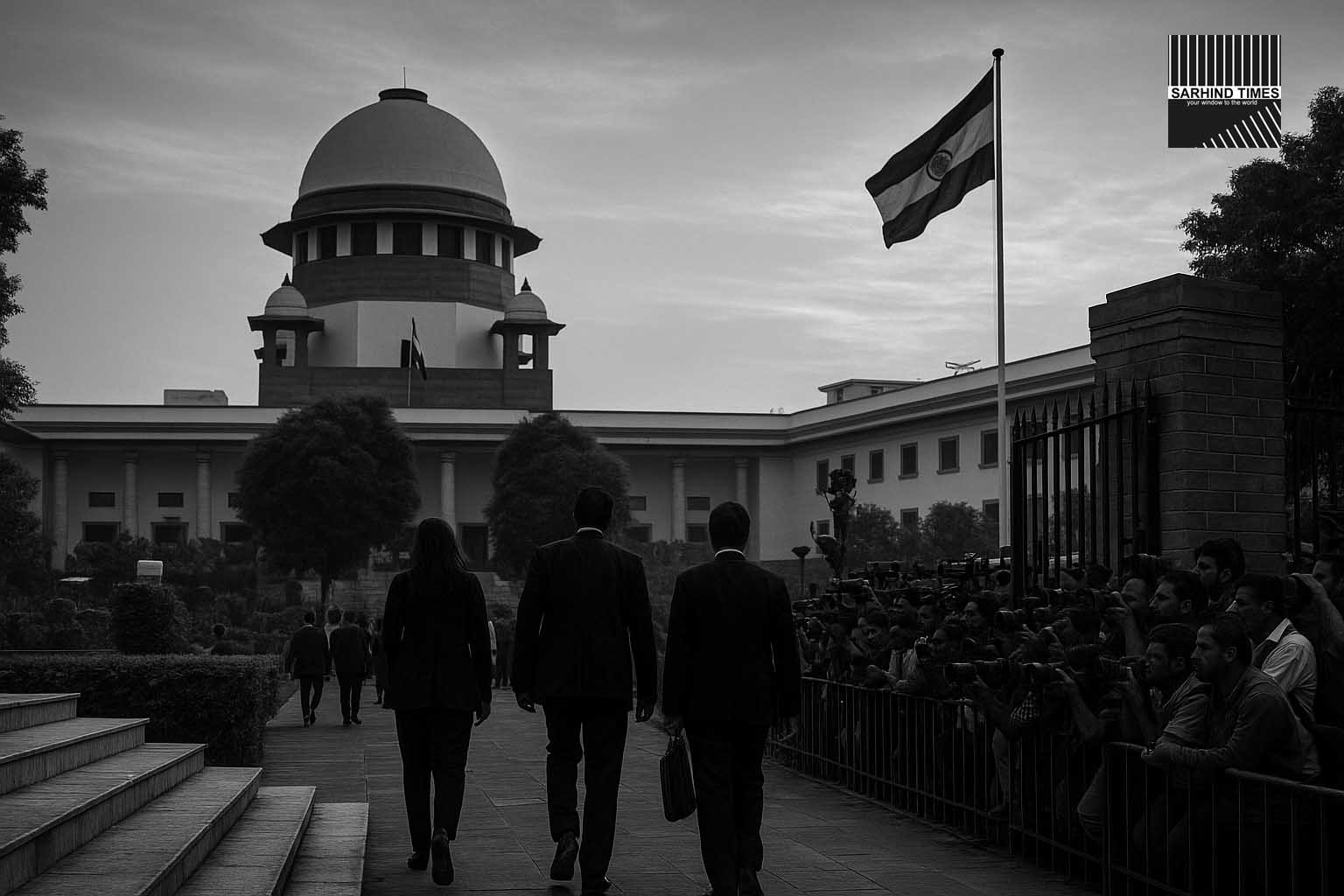
At the heart of India’s election-financing transparency debate, the court-case could redefine how political contributions are regulated and disclosed
Dateline: New Delhi | 14 November 2025
Summary: The Supreme Court of India has commenced a pivotal hearing on the constitutionality and transparency of the electoral bonds scheme, challenging the opaque nature of political donations in India. Key judgments and interim orders expected within the coming weeks will have significant implications for election-financing norms, disclosure obligations for political parties and the broader integrity of India’s democratic process.
Background: What are electoral bonds and why they matter
Electoral bonds scheme was introduced by the government in 2018 to enable political donations in a “clean” manner, allowing donors to purchase bonds from specified banks and transfer them anonymously to registered political parties. The aim was to reduce cash-based contributions which were difficult to trace. However, critics argue the scheme undermines transparency, as the identity of donors is shielded from public view, creating risks of preferential access, quid-pro-quo and opacity in funding of parties and campaigns.
The scheme allows any Indian citizen or company to buy a bond and donate it to a political party; the party encashes it with minimal disclosure obligations. While banks provide donor data to the government, this information remains confidential and not accessible to the public or watchdogs. In recent years, the volume of electoral-bond transactions has grown significantly, prompting civil society, media organisations and opposition parties to challenge the system’s constitutionality on grounds of free-and-fair elections, equality of vote weight and the right to information.
The hearing commences: what’s on the table
The Supreme Court’s current hearing focuses on multiple key issues:
- Whether the scheme’s anonymity clause violates the citizen’s right to information and hampers electoral transparency.
- Whether undisclosed donations constitute state-subsidisation of political parties and therefore warrant stricter regulatory oversight and disclosure norms.
- Whether the legislative changes that brought the scheme in scope (amending the Representation of the People Act, raising contribution limits, and waiving donor-identification requirements) were valid and compliant with constitutional guarantees.
- The appropriateness of treating political parties as entities entitled to significant anonymity in financial transactions given their public-role nature.
During the opening day of hearings, senior advocates representing civil society groups argued that the scheme allows unlimited corporate and heavy donor contributions—outside the public eye—and effectively empowers a small segment of donors over ordinary citizens. Lawyers for the government defended the scheme as a modern instrument designed to transition from cash to banking-channels, with appropriate oversight via the banks and government while preserving donor privacy. The bench, comprising five senior justices, questioned both sides rigorously on empirical data, donor-behaviour and international comparators.
Why the timing matters
The timing of this judicial review is significant. India is preparing for a major general election cycle in 2026-27 and state elections in several large states in 2025-26. Political funding patterns, campaign expenditures and donor behaviour are under increasing scrutiny. With digital campaigning, high-cost logistics and growing influence of large donors, the fairness of contest and perceived integrity of elections become critical for democratic legitimacy.
Moreover, global attention on election integrity and campaign-finance regulation is rising. India, as the world’s largest democracy, is under pressure to strengthen its institutional frameworks and align with transparency norms seen in advanced democracies. The Supreme Court’s ruling could set precedent for how donor equality, disclosure, and accountability are balanced with donor privacy and financial innovation.
Stakeholder positions and arguments
Civil society and watchdogs: Organisations representing transparency, anti-corruption and democratic accountability argue that the electoral-bonds system creates an unlevel playing field. They emphasise the need for full public disclosure of donor identity, transaction amounts above a threshold, and independent auditing of political-party finances.
Political parties: Opposition parties have consistently argued that undisclosed large donations tilt the electoral field in favour of incumbent governments and well-connected parties. They seek retroactive disclosure and audit of bonds issued and encashed to date. Ruling parties typically defend the current structure, arguing that donor anonymity is vital to avoid donor intimidation and that the banking-channel trace provides sufficient oversight.
Government and regulatory view: The Ministry of Finance and the Election Commission defend the framework as a modernised, banking-channel enabled mechanism intended to phase out black-money in politics. They claim that the donor-details available to the government via banks ensure internal oversight; what matters most is the shift away from cash donations to transparent transfers.
Analysis: Potential outcomes and likely impact
The Supreme Court’s decision could go several ways. Three possible scenarios emerge:
- Ruling for enhanced transparency: The court may require full public disclosure of donor names and bond amounts above a threshold; possibly strike down key anonymous features of the scheme or call for overhaul of contribution rules. This would redefine political-finance norms and force revision of party-funding practices.
- Limited reform with retention of anonymity: The court could allow the scheme to stand but demand stronger government and regulator oversight—mandatory audit trails, independent transactions registry, improved disclosure to government and Parliament, but no public donor-list.
- Status quo upheld: The court may decline to interfere substantially, backing the government’s argument that donor-privacy and banking-channel trace address transparency sufficiently. That would signal slower change for election finance regulation.
Each outcome has significant implications. A transparency-centric judgment may force political parties to adapt quickly—changing donor behaviour, tightening internal controls, very possibly reducing large unseen corporate funding. This could level the playing field, increase public trust, and reduce perceived “dark money” influence. On the flip side, it could reduce supply of high-value donations, shrink party war-chests, and force parties to rely more on smaller donors and grassroots-funding models.
Broader governance and democratic system implications
The case touches on more than just financial flows—it raises questions around how modern democracies regulate electoral competition in the age of capital-intensive campaigns, mass media, digital marketing and globalised donor flows. Are donors more powerful than citizens? Does money unduly shape policy outcomes even in strong democracies? The Supreme Court’s ruling is being watched as a key test of India’s institutional maturity.
It also invites comparisons with international frameworks: in many democracies, political-funding disclosure is mandated, public funding of parties is scoped, upper limits on individual or corporate donations are placed, and campaign-spending limits are strictly enforced—with varying success. India’s decision may influence reform in other emerging democracies as well.
What to watch next
- When the court issues interim orders—will it halt issuance of fresh bonds, ask parties to disclose past bond transactions or demand registry creation?
- Whether the Election Commission of India (ECI) and banks publish anonymised or aggregated data about bond purchases, encashments and donor classes in response to the hearings.
- Whether political parties begin voluntary disclosure of bond transactions, possibly ahead of judgement, as reputational risk management.
- Whether parliament or government tables amendments to the Representation of the People Act or the electoral-bonds scheme in response to the court process, signalling pre-emptive reform.
- Whether donor behaviour begins to shift—smaller donation volumes, increased use of digital-fundraising platforms, or new channels emerging outside bonds altogether.
Conclusion
The Supreme Court’s hearing on the electoral-bonds scheme is a landmark, not only for India’s election-financing framework but for its democratic architecture. The outcome will resonate beyond boardrooms and party-funding ledgers—it will influence how elections are contested, how parties raise money, and how citizens assess the credibility of political competition.
If the court mandates enhanced transparency and accountability, it could redefine the landscape of money in Indian politics, strengthen institutional credibility and rebuild citizen trust. If it declines significant intervention, the scheme may continue but with ongoing reputational risk and electoral-finance debate. Either way, India’s democratic contest is entering a new phase—where finance, transparency and institutions intersect at critical junction. The next few weeks will tell how robust the system is and whether reform will be retrofit or transformed.



+ There are no comments
Add yours