
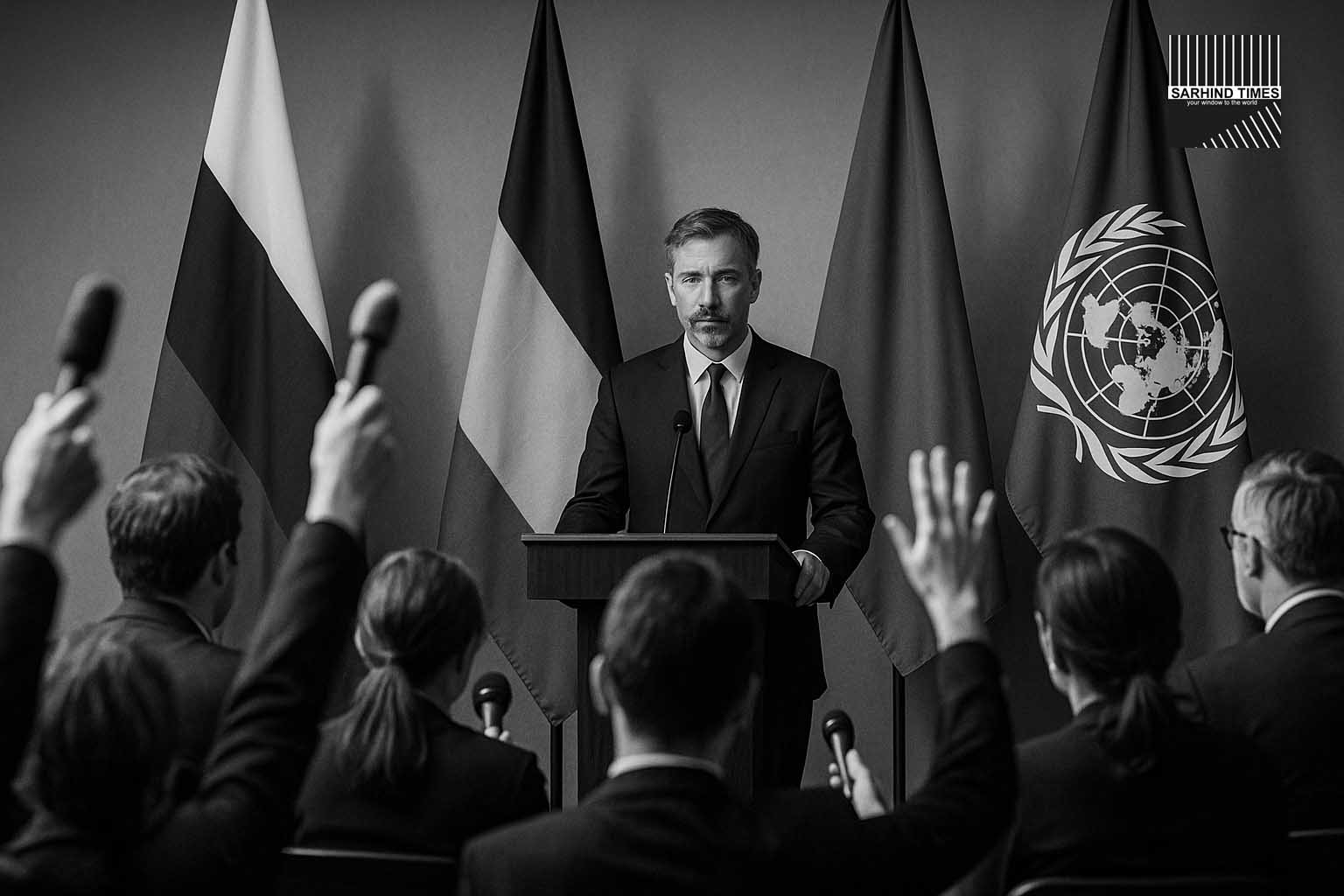
Moscow hints at negotiated settlement parameters; Kyiv demands withdrawal guarantees; NATO and EU fracture over next steps, leaving the international community uncertain about the war’s trajectory
Dateline: Geneva | November 16, 2025
Summary: Russia has issued fresh diplomatic signals suggesting it may be open to a negotiated “endgame” in the Ukraine war, drawing cautious global attention. However, Ukraine insists that any talks must include full territorial withdrawal commitments, while Western allies remain divided over how far negotiations should go. Despite rising humanitarian and economic pressures, formal peace talks remain stalled.
A Subtle Shift in Moscow’s Tone
In a development that has caught global observers off guard, senior Russian officials issued a series of carefully worded statements this week hinting that Moscow may be prepared to evaluate a “negotiated settlement” to end the drawn-out Ukraine conflict. Although not a formal proposal, the rhetoric marks a notable shift from recent months, when Kremlin responses remained uncompromising and focused on military objectives.
Analysts describe the new statements as “strategically ambiguous”—offering just enough flexibility to keep diplomatic doors open without specifying any concrete concessions.
Kyiv Reacts Cautiously: “Words Mean Nothing Without Withdrawal Guarantees”
Ukraine’s leadership responded with cautious skepticism. Officials reiterated that Kyiv would not enter negotiations without assurances that Russian forces would withdraw from occupied territories, including eastern regions and strategic border corridors.
President Zelenskyy’s office emphasized that “peace discussions cannot begin while missiles remain pointed at Ukrainian cities.” Ukrainian diplomats expressed frustration, arguing that Russia’s signalling may be an attempt to ease international pressure rather than a genuine offer.
War Fatigue Deepens Across the Region
Now entering its third year, the war has imposed staggering humanitarian and economic costs on both sides and across Europe. Ukrainian cities remain vulnerable to drone attacks, infrastructure damage continues to mount, and millions of displaced civilians have yet to return home.
In Russia, sanctions have tightened economic conditions, causing inflation spikes and shrinking industrial output. Analysts believe these pressures—combined with battlefield stagnation—may be influencing Moscow’s shift in tone.
NATO Remains Divided on Strategy
Inside NATO, the new developments have exposed underlying strategic differences. Some member states argue that exploring a negotiated settlement could prevent further escalation and reduce economic strain. Others warn that early negotiations could reward aggression and weaken long-standing security principles.
Diplomats confirm that no consensus exists yet, with internal discussions described as “tense but ongoing.”
EU Leaders Push for Humanitarian Relief Corridors
European Union leaders have revived calls for expanded humanitarian corridors to deliver medical supplies, heating assistance, and winter equipment to vulnerable Ukrainian regions. With another harsh winter approaching, European governments fear a renewed humanitarian crisis.
Brussels is urging both sides to permit temporary ceasefires for relief operations—something that Russia has not fully rejected but also not formally accepted.
Geneva, Istanbul, or Vienna? The Search for a Neutral Negotiation Venue
Although no formal peace talks have begun, several international actors have floated potential neutral venues for preliminary dialogue. Switzerland, Turkey, Austria, and the United Arab Emirates are among the countries expressing willingness to host early-stage discussions.
UN diplomats familiar with the deliberations caution that the idea remains in exploratory stages, with no commitment from either side.
Humanitarian Situation: A Race Against Time
The toll of the conflict continues to rise. UN agencies report increasing civilian casualties from sustained drone activity and missile interceptions. Electricity infrastructure remains fragile, especially in border regions where winter temperatures are expected to plummet.
Aid groups warn that supply gaps may widen in December if existing transport corridors remain unstable. Their appeals for ceasefire-based humanitarian windows have grown more urgent.
Russia’s Strategic Calculations: Analysts Decode the Signals
Experts on Russian military strategy suggest the latest statements may be aimed at multiple audiences:
- International allies concerned about prolonged war
- Domestic populations feeling the impact of sanctions
- Western governments pressured by rising energy and defense costs
Some analysts argue that Russia’s signalling is designed to test diplomatic appetite without committing to concessions. Others believe that the stalemate on the battlefield may be prompting genuine re-evaluation.
Ukraine’s Counter-Strategy: Strengthen Battlefield Gains Before Talks
Kyiv’s military advisors maintain that negotiating from a position of strength is essential. Ukrainian forces continue pushing defensive lines, aiming to reclaim strategic nodes before any diplomatic window materializes.
Officials emphasize that entering talks prematurely—without territorial advantage—could weaken Ukraine’s leverage.
China and Middle-East Powers Enter the Diplomatic Arena
China has issued new statements calling for “responsible de-escalation,” while several Middle Eastern nations have quietly positioned themselves as potential mediators. Their growing involvement reflects shifting global diplomacy, where several regions seek to reduce Western-dominated processes in favor of multipolar negotiation frameworks.
While none have publicly outlined a peace roadmap, their engagement signals an appetite to shape the eventual settlement.
Global Markets React Cautiously
The possibility—however slim—of early diplomatic movement generated mild fluctuations in oil and commodity markets. Energy traders expect that even exploratory talks could impact supply confidence for winter. Defense stocks across Europe saw slight rebalancing as investors assessed the long-term trajectory of the conflict.
US and UK Maintain Hardline Stance
The United States and United Kingdom have maintained that sanctions must remain until Russia demonstrates verifiable commitment to de-escalation. Officials argue that premature concessions could undermine the global norm against territorial acquisition by force.
Both governments continue to frame the conflict as a critical test of international rules-based order.
Peace Talks: The Three Core Roadblocks
Diplomats identify three issues that continue to block even preliminary negotiations:
- Territorial Status: Both sides refuse to compromise on claims.
- Security Guarantees: Ukraine demands NATO-aligned protection; Russia opposes it.
- Accountability Questions: Disputes over war damages, prosecutions, and responsibility.
Until movement occurs on at least one of these fronts, peace talks are unlikely to begin.
Civil Society in Both Nations Pressures for Peace
Amid the geopolitical tensions, civil-society groups in Russia and Ukraine have intensified calls for humanitarian relief and long-term settlement. Families of displaced civilians, volunteers, medical workers, and local aid collectives have appealed for steps to protect vulnerable populations before winter deepens.
Their voices, however, remain overshadowed by military and political considerations.
Could “Back-Channel Diplomacy” Be Underway?
International observers speculated that quiet negotiations could already be taking place behind closed doors. Intelligence-linked analysts suggest that:
- Envoys may be discussing prisoner exchanges
- Humanitarian pauses could be on a draft calendar
- Neutral intermediaries may be carrying confidential messages
Both sides have denied formal talks. Still, back-channel diplomacy has historically played a role in resolving major conflicts when public negotiations stall.
A Winter of Uncertainty Ahead
As temperatures drop, pressure on both governments is expected to intensify. Military operations typically slow during harsh winter conditions, presenting a potential opening for diplomatic maneuvers—but also raising the risk of humanitarian crises.
Officials warn that power shortages, displacement pressures, and logistical disruptions could worsen dramatically unless relief corridors are secured soon.
The Road Ahead: No Clarity, but a Glimmer of Possibility
For now, Russia’s statements represent the first slight easing of rigid rhetoric in months—but without tangible action, they remain words. Ukraine continues to insist on non-negotiable sovereignty conditions. Western allies are split, global mediators are circling, and humanitarian groups are pleading for emergency protections.
The international community is watching closely, aware that even the earliest steps toward negotiation could reshape global politics for years—but also aware that missteps could prolong a devastating conflict.


+ There are no comments
Add yours