
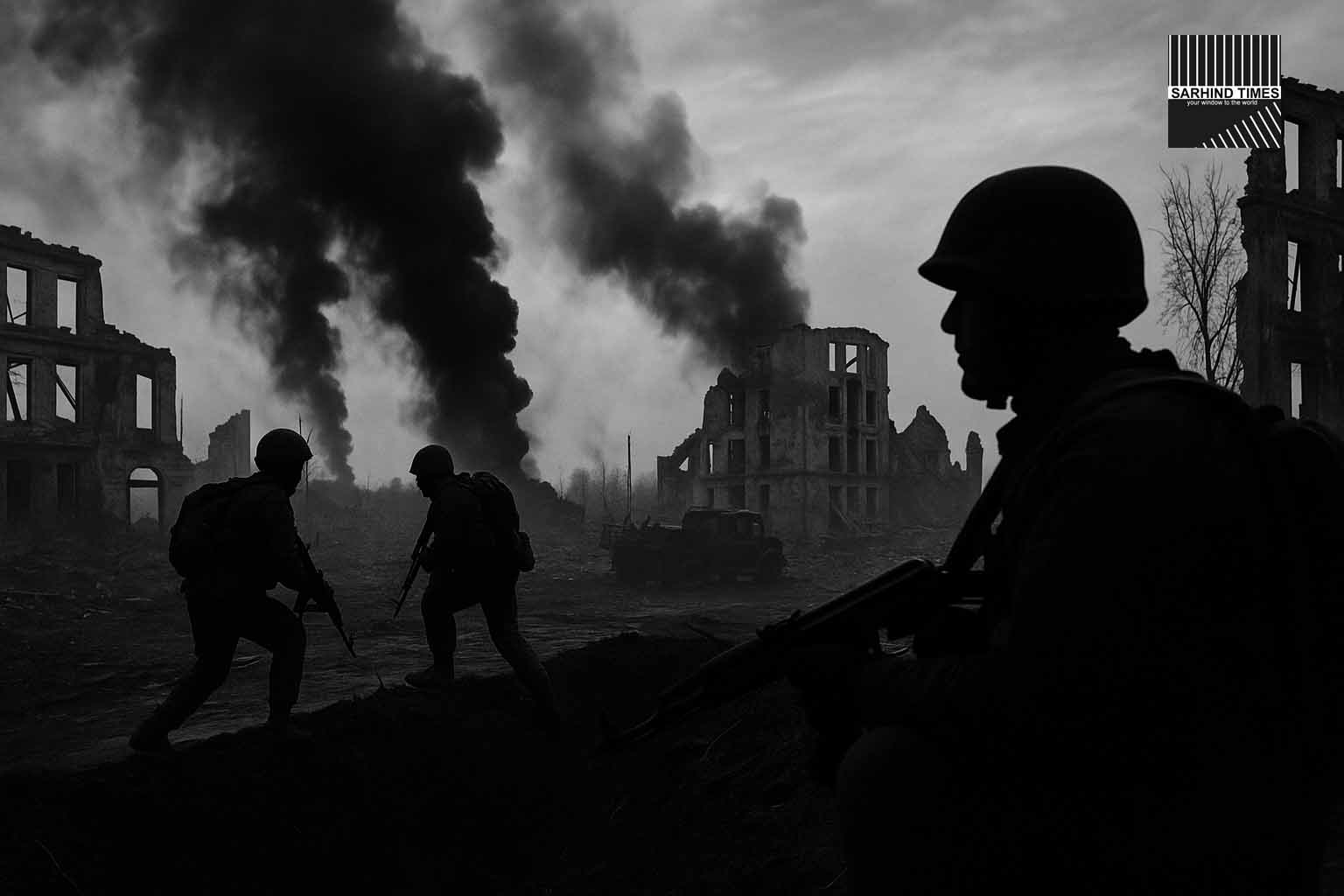
Kremlin says pathway to settlement exists even as frontline violence persists and diplomacy falters
Dateline: Kyiv / Moscow | 11 November 2025
Summary: The Ukraine war appears at a pivotal juncture: the Vladimir Putin-led Russian government publicly stated that it still aims for a political settlement, yet warned that negotiations are stalled by Ukraine’s insistence on reversing map gains. Amid intensified fighting around towns like Pokrovsk, and fresh engagement of Sergei Lavrov with U.S. counterparts, the conflict remains firmly in stalemate—raising prospects of a long war rather than imminent peace.
In recent remarks, the Kremlin’s spokesman reaffirmed Moscow still wants an end to the extended war, saying a settlement grounded in diplomacy and the political arena remains possible. Dmitry Peskov stated that the failure of current outreach is due to Ukraine’s ambition to reclaim all occupied territory—something Russia views as incompatible with its war-goals. The message: talks are on the table, but on Moscow’s terms.
Simultaneously, Foreign Minister Lavrov said he was ready to meet U.S. Secretary of State Marco Rubio, signalling potential re-engagement with Washington. The context is complex: earlier U.S. efforts to mediate a summit between Putin and Ukraine’s Volodymyr Zelenskyy were derailed. Lavrov’s outreach suggests Russia is repositioning diplomatically even while controlling much of the military initiative.
Frontline dynamics: Pokrovsk in view
The eastern Ukrainian town of Pokrovsk has emerged as a potential tipping point. Analysts monitoring the region warn the Russian offensive may succeed in capturing the town, thereby collapsing one of Ukraine’s defensive axes.
Military observers note that even though territorial changes are marginal overall, Russia’s emphasis on grinding attrition and energy-infrastructure strikes is shaping the battlefield. Ukraine’s counter-targets inside Russia’s oil-refinery zones signal that the war remains intense—despite the rhetoric of settlement.
Diplomacy in limbo
The diplomatic thread remains tangled. The U.S. previously called for a freeze at the current frontlines as part of a peace framework; Ukraine publicly accepted the concept in principle.
But Russia rejected key pre-conditions for any ceasefire—including recognition of its annexed territory and veto power over Ukraine’s Western alliances. The result: direct talks have not resumed since mid-2025 and both sides accuse each other of dragging feet.
Why Moscow signals openness now
There are several plausible reasons for the Kremlin shifting its tone:
- Winter is approaching, and sustaining logistics across contested territory is expensive and risky.
- Domestic Russian war-economy pressure is mounting, and public appetite for prolonged attrition may be fading.
- By signalling willingness, Russia may be positioning for favourable exit terms while retaining leverage of military occupation.
For Ukraine and its allies, these signals are mixed. On one hand, a path to negotiation may open; on the other, agreeing too early might freeze in advantages Moscow has gained. Thus, Kyiv remains wary of a “peace” that embeds Russian territorial control.
Ukraine’s wartime calculus
Ukraine faces a strategic dilemma: push for full recovery of territory and risk heavier losses, or accept a ceasefire that may freeze the status quo. Ukrainian officials assert they will not negotiate under duress. This insistence makes agreement harder—but from Kyiv’s view, trust in Moscow is too low.
At the same time, Ukrainian resilience is tested. Ensuring supply of Western arms, managing frontline attrition and preserving morale are critical. If domestic support or external flows falter, Kyiv’s strategic window may shrink.
International stakes
The war is no longer just bilateral—it spans global supply chains, energy markets, and geopolitics in the Indo-Pacific and beyond. India, for example, watches the conflict for its implications on defence imports, energy sourcing and strategic partnerships. Europe views this war as a test of its long-term resilience.
Any settlement will set precedent for how major powers engage in territorial conflict approaching the nuclear era. The Kremlin is aware of that symbolism even as it plays out on the ground.
What to watch next
Key indicators for the coming period include:
- Whether direct negotiations resume and if Ukraine agrees to a face-to-face meeting with Russia.
- Movement of frontline lines around Pokrovsk and other contested sectors.
- Ukraine’s access to fresh Western weapon-systems, particularly air-defence and long-range strike assets.
- The behavior of third-party actors: will China or India push for mediation or tilt?
- Russia’s energy-infrastructure strike tempo—if Moscow increases pressure on civilian systems, it may force concessions from Kyiv or its backers.
Risks and caveats
Many factors suggest a settlement remains distant:
- Russia sees its war aim as regime guarantee and territorial gains—it has repeatedly affirmed willingness to fight until goals are achieved, not merely reach a ceasefire.
- Ukraine’s demand for full restoration of its territory remains incompatible with areas Moscow already holds. Any compromise may be politically unsellable domestically in Kyiv.
- Proxy escalation risks—Russia’s recent actions around nuclear infrastructure trigger wider alarm and may spiral into broader conflict.
- Global fatigue: Western public opinion and budgets may weaken over time, reducing pressure on Russia and diminishing Ukraine’s ability to hold out.
Implications for India and Asia
For India, the evolving war matters for multiple reasons:
- India imports significant volumes of oil and gas; any shift in Russian-Western sanctions directly impacts its cost exposure and negotiating position.
- Defence sourcing: India’s indigenous projects and imports may face delays or opportunities depending on whether Russia remains isolated or reintegrated economically.
- Diplomatic posture: As India balances relations with Russia, the U.S. and Europe, the outcome—and India’s positioning—will influence trade, technology partnership and global strategic weight.
Conclusion
The Russia–Ukraine conflict has entered a phase where settlement is theoretically possible—but not remotely imminent. Russia is signalling readiness, yet the mismatch between Moscow’s demands and Kyiv’s red-lines remains vast. On the battlefield, fighting intensifies rather than recedes. Diplomacy is fraying. For now, the war remains at a pause in motion—each side preparing, wary, and watching.
Whether this becomes a “frozen conflict” or a live war with renewed escalation will depend on timing, willpower, and external support. For the global community, the choice is: double down on strategy to shape the outcome, or drift into a prolonged stalemate with unpredictable consequences.


+ There are no comments
Add yours