
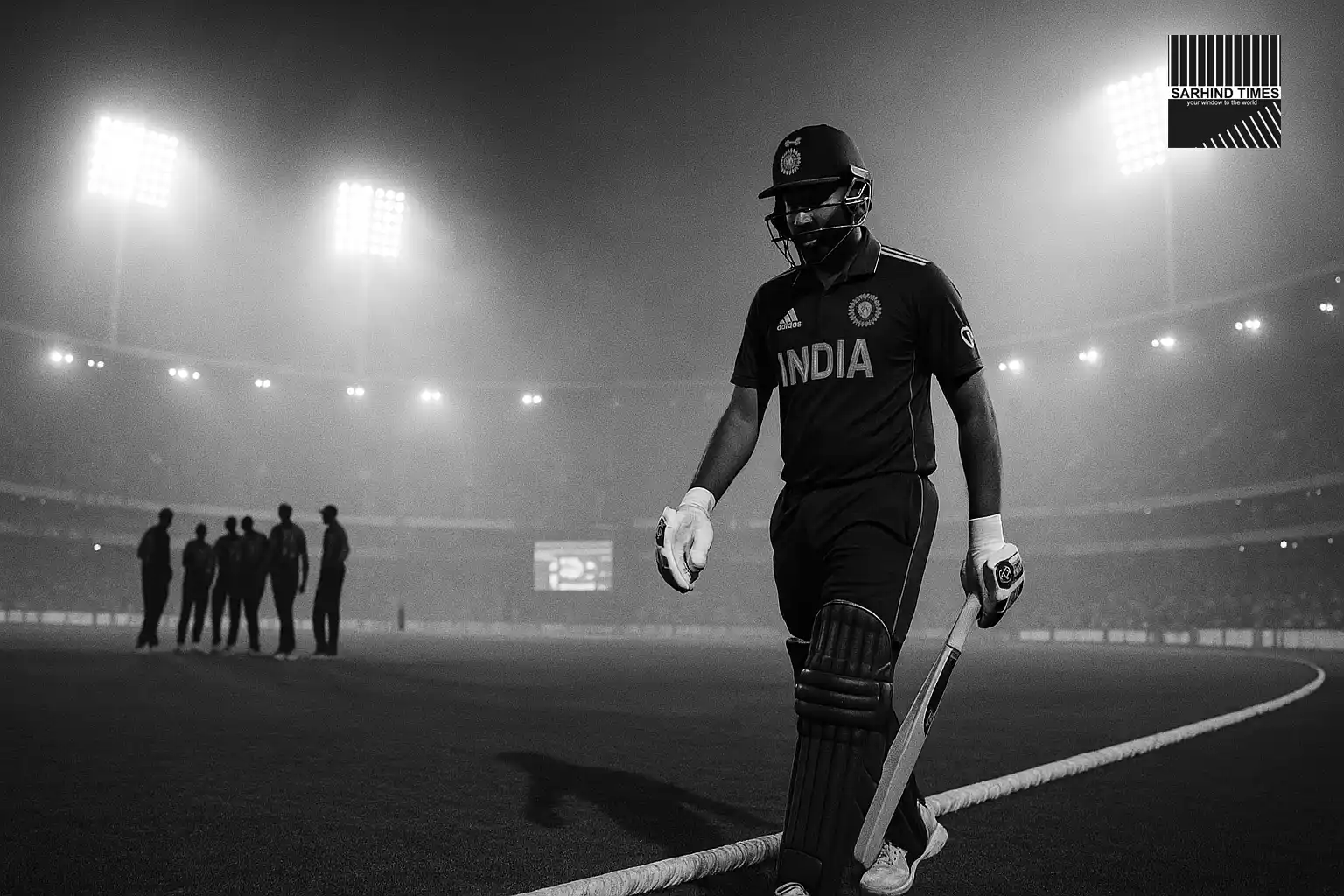
After dominating Australia with a century, Rohit hints at signature exit while coach confirms he aims for 2027 World Cup
Dateline: New Delhi | 27 October 2025
Summary: Rohit Sharma stirred widespread speculation about his future after posting on social media: “One last time, signing off from Sydney”, following an unbeaten 121 in the third ODI against Australia. The shot-maker’s childhood coach, Dinesh Lad, later clarified that Rohit aims to play the 2027 World Cup before retiring—suggesting the social media post was more symbolic than final.
1. The context: Sydney, 121* and a cryptic sign-off
In the final ODI of India’s recent tour against Australia national cricket team, Rohit Sharma struck a commanding 121 not-out off 125 balls at the Sydney Cricket Ground—his 33rd ODI century and a statement performance despite India losing the series.
Shortly after the match he posted on X (formerly Twitter):
> “One last time, signing off from Sydney.”
The phrase immediately lit the retirement-discourse. Was this Rohit’s farewell tour of Australia? Or a bigger signal that “something ends here”? Analysts and fans went into overdrive.
But then his coach, Dinesh Lad, weighed in: “He wants to play the 2027 World Cup and only retire after that.”
The past few months already brought change: Rohit had earlier retired from T20 Internationals post-2024 victory, and stepped away from Test cricket earlier this year.
Now, the ODI future is under discussion.
2. Why this matters: leadership, transition and timing
Rohit remains a central figure in India’s white-ball structure, especially in ODIs. His form in Australia—scoring 121* and being named Player of the Series—shows he still has the batting firepower.
At 38 he sits at the convergence of two eras: the finishing phase of his own career, and the emergence of a younger core led by Shubman Gill and others. His sign-off message raises two questions:
1. Is this his farewell to Australian tours only?
2. Or is it a broader signal of one-last-hurrah before winding down?
The coach’s remarks suggest the latter is not yet. The “2027 World Cup” target means Rohit might have 18-24 months of top-level ODI cricket left.
For team management and selectors, this matters. If Rohit plays until 2027, the transition must be managed—ensuring he contributes while grooming successors. A premature retirement announcement could force changes; a late one risks legacy wear-down.
3. The social media angle: “One last time” and fan read-through
In today’s sports media ecosystem, a single caption can matter. The “One last time, signing off from Sydney” post felt like a retirement nod, especially given the performance context (a century, end of tour).
FirstPost noted the “mysterious social media post” immediately triggered retirement talk.
But social media is ambiguous by design. Statements like “signing off from Sydney” may be about that tour, not the career. The ambiguity is what drives conversation—and speculation adds value for brand, for media and for legacy.
From a management perspective, the BCCI and team optics must respond. Clarifying or letting it simmer both have costs: silence fuels speculation; official announcements bring finality and open leadership transitions.
4. Statistical proof: form still high, but age is a factor
Rohit’s recent numbers justify his selection: 202 runs in three ODIs vs Australia, average ~101 with a century and a 75-odd innings. His coach pointed to his self-confidence as the differentiator.
But age is an undeniable factor. At 38, recovery, workload and competition from younger players will influence his role. While centuries and match-winning knocks remain possible, consistency becomes harder.
The next 18–24 months could be a controlled phase: less cricket, more management of workload, and perhaps format-specific focus. How the Board and team handle this will shape his final chapter.
5. Transition planning: India’s next generation and roles
With Rohit nearing twilight, India must plan transition. Who takes over the top-order responsibility? How is the ODI captaincy structured? Gill, young yet with promise, is part of the answer—but the senior-junior blend must be managed.
Media commentary suggests Rohit’s presence gives breathing space to the younger players to grow while maintaining the team’s competitive edge. But at some point, the baton must pass. A clear retirement plan helps.
If Rohit plays through 2027, then role clarity becomes critical: is he a starter, a selector’s option, a mentor-player? How many games? Which tours? These questions need answers now. Delayed transition planning creates confusion.
6. Legacy friendliness: what Rohit’s final phase could define
Rohit’s legacy is already substantial: highest-scoring Indian opener across formats, 30+ centuries, three double-hundreds in ODIs, multiple trophies. What the final chapter adds could shape public memory.
Controlled exit: If he retires on his terms, post-World-Cup or after a major series, he gets a celebrated farewell. Greyed exit: If performance dips or selection dilemma forces omission—legacy may suffer.
His social media statement may be interpreted as “I control the timeline.” If managed well, it reinforces his brand and leadership.
7. Risks and pitfalls ahead
– **Injury potential**: Older players manage fitness more carefully; any major injury could accelerate exit.
– **Form decline**: A few low scores could shift public and team sentiment about his desirability.
– **Selection politics**: Younger players demanding starts may force management’s hand.
– **Messaging mismatch**: If the “one last time” message is mis-read and media frames it as career farewell prematurely, speculation could destabilise team dynamics.
– **Global competition**: Team India’s search for consistency in white-balls means minimal patience for ageing stars unless they perform.
8. What to watch for in the immediate future
– Will Rohit rest selectorially for minor series to manage workload?
– Will there be a designated farewell series announced?
– Will the coaching staff assign Shawn-type mentoring role alongside a junior top-order?
– Will BCCI issue clarifying statement about his future?
– Will team performance remain robust with this transition narrative?
These markers will determine whether the “one last time” was symbolic or literal.
9. Fan and media behaviour: hype, nostalgia and expectation
Fans love to craft “farewell tours”. Whether Rohit wants that or not, media and fan networks will build narrative. Each series might become “last for Rohit in Australia”, “last as India opener”, “last in World Cup”. This amplifies coverage but can also distract the player and team.
Managing narrative—via selective appearances, controlled communication, and role clarity—becomes key. For Rohit and team management alike.
10. Bottom line
The combination of a brilliant century, a social-media statement, and a coach’s target of 2027 World Cup has created a narrative inflection point for Rohit Sharma’s career. Whether the post indicates final tour of a country or final phase of his playing years, the point is clear: transition is coming. For Indian cricket, for Rohit, for teammates and fans alike. The next 18 months will define how one of India’s batting greats says goodbye—on his terms.
For now: run-scoring stays high, the era continues, but the clock is ticking.



+ There are no comments
Add yours