
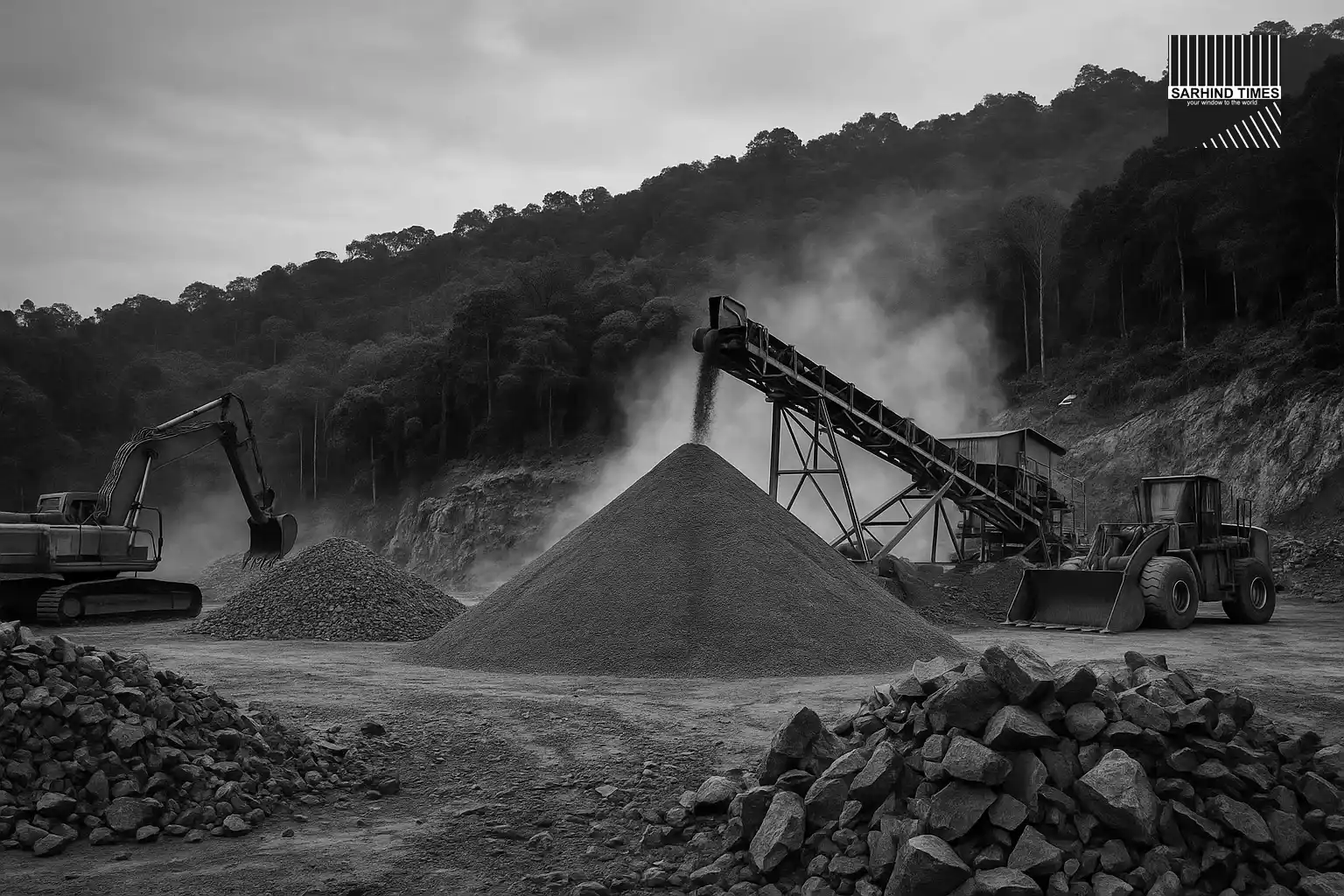
From rampaging quarries near protected forests to official probes into polluted river stretches, India’s environmental vulnerabilities are once again in focus
Dateline: New Delhi | 13 November 2025, Asia/Kolkata
Summary: A recent study has uncovered that following a ban on river-sand mining in parts of Kerala, quarries have expanded rapidly near protected zones of the Western Ghats — raising serious concerns about habitat destruction. At the same time, official pollution assessments show hundreds of polluted river-stretches in India, and tribunals are imposing large fines on erring authorities. The combined signals point to accelerating environmental risk and an urgent need for enforcement and policy recalibration.
Backdrop: Why the environment is under renewed pressure
India’s rapid urbanisation, infrastructure drive, mining demand and extractive pressures are colliding head-on with ecosystem fragility. The Western Ghats, a UNESCO-recognised biodiversity hotspot, long regarded as a zone requiring strict environmental protection, is now witnessing a surge in quarrying activity, according to researchers. One such study found that after a 2016 ban on river-sand mining in Kerala, extensive stone quarries proliferated within the Ghats’ buffer zones — expanding five to ten-fold in some places between 2011 and 2021.
Meanwhile on the water front, the country has made marginal progress in cleaning rivers. The Central Pollution Control Board (CPCB) in one recent review recorded 296 “polluted river-stretches” in 2025 — down from 351 in 2018, but still a stark reminder of scale. At the state and local level, commissions and tribunals are issuing directives and imposing fines for pollution, illegal mining and encroachment in river catchments.
Quarry expansion in the Western Ghats: a case study of regulatory displacement
The Kerala study analysed permit data, satellite imagery and mining-portal records, revealing that as river-sand mining was curtailed, extraction pressure shifted to hard rock quarries. Some quarries were located within 10 km of protected areas, even though rules typically restrict such operations.
From an ecological perspective this shift is highly concerning: quarry blasting creates dust plumes, noise-vibration, destroys soil and rock structure, disturbs water tables, increases sediment runoff into streams, fragments habitats and threatens endemic species. The pattern of rapid expansion in sensitive zones points to weak enforcement, regulatory arbitrage and demand-pressure for construction materials. The researchers argue that the sand-mining ban, though well intentioned, may have had unintended consequences by shifting extraction to quarries with even greater environmental cost.
The implications are broad: the Ghats serve as watershed for Kerala and adjoining states, supply forests, biodiversity corridors and hydrological stabilisation. Disruptions to these functions can destabilise downstream water supply, increase landslide risk, reduce forest-resilience, and escalate human-wildlife conflict.
River pollution: scale, trends and institutional responses
The data reveal a mixed picture. On the positive side, 296 polluted river‐stretches is a reduction from earlier years. But “reduction” here is relative: 296 stretches is still a vast number, signalling persistence of core problems. The definition of a ‘polluted stretch’ is based on biochemical oxygen demand (BOD) exceeding 3 mg/L in two or more adjacent locations along a river.
Addressing this, the National Green Tribunal (NGT) recently imposed a fine of over ₹7 crore on the municipal corporation of Kota and the Kota Super Thermal Power Plant for polluting the Chambal River — a river that hosts endangered species including the gharial and the Gangetic dolphin. In another instance the Karnataka State Human Rights Commission ordered the deputy commissioner of Kodagu district to take immediate action to stop waste discharge into the Cauvery River and the Lakshmana Theertha River following complaints of untreated discharge from hospitals and hotels.
Key drivers of the environmental strain
1. **Construction and material demand**: India’s infrastructure and real-estate push has created huge demand for aggregates, sand, stone rock and other raw materials. Constrained supply of legal sand has shifted pressure onto quarries and extractive hotspots.
2. **Urban wastewater and industrial effluents**: Many rivers continue to receive untreated or partially treated sewage and industrial discharge. Even where sewage-treatment plants (STPs) exist, they often do not operate optimally or lack capacity.
3. **Regulatory gaps and enforcement weakness**: Many environmental statutes and notifications exist, but enforcement at local level lags. This includes monitoring of prohibited zones, rehabilitating mining areas, sanitation enforcement, and fines that act as weak deterrents.
4. **Hydrological and climate change pressures**: Reduced water-flows, changing rainfall patterns, glacier-melt stress, and river-bed mining all combine to make ecosystems more fragile and reduce pollutant-dilution capacity.
What this means for biodiversity, water security and local communities
Loss of intact forest and watershed function in the Western Ghats threatens species, reduces carbon-storage, increases landslide risk and disrupts water supply to downstream zones. For river systems, polluted stretches mean degraded aquatic ecosystems, fish die-offs, loss of safe bathing/drinking water, health risks to rural households and worsening of flood-risk during monsoons.
Communities often pay the price: drinking-water supply becomes more difficult (requiring more treatment), agricultural irrigation becomes unreliable, and livelihoods tied to fisheries, forest-produce or eco-tourism diminish. One case in point: stretches of the Ganga basin already see health burdens tied to heavy-metal contamination and polluted waters.
Policy and governance response: signals of action and gaps
Recent tribunal orders and state-level alerts show that regulatory machinery is reacting. Fines, directives and audit-reports are being issued. However, the deeper issues remain:
- Regulators must shift from reactive to proactive: monitoring, remote sensing, real-time data and community reporting must become standard rather than exception.
- Extraction of material (sand/stone) must be aligned with ecological budgets — not just banning but providing viable alternatives, rehabilitation, supply-planning and demand-management.
- River-cleaning initiatives must integrate flow-management, ecological restoration, community engagement and sustainable livelihood support rather than just STP construction.
- The many different ministries and state agencies (environment, forest, mining, water-resources, urban-local bodies) need stronger coordination and shared accountability for outcomes rather than fragmented jurisdictions.
Short-term triggers and long-term watch-points
**Short-term triggers (next 12-18 months)**:
- An increase in public and tribunal-action on high-risk zones (Quarries near protected forests; major river-pollution sites) which could push policy enforcement into higher gear.
- New mining-permits or lease-renewals near ecologically sensitive areas will attract legal challenge and scrutiny — stakeholders should anticipate more disputes.
- Government may release updated guidelines for minor-mineral extraction, buffer-zone protection and river-front clean-ups — this may trigger project delays or cost escalations for developers.
**Long-term watchpoints (3-5 years)**:
- Whether the Western Ghats quarry-boom leads to measurable ecological damage (forest loss, habitat fragmentation, worsening landslide frequency, reduced groundwater recharge).
- Whether India can accelerate the reduction of polluted-river stretches significantly (from 296 downward) and ensure water-quality improvement in tangible metrics (BOD, DO, aquatic-life indices).
- Whether regulatory reform can shift from punishment to prevention — aligning asset valuations of ecosystems, incentivising demand-reduction (aggregates, sand) and enforcing buffer-zones effectively.
Implications for investors, developers and communities
– **Investors & developers**: Projects near ecologically sensitive zones or those dependent on extractive-material supply must evaluate regulatory and ecological risk. Unanticipated legal action, delays or local opposition can increase cost/time.
“`
– **Communities**: Those living near rivers and forests must stay alert to health, water-supply and habitat-loss issues. There is an opportunity for community-based monitoring and engagement to hold agencies accountable.
– **Policymakers & regulators**: The opportunity to show leadership by translating tribunal decisions, research findings and public complaints into operational action. That means building real-time dashboards, strengthening minor-mineral regulation, integrating cross-agency workflows, and measuring ecological outcomes not just policy inputs.
“`
Conclusion
India’s environmental narrative at the moment straddles caution and potential. On the one hand, there are measurable advances in certain policy areas and regulatory push-back; on the other, the under-reported growth of quarrying in protected zones and the persistent scale of river pollution signal that the country remains far from ecological stability. Whether the country will convert intents into outcomes will depend heavily on enforcement, cross-sector cooperation and community engagement.
In short: the environment is no longer a passive backdrop to India’s development story — it has real financial, social and operational implications. Projects, policies and communities that fail to account for ecological risk may find themselves exposed. Yet for the first time there is visible energy around enforcement, data and accountability. The coming years will reveal whether this energy captures momentum or dissipates into rhetoric.


+ There are no comments
Add yours