
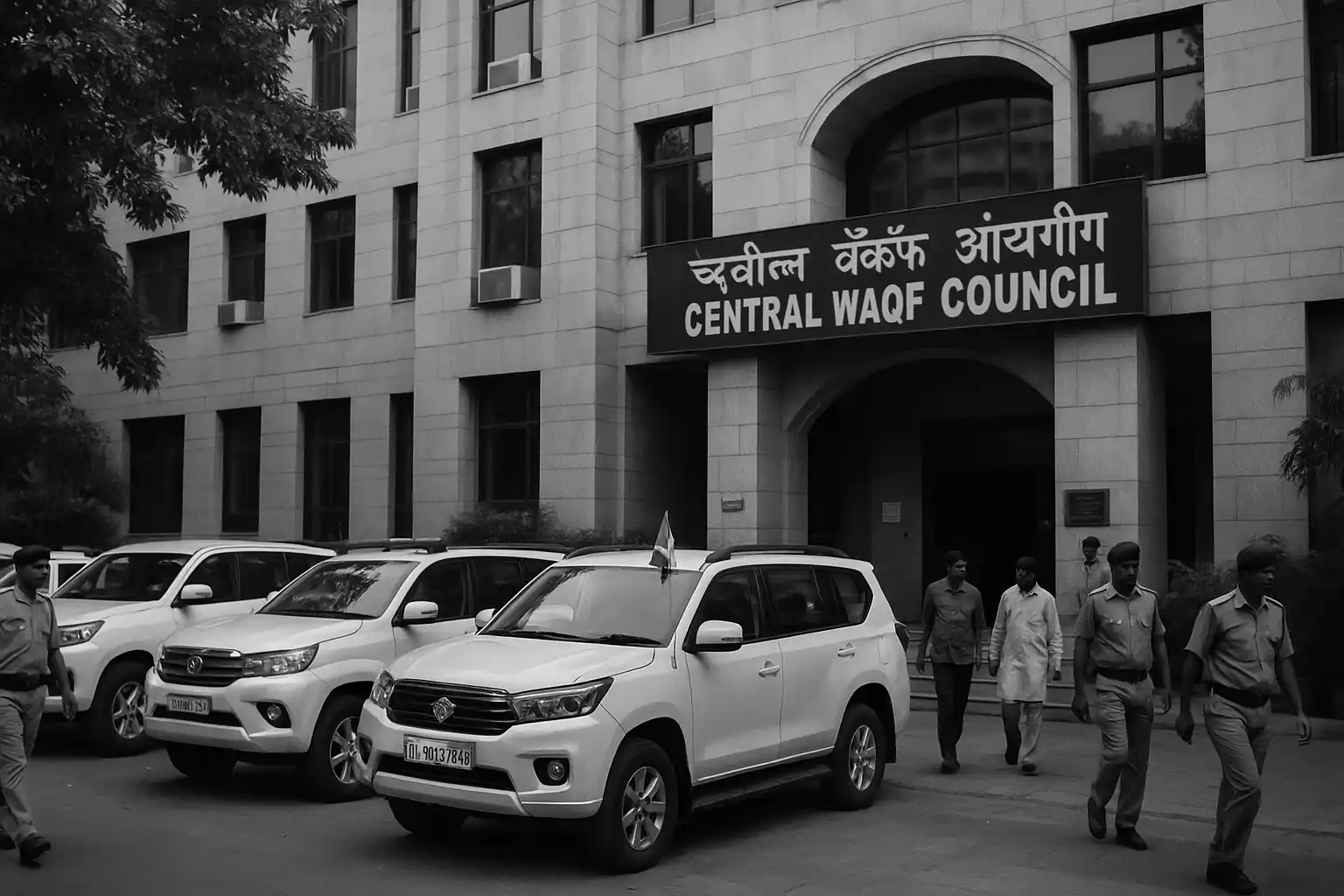
The Waqf (Amendment) Act, 2025 brings sweeping changes to waqf boards, property-governance and minority institutional oversight
Dateline: New Delhi | 05 November 2025
Summary: India’s Parliament has enacted a major amendment law governing Muslim charitable endowments (waqf), introducing non-Muslim representation on waqf boards, enhanced governmental oversight, stricter ownership verification, and new mechanisms for recovery of encroached properties. While supporters say the reform is long overdue, critics argue it threatens minority institutional autonomy and may trigger litigation and social unrest.
Historical Context: Waqf Governance and Challenges
The term “waqf” refers to an inalienable charitable endowment under Islamic law, usually for religious, educational or social-welfare purposes. In India, waqf properties have historically been managed by state waqf boards under the Waqf Act, 1995 and various subsequent amendments. Over time, challenges emerged: weak oversight, land encroachment, fragmentation of endowments, opaque accounting and low returns from waqf assets.
Official estimates suggest that Indian waqf boards manage over 8.7 lakh properties covering roughly four lakh acres of land, placing them among the country’s largest institutional land-holders. In many cases the value of assets far outstrips their revenue flows, while encroachment and litigation are extensive. The 2006 Sachar Committee report, for example, flagged serious under-utilisation and management deficits in waqf lands. The reform law enters against this backdrop of pressures: operational inefficiency, asset-loss risk, governance concerns and minority-institution activism.
What the 2025 Amendment Law Changes
The Waqf (Amendment) Act, 2025 introduces several significant changes to the legal-governance architecture of waqf institutions in India. Key features include:
- **Inclusion of non-Muslim members on waqf boards**: The law mandates representation of persons who are not practising Muslims (and who may or may not belong to the Muslim community) on both central and state waqf boards. The government argues this will strengthen oversight and accountability in the management of assets.
- **Enhanced governmental oversight and ownership verification**: The amendment empowers the central government and district collectors to establish clearer ownership records of waqf properties, impose time-limits for inspection, and accelerate recovery of encroached lands. Those properties lacking proper documentation risk becoming subject to state intervention.
- **Waqf-by-user and waqf-al-áulad provisions revised**: Some historic categories of endowment (such as ‘waqf by user’) are revised or eliminated, bringing them in line with standard governance frameworks. The law also clarifies that waqf-al-áulad (family endowments) must not deprive heirs (including women heirs) of inheritance rights.
- **Faster resolution of disputes**: The amendment introduces mechanisms to expedite legal disputes over waqf assets. It provides for more streamlined tribunals, reduced procedural delay, and clearer requirement for boards to maintain digital records and upload property-data into national management platforms.
- **Re-branding and clearer governance objectives**: The law also revises the long title of the Waqf Act to reflect its reform-focus—“Unified Waqf Management, Empowerment, Efficiency and Development Act” is one proposed nomenclature emphasising transparency, asset-utilisation, empowerment of beneficiaries and institutional reform.
Government’s Rationale and Policy Logic
The government, in its explanatory statement, described the reform as necessary for three primary reasons: restoring the value and productive use of waqf assets, curbing encroachment and misuse, and enhancing delivery of social-welfare value from waqf endowments. It argued that because several waqf boards historically lacked full accounting, many properties lay unused or under-utilised and thus did not serve their intended charitable purpose.
By bringing greater oversight, diversified board representation and stronger enforcement, the law is intended to unlock latent value, improve returns from waqf estates, and protect the endowment ecosystem from mis-management and land- encroachment. For the government, this aligns with broader targets around digital-governance, state-asset efficiency and ensuring social-welfare funds reach the intended beneficiaries.
Reactions and Stakeholder Perspectives
The law has elicited a wide spectrum of responses:
Supportive voices: Some think tanks and reform-advocates welcomed the change. They noted that decades of under-utilisation and mis-management of waqf assets required structural fix-ups. These observers argued that improved oversight and inclusion of non-Muslim professionals would strengthen the capacity of waqf boards and reduce dependency on patronage politics.
Civic and minority-institution concerns: However, many Muslim organisations, waqf board representatives and minority-rights groups expressed concern. Their objections include:
- The inclusion of non-Muslims on waqf boards may infringe on the autonomy of Muslim religious institutions and dilute their community-control.
- Empowering the state to determine ownership and rights in historic waqf lands risks dispossessing communities of prayer halls, seminaries and graveyards, especially where documentation is weak or historic.
- The changes may shift property rights, jeopardise waqf-by-user and waqf-al-áulad arrangements and lead to litigation or resistance at the ground level.
Political opposition: Opposition parties argued that the law could erode constitutional protections for minorities under Articles 25 and 26 of the Indian Constitution and questioned whether the measure was timely or balanced in its approach. Some accused the government of using the reform as part of a wider agenda to exercise greater control over minority-institution assets.
Legal and Constitutional Dimensions
From a constitutional-law perspective, the amendment raises important questions about religious-institution autonomy, the role of the state in endowment governance and minority rights. Scholars point out that waqf boards and their assets are partly protected under Article 26 (rights of religious denominations to manage their affairs). Increased state oversight and board-composition change may invite judicial challenge.
Indeed, petitions are already expected before the Supreme Court of India and high courts raising issues around documentation-requirements, encroachment-recovery procedures, board-composition changes and possible retrospective liability. The government counters that the reform law was within its legislative competence and aimed at facilitating better governance rather than dispossession.
Impact on Assets, Administration and Beneficiaries
The amendment law is likely to bring wide-ranging changes in how waqf assets are managed, administered and utilised:
- Waqf boards will need to conduct property-surveys, digitise portfolios, identify encroachment, clear title-deficiency and prepare asset-management plans.
- The inclusion of independent professionals and non-Muslim members may bring new governance disciplines, audit practices and fresh decision-making perspectives.
- Beneficiary-communities (students of madrassas, residents of waqf-granted land, mosque users) may see improved services if asset-returns increase. However, rapid change also carries risk of servicing disruption if transition is poorly managed.
- Land-encroachment recovery may accelerate, but this may also mean litigation and controversy in certain localities where property-rights are unclear or historic records are weak. Some waqf boards fear aggressive recovery could create local agitation or disruption of religious sites that have long been in community use.
Implementation Timeline and Key Next Steps
The law will come into effect from the date notified by the central government. Key implementation steps include:
item Issuing of rules and regulations under the amended Act, including board-composition norms, digitisation timelines and recovery-mechanism guidelines. item Formation/election of new waqf boards under the reform regime and integration of non-Muslim representation. item State-level surveys of waqf assets and commencement of digital-registry work. item A multi-year roadmap for return-enhancement of assets, redevelopment of waqf-land for social-welfare use and alignment of waqf-trust management with broader social-development frameworks.
Risks and Challenges Ahead
While the reform is ambitious, execution will present several risks:
- Resistance at ground level: Some local waqf boards may resist change, slow digitisation or contest board-composition provisions. Institutional inertia and local political dynamics may hamper rollout.
- Legal-liability backlog: Existing encroachment and title-disputes may generate large litigation-loads; new rules may accelerate fights rather than settle them unless well-designed dispute-resolution mechanisms are in place.
- Community-trust and perception risk: If reforms are perceived as heavy-handed or undermining community rights, backlash and social unrest may occur. Communication and inclusive rollout will be important.
- Capacity constraints: Digitisation, survey work, asset-management and compliance require administrative capacity and funding. States with weaker institutional structures may struggle to keep pace.
What to Watch Next
Over the coming months and years, a few signals will indicate how successful the reform will be:
- How many waqf boards have completed digitisation and property survey work within the first year.
- The pace of recovery of encroached properties and the quantum of assets unlocking for social-use.
- Removal or reduction of legal-cases lag-time related to waqf disputes and improved audit-transparency of waqf assets.
item Community-feedback and beneficiaries’ response on service-quality improvements (for example: waqf-schools, grants, mosque maintenance).
item Judicial review: how courts interpret the board-composition changes and state-oversight powers and whether major parts of the Act are struck down.Conclusion
The passage of the Waqf Amendment Act of 2025 marks a watershed moment in the governance of Muslim charitable endowments in India. It reflects a determined push by the government to reform long-neglected institutions, integrate transparency, ensure asset-utilisation and protect public-interest goals. At the same time, the law has stirred significant debate around religious-institution autonomy, minority-rights safeguards and the balance between reform and respect for faith-based governance.
Ultimately, the success of the reform depends not only on the text of the law, but on how it is implemented: how waqf boards adapt, how stakeholders are engaged, how assets are marshalled for public benefit—and how communities feel they are part of, rather than passive recipients of, change. If well-executed, the reform can unlock a major reservoir of social-welfare value; if mis-managed, it risks deepening distrust and contestation.
As India moves ahead, the waqf reform law will be watched as both a governance test and a social measure. It is not simply about lands and mosques—it is about institutional trust, community engagement and the societal value of millions in assets. The next few years will determine whether the promise of empowerment, efficiency and development is realised in practice.



+ There are no comments
Add yours