
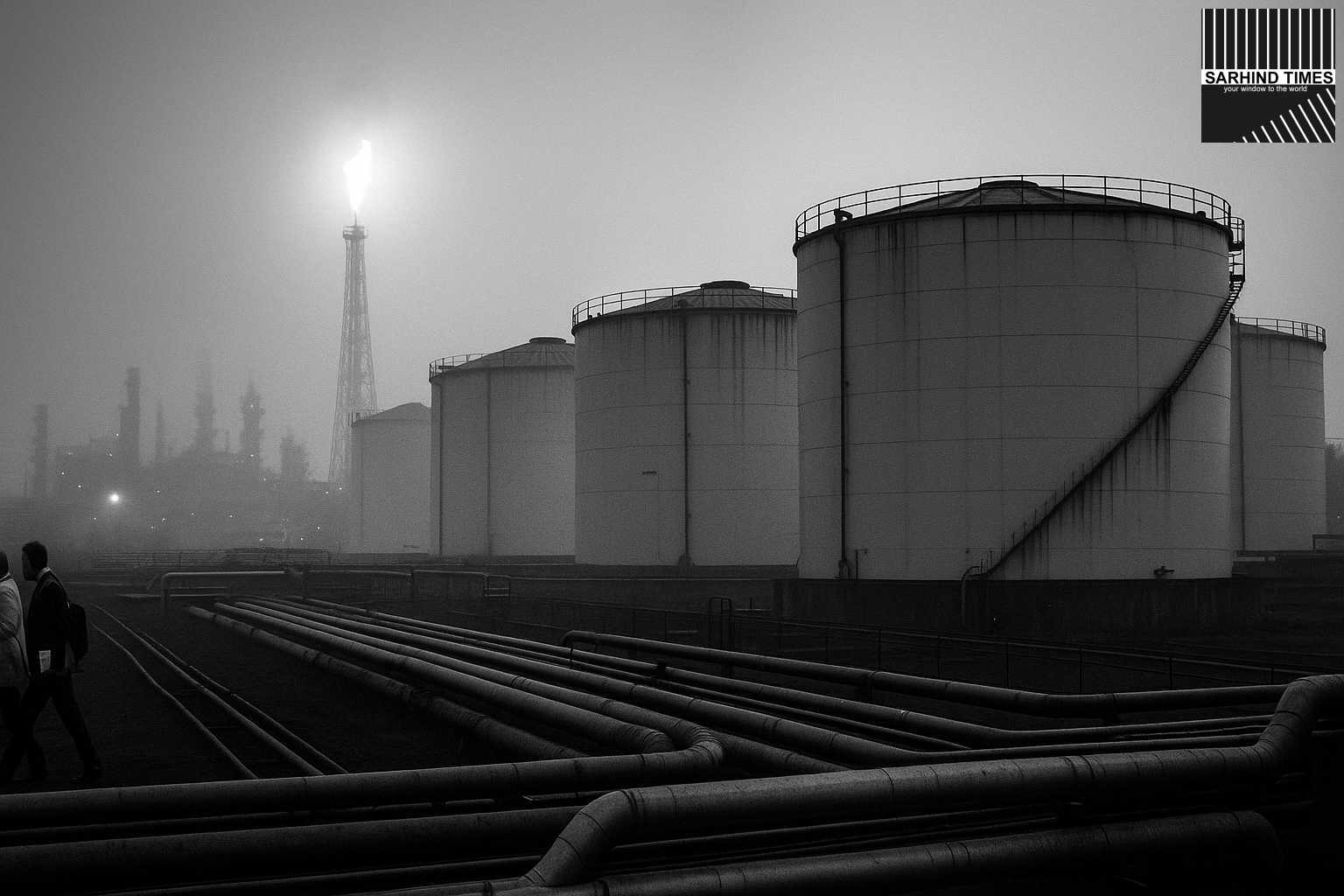
Unexpected production move sends crude prices surging, raises inflation risks, and triggers global diplomatic recalculations
Dateline: New Delhi | November 27, 2025
Summary: OPEC+ stunned global markets this week with a surprise decision on oil production that immediately pushed crude prices upward and sent ripples across world economies. India, one of the largest importers of crude oil, faces rising pressure on inflation, fiscal stability, and foreign policy balancing as markets react sharply.
A decision that rattled global markets overnight
In a dramatic move that caught global analysts off-guard, the OPEC+ alliance announced an unexpected shift in its oil production strategy during its emergency meeting this week. The bloc — led primarily by Saudi Arabia and Russia — unveiled a policy change that immediately triggered a spike in global crude prices, rattling stock markets, altering energy forecasts, and forcing many economies, including India, to prepare for heightened volatility.
The decision comes at a time when global energy markets were beginning to stabilise after months of fluctuations caused by geopolitical tensions, slowing demand in Europe and China, and uncertainty over global trade flows. Instead, the sudden recalibration has reintroduced uncertainty into an already fragile global economic landscape.
What OPEC+ decided — and why it matters
According to delegates familiar with the closed-door negotiations, OPEC+ agreed to implement a production move that had not been widely anticipated by market watchers. The decision was framed as necessary to “maintain long-term market stability,” but analysts believe it reflects deeper strategic concerns among the world’s dominant oil producers.
While the bloc did not disclose the full internal voting pattern, experts suggest that member states aligned with stronger fiscal needs supported the shift, while others expressed concerns over potential demand destruction if prices surge too fast.
The timing of the decision — close to the holiday season in the West and a winter-demand uptick in several Asian economies — amplifies its global impact.
Immediate market reaction: crude prices surge
Within hours of the announcement, Brent crude prices jumped sharply, with futures markets showing heightened volatility. Traders reported strong buying by hedge funds anticipating reduced supply, while refiners across Asia began recalibrating procurement strategies.
Stock markets reacted swiftly. Energy stocks rallied, while aviation, logistics, and manufacturing counters declined in Europe and Asia. Currency markets also felt the tremor, with oil-importing nations experiencing depreciation pressure as import costs were revised upward.
Impact on India: inflation risk rises, fiscal pressure builds
As the world’s third-largest oil importer, India stands among the most exposed economies when crude prices spike unexpectedly. Analysts warn that even a short-term rally in global oil prices can have cascading effects across India’s inflation trajectory, fiscal math, logistics sector, and consumer demand.
The Ministry of Petroleum is reportedly monitoring the situation closely and evaluating procurement options through long-term contracts and strategic reserves. However, higher global prices typically mean elevated pump-level fuel prices unless the government absorbs part of the shock.
Inflation worries return to New Delhi
Higher crude prices translate directly into increased fuel, transportation, and manufacturing costs. Economists estimate that every $10 rise in global crude prices can raise India’s retail inflation by 35–40 basis points. With food prices already facing seasonal pressures, the new oil surge has renewed fears that headline inflation could breach comfortable levels.
Officials at the Reserve Bank of India (RBI) are expected to factor the new energy risk into monetary policy deliberations. While the central bank has maintained a cautious stance, any sustained surge in crude prices could limit its capacity to pursue growth-focused measures.
Fiscal deficit concerns grow
Rising crude prices also squeeze government finances. If the Centre chooses to shield consumers by reducing excise duties or compelling oil marketing companies to absorb losses, fiscal deficit pressures could widen. With major welfare schemes and infrastructure commitments planned for 2026, the government faces difficult trade-offs.
Political ramifications inside India
Fuel prices carry immense political weight in India. Opposition parties have already begun pressuring the government to clarify whether consumers will face new price hikes. With several state elections on the horizon, any increase in petrol or diesel prices risks becoming a central campaign issue.
Political commentators note that the government may attempt a balancing act — allowing limited price revisions while offering targeted relief to vulnerable sectors like agriculture and public transportation.
Global diplomatic dimension: India’s energy balancing act
India’s foreign policy often requires careful balancing between traditional allies in the Middle East and new strategic partnerships in the West. OPEC+ decisions inevitably push New Delhi to recalibrate its diplomatic and economic engagements.
India may seek adjustments to long-term crude contracts, explore increased purchases from non-OPEC suppliers, and potentially enhance its strategic petroleum reserves to cushion future shocks.
Some analysts believe this moment could accelerate India’s shift toward diversified energy portfolios, including renewable expansion, domestic exploration incentives, and green hydrogen pilots.
Global reactions: major economies respond
In Washington, the U.S. administration expressed concern, warning that unexpected supply decisions risk destabilising the fragile global economic recovery. European nations issued similar statements, highlighting the strain higher fuel prices put on households already grappling with inflation.
China and Japan, both major importers, are reportedly recalibrating procurement strategies. Southeast Asian economies, heavily dependent on imported fuels, expressed worry about rising import bills and foreign exchange pressures.
Airlines, logistics, and manufacturing brace for impact
Global airlines, including major carriers in India, face immediate increases in aviation turbine fuel (ATF) costs — a significant portion of operational expenses. This could lead to fare hikes during peak travel season.
Logistics companies anticipate increased freight charges, while manufacturing sectors reliant on petrochemical derivatives may see input cost inflation. Meanwhile, small and medium enterprises (SMEs) warn that further cost pressure could hamper recovery momentum.
Energy analysts split on medium-term outlook
While the initial market reaction has been sharp, analysts are divided on whether the oil rally will be sustained. One school argues that slowing global economic growth will cap demand, eventually stabilising prices. Another contends that geopolitical uncertainties — including maritime tensions and regional conflicts — could keep supply tight.
Much depends on whether OPEC+ signals future flexibility or reinforces the current decision in subsequent meetings.
India’s long-term strategy: reduce vulnerability
For India, the crisis underscores a long-standing strategic priority: reducing overdependence on imported fossil fuels. Policymakers have increasingly emphasised renewable capacity expansion, electric mobility adoption, and domestic exploration — but progress remains uneven.
The government may accelerate renewable auctions, incentivise biofuel adoption, and push state-run oil companies to diversify. Industry experts say this moment offers both a challenge and an opportunity for India to rethink its energy architecture.
Market watchers expect continued volatility
In the coming days, markets are expected to remain highly reactive to signals from OPEC+, U.S. production levels, and macroeconomic updates from Asia and Europe. Analysts caution that investors should brace for heightened volatility across commodities, currency markets, and equities.
Conclusion: A global shock with deep Indian implications
The surprise OPEC+ decision has reshaped global economic expectations almost overnight. For India, it represents an urgent reminder of external vulnerabilities and the need for robust energy diversification. As policymakers weigh inflation risks, fiscal constraints, and political sensitivities, the coming weeks will be critical in determining how effectively India can navigate the turbulence caused by global oil markets.
Globally, the OPEC+ move has reignited debates around supply control, geopolitical leverage, and sustainable economic recovery. Whether this becomes a short-term disruption or a long-term structural shift will depend on the actions of producing nations — and the resilience of consuming economies.



+ There are no comments
Add yours