
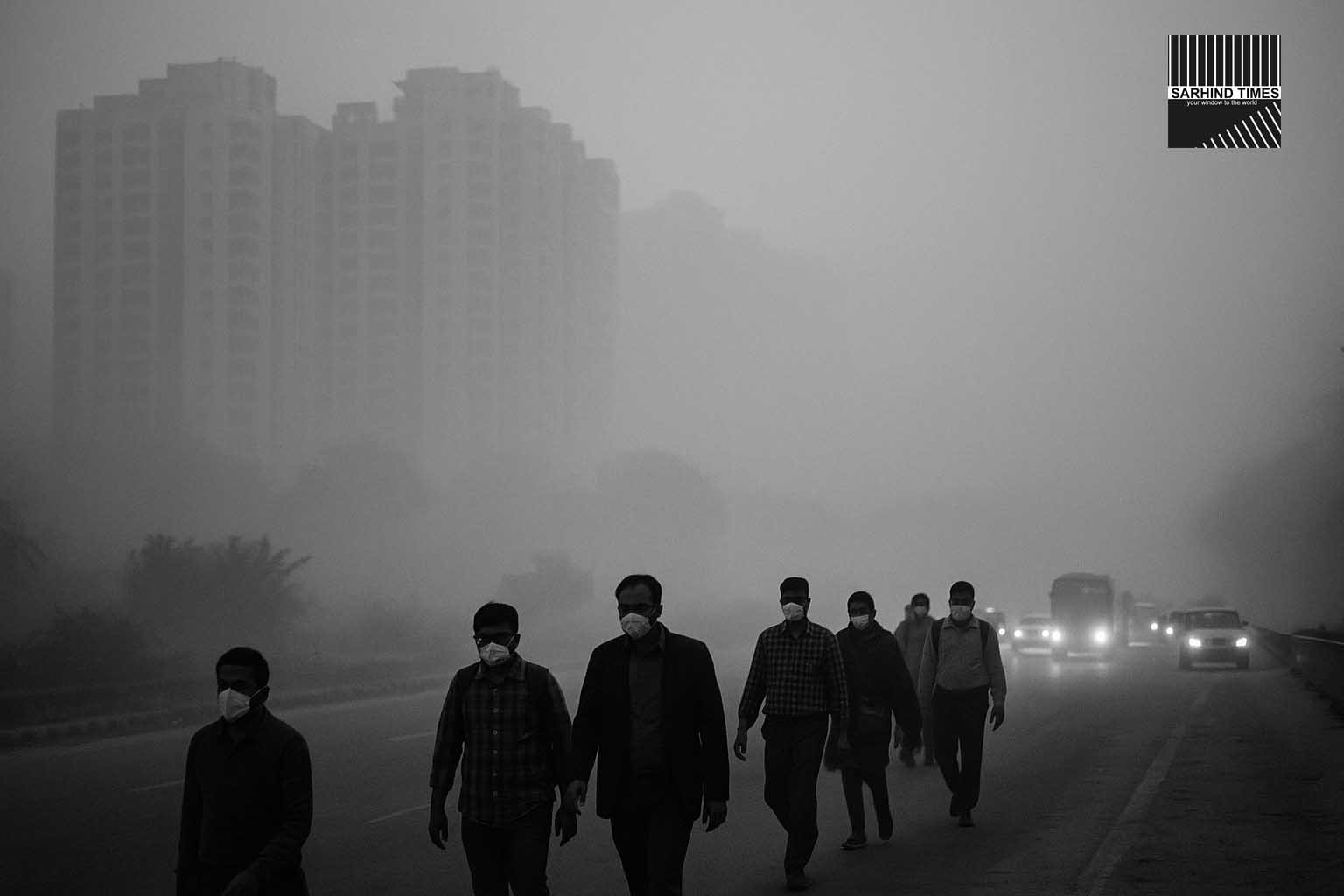
Schools shut, construction halted, vehicles restricted, and hospitals witness a surge in respiratory cases as air quality deteriorates to hazardous levels across the region.
Dateline: Gurugram | 23 November 2025
Summary: The National Capital Region (NCR) has entered one of the worst pollution phases of the year, with Delhi, Gurugram, Noida, and Faridabad all recording Air Quality Index (AQI) values in the ‘Severe’ category. Authorities have activated emergency measures, including school closures, construction bans, vehicle restrictions, and health advisories. Hospitals are reporting a spike in respiratory distress, particularly among children and the elderly.
A Toxic Blanket Over NCR: The Air Turns Hazardous
A dense, toxic smog has engulfed the entire National Capital Region, pushing pollution levels to dangerous highs and prompting authorities to trigger emergency responses under the Graded Response Action Plan (GRAP). Gurugram recorded AQI readings between 460 and 520 across multiple monitoring stations, placing it firmly in the ‘Severe’ category for the third consecutive day.
Residents woke up to a thick layer of haze that reduced visibility, caused burning eyes, and triggered coughing fits. For many, the stinging air quality felt worse than previous years, raising concerns that 2025 could mark one of the most polluted winter seasons in the region’s recent history.
Schools Shut Across Gurugram and Delhi NCR
In a decisive step to protect children from hazardous pollution levels, the Haryana and Delhi governments announced the closure of all schools up to Class 12. Online classes have been reinstated, echoing a pattern now common every winter season as pollution levels spike.
Parents, already fatigued by recurring winter closures, expressed both relief and frustration. Relief — because children are vulnerable to particulate matter exposure. Frustration — because the winter academic calendar continues to be disrupted year after year.
Many schools reported that students had complained of headaches, nausea, difficulty breathing, and watery eyes in the past two days, prompting principals to write to district administrations requesting emergency intervention.
GRAP Stage 4 Activated: Emergency Pollution Controls Rolled Out
With AQI dipping below 500 in several regions, GRAP Stage 4 — the most stringent category — has been officially activated. This triggers a series of sweeping curbs across the NCR, including:
- Total ban on construction activities except for critical government projects.
- Restriction on diesel trucks and heavy commercial vehicles except those carrying essentials.
- Closure of brick kilns, stone crushers, and hot mix plants.
- Ban on most industrial operations running on non-clean fuels.
- Advisory to work-from-home for private offices where feasible.
Gurugram authorities also announced a special joint enforcement drive involving the Municipal Corporation, Traffic Police, HSPCB, and District Task Force to crack down on dust-generating activities, illegal constructions, and waste burning.
What’s Causing the Pollution Spike?
While NCR’s winter pollution has several contributing factors, this year’s unprecedented spike has been traced to a dangerous cocktail of:
- Stubble burning across Punjab and Haryana.
- Sluggish winter winds trapping pollutants close to the surface.
- Vehicular emissions as traffic volumes increased post-festive season.
- Industrial activities and construction dust.
- Temperature inversion preventing dispersion of pollutants.
Satellite-based smoke monitoring showed large plumes of stubble-burning emissions drifting directly into NCR due to northwesterly winds — a weather pattern that historically pushes pollution spikes in late November each year.
Gurugram: A Closer Look at the City’s Pollution Hotspots
Gurugram’s AQI breaches were not uniform — several pockets recorded dangerously higher levels. The worst-hit zones included:
- Sector 51–57 belt
- MG Road and Cyberhub corridor
- New Gurugram sectors (80–95)
- Udyog Vihar industrial area
- Sohna Road – Badshahpur stretch
In these hotspots, AQI peaked above 520, making outdoor exposure unsafe even for healthy individuals. Several residents reported that stepping outside caused a metallic taste in the mouth — a characteristic of PM2.5-heavy smog.
Hospitals Overwhelmed: Surge in Respiratory & Cardiac Cases
The city’s major hospitals — Medanta, Artemis, Fortis, and Narayana — have reported a rise of nearly 30–40 percent in respiratory complaints since the pollution spike began. Emergency wards saw more walk-ins for:
- Asthma attacks
- Severe bronchitis
- Wheezing and breathlessness
- Chest tightness
- Allergic reactions
- Post-COVID lung sensitivity
Pediatricians report that children aged 3–12 are particularly vulnerable, with many experiencing throat irritation, coughing fits, and sleep disruptions.
Cardiologists have warned that high PM2.5 exposure can exacerbate heart conditions, increase blood pressure, and trigger inflammation — a combination proven to raise cardiovascular risk.
Public Health Advisory: Stay Indoors, Use N95 Masks
Authorities have issued strict advisories urging residents to:
- Avoid outdoor activity except for emergencies.
- Use N95 or FFP2 masks when stepping outside.
- Run indoor air purifiers for extended hours.
- Keep windows closed during peak smog hours (6 AM–1 PM).
- Increase hydration and avoid outdoor exercise.
For schools conducting online classes, parents have been advised to monitor children for respiratory strain and provide frequent breaks.
Transportation Disruptions: Low Visibility and Traffic Slowing Down
Visibility across major roads such as NH-48, Golf Course Road, and MG Road dropped below 150 meters in the early morning hours. Commuters reported prolonged travel times, as traffic police manually regulated flow at several key intersections.
Cab drivers experienced reduced demand as residents preferred staying home, while delivery workers reported difficulty navigating in low visibility.
Outdoor Workers at Highest Risk
Construction labourers, security guards, traffic police personnel, sanitation workers, delivery staff, and rickshaw pullers remain among the most vulnerable groups during pollution spikes. Despite advisories, not all workers have access to proper respiratory protection.
Labour unions have requested mandatory distribution of N95 masks and limited working hours until AQI stabilises.
Real Estate Sector Hit Hard by Construction Ban
With GRAP Stage 4 automatically banning construction activities, Gurugram’s booming real estate market has suffered an immediate blow. Work at residential towers, commercial projects, and road construction sites has come to a halt.
Developers estimate losses in crores if restrictions extend beyond two weeks. Many have appealed for mechanised dust-control machines and quantum-based exemptions, though authorities maintain that public health must take priority.
Economic Impact: Retail, Hospitality, and Outdoor Businesses Suffer
Pollution not only disrupts mobility but also depresses consumption patterns. Outdoor cafes saw a sharp fall in footfalls. Street vendors reported fewer customers due to poor visibility and health concerns. Fitness centres suspended outdoor boot camps and morning runs.
Meanwhile, sales of air purifiers, humidifiers, indoor plants, and N95 masks have surged across Gurugram.
Delhi Government Urges Centre for Immediate Intervention
Delhi’s leadership has requested urgent central support to tackle what they label a “public health emergency.” Authorities have called for:
- Temporary restrictions on non-essential interstate vehicular movement.
- Enhanced meteorological support to analyse smog dispersion.
- Deployment of smog towers in key hotspots.
- Coordination with neighbouring states on stubble burning reduction.
Officials emphasised that no single city can tackle pollution alone — regional coordination is essential.
Haryana Government Intensifies Enforcement in Gurugram
Haryana officials have deployed extra teams for:
- Fines on dust-generating activities.
- Checking overloaded trucks near KMP Expressway.
- Monitoring waste burning incidents in peri-urban areas.
- Ensuring diesel generator ban compliance.
Gurugram district administration released a statement urging citizens to prioritise health and cooperate with restrictions, adding that enforcement would be “strict and uncompromising.”
Residents React: Anxiety, Anger, and Exhaustion
Many residents expressed deep concern over the recurring nature of winter pollution. Social media was filled with photos of smog-covered skylines, comparisons to previous years, and calls for long-term solutions rather than seasonal emergency measures.
A number of residents in high-rise societies complained that despite indoor efforts, fine particulate matter continued to seep inside buildings, forcing them to run air purifiers continuously — increasing electricity bills and creating noise.
For families with young children or elderly parents, the stress is especially high. Some elderly residents reported headaches and dizziness simply from walking from parking areas to lifts.
Impact on Children: Rising Cases of Breathlessness and Anxiety
Pediatric clinics across Gurugram have reported a heavy influx of children experiencing recurring coughing fits, wheezing, and breathlessness. Parents are deeply alarmed as even short exposure outside school buses or during morning commuting triggered episodes of discomfort.
Doctors warn that prolonged exposure to high PM2.5 concentration can cause long-term developmental effects, including impaired lung growth, reduced immunity, and vulnerability to chronic respiratory diseases. Many parents reported behavioural changes as well — irritability, fatigue, and sleep disturbances caused by breathing discomfort.
Schools, meanwhile, are struggling to adjust academic schedules. While online classes are a solution, many children — especially younger ones — struggle with attention, eye strain, and screen fatigue. Principals have appealed for clear government policy on winter pollution protocols to reduce academic disruptions year after year.
Elderly Bear Heavy Burden: Rising Blood Pressure and Cardiac Distress
The elderly population in Gurugram is among the worst affected. Geriatric specialists have observed a rise in:
- High blood pressure episodes
- Palpitations
- Congestive heart failure exacerbation
- COPD flare-ups
- Dizziness and confusion
Air pollution has a direct impact on cardiovascular function. Toxic particles enter the bloodstream, increase inflammation, and elevate stress on the heart. This year’s smog has been particularly harsh due to higher PM2.5 density, which penetrates deep into the alveoli.
Several senior citizens have been advised complete indoor protection and round-the-clock use of home air filtration systems.
Air Quality Science: Why NCR Is a Winter Hotspot for Smog
Environmental scientists say the geographical and meteorological factors of NCR act as a smog trap each winter. Cold temperatures, weak winds, and thermal inversion create a low atmospheric boundary layer that prevents pollutants from dispersing upwards.
The region’s rapid urbanisation, construction-heavy economy, and vehicular density add local emissions that mix with external sources such as stubble smoke from neighbouring states. This year, smoke dispersion modelling indicated that nearly 30–35 percent of particulate matter in NCR originated from stubble burning peaks.
Role of Stubble Burning: A Seasonal Shockwave
The spike in farm fires in Punjab and Haryana significantly contributed to this year’s pollution crisis. Despite mechanisation subsidies, crop diversification programs, and penalties, the practice continues due to tight harvesting schedules and lack of affordable alternatives for residue disposal.
Satellite data from the last 72 hours detected thousands of active fire locations. With northwesterly winds blowing directly toward NCR, smoke plumes created an immediate surge in AQI. Experts say that unless long-term agricultural reforms are introduced, NCR will continue to experience annual pollution crises.
Gurugram’s Rapid Urbanisation: A Double-Edged Sword
Once known as a small town on Delhi’s outskirts, Gurugram has transformed into a major business hub—home to Fortune 500 companies, luxury residences, and high-rise commercial zones. But this growth comes at a cost.
Large-scale construction, heavy diesel generator usage, commercial traffic, and industrial pockets contribute significantly to the city’s pollution load. Many upcoming sectors lack green buffers or adequate tree cover, turning them into dust bowls during winter winds.
Indoor Air Quality Crisis: Homes Not Safe Either
One of the most concerning findings this year is the deterioration of indoor air quality. Many Gurugram homes recorded PM2.5 levels between 180 and 260 — classified as “Unhealthy” — even with windows closed.
Pollutants enter through ventilation gaps, lift shafts, and building cracks. High-rise buildings are especially vulnerable because PM2.5 particles remain suspended at mid-level altitudes.
Air purifiers have become a basic necessity, but experts warn that prolonged purifier usage also increases electricity consumption and may not fully eliminate health risks.
Transport Restrictions: Gurugram Traffic Police on High Alert
In response to deteriorating conditions, Gurugram Traffic Police deployed teams to enforce GRAP restrictions. Diesel commercial vehicles without essential permits are being turned away from city borders. Inspection drives are underway at:
- Kherki Daula Toll
- Shankar Chowk
- Rajiv Chowk
- IFFCO Chowk
- Gurugram–Faridabad Road
Traffic police officers themselves are facing health risks. Many officers report breathing difficulty and require frequent breaks from field duty.
Rise in Mental Health Strain: Pollution-Induced Anxiety
Psychologists across NCR say pollution is silently aggravating mental health. Many residents describe a sense of suffocation, claustrophobia, and irritability. The constant smell of smoke, grey skies, and health advisories contribute to emotional fatigue.
Children confined indoors for longer hours are experiencing restlessness. Working professionals report productivity dips due to headaches and fatigue.
Economic Ripple Effects Across NCR
Pollution’s economic cost is immense. Analysts estimate that NCR could lose hundreds of crores this month due to:
- Construction stoppages
- Decline in outdoor retail activity
- Reduced workforce mobility
- Increased healthcare expenditure
- Higher operational costs for offices using air filtration systems
GRAP Enforcement: Are Fines Working?
Despite harsh penalties, enforcement remains a challenge. Illegal construction continues in smaller pockets. Waste burning is still reported in peri-urban belts of Gurugram, Sohna, and Manesar.
Officials say manpower constraints and lack of citizen compliance are major barriers. Enforcement teams have issued thousands of challans, yet the scale of non-compliance remains high.
Citizen Responses: Complaints Surge on Pollution Portals
Gurugram residents filed thousands of complaints on platforms such as:
- HSPCB complaint portal
- Municipal Corporation helpline
- Delhi–NCR GRAP portal
- Social media tagging city officials
Most complaints relate to roadside waste burning, construction dust, and heavy vehicle pollution during night hours.
Are Air Purifiers Enough? Experts Say No
While air purifiers help reduce particulate exposure indoors, experts caution that they do not solve the root problem. Over-reliance may give a false sense of security. Without proper room sealing, constant ventilation management, and filter replacement, purifier effectiveness falls drastically.
Many households in Gurugram use basic purifiers that lack HEPA filtration, leaving them vulnerable to ultrafine particles.
Long-Term Health Risks: A Slow-Burning Public Crisis
Doctors warn that repeated winter exposure to AQI above 400 can lead to:
- Chronic asthma
- Pulmonary fibrosis
- Reduced lung capacity in children
- High blood pressure
- Increased risk of stroke
- Weakened immunity
Many individuals in NCR develop a “winter cough” that lingers for months due to recurring inflammation of the respiratory tract.
Are Air Corridors a Solution?
Environmental agencies are exploring whether artificial air corridors — using massive fans to push polluted air upward — could temporarily reduce ground-level pollution. However, experts argue that these are short-term, high-cost interventions that cannot replace long-term systemic reforms.
Technology & Innovation: Smog Guns and Real-Time Monitoring
Gurugram is deploying additional smog guns along:
- Golf Course Road
- NH-48 highway stretch
- Sector 29 market
- New Gurugram construction belts
The city will also install more real-time air quality sensors in residential societies and major roads to improve data accuracy.
Future Weather Outlook: When Will AQI Improve?
Meteorological forecasts indicate that NCR may get a slight reprieve in 3–4 days when wind speeds pick up. However, without rainfall, pollution dispersion will remain limited. Experts caution that AQI may fluctuate between “Very Poor” and “Severe” for the next two weeks.
Winter temperatures will continue to drop, increasing the likelihood of further smog accumulation.
Will Schools Reopen Soon?
Education authorities in Haryana and Delhi will review AQI trends before reopening schools. If AQI does not drop below 300 consistently, online learning may continue for another week.
Many parents support extended closures, fearing the long-term health impact on young children.
Residents Demand Accountability
Citizen groups in Gurugram are demanding:
- Stricter industrial monitoring
- Immediate action against waste burning
- Real penalties for construction violators
- Transparent data on pollution sources
- Long-term agricultural policy changes
Residents argue that annual “crisis management” is no longer enough and urgent structural reforms are needed.
Experts Recommend a Multi-Layered Strategy
Policy experts say NCR needs a permanent regional clean-air blueprint that includes:
- Rapid rural mechanisation subsidies
- Alternate crop solutions
- Cleaner public transport
- Industrial relocation from residential belts
- Increased green cover
- Year-round pollution management cells
Without these, Delhi NCR will continue to bear the burden of seasonal smog.
Conclusion: A Region Gasping for Breath
The NCR pollution emergency has once again exposed the deep-rooted environmental and governance challenges faced by India’s most urbanised region. Gurugram, Delhi, Faridabad, and Noida are grappling with an annual crisis that disrupts schooling, reduces productivity, harms public health, and weakens overall quality of life.
This year’s smog wave has been particularly severe — with a deadly mix of stubble smoke, industrial emissions, construction dust, and stagnant winter winds forming a toxic haze that refuses to lift. While emergency GRAP measures provide temporary relief, long-term systemic reforms remain the only path forward.
As winter deepens and air grows heavier, residents are left hoping for stronger winds, possible rainfall, and most importantly — policy decisions that prevent this damaging cycle from repeating every year. NCR continues to gasp for breath, waiting for solutions that go beyond temporary restrictions and reactive responses.


+ There are no comments
Add yours