
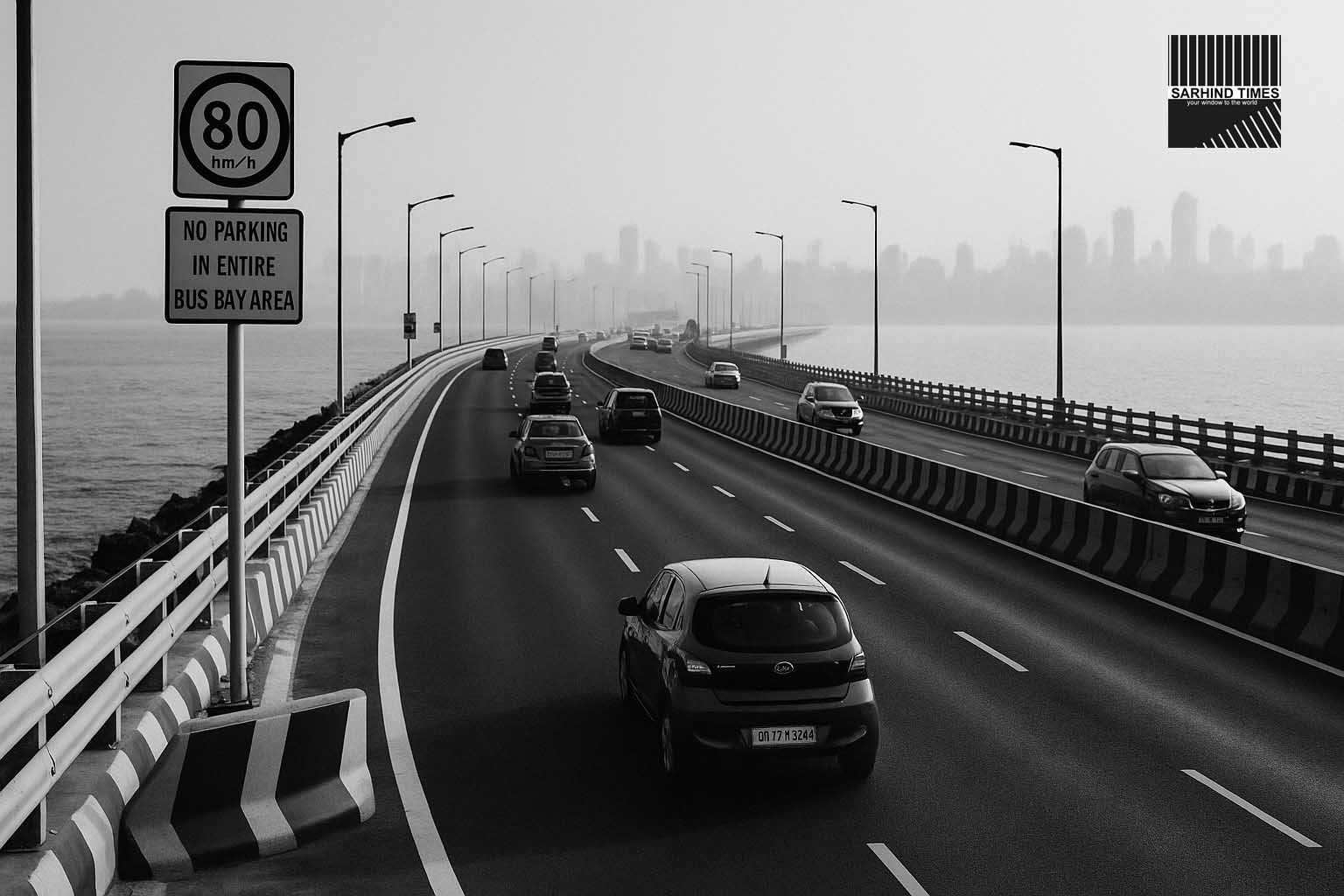
The long-awaited expansion brings major relief to commuters as Mumbai’s largest urban mobility project moves into its next operational phase.
Dateline: Mumbai | (Asia/Kolkata)
Summary: Mumbai marked a significant moment in its urban development journey as Phase-2 of the Coastal Road project officially opened to the public today, offering smoother north–south travel and dramatically reducing peak-hour commute times. The new 6.25 km stretch, connecting Worli to Marine Drive, integrates tunnels, elevated corridors, and sea-wall fortifications. Officials estimate that the route will reduce daily congestion, shorten travel times by up to 40 minutes, and ease pressure on key arterial routes such as Peddar Road and Dr E. Moses Road. The event is being hailed as one of Mumbai’s largest mobility upgrades in a decade.
1. A landmark day for Mumbai’s transport infrastructure
Mumbai’s iconic shoreline witnessed a major transformation as Phase-2 of the Coastal Road project opened to commuters. Designed to ease traffic snarls across the city’s busiest corridors, the new stretch is expected to significantly alter everyday travel patterns. For millions of office-goers, students, and essential-service workers who spend hours navigating the city’s narrow arterial roads, the opening comes as a major relief.
The Coastal Road, which has been constructed in phases over several years, is part of a larger plan to integrate sea-facing expressways with inland transport networks. Phase-2 features multiple entry and exit ramps, dedicated safety systems, high-capacity lighting, and high-grade asphalt technology to ensure durability against heavy monsoon wear.
2. What Phase-2 includes: a closer look at the design
The newly opened segment incorporates several engineering innovations that contribute to smoother traffic flow:
- Sea-side vehicle lanes: Built along reclaimed land and reinforced with sea walls.
- Underground tunnels: Allow uninterrupted travel between Worli and Marine Drive.
- Three-lane high-speed corridor: Designed for optimized vehicular throughput.
- Emergency bays: Installed at regular intervals to enhance safety.
- LED intelligent lighting: Offers power-efficient illumination for night-time commutes.
The combination of engineering design and landscape integration has given the project a distinctive aesthetic that blends infrastructure with Mumbai’s coastline.
3. Commuters experience major time savings
The biggest highlight of the new phase is the significant reduction in travel time. Before the Coastal Road expansion, peak-hour traffic between central and south Mumbai could take up to 90 minutes due to bottlenecks near Haji Ali, Mahalaxmi, and Peddar Road.
With Phase-2 now operational, officials report an average travel-time cut of 30–40 minutes, making north–south movement substantially more predictable.
Drivers who used the Coastal Road this morning described the experience as “smooth”, “clutter-free”, and “a major stress reliever” compared to the traditionally congested surface roads.
4. Environmental and coastal engineering considerations
The project faced intense environmental scrutiny during its planning and execution stages. To ensure long-term coastal sustainability, engineers incorporated a series of protective measures:
- Wave-dissipation blocks to reduce erosion impact.
- Specialised drainage systems to handle high monsoon rainfall.
- Reinforced sea walls designed to withstand rising tide patterns.
- Native vegetation planted across reclaimed areas to stabilise soil.
Authorities claim the new infrastructure has been constructed using environmentally sensitive technologies while complying with mandated regulatory frameworks.
5. How Phase-2 affects major traffic corridors
The Coastal Road is expected to ease pressure on several overloaded routes:
- Worli Sea Face
- Peddar Road
- Mahalaxmi Junction
- Kemps Corner
- Dr E. Moses Road
Traffic experts believe that commuters who previously avoided certain corridors due to heavy congestion may now shift to the newly opened expressway, balancing city-wide traffic distribution.
6. Public reaction: a mix of excitement and caution
The opening generated significant buzz across social media and local networks, with thousands of Mumbaikars sharing photos of the new roadway, scenic views, and vehicle flow. Many residents expressed optimism that the Coastal Road would finally provide relief after decades of infrastructure challenges.
However, some residents remain cautious, noting that long-term success will depend on consistent road maintenance, traffic discipline, and enforcement against overspeeding.
Pedestrian safety advocates also emphasized the need for well-designed walking access around entry points.
7. The engineering story behind the project
Phase-2 involved complex marine engineering, requiring precise modelling of tidal patterns, long-term wave impacts, and soil behaviour. Several international consultants collaborated with local engineers to construct reinforced foundations capable of supporting multi-lane traffic.
Officials highlighted that one of the most challenging aspects of construction was tunnelling beneath coastal rock formations and densely populated residential areas without disturbing surface utilities.
The integrated design ensures that tunnels remain secure, well-lit, and protected from water seepage—an especially critical requirement for Mumbai’s monsoon conditions.
8. Economic benefits for Mumbai
Infrastructure analysts note that Phase-2 will create significant economic opportunities by:
- Improving access to South Mumbai’s commercial districts
- Reducing logistical delays for service and delivery operations
- Boosting real estate value in adjacent regions
- Encouraging tourism along new sea-facing corridors
- Enhancing connectivity for corporate offices in Worli, Lower Parel, and Nariman Point
Reduced travel time also translates into higher productivity for working professionals across Mumbai’s corporate and financial sectors.
9. Integration with future mobility corridors
The Coastal Road is designed to integrate seamlessly with several other major infrastructure projects:
- Worli–Sewri Connector
- MTHL (Mumbai Trans Harbour Link)
- Mumbai Metro Lines 3, 4, and 6
- Bandra–Worli Sea Link expansion concepts
Once fully functional, Mumbai’s mobility grid will connect inland metro lines with sea-facing expressways, reducing travel friction across the entire metropolitan region.
10. Policy and governance angle
The Brihanmumbai Municipal Corporation (BMC) has treated the Coastal Road as a signature project, placing it among the city’s largest budget allocations in recent years. Public–private coordination, contractor performance reviews, and multi-agency supervision played essential roles in delivering the Phase-2 segment.
City planners say the project aligns with Mumbai’s long-term development vision of creating high-capacity transport corridors to match population growth and economic demand.
11. Is the project future-proof?
Given the accelerating impacts of climate change and rising sea levels, the Coastal Road’s design includes adaptive engineering features to manage future environmental challenges.
Experts point out that continuous maintenance and periodic reinforcement will be necessary to ensure structural integrity. But the project’s integration of sea-resistant materials and dynamic drainage systems gives it strong resilience potential.
12. What commuters should expect in coming weeks
Authorities have urged commuters to follow lane discipline and adhere to posted speed limits while the new corridor stabilises. The next few weeks will involve:
- Traffic flow monitoring through CCTV and sensors
- Adjustment of signal timings at exit points
- Deployment of additional traffic personnel
- Feedback collection from commuters
- Minor tweaks to ramp access and signage
Officials expect the route to reach stable traffic patterns within a month.
13. Looking ahead: what Phase-3 will bring
The next phase of the Coastal Road aims to extend connectivity toward northern suburbs, potentially linking with the Western Express Highway and Metro lines. Early discussions suggest expansions may include:
- new underpasses
- additional sea-facing corridors
- cycle and pedestrian pathways
- green recreational zones
If executed well, the full Coastal Road network could become one of India’s most advanced coastal mobility systems.
14. A transformative milestone for Mumbai
With Phase-2 open, Mumbai enters a new era of modern urban transport. For decades, the city’s residents have coped with some of the world’s densest traffic conditions. The Coastal Road—once a controversial blueprint—has now become a functioning reality, offering smoother travel, reduced delays, and a rejuvenated daily commute for millions.
The project underscores the city’s capability to undertake complex megaprojects despite environmental constraints, political debates, and engineering challenges. As Phase-2 begins its operational life, Mumbai’s broader transport future looks more connected, efficient, and adaptable to the needs of a growing metropolis.



+ There are no comments
Add yours