
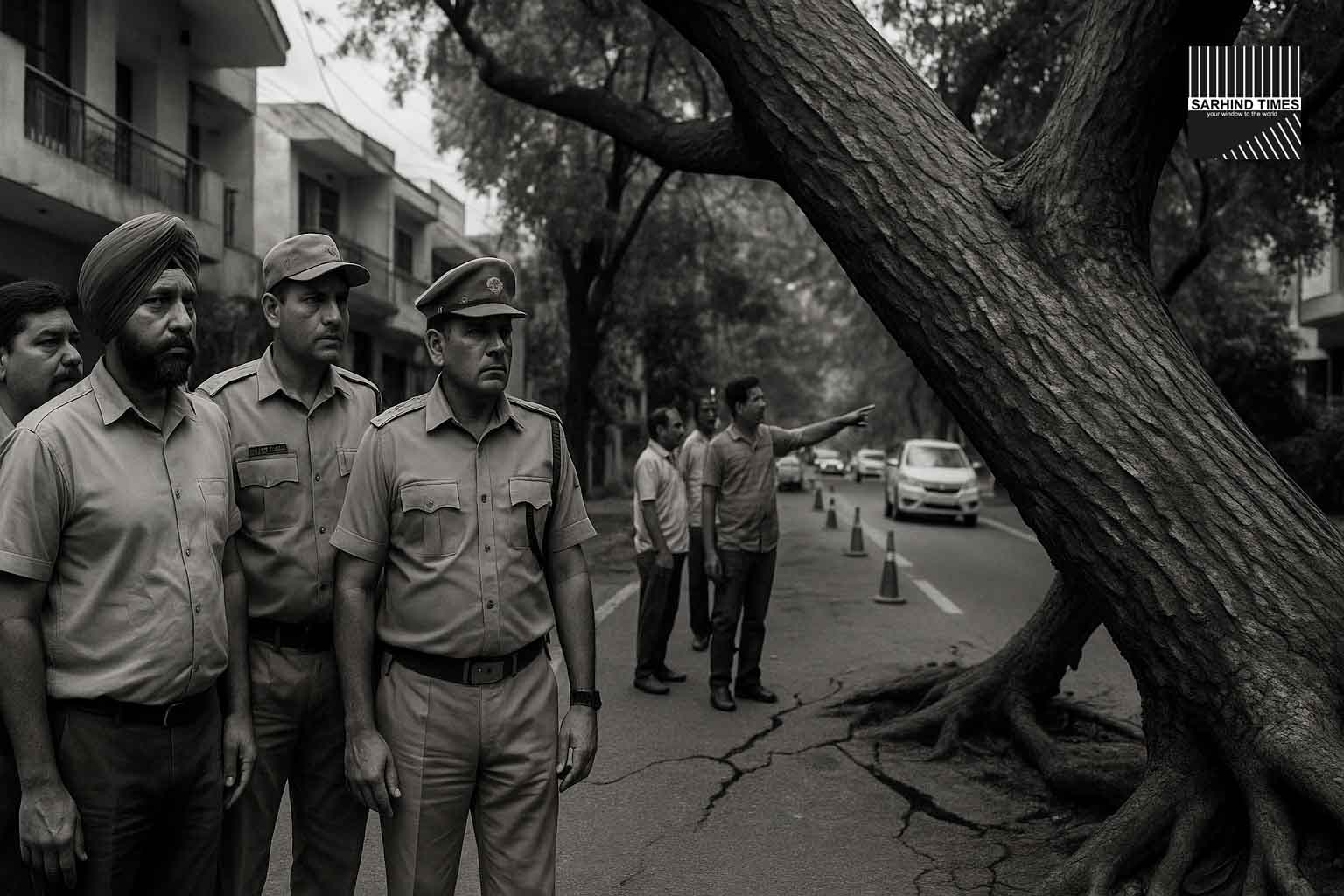
Mohali Municipal Corporation has initiated a campaign to identify dead or hazardous trees and remove or remediate them. The drive includes forming special committees and responding to citizen reports to ensure safety.
Introduction:
Urban greenery is often considered the lungs of a city, but when not maintained properly, it can sometimes become a risk to lives and property. Mohali, known for its green belts and planned urban zones, is now facing a challenge: aging, diseased, and storm-vulnerable trees that pose dangers to public safety. Responding to multiple complaints and recent storm-related incidents, the Mohali Municipal Corporation (MC) has launched a comprehensive citywide drive to map, classify, and remove dead or hazardous trees.
This proactive step is being hailed as an essential intervention for both public safety and sustainable urban development, setting a precedent for other cities across Punjab and beyond.
Why This Initiative Matters:
Trees, especially mature ones, are critical for maintaining ecological balance, reducing air pollution, and offering shade in rapidly urbanising regions like Mohali. However, when left unmonitored, some trees become structurally weak, infected by disease, or dangerously tilted due to root damage. These pose real threats during heavy rains, storms, or even on calm days, endangering pedestrians, motorists, and nearby property.
Recent incidents in Mohali, where trees collapsed onto cars, blocked traffic, and even damaged residential walls, highlighted the urgency of civic action. The MC’s campaign reflects a growing recognition that urban forestry requires both conservation and regular risk audits.
Structure of the Drive:
Mayor Amarjit Singh Jeeti Sidhu has announced the formation of a multi-stakeholder committee comprising:
- Municipal councillors to ensure political accountability
- Forest officials to provide technical expertise
- Resident Welfare Associations (RWAs) for community representation
- Environmentalists to ensure ecological sensitivity
The committee will oversee mapping, risk categorisation, and final approvals for removal or remediation.
Focus Areas:
- Phase IV and adjoining residential belts, which have dense tree coverage
- Traffic-heavy intersections and arterial roads, where falling trees can cause accidents
- School and hospital vicinities, prioritising safety for vulnerable groups
Process of Identification and Removal:
The campaign follows a systematic approach:
- Tree Audit & Mapping: Teams will conduct surveys to classify trees into categories: healthy, diseased, dead, or dangerous.
- Public Reporting: Citizens can report unsafe trees through the MC helpline and upcoming mobile app integration.
- Expert Evaluation: Forest officers and environmental experts will recommend whether a tree should be pruned, supported, or removed.
- Clearance & Approval: The committee will streamline approvals, especially in cases requiring National Green Tribunal (NGT) clearance.
- Replacement with Native Species: Wherever possible, removed trees will be replaced with native, storm-resistant saplings to maintain ecological balance.
Public Safety First:
Mohali has seen several cases of tree collapses during seasonal storms. In July this year, a fully-grown tree fell near Phase IV market, damaging three cars and partially blocking the main road. Fortunately, no injuries were reported, but the incident raised alarms among residents.
Civic authorities emphasise that the goal is not to reduce the city’s green cover but to manage it more responsibly. “Every tree has a life cycle. Our priority is to prevent accidents while also ensuring long-term greenery,” said Mayor Sidhu.
Environmental Concerns:
Environmentalists have cautiously welcomed the initiative, but with a word of caution. Dr. Nisha Sharma, an urban ecologist, told:
“Tree removal must never be a blanket exercise. Each case needs careful scrutiny. While dead or structurally unsound trees must go, authorities should also consider soil management, proper pruning, and support mechanisms for semi-weak trees.”
The MC has assured that native and resilient species like Neem, Jamun, and Peepal will be replanted wherever feasible, avoiding fast-growing but weak-rooted exotic species that often fail under extreme weather.
The Role of Climate Change:
Experts say the campaign must be understood in the broader context of changing weather patterns. Increased storm intensity and irregular rainfall have made urban trees more vulnerable. Root zones often suffer from over-concretisation, reducing soil breathability and water absorption, which weakens trees over time.
Prof. Harpal Singh from Punjab Agricultural University noted:
“Urban planning has to adapt to climate realities. Tree audits and soil rejuvenation should become routine, not crisis-driven actions.”
Citizen Participation:
One of the most innovative aspects of the campaign is citizen-driven reporting. Residents can now flag trees they consider dangerous, either via helpline numbers or through RWAs. These reports will then be verified by expert teams.
Local resident Rajinder Kaur from Phase V shared her view:
“A huge tree near our house leans dangerously after every rain. We have complained before but action was slow. If this new system really works, it will be a big relief for families like ours.”
Administrative Hurdles:
One of the persistent challenges has been clearance from the National Green Tribunal (NGT). Many tree-cutting requests in the past remained pending due to procedural delays. The MC now plans to streamline documentation and prioritise cases flagged as urgent by the committee.
Officials also hinted at a proposal for fast-track NGT approvals in urban safety cases, a demand that may soon be raised formally with the Punjab government.
Balancing Ecology and Safety:
The Mohali MC drive reflects a wider urban dilemma across India: How do we protect people while also protecting the environment?
Critics often fear that tree removal could lead to indiscriminate felling. However, authorities are keen to stress that the net green cover will remain stable, thanks to replantation efforts. In fact, the MC is considering introducing penalties for developers or contractors who fail to replace trees they remove for construction.
Case Studies from Other Cities:
Similar initiatives in Delhi, Bengaluru, and Chandigarh offer lessons:
- Delhi: Regular tree audits along flyovers and metro routes helped reduce accident-prone collapses.
- Bengaluru: Citizen reporting apps became successful but faced challenges with follow-up action.
- Chandigarh: Focused on root-zone aeration and pruning instead of removals, ensuring long-term survival of heritage trees.
Mohali’s plan seems to blend these approaches, aiming for both speed and sustainability.
Future Vision:
The MC is considering a long-term Urban Forestry Plan, which may include:
- Annual tree health audits
- Smart sensors for heritage trees to monitor stability
- Soil de-compaction drives around root zones
- Expansion of native nurseries to supply saplings
- School-level programs for tree adoption and care
Mayor Sidhu emphasised:
“This is not a one-time drive. We are laying the foundation for a permanent system where tree safety and tree growth go hand-in-hand.”
Closing Thought:
The Mohali tree audit campaign is a reminder that urban greenery requires active stewardship. Trees are indispensable to urban life, but safety cannot be compromised. By combining expert input, citizen participation, and environmental responsibility, Mohali has a chance to become a model city for urban forestry management.
If implemented effectively, this drive will not only prevent accidents but also nurture a healthier, greener, and safer Mohali for generations to come.
#Mohali #UrbanSafety #Trees #Environment #CivicIssues #PublicSafety #GreenMohali #ClimateResilience


+ There are no comments
Add yours