
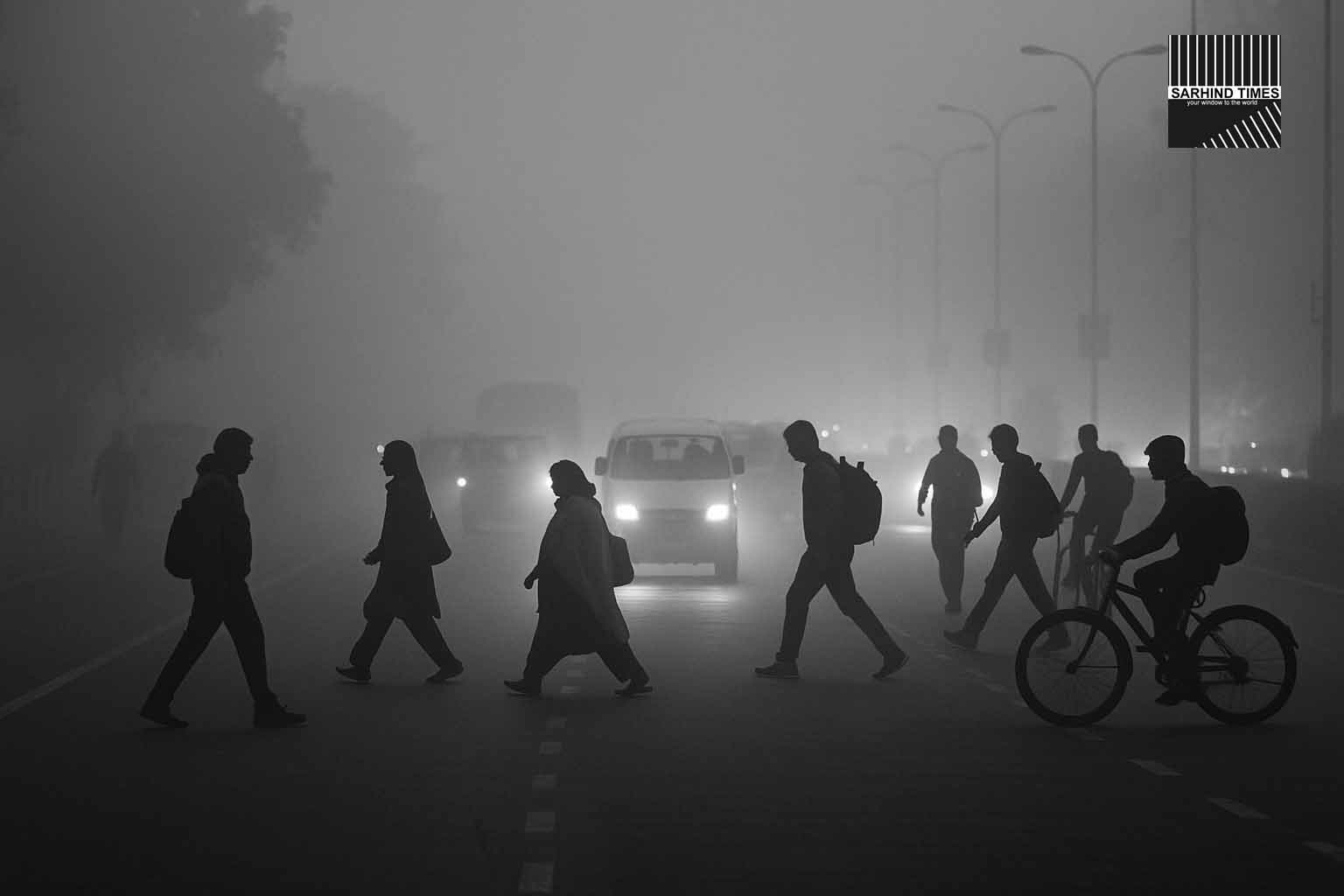
Severe pollution levels return to hazardous territory, forcing schools to adjust schedules, hospitals to issue respiratory advisories, and authorities to consider emergency restrictions
Dateline: New Delhi | 23 November 2025
Summary: Persistent smog and stagnating winds pushed air quality in Delhi-NCR to hazardous levels again this week, reigniting public health concerns. Authorities reported spikes in PM2.5 concentrations across major localities, prompting warnings from doctors, travel advisories, and renewed questions about the long-term effectiveness of pollution-control policies. The crisis arrives earlier than expected and shows signs of intensifying.
Delhi-NCR Chokes Under Dense Winter Smog
As temperatures dropped and wind speeds weakened, a thick blanket of toxic smog settled over Delhi-NCR, pushing Air Quality Index readings into the “severe” category across several monitoring stations. Visibility dropped sharply on key routes, including the Delhi-Gurugram Expressway, Ring Road, and Noida Link routes. The familiar winter haze — a recurrent, long-standing environmental emergency — has once again put millions of residents at risk.
In several parts of the capital, PM2.5 levels crossed 450 micrograms per cubic meter, far exceeding safe limits. Environmental experts warn that the current conditions reflect a dangerous accumulation of pollutants trapped close to the surface due to temperature inversion — a meteorological phenomenon that prevents the upward dispersion of particles.
Health Experts Issue Urgent Warnings
Hospitals across the region have confirmed a steep surge in respiratory complaints. Doctors reported a jump in asthma attacks, bronchitis cases, and severe irritation in the eyes and throat among both adults and children. Elderly patients and those with existing cardiovascular conditions have been especially vulnerable.
Several medical institutes issued public advisories urging residents to avoid early morning walks, limit outdoor exposure, and use N95-grade masks when stepping outside. Pediatric departments noted a worrying rise in breathing difficulties among children.
Schools and Workplaces Respond
Private schools in Delhi, Gurugram, and Noida have shifted classes partially online or delayed outdoor activities. Many institutions reported requesting air purifiers in classrooms and administrative areas. Some offices have allowed employees to work from home, especially those with respiratory issues.
While government schools remain open, officials say they are monitoring the situation and ready to adjust schedules if conditions worsen.
Why the Pollution Spiked So Early
Environmental analysts highlight three primary reasons for the sudden spike:
1. Stubble Burning – Satellite-based fire notifications in Punjab and Haryana have increased steadily over the past week. Although the numbers are lower than last year, current wind patterns have pushed plumes directly toward Delhi-NCR.
2. Vehicular Emissions – The region has seen a marked rise in daily traffic, especially during the festival and wedding season. Slow-moving traffic and extended idling contribute heavily to the accumulation of PM2.5 and NOx emissions.
3. Weather Conditions – A sudden drop in evening temperatures combined with extremely low wind speeds has trapped pollutants close to the ground, worsening night-time smog layers.
What the Data Shows
According to pollution-monitoring dashboards, the worst-hit areas included Anand Vihar, Jahangirpuri, RK Puram, and Gurugram’s Sector 51. AQI readings fluctuated between 430 and 490 — levels considered highly unsafe even for brief exposure.
Gurugram, which often fares better due to open landscapes and higher wind speeds, recorded its highest PM2.5 concentration of the season. Several Gurugram neighborhoods saw AQI readings above 400 for hours.
Traffic Disruptions and Low Visibility
Dense smog triggered early morning disruptions on major roads, slowing traffic across the Delhi-Faridabad border, the Noida Expressway, and the Delhi-Gurugram corridor. Commuters reported difficulty spotting road markers, and several minor collisions were reported.
Ride-hailing services saw a spike in fares during peak hours due to higher demand and cautious driving speeds.
Government Response and Possible Restrictions
Authorities are considering emergency implementation of air pollution control measures under the Graded Response Action Plan (GRAP). These may include:
- Restrictions on older vehicles
- Curbs on construction activities
- Closure of stone crushers and hot-mix plants
- Additional water sprinkling in industrial areas
- Odd-even vehicle policies if conditions persist
Officials from the Commission for Air Quality Management held a late-night meeting to assess the worsening AQI and prepare contingency measures.
Public Frustration Rising
Residents expressed anger and fatigue as pollution levels worsened yet again. Many questioned why conditions have not improved despite years of policy discussions, technological interventions, and seasonal action plans.
Social media saw a flood of posts from citizens urging authorities to ensure strict enforcement against crop burning and polluting industries.
Experts Call for Long-Term Structural Fixes
Environmental scientists argue that short-term emergency measures will provide limited relief unless deeper structural steps are taken. Experts recommend:
- Incentivizing farmers to adopt non-burning crop residue management
- Scaling up electric vehicle infrastructure
- Phasing out diesel generators across urban areas
- Installing large-scale air filtration systems in dense public zones
- Increasing penalties for illegal industrial emissions
Many experts also argue that India’s urban planning still lacks the green buffer zones required to absorb pollution during peak winter months.
Economic Costs of the Smog
Business leaders estimate that winter smog results in economic losses across manufacturing, logistics, aviation, and retail sectors. Flight disruptions, productivity losses due to illness, and increased operational expenses such as air-filtration systems contribute to the annual economic burden.
For small businesses, especially street vendors and daily wage workers, toxic air represents not just a health hazard but a financial one, as footfall decreases and working conditions worsen.
Air Quality in Neighbouring States Also Declines
Pollution levels spiked across Haryana, Punjab, Rajasthan, and Uttar Pradesh. Cities such as Faridabad, Ghaziabad, and Gurugram saw AQI levels comparable to Delhi’s. Additionally, agricultural zones reported difficulty managing field activities as visibility dropped.
Children Among the Worst Affected
Pediatricians repeatedly emphasize that children face disproportionate risks due to higher respiratory rates and developing lungs. Short-term exposure can cause persistent cough, wheezing, and long-term asthma-like symptoms.
Schools across Delhi-NCR have requested parents to ensure children use masks and avoid spending prolonged time outdoors.
Looking Forward: No Immediate Relief Expected
Meteorological forecasts suggest the situation may worsen over the next three days due to stagnant atmospheric conditions. Winds from the northwest, expected by late next week, may provide temporary relief by dispersing the particulate load.
Until then, authorities advise residents to stay indoors, use HEPA-level purifiers, and follow health guidelines strictly.
The Larger Climate Context
The annual winter smog crisis reflects a broader challenge linked to climate change, urban expansion, and inadequate enforcement. India’s rapid urbanization continues to outpace environmental infrastructure, making pollution management increasingly difficult.
Experts insist that addressing the root causes — crop residue management, clean energy transitions, industrial regulation, and mass transit expansion — must remain policy priorities for the coming decade.
A Season of Familiar Struggle
For Delhi-NCR residents, the return of severe smog serves as yet another reminder of an environmental crisis that has turned into a predictable annual ordeal. Despite repeated warnings, policy debates, and emergency actions, the region remains vulnerable to dangerous air quality spikes every winter — affecting health, economy, mobility, and quality of life for millions.


+ There are no comments
Add yours