
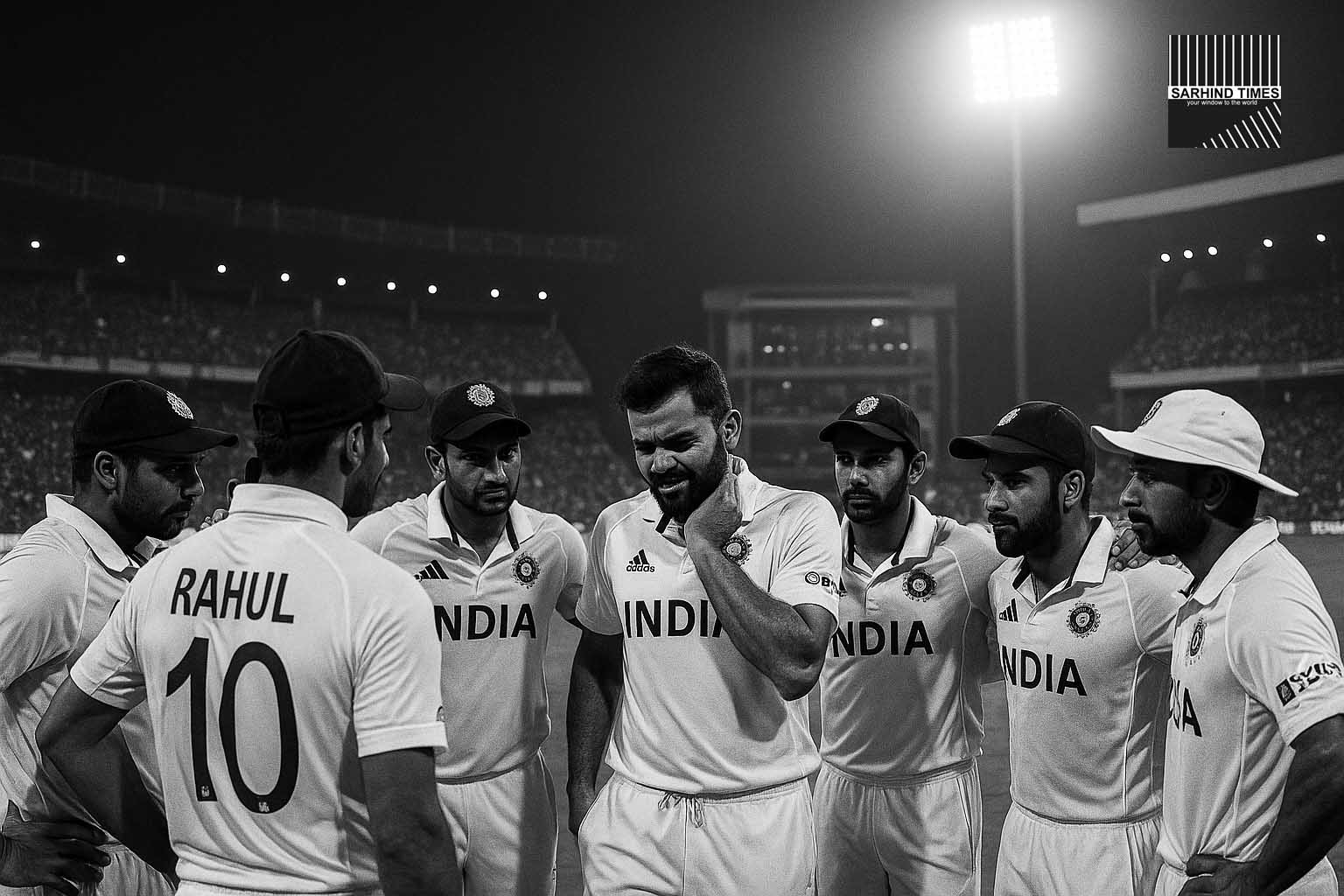
Injury to young leader forces squad reshuffle ahead of crucial second Test in Guwahati
Dateline: New Delhi | 21 November 2025, Asia/Kolkata
Summary: India’s preparations for the second Test against South Africa national cricket team have suffered a blow with captain Shubman Gill ruled out of the must-win match owing to a neck injury. With the series hanging in the balance and the team under pressure to respond after the opening defeat, senior figures and selectors must act swiftly to steady the ship.
The injury and its timing
India’s cricketing hopes took a sharp turn when Shubman Gill, who has skipper-cyclic responsibilities across formats and has been central to the Indian setup in 2025, was officially ruled out of the second Test against South Africa in Guwahati owing to a neck spasm. Gill had already missed the second innings of the opening Test in Kolkata. The injury was reported during practice and while travelling with the squad, prompting the team’s management to withdraw him from the upcoming match.
Given that this is a crucial series—South Africa being the reigning World Test champions—the timing could not be worse. India needs to salvage pride and regain momentum; the absence of the leader undermines both morale and tactical continuity.
The impact on team leadership and strategy
Gill’s dual role—as a frontline batter and now Test captain—makes his absence even more significant. Losing a player who contributes both runs and leadership complicates the selection matrix and on-field command structure. The Indian team now must identify a stand-in captain and rejig batting order, potentially affecting team dynamics.
Former cricketers and commentators have flagged how the uncertainty at the top impacts planning: whether the incoming leader commands the dressing-room, how stable the batting top-order will remain, and how the bowlers will adjust to the missing strategic input from the captain. In Test cricket, leadership is not only about on-field tactics but holding the unit together over five days; India’s management must respond quickly.
Work-load and fitness questions resurging
Gill’s injury has also reignited debate around workload management within Indian cricket. He has been the only frontline batter to play across all formats, alongside leading a domestic franchise in the IPL, thereby logging high cricketing hours this year. A leading former cricketer, Aakash Chopra, publicly advised Gill to take a break from the IPL to allow recovery.
The intersection of multiple formats, leadership responsibilities, and travel demands increases susceptibility to injury. India’s cricket-board will now have to weigh short-term imperatives against long-term player health. Failure to manage this correctly can lead to further episodes and compromise key series.
South Africa’s challenge and India’s adjustment task
South Africa’s bowling attack is fresh and aggressive, and they enter the second Test buoyed by their opening win. India, on the other hand, must reset quickly. The selection reshuffle could involve bringing in a fresh batter or promoting an existing one, introducing an alternate captain and reframing the game-plan.
Indian coaches must also consider how this absence will affect field placings, bowling changes, and mid-innings decision-making. The visitors may look to press hard on the weakness caused by the leadership gap. For India, making minimal disruption while retaining structure and confidence is essential.
Selection and substitution dilemmas
With Gill unavailable, the team management must decide whether to retain his batting spot with a specialist batter or hold his place in the XI and pick an extra bowler. The vice-captaincy could go to a senior member, but it remains unclear if that person will carry full tactical autonomy.
Further complicating matters is the impact on running changeovers, DRS calls, field rotations and the batting order itself. Tests are five-day marathons; abrupt changes often result in lower predictability. India’s bench strength—though growing—will be tested under pressure.
Historical precedence and how India has coped
India has lost key players mid-series before—but rarely the captain and across formats together. The management’s ability to respond will be judged harshly. Past replacements have succeeded, but only when leadership and support structures were strong.
Given that India has expressed its ambition to become a dominant Test side again, such setbacks are a reminder of the fragility of even top teams. How India handles this will shape its Test trajectory going into 2026.
Psychological and media-pressure dimensions
The media spotlight will now intensify on India’s senior players to fill the leadership void. With expectations high and the nation following closely, any failure will attract criticism. Players must manage not only the opposition but the weight of expectation.
At the same time, this provides an opportunity for a new leader to emerge—someone who can galvanise the team, bring fresh energy and restore balance. For younger players, this is a crucial moment of stepping-up.
Possible scenarios and outcomes of the second Test
Several scenarios now unfold for India:
- Successful adaptation: The replacement steps in seamlessly, India adjusts tactics and wins—reaffirming depth of squad and leadership pipeline.
- Struggle to adjust: The lack of Gill destabilises batting, tactical rotation becomes weaker, South Africa capitalises and the series slips away.
- Temporary setbacks but salvageable: India loses but remains competitive, sends a strong message, and recovers in subsequent matches.
The spectrum of results is wide. For fans and analysts, the key question is whether India will be proactive rather than reactive.
Long-term implications for Indian cricket
This incident reinforces several take-aways for the Indian cricket ecosystem:
– Leadership succession must be managed proactively; relying on a single individual across formats is risky.
– Workload management systems and rotation policies must be robust, especially for key players.
– Bench strength, seniority and depth will be more critical than ever as the cricket calendar becomes more congested.
– The management and board must balance short-term ambition with long-term player fitness and availability.
As Indian cricket positions itself for a heavier Test schedule and global competitiveness, such structural adjustments will separate elite sides from merely good ones.
Conclusion
The ruling out of Shubman Gill from the second Test against South Africa is a severe blow—but not a death-knell. For India to succeed in its objectives, the response matters more than the setback. The ability to reorganise quickly, instil confidence in the replacement leadership, and maintain performance under pressure will determine whether this moment becomes a crisis or a catalyst.
As the cricketing world watches, India’s next move will speak volumes about its maturity, depth and capacity to handle adversity at the top level.



+ There are no comments
Add yours