
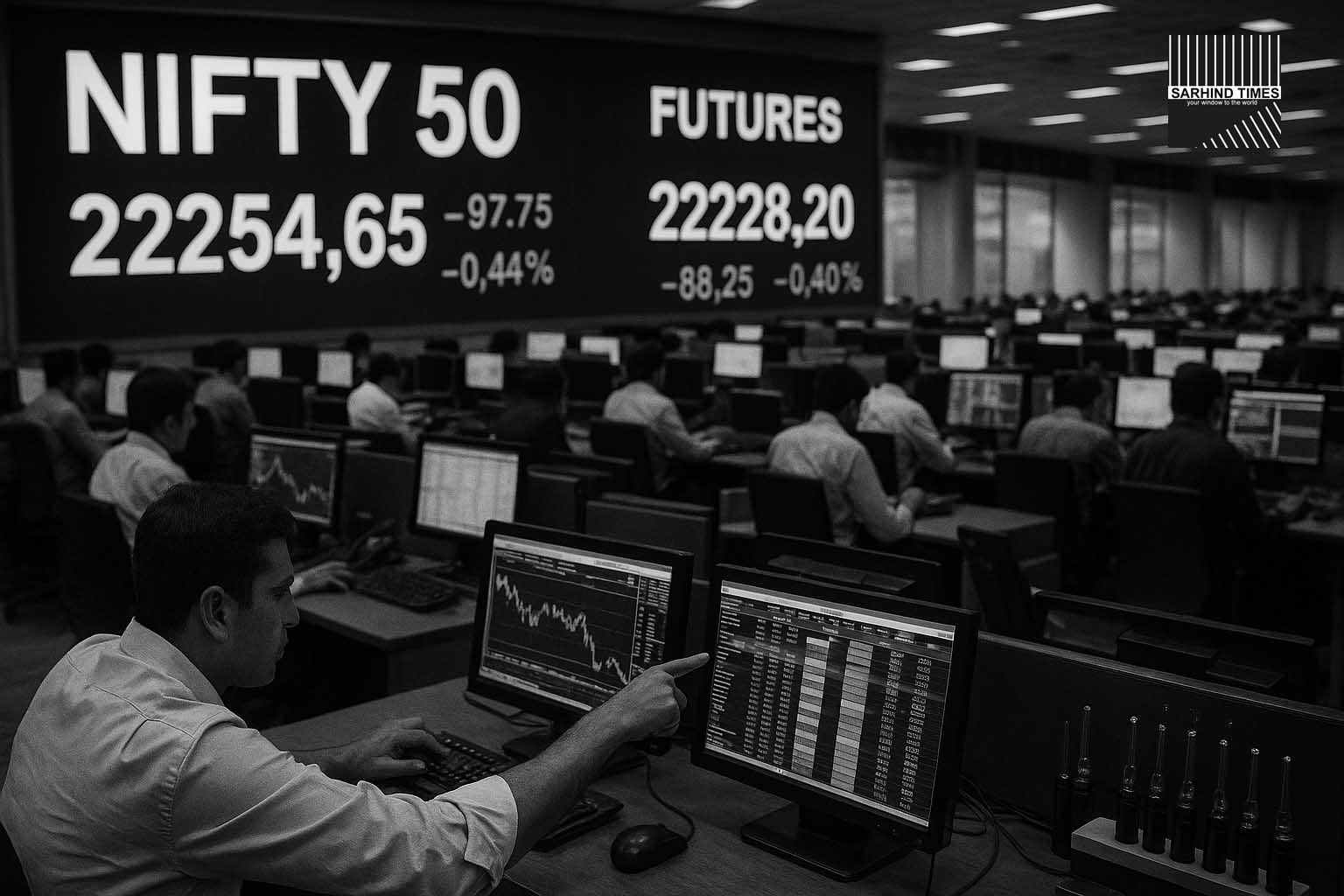
Robust primary deals and elevated futures hint at renewed investor confidence while macro backdrop remains cautious
Dateline: New Delhi | 01 November 2025
Summary: With over ₹76,000 crore of public offerings lined up in November and futures contracts trading at a healthy premium, India’s equity markets are showing signs of renewed vigour. Yet beneath the surface, structural challenges—earnings softness, global volatility and domestic macro headwinds—mean that the bullish momentum remains tempered by caution.
Primary market booms while secondary markets tread carefully
India’s capital-market ecosystem is entering a busy phase. According to industry trackers, the primary segment is expected to raise more than **₹76,000 crore** through initial public offerings (IPOs) and follow-on public issues during November alone. Notable among such upcoming listings are a sizeable fintech/consumer-tech company followed by other large-ticket names.
This momentum reflects strong retail interest, ample domestic liquidity and a broadening base of issuers looking to tap the public markets before the year-end. Observers highlight that the deal-pipeline demonstrates confidence in the Indian growth story, even as global headwinds remain in view.
At the same time, the secondary market (i.e., listed stocks) has displayed more measured behaviour. Benchmarks have climbed from earlier troughs but remain vulnerable to earnings misses and external shocks. The _Nifty 50_ futures market trading at a premium (around 185 points above cash level) is being interpreted as a forward-looking signal of optimism—but one which is not without caveats. Because premium levels often reflect anticipated flows or positioning, they may equally presage a sharp correction if macro data disappoints. The premium reinforces the narrative that participants are wagering on an upward move ahead of the near-term catalysts.
What sets the current period apart is the confluence of three factors: strong supply of new-issue offerings, favourable domestic liquidity conditions (thanks to retail and institutional participation) and a backdrop of structural growth expectations for India. But while the primary wave is vigorous, delivering returns for listed stocks may remain dependent on broader macro-earnings calibration, foreign fund flows and global risk appetite.
Macro backdrop: growth remains solid but not without risk
India’s economic growth trajectory continues to command attention. Independent forecasts suggest real GDP growth in the current fiscal year could range between **6.7 %–6.9 %**, assuming supportive policies and stable external environment. Amid these positive views, analysts caution that risks across the inflation-interest-rate complicated path, evolving global trade tensions and global demand softness could weigh on corporate profits and investor sentiment.
In the equities context, what matters is not just the top-line growth of the economy but corporate-earnings momentum, margin pressures, cost inflation and export demand. The secondary market will increasingly pick winners from the broad growth backdrop—but the broad market may yet see dispersion and selective rallies rather than uniform strength.
In short: while the primary-market boom reflects confidence and heavy activity, equity markets must still navigate uneven execution, earnings-cycle uncertainty and global variable flows.
Futures premium: a signal of positioning and expectations
The premium in Nifty futures is significant. With the futures contract closing at approx. 25,907 versus the cash index at 25,722, that premium of roughly 185 points indicates traders are pricing ahead for upside. Such a premium often results when traders expect the market to open higher, but it also reflects carry costs, expected dividends and cost of funds.
Importantly, a sustained premium suggests an upbeat near/medium-term view—but it also raises the risk-of a “buy-the-rumour, sell-the-fact” scenario if expected catalysts don’t deliver. Market participants should keep in mind the interplay between futures positioning, spot liquidity and regulatory activity (such as options settlement, margin changes, expiry events).
In this environment, while the futures premium suggests optimism, prudent participants will guard against liquidity squeezes, rollover risks and sudden reversals triggered by overseas sell-offs or regulatory surprises.
Retail participation, domestic flows and liquidity dynamics
One of the enduring shifts in India’s markets over recent years has been the escalation of retail participation, driven by online investment platforms, app-based brokers and easy access to derivatives. With fresh equity issuances, the channel of retail flows matters significantly—participating investors in IPOs now number into millions, and aftermarket behaviour is shaping how stock-prices evolve post-listing.
The strong IPO pipeline will draw not just institutional investors but large retail and high-net-worth individual (HNI) contributions. That helps underpin demand for new-issue allocations and provides a funding flow into equity markets. On the flip side, if retail investors chase new issues without discernment (i.e., buying at peak valuations) and secondary liquidity is weak, there is risk of post-listing price weakness.
On the institutional side, foreign portfolio investors (FPIs) remain watchful: global rates, dollar strength, risk-appetite across emerging markets and India-specific flows will influence their direction. Net FPI flows into India often act as the swing factor for large-cap index performance. To the extent domestic retail/institutional flows remain strong, they may compensate for any short-term FPI hesitation—but longer-term momentum will depend on earnings delivery.



+ There are no comments
Add yours