
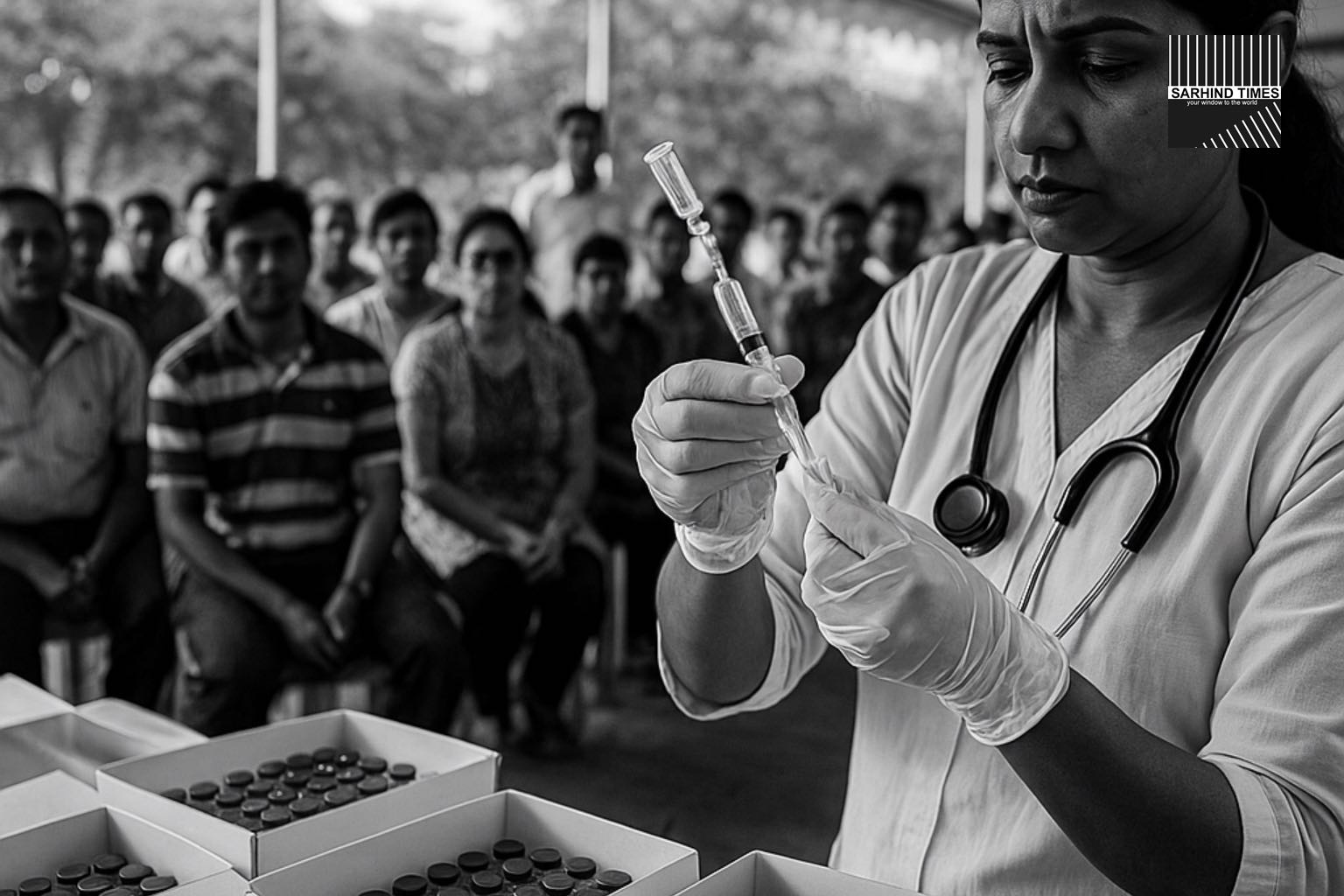
Over 7,000 participants enrolled at 20 sites for the ‘DengiAll’ trial, signalling a leap in India’s vaccine innovation
Dateline: Pune / New Delhi | 09 November 2025
Summary: India’s home-grown tetravalent dengue vaccine, DengiAll, developed by Panacea Biotec Limited under an agreement with the Indian Council of Medical Research (ICMR), has crossed the 50% participant-enrolment mark in its Phase III study with over 7,000 volunteers across 20 sites. The trial seeks completion of enrolment by October 2025 and represents a major step in India’s ambition to tackle dengue via an indigenous preventive tool.
Why this trial matters now
Dengue is a major public-health challenge in India, with repeated annual outbreaks, rising cases in urban and peri-urban zones, and growing concerns about the cost, mortality and healthcare burden. Despite longstanding efforts, India has so far lacked an approved domestically-developed dengue vaccine. The arrival of DengiAll’s Phase III transition therefore marks a shift: from reliance on external solutions to local innovation. Observers view the trial as a bell-wether for India’s vaccine-ecosystem — its capability to not only manufacture at scale but also develop home-grown novel immunisers.
The trial is also significant because it tests a tetravalent formulation (targeting all four dengue virus serotypes), which if successful would simplify immunisation strategy in endemic regions. The move is timely: vector-borne disease pressure is intensifying thanks to climate change, urbanisation and increased mosquito-breeding conditions. For India’s public-health system, a successful vaccine rollout could change outbreak interventions from reactive to pre-emptive.
Trial structure and current status
The Phase III trial of DengiAll commenced after successful Phase I/II studies showing safety and immunogenicity. Sites have been deployed across India, enrolling participants aged 18–60 years, randomised to receive either the vaccine or placebo, with follow-up planned for two years post-vaccination. As of early July 2025, more than 7,000 participants have been recruited, crossing the 50 per cent mark of the target 10,355 enrolments.
The trial is being coordinated by the ICMR and Panacea Biotec. The vaccine is live attenuated and designed to stimulate immunity across all four dengue serotypes, a key requirement in endemic settings where cross-serotype infection risks complicate vaccine design.
Monitoring includes safety endpoints, incidence of symptomatic dengue, serious adverse-events, serotype-specific immunologic response and durability of protection. The timeline anticipates enrolment completion by October 2025, followed by data lock and submission to the regulator – the Central Drugs Standard Control Organisation (CDSCO) for marketing authorisation. Early-results and interim safety reports are expected in late 2025.
Technical and regulatory challenges
Vaccine development for dengue is notoriously complex. The virus exists in four serotypes, and partial immunity or mismatched immune response can increase risk of severe disease in subsequent infections—a well-documented challenge. The Indian trial design therefore emphasises balanced immunogenicity across serotypes and long-term safety.
From a regulatory standpoint, the CDSCO will scrutinise not only safety and efficacy but also post-licence pharmacovigilance in real-world use. The Indian pathway also includes manufacturing scaling, cold-chain logistics, integration with the national immunisation programme and pricing strategy. The trial’s success will depend on meeting global best-practice standards to ensure confidence domestically and for potential exports.
Implications for public health and outbreak control
If approved, DengiAll could transform India’s approach to dengue control. Currently, outbreak management is built around vector-control, reactive case treatment and hospital care. A preventive immunisation tool shifts the paradigm: fewer cases, lowered severity, less burden on healthcare infrastructure and economic savings in outbreak years.
For the private sector, a domestic dengue vaccine also opens export possibilities—India becoming a manufacturing donor nation for dengue-endemic countries in Asia, Africa and Latin America. Internally, it reinforces the government’s ‘Make in India’ and ‘Atmanirbhar Bharat’ goals in high-tech biomedicines.
Costs, access and equity considerations
One key question will be pricing. To achieve public-health impact, the vaccine must be affordable for wide coverage. Manufacturers face the challenge of balancing recouping R&D investment with scale-up. Equally, distribution equity across rural, tribal and marginalised regions will matter—dengue is no longer only an urban disease.
Another issue is integration with existing vaccination systems. Even if approved, rolling out across states will require logistics, scheduling, health-worker training and awareness—which means the health-system must prepare ahead of marketing authorisation.
Industrial and economic impacts
From an industrial-economy perspective, a successful indigenous dengue vaccine is a milestone. India’s vaccine industry has matured on COVID-19, but dengue requires more advanced R&D, live-virus technologies, sophisticated trial design and export-grade manufacturing. Panacea Biotec’s partnership with the ICMR signals that Indian biotech firms can deliver cutting-edge products, creating scientific-jobs, boosting exports and enhancing market value for Indian-origin biopharma.
The innovation also strengthens India’s credentials in global health and soft power. If DengiAll gets approved and exported, India may deepen its status as a global health partner for low- and middle-income countries.
What to watch next
In the coming months the focus will be on:
– Finalisation of enrolment in the Phase III trial and interim analysis outcomes.
– Submission of dossier to regulator and potential approval timelines in 2026.
– Manufacturing scale-up announcements, possibly involving tie-ups with state-governments or public-sector vaccine firms.
– Pricing strategy and inclusion in the national immunisation programme.
– Initiatives to reach the private-sector market and export plans.
Challenges ahead and caveats
Despite the positive trajectory, hurdles remain. Vaccine efficacy in real-world heterogeneous public settings may differ from trial conditions. Post-licence adverse-events may pose reputational risk. Distribution and cold-chain logistics in rural/hilly terrains may lag. Finally, maintaining the attention and funding momentum—even after COVID-19—will be critical to ensure the vaccine’s full potential is realised.
Conclusion
India’s dengue vaccine milestone—the crossing of the 50 per cent enrolment threshold in Phase III for DengiAll—is more than a scientific step—it is a signal of ambition, capacity and potential. For public health, it means moving closer to a world where dengue outbreaks may be preventable rather than inevitable. For industry, it signals that Indian biotech has entered a higher gear. The next year will be pivotal: the trial outcomes, regulatory pathway and rollout strategy will determine whether this promise transforms into public-health reality.


+ There are no comments
Add yours