
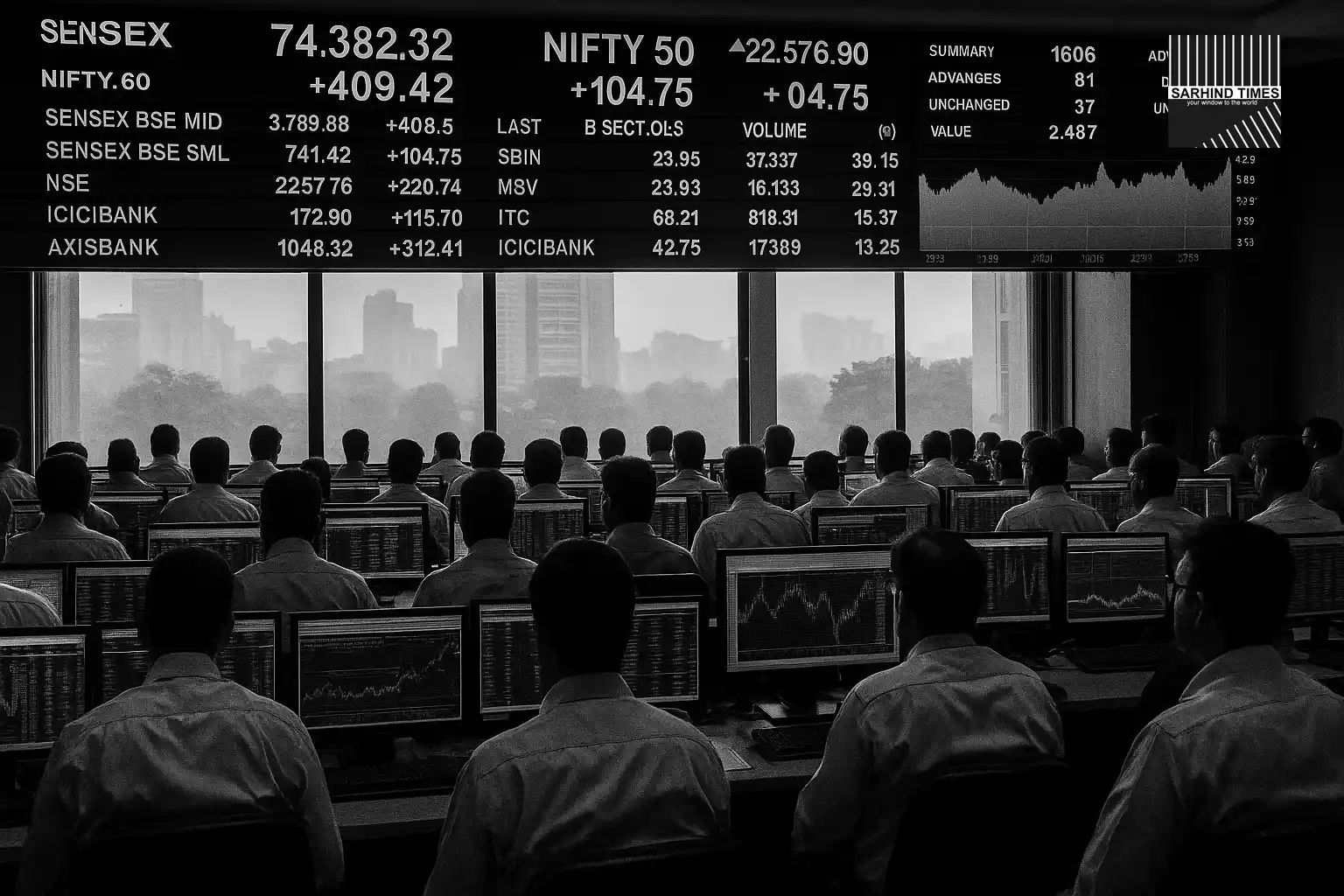
Despite robust manufacturing surge, decline in GST collections and export pressures hint at emerging imbalances in the growth story
Dateline: New Delhi | 05 November 2025
Summary: India’s economy continues to show signs of resilience amid global uncertainty, yet recent data — including a dip in GST collections across 20 of 36 states in October and falling merchandise exports to traditional markets like the United States — point to structural risk zones. The interplay of strong domestic demand, manufacturing rebound and trade headwinds places policymakers in a balancing act between stimulus and caution.
Backdrop: Growth on the Edge of Transformation
Economic narrative for India has shifted over recent years. After enjoying a period of rapid expansion, the country is now navigating the transition from high-speed growth driven by consumption and infrastructure to a more mature stage characterised by structural reforms, global headwinds and internal rebalancing. According to the latest projections, the economy is nearing a growth rate of 7 percent for FY 2025-26, highlighting strength in domestic fundamentals even as external challenges mount. This strength is complemented by favourable indicators: the manufacturing Purchasing Managers’ Index (PMI) jumped to 59.2 in October, signalling robust new orders, improved capacity utilisation and growth momentum. At the same time, government statements emphasise confidence in moving India into the top-three global economies. Yet recent data such as the Goods and Services Tax (GST) collection disclosures and export trends are flashing caution signals. In October 2025, GST collections fell in 20 of India’s 36 states and union territories. Meanwhile merchandise exports to the US have shrunk amid new tariff regimes, compelling diversification of export markets. The question on policymakers’ minds is clear: can this resilient growth withstand looming risks of global trade friction, domestic revenue strain and shifting investment dynamics?
Key Indicator: GST Collections Slip
One of the most conspicuous signals of stress is the drop in GST collections. According to official data, 20 of India’s 36 states and union territories saw a decline in GST revenue in October 2025. While the GST system has been undergoing rate rationalisation and structural change, the dip is noteworthy and raises alarm bells about underlying domestic demand and tax base strength.
The fall is partially attributed to adjustments after late-September rate cuts, seasonal behaviour, and alignment of base effects, but analysts warn that if the trend persists, it could hamper state finances, delay infrastructure spending and reduce fiscal flexibility.
For states dependent on indirect tax-revenues for both capital and revenue expenditure, the stress is tangible. Reduced GST inflows can delay projects, shrink maintenance budgets and raise the risk of borrowing. Since the centre-state fiscal architecture often links state capex with tax-sharing and transfers, a dip in GST poses broader implications for growth.
Manufacturing Surge: PMI Strengthens
In contrast to the tax-revenue worries, the manufacturing sector is showing remarkable strength. The manufacturing PMI soared to 59.2 in October, reflecting brisk growth in new orders, faster production, better employment prospects and optimism among firms. The stimulus from GST rate cuts, easing input-cost pressures and stronger domestic demand are cited as drivers of the uptick.
This rebound is significant. Manufacturing is a key lever in the government’s growth strategy — not only for output but for formal employment creation, export potential and capturing value-chains. A sustained expansion in manufacturing could help India absorb displaced labour, move up the value ladder and reduce reliance on services-led growth alone.
However, one must pause to consider the interlinkages: is manufacturing growth feeding exports or domestic consumption? To what extent is it driven by inventory build-up versus genuine underlying demand? The answer has bearing on medium-term stability.
Trade Headwinds: Exports to the US, New Routes Required
The trade environment is now more complex than ever. Indian merchandise exports to the United States have declined by double-digit percentages in certain segments due to elevated tariffs and supply-chain realignments. As exporters grapple with reduced access to the US market, attention is shifting to new geographies and Free Trade Agreement (FTA) possibilities.
The government has urged exporters to leverage existing and emerging FTAs, diversify destination markets and strengthen competitiveness. At the same time, refining supply-chains, reducing dependencies and improving logistics have entered the policy agenda. The export slowdown has one clear implication: if external demand weakens, the growth load shifts further onto domestic consumption and investment, making those engines even more critical.
Consumption & Investment: The Dual Engines
A recurring theme in India’s growth story is the dual dynamic: consumption and investment. Consumer demand remains strong — buoyed by rural wage flows, festival spending, tax relief measures and a larger young population. Investment, particularly infrastructure and manufacturing capacity, is picking up pace, signalling a move beyond consumption alone.
As the manufacturing PMI suggests, firms are preparing capacity, and the government has flagged higher capital-spending outlays in the new fiscal year. However, the fiscal math is tricky: with weaker tax collections and elevated borrowing, sustaining high investment without increasing risks is a delicate act.
Moreover, the nature of consumption deserves scrutiny. Is it broad-based across income segments, or concentrated among higher-income households? How much of it is impulsive festival-driven, and how much reflects sustainable employment and wage growth? These questions determine the resilience of growth.
State Finances & Fiscal Health
The stress on indirect tax collections, notably GST, translates into pressure on state finances. Many states have already deferred capital-expenditure, faced higher interest burdens and experienced delays in project execution. The central government’s transfers and centrally sponsored scheme funding can offset some of this, but not indefinitely.
In response, the finance ministry has opted against increasing the food-subsidy bill for now — a decision framed as prudent spending discipline. Rather than pumping more subsidies, the ministry prefers to liquidate surplus grain stocks in open markets and clean up beneficiary databases. While fiscally responsible, this choice reflects the tension between social obligations and fiscal constraints.
From a fiscal-policy standpoint, the message is clear: growth will be supported, but without undermining fiscal sustainability. The trade-off is a tighter fiscal envelope, especially at the state level, and consequently a need for better expenditure prioritisation and power-sector reform.
Future Orientation: R&D, Innovation and Structural Transformation
Beyond cyclical performance, India is attempting structural leap-frogs. A recently announced Research, Development and Innovation (RDI) fund of approximately USD 11.27 billion aims to catalyse high-risk, high-impact projects in fields such as advanced manufacturing, artificial intelligence, quantum technologies and deep science. This signals a shift from incremental growth to transformational growth.
If the fund is well-utilised, it could help push India up the value-chain, reduce dependence on basic manufacturing and commodities and transform the country into a knowledge-intensive economy. However, converting funding into viable technologies, scaling them and creating global scale will be the challenge.
Risk-Matrix: Where Things Could Slip
While the macro-indicators are broadly positive, several risk-factors loom:
1. **External Demand Shock**: Any further escalation in global trade barriers, energy-cost shock or slowdown in key trading partners could dent export potential and investment flows.
2. **Tax Base Weakening**: If GST collections continue to lag, states may unwind capital spending or raise borrowing, increasing vulnerability.
3. **Banking & Credit Stress**: Rapid credit growth is positive, but if underwritten by weak assets or if non-performing assets rise, the nascent recovery could be undermined.
4. **Inflation & Input Costs**: While input costs have eased currently, any reversal (e.g., due to geo-political shocks or commodity price surge) could stoke inflation, reducing consumer demand and pressuring the central bank.
5. **Employment & Wage Growth**: If hiring does not keep pace with output growth, consumption may falter. Manufacturing growth must translate into jobs, not just output.
6. **State-Centre Coordination**: Delivery of infrastructure and reforms requires effective coordination; any breakdown can delay projects, inflate costs and dampen the multiplier effect.
Policy Implications: Balancing Growth, Reform and Stability
The government’s policy challenge is multifold: keep growth momentum alive, support structural transformation and manage fiscal/monetary risk. The push to deepen manufacturing, raise exports, harness R&D, and strengthen consumption facets is visible. Equally, the decision to resist inflationary stimulus and adhere to fiscal discipline signals maturity.
Monetary policy is likely to remain cautiously accommodative. With inflation under control, the central bank may consider incremental easing — but not prematurely, given the credit cycle and external vulnerabilities. For fiscal policy, the emphasis is on targeted spending, reform-driven capital investment and better utilisation of existing assets rather than blanket hand-outs.
A key theme will also be equity and mandate: ensuring that growth benefits reach broader segments — lower-income households, smaller firms and less urbanised regions. A growth story concentrated in metros and in the formal sector will leave behind millions, increasing social risk. Therefore, structural reforms (labour codes, land, MSME access, skilling) remain relevant.
What to Watch Next
Over the coming months, several indicators and events will decide the path of India’s growth:
– November and December GST collections for states, which will signal whether the drop in October is a transient blip or a deeper structural shift.
– Export numbers for November and December, especially responses to tariff pressures and repositioning to non-US markets.
– Credit growth and bank health metrics, especially if manufacturing output and investment are financed by formal institutions.
– State-level capital spending trends — delays or pick-ups will reveal the strength of regional growth engines.
– The performance of the RDI fund’s early launches, announcements of projects and private-sector participation — a visible pipeline will boost confidence in structural change.
– Job creation data and wage growth, especially in manufacturing and services, which will underpin consumption strength.
Regional Considerations: Implications for States & Key Urban Zones
While the national narrative is attracting attention, the regional dimension is equally important. States with strong tax bases, better infrastructure, efficient governance and higher urbanisation are well-placed to ride the next wave of growth. Regions lagging in reform, infrastructure and human-capital investment risk falling behind. For urban clusters such as those in Haryana, Gujarat, Maharashtra and Tamil Nadu, leveraging the national growth story into local development will be key.
In particular, states in the National Capital Region (NCR) like Haryana must ensure that their local infrastructure, connectivity, skills and investment climate match the national thrust. Private investment will shift increasingly to regions where transit, utilities and regulatory environments are strong, reinforcing the importance of integrated planning.
Global Context: Opportunities and Fragility
On the global front, India’s relative resilience is drawing attention. Its large internal market, demographic dividend and structural reforms give it a comparative advantage. At the same time, it remains exposed to global risks — slowing global growth, rising protectionism, commodity price shocks and currency volatility. The interplay between global mega-trends (digitalisation, decarbonisation, supply-chain realignment) and India’s domestic positioning will determine how wholly the country can grab the upside of its structural potential.
For example, supply-chain realignment from China is creating opportunities for India — but this requires faster logistics, better industrial policy, land reform, stable power and digital infrastructure. Meanwhile, the shift towards green economy, advanced manufacturing and AI presents a big prize — but only for those who can bridge the gap between policy aspiration and execution.
Conclusion: The Resilience Is Real, The Work Is Intensive
India’s current economic moment is one of cautious optimism. There is genuine reason to believe the country can sustain high growth, deepen structural change and emerge as a dominant force in the global economy. But to realise that potential, the growth model must evolve: from speed to sustainability, from quantity to quality, from reactive to proactive.
The recent indicators — GST slip, export headwinds and strong manufacturing rebound — show both opportunity and caution. Policymakers, business heads and regional administrations must now work in concert to ensure the momentum doesn’t fade. In the end, what matters is not just the headline growth number, but whether it translates into better jobs, wider prosperity, improved infrastructure and cleaner environment.
The path ahead is challenging. But if India holds steady — in policy, execution and institutional strength — the next several years could mark the era when the country moves from “emerging” to “emerged”.



+ There are no comments
Add yours