
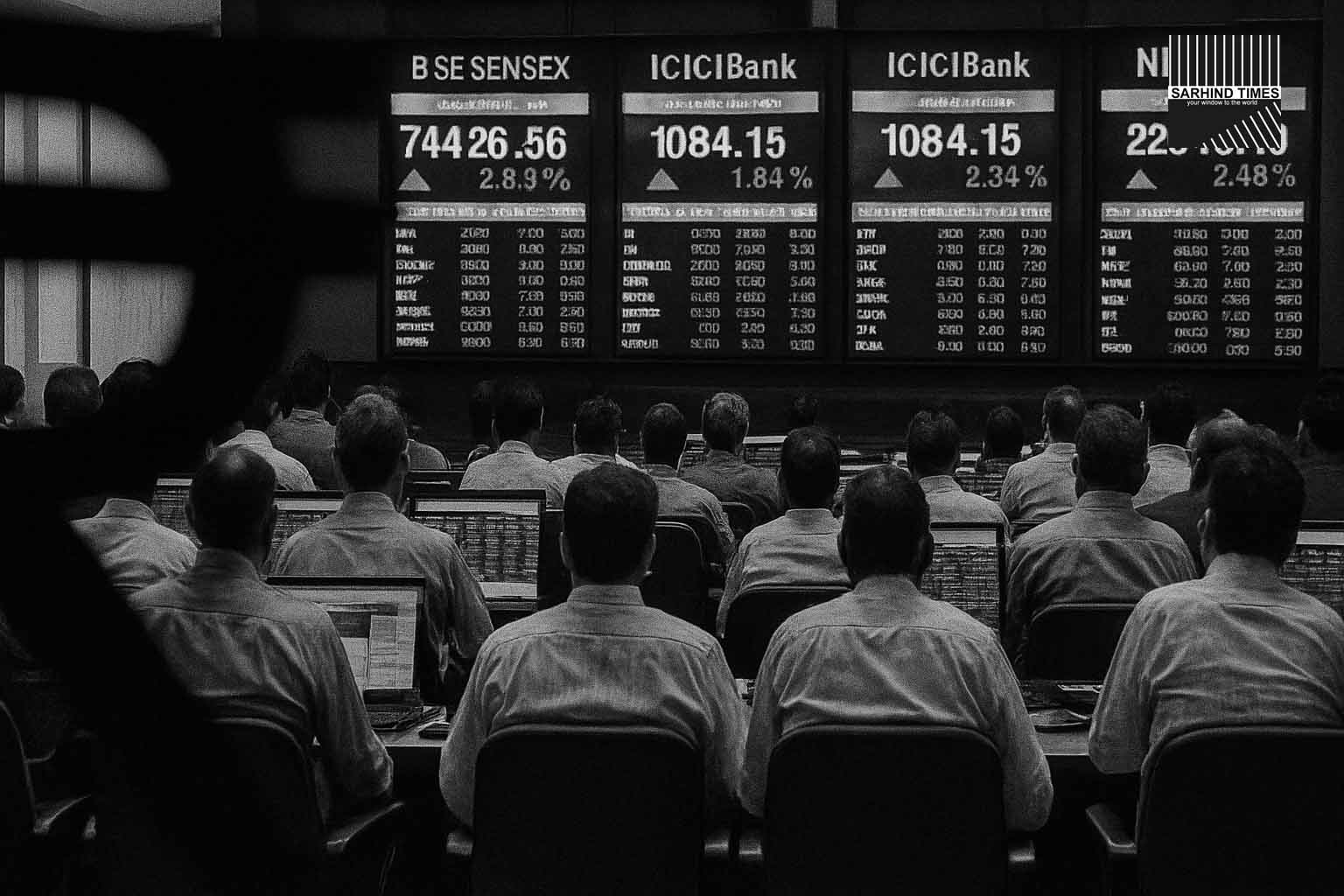
Global index additions, corporate buybacks and upgraded earnings outlook bolster domestic equities ahead of 2026 relief cycle
Dateline: Mumbai / New Delhi | November 26 2025
Summary: After months of foreign-investor outflows and muted enthusiasm, the Indian stock market is showing renewed signs of momentum. A major brokerage projectives the benchmark BSE Sensex could hit 94,000 by end-2026, while global index-provider MSCI Inc. is adding several large Indian stocks, and home-grown giant Infosys has announced an ₹18,000 crore buy-back plan. These signals suggest a potential shift in the market mindset — from “wait and watch” to tentative participation.
Backdrop: What Got Us Here
Indian equities were under pressure for much of this year, despite relatively solid macro fundamentals. Foreign portfolio investors (FPIs) withdrew an estimated US $16.8 billion from Indian equities in 2025 to date, weakening sentiment and constraining upside. However, earnings for the second quarter and beyond began showing signs of recovery, valuations cooled from earlier peaks, and combined with positive domestic flows, the groundwork for a rebound appears to be forming.
Part of the cautious market temperament stems from global headwinds — elevated US interest rates, concerns over China’s growth trajectory, trade frictions — and domestic structural issues such as slow private-investment pick-up and banking sector stresses. With these factors lingering, many investors stayed on the sidelines.
But the last few weeks have brought multiple catalysts converging: major brokerages upgrading India’s equity outlook, global benchmarks increasing Indian stock inclusion, and large Indian corporates announcing significant buy-backs. Each of these carries symbolic and actual significance for market flows, investor confidence and domestic liquidity.
Key Signals Turning Heads
**1. Index inclusion momentum:** MSCI’s November 2025 review will add four Indian companies—including fintech firm Paytm and private healthcare player Fortis—to its Global Standard Indexes, boosting India’s weight and expected foreign flows of roughly US $1.46 billion. Conversely, some stocks are being removed, but the overall signal to global investors is positive.
**2. Large corporate buy-backs:** Infosys has proposed its largest-ever buy-back (₹18,000 crore) which sent its shares higher by about 4 % immediately. Buy-backs often signal confidence from management, support corporate valuations and improve return to shareholders, thereby boosting market sentiment.
**3. Upgraded earnings outlook:** Major brokerage HSBC Global Investment Research lifted its projection for the Sensex to around **94,000** by end-2026, citing margin expansion in banks, consumption uptick in autos, and lower interest rates ahead. Given current levels in the ~85,000 range (for Sensex), this implies a ~10% upside over the coming year.
What’s Driving the Improved Sentiment?
One of the more often-cited drivers in current commentary is the shift from “export-led” to “domestic-demand-led” growth but also an improvement in corporate margins. The labour-codes reform, infrastructure spending, formalisation trends and data-centre investment all feed into stronger earnings outlooks for banks, auto, consumables and selective tech. In turn, this helps valuations appear more reasonable compared to some global peers.
Another key element is flow-management. While FPIs pulled money out earlier, domestic institutional investors (DIIs) have shown continued buying interest and net flows have turned less negative. Index inclusion and buy-back announcements provide triggers for fresh capital allocation decisions or repositioning.
Global investors are also seeking alternative growth stories beyond saturated developed markets. With China growth slowing and developed markets appearing priced for perfection, India’s large domestic market, reform momentum and political stability become relatively attractive. HSBC sees India as part of that next wave.
Sectors In Focus: Who’s on the Move?
The current narrative places several sectors in the limelight:
- Banking & Financials: With improving credit-offtake, declining non-performing assets in some large banks, and potential transmission of monetary easing (if inflation continues to moderate), margins should improve. HSBC specifically points to banks as a beneficiary.
- Autos & Durables: As consumption strengthens and GST reforms help affordability, auto companies are in prime position. The buy-back and improved demand narrative add to optimism here.
- Information Technology & Services: Though earlier driven by exports, the next leg may come from higher domestic digital investment, generative-AI adoption, cloud infrastructure — companies with scalable models have incremental runway.
- Mid/Small Caps & Index Extensions: With MSCI increasing India’s weight, many previously under-owned names may get attention; this creates rotation opportunities beyond the blue-chips, though caution remains warranted given volatility.
Risks Not Yet Eliminated
Even while the tone is improving, several risks remain that could derail the up-cycle or keep it muted:
- Delayed private-sector investment: Much of the current growth story still hinges on investment that is yet to pick up in a big way. If infra or manufacturing cap-ex slows, earnings upgrades may stall.
- Global shocks and valuations: The world remains volatile — escalation in geopolitics, oil-price spikes, rate shocks or slower global growth could still trigger sharp corrections. Indian equities are not immune.
- Domestic structural issues: Banking sector risks, stressed corporates, regulatory changes, state-level policy mismatches and inflationary pressures can create headwinds though markets appear less sensitive for now.
- Flow-reversal risk: Much of the current positive talk depends on steady capital inflows. If FPIs reverse again (e.g., due to global risk-off), Indian markets could fall quickly because the margin of safety is not yet large.
What This Means for Investors
For retail and institutional investors alike, the current environment suggests a tactical window of opportunity but not a guarantee of accelerated growth. Key take-aways include:
- Evaluate companies based on earnings-upgrade potential rather than simply high multiples. Markets now appear to reward sustainable business models, margin resilience and growth rather than hype alone.
- Use sector rotation to tilt toward themes gaining tailwinds (banks, autos, consumables) while still being aware that macro shifts could reset sentiment quickly. Avoid over-concentration in one theme or over-valued segments.
- Maintain liquidity and watch for global triggers — a comfortable allocation with exit discipline remains smart, especially given the still-fragile nature of the recovery.
- For long-term horizons, the signals of institutional structural change (index inclusions, corporate buy-backs, domestic demand growth) suggest India remains among the higher-growth large markets globally; however, timing, execution and valuation still matter.
Outlook and Near-Term Expectations
Looking ahead to early-2026, the market may see a consolidation phase followed by selective breakout moves if earnings revisions pick up and capital flows accelerate. The 25,000–26,000 mark in the Nifty 50 index has already been breached, suggesting investor confidence is inching back.
If the Sensex hits 94,000 by end-2026 as predicted, the implied return from current levels is modest (around 10 %). That means for the next few months, the journey may be more about stabilization and less about explosive rallies. The reward may come through steady upgrades, rather than dramatic re-rating.
In short, the market is not yet “euphoric” but perhaps moving out of “fear-mode.” The key will be whether this cautious optimism turns into sustained participation and whether policy, earnings and flows align. If they do, Indian equities could be ready for the next phase.
Conclusion
The Indian stock market narrative appears to be shifting from defensive to opportunistic — from “just watch” to “maybe participate.” With major global and domestic signals aligning (index inclusions, corporate buy-backs, earnings momentum), the groundwork for a renewed equity cycle is being laid.
But make no mistake: the path ahead is still tentative. Many of the old structural challenges remain; only this time they must be addressed, not ignored. For investors the message is encouraging but also cautionary — the door to gain is open, but it’s not a sprint; it’s a long play.



+ There are no comments
Add yours