
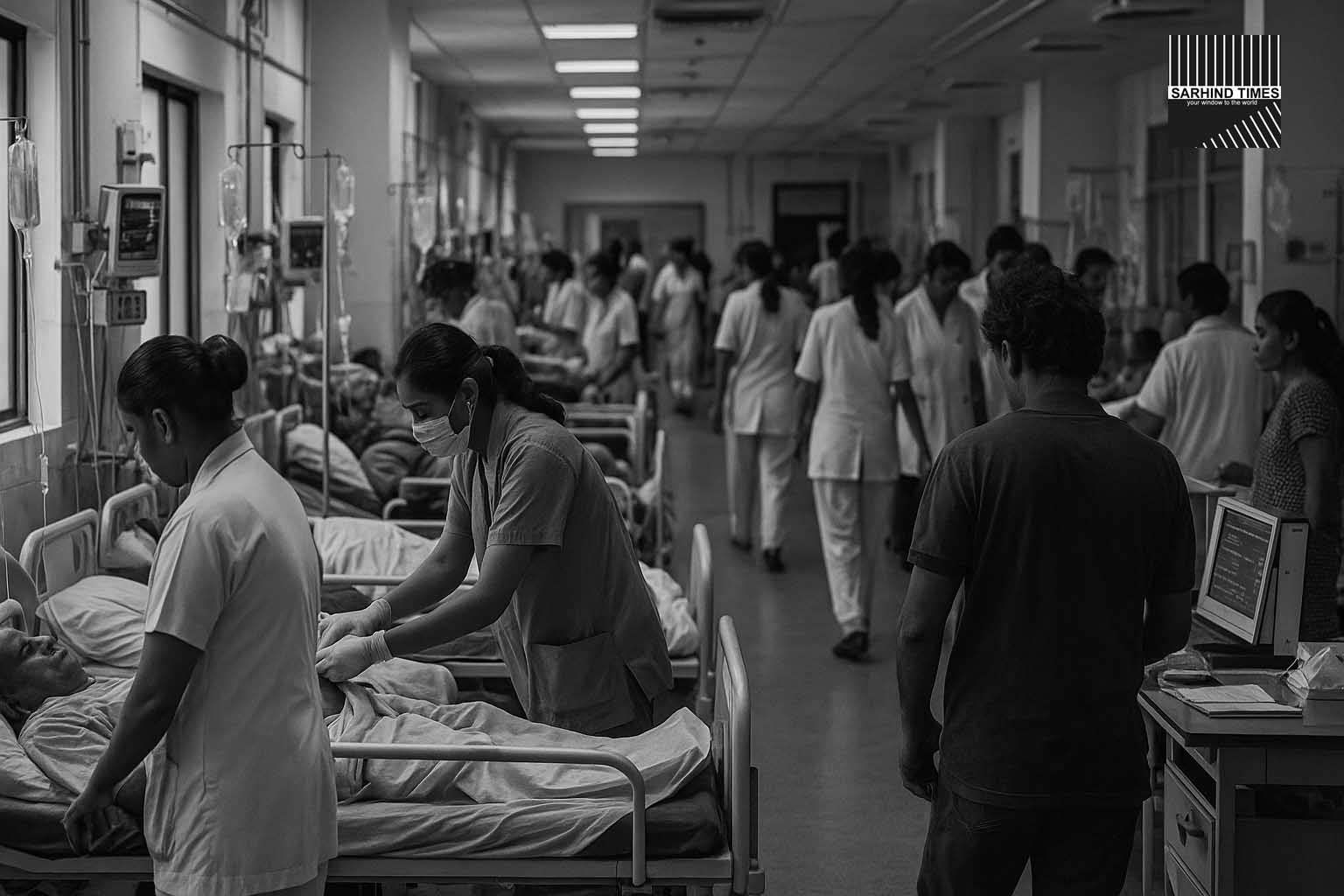
Despite the increase, spending remains under the 2.5 % of GDP target and policy execution will determine impact
Dateline: New Delhi | 22 November 2025, Asia/Kolkata
Summary: The Union Budget for 2025-26 earmarked approximately ₹99,859 crore for health under the Ayushman Bharat‑Pradhan Mantri Jan Arogya Yojana (AB-PM JAY)-led framework, marking an 11 % increase from the previous year. Key new initiatives include day-care cancer centres across districts, extension of health coverage to gig-workers, and proposed taxation of ultra-processed foods. While the upgraded allocation signals intent, public health experts caution that India still lags its goal of public health spending reaching 2.5 % of GDP, and the focus must now shift to delivery, equity and state-level execution.
Budget numbers and headline changes
The Ministry of Health and Family Welfare (MoHFW) was allocated ₹99,859 crore for the 2025–26 financial year, up from the revised estimate of approximately ₹89,974 crore in 2024–25 — representing an 11 % increase.
Within this, the Department of Health & Family Welfare received roughly ₹95,958 crore, while the Department of Health Research was allocated about ₹3,901 crore (a 15 % rise).
Major scheme allocations include:
– National Health Mission (NHM): ~₹37,227 crore (≈3 % rise)
– AB-PM JAY: ~₹9,406 crore (≈24 % rise)
Additionally, budget commentary announced the plan to establish district-level day-care cancer centres (200 centres in 2025-26 alone), impose a health tax on ultra-processed foods, extend health coverage to gig-workers, and deepen primary-care infrastructure.
What the policy shifts signify
These budget moves signal several strategic directions:
– **Expanding tertiary care access**: The day-care cancer centres initiative aims to decentralise oncology treatment and relieve pressure from large referral hospitals.
– **Coverage for non-traditional workers**: Inclusion of gig-workers in health-insurance/health-coverage frameworks recognises evolving labour-market structures.
– **Focus on diet and prevention**: The proposal to tax ultra-processed foods reflects a shift from purely curative to preventive public-health policy — recognising rising non-communicable disease burden.
– **Infrastructure and research uptick**: The rise in health-research allocation and infrastructure funding suggests the government is planning for long-term system strengthening rather than short-term fixes.
Where gaps remain: The number and the ratio
Despite the increase, the health allocation remains at just under 2 % of total government budget and around 1.8 % of GDP — falling short of the 2.5 % of GDP target set by the National Health Policy.
Other issues include:
– Public health spending as share of total health expenditure remains far below many peers, with heavy reliance on out-of-pocket expenses.
– State-level health spending varies significantly, and central allocations alone cannot guarantee equitable access or outcomes.
– The modest rise in NHM funding (3 %) when compared to scheme expansion may raise questions on whether primary and preventive care will get sufficient thrust.
– Implementation and absorptive capacity of funds remain key — increased allocation may not translate into better outcomes unless state systems, human resources and governance are strengthened.
Implications for states, providers and patients
**For states**:
States will need to align their health budgets, infrastructure plans and human-resource strategies with the central push. As many states are already operating under fiscal constraints, leveraging central funds efficiently is critical.
**For service providers**:
Hospitals, diagnostics firms, oncology-care providers and health-insurance entities should prepare for increased demand and expansion of district-level services. The focus may shift to more facilities outside major metros.
**For patients and households**:
The ramp-up promises broader access to tertiary care (oncology), reduced financial burden for gig-workers, and a more prevention-oriented policy environment. But real benefits will depend on whether new facilities are operational, well-staffed and accessible.
Challenges ahead: Execution, equity and sustainability
Several execution risks and policy trade-offs must be managed:
– **Staffing shortage**: Additional infrastructure will require more doctors, nurses and allied staff; training and deployment remain long-term challenges.
– **State‐level variance**: States with weaker health systems may struggle to absorb or utilise funds; capacity building will matter.
– **Preventive vs curative balance**: While tertiary care expansion is important, unless prevention receives parallel strengthening, the burden of NCDs may continue to rise.
– **Fiscal sustainability**: With rising healthcare costs (technologies, chronic care, diagnostics), spending pressure will grow; mere increases may not suffice if cost-structures spiral.
– **Monitoring and accountability**: Ensuring that allocated funds translate to outcomes (reduced mortality, improved access, financial protection) will require stronger data systems, evaluation frameworks and transparency.
What to watch next
Key indicators to monitor include:
– Roll-out and functionality of 200 day-care cancer centres announced for 2025-26.
– Number of gig-workers enrolled under AB-PM JAY or related schemes and resultant insurance-claim patterns.
– Taxation and regulatory moves on ultra-processed foods and early data on dietary trends.
– State government health-budget outcomes and actual expenditure performance vs allocations.
– Out-of-pocket expenditure trend in the next National Health Accounts cycle to assess progress in financial protection.
Conclusion
The 2025-26 healthcare budget in India reflects a meaningful step forward: the rise in allocation, combined with targeted policy initiatives, offers a promising direction. However, what will determine success is less the size of the cheque and more how the money is spent. The emphasis now must switch to delivery, equitable state-level rollout, human-resource development and monitoring of outcomes. If these align, India may move closer to its goal of universal health coverage; if not, the increased allocation risks being another budget-line without proportional health-gain.
In short: the intent is clear, the resources are better — now the execution must follow.



+ There are no comments
Add yours