
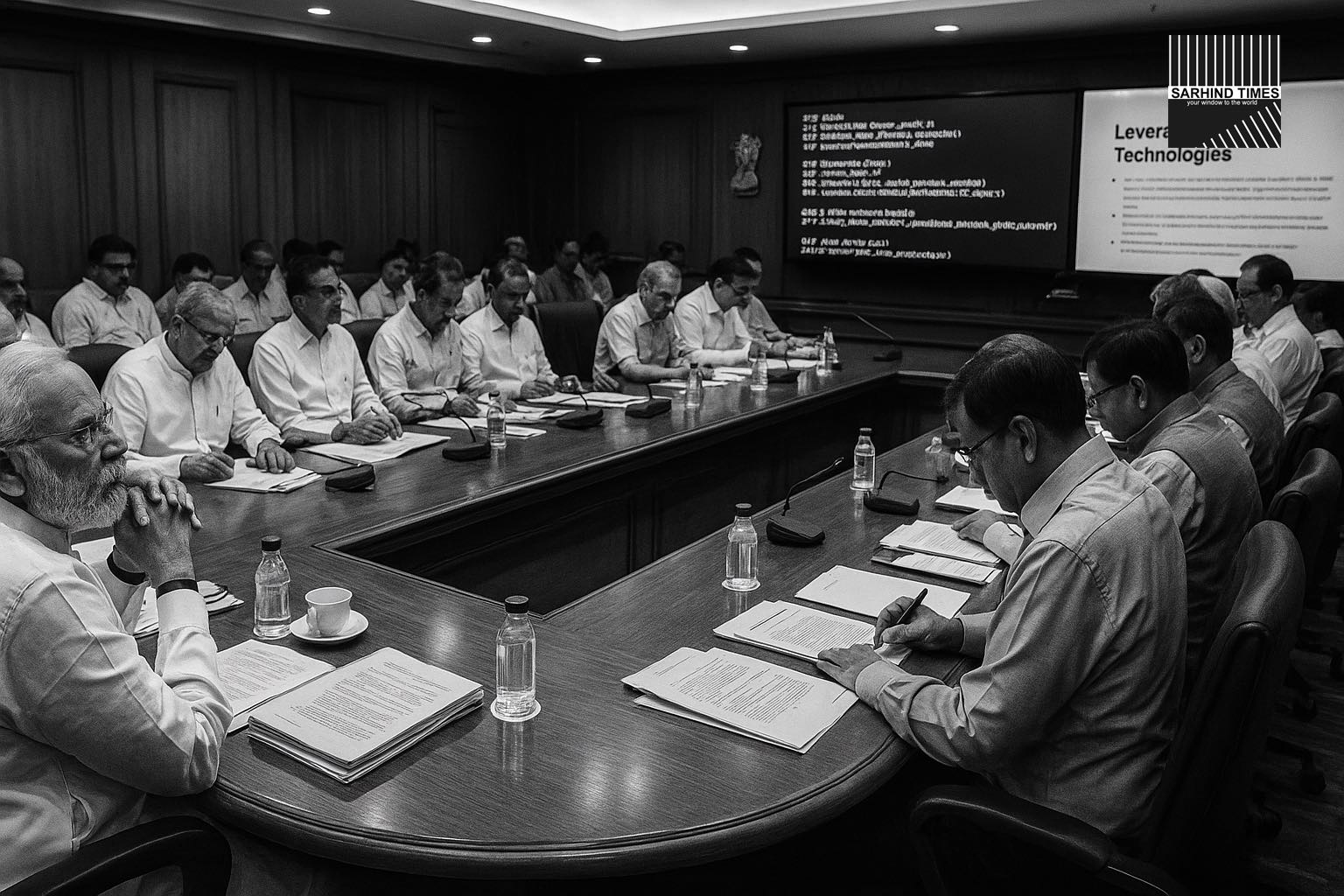
Ministry of Electronics and Information Technology (MeitY)’s November 2025 guidelines mark a strategic pivot toward enabling innovation while addressing risks
Dateline: New Delhi | 09 November 2025
Summary: India has published its much-anticipated AI Governance Guidelines, which signal a clear shift away from heavy-handed regulation toward a “light-touch”, principle-based framework designed to foster innovation in artificial intelligence (AI) while safeguarding against harms. The move positions India among the few jurisdictions actively balancing rapid AI adoption with risk-management in a developing-economy context.
Why the timing matters
Artificial intelligence has been thrust to the forefront of India’s technology strategy, with the country’s digital-economy architecture already built upon large-scale identity platforms, payments rails and public-digital-infrastructure. In this environment, the risks of AI-deployment—bias, transparency, concentration of power, security incidents—are pronounced, but so are the opportunities: innovation, global competitiveness, inclusion. The new guidelines published by the Ministry of Electronics and Information Technology (MeitY) on 5 November 2025 respond to this dual imperative. They follow years of consultation, patchwork regulatory interventions and international benchmarking, and mark a strategic turning point in India’s approach to governing AI systems.
Core tenets of the guidelines
The AI Governance Guidelines articulate a set of guiding principles and procedural expectations rather than prescribing heavy regulatory commands. Key features include:
- Innovation-first orientation: The guidelines emphasise enabling development and deployment of AI technologies in India’s economic and social sectors, framing regulation as an enabler rather than a barrier.
- Risk-proportionality: Systems and applications of AI are classified according to the potential harm. High-risk systems (e.g., those impacting rights, safety, financial decision-making) attract greater scrutiny; lower-risk applications benefit from lighter oversight.
- Transparency and accountability: Developers and deployers of AI are encouraged to provide explainability, audit logs, documentation of training data and processes, and mechanisms for redress.
- Governance and oversight frameworks: Entities using AI at scale must establish internal governance structures, designate AI-responsibility officers, perform periodic impact assessments and maintain incident-reporting mechanisms.
- Sectoral coordination: While MeitY sets the overarching principles, sector regulators (finance, health, transport) retain domain-specific regulatory responsibility, ensuring that AI systems in regulated sectors align with existing rules and the new framework.
What the “hands-off” approach means in practice
Unlike detailed prescriptive regulation, the new guidelines adopt a “framework” model. In effect:
• Developers are not required to seek prior approval for every AI system — instead, they must assess risk, classify system, document appropriately and ensure compliance with the general principles.
• The Guidelines emphasise market competition, experimentation and private-sector leadership: the government signals that India does not intend to slow down AI innovation through heavy-licensing or fixed procedural hurdles.
• The “light-touch” ethos is especially suited to India’s large and growing start-up ecosystem — the cost and time of compliance are intended to be moderate. The framework also signals India’s intent to be globally competitive in the AI-economy rather than purely regulatory reactive.
• The document does *not* yet require mandatory registration or licensing of all AI systems, though it opens the door for targeted regulation of high-risk use-cases in future. This gives stakeholders time to adapt and regime to evolve.
Context and background
The publication of these guidelines comes against multiple trends: India’s rapid digital-payments growth, deepening data-digitisation across public services, proliferating start-ups in AI and machine-learning, and mounting international competition in AI capabilities. The government has been under pressure from technical-communities, business-leaders and civil-society to strike the right balance: enable growth, protect citizens and avoid regulatory over-hang. In addition, India’s participation in G20 technology dialogues and global AI governance talks further underscored the strategic importance of having a domestic-framed policy.
Earlier draft documents, sector-specific interventions and committee reports (e.g., the Reserve Bank of India’s “FREE-AI” working group) had signalled movement toward such guidelines. The new MeitY document formalises the direction.
Industry and stakeholder reaction
Responses from the business and technology ecosystem have ranged from cautious optimism to guarded welcome. Tech-start-ups and AI service-providers welcomed the fewer upfront procedural burdens and the recognition that India aims to be a leader, not follower in AI systems deployment.
At the same time, some concerns remain: civil-society and academic commentators note that without strong enforcement mechanisms or dedicated oversight agencies, the principles may be aspirational rather than binding. Others point out that the lack of mandatory licensing for high-risk AI may leave gaps in protection.
One large analytics-firm CTO said: “The guidelines provide improved certainty about expectations, but we will watch how regulators interpret them in future. The devil will be in how ‘high-risk’ is defined and how incident-reporting gets enforced.”
Implications for AI-ecosystem and India’s growth story
The impact of the guidelines is likely to play out over multiple dimensions:
- Start-up acceleration: By reducing regulatory friction, AI-start-ups may access markets faster and scale solutions across domains such as healthcare, agriculture, fintech, logistics and climate.
- Cross-sector adoption: The framework is designed to be technology-neutral and sector-agnostic, enabling AI uptake in public-services, smart cities, industry 4.0 and digital-governance.
- Global competitiveness: With innovation space safeguarded and regulation proportionate, India aims to build home-grown models, data-sets, platforms and AI-tools that can compete internationally.
- Risk-culture embedment: While not prescriptive, the emphasis on accountability, redress, governance and transparency is a positive step toward embedding a risk-aware AI-culture in India.
Potential pitfalls and what to watch out for
Several risks need monitoring:
- Regulatory enforcement ambiguity: If oversight remains weak, even high-risk AI systems may operate without thorough review—potentially undermining trust.
- Definition drift: Over-time, the classification of “high-risk” may expand, creating retroactive burdens for early adopters.
- Coordination challenges: Sector regulators need to align with MeitY’s framework; divergence could lead to regulatory overlap or gap.
- Data-access and equity: Without data-sharing norms, innovation may concentrate in large firms rather than broad-based actors. The challenge will be to ensure smaller firms and regions benefit.
Next steps and implementation roadmap
Going forward, stakeholders can expect:
• Publication of detailed sector-specific implementation guidelines and definition of “high-risk” categories.
• Launch of self-assessment tools for AI-developers, incident-reporting portals and governance-repositories in early 2026.
• Sector- regulator alignment sessions to map the framework to domain-specific rules (finance, health, transport, defence).
• Education and capacity-building programmes for AI-ethics, auditing, data-governance and model-risk in universities and firms.
• Monitoring metrics and review-cycles: the guidelines state that MeitY will review the regime every 18 months and propose changes if necessary.
Conclusion
India’s AI Governance Guidelines of November 2025 represent a calibrated and forward-looking step. They strike an encouraging balance between enabling innovation and embedding safeguards—but the real test lies in implementation. For content creators, innovators and investors, the signal is clear: India is open for AI business—but expect to govern responsibly.
As you navigate this evolving landscape, remember: if the opportunity is clear, the oversight is real. Innovate boldly—but build trust equally.



+ There are no comments
Add yours