
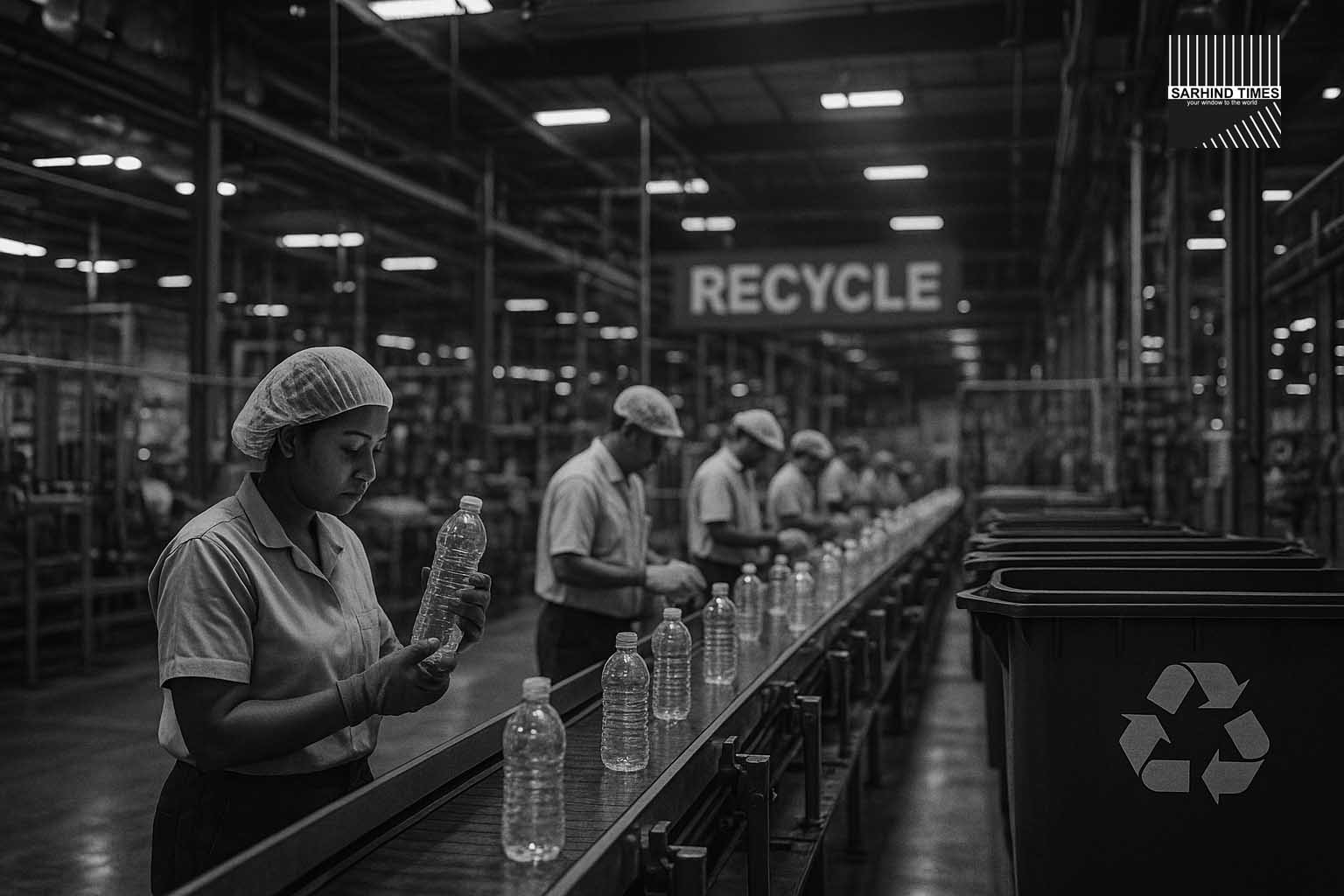
New traceability, recycled-content targets and importer responsibilities raise the bar for manufacturers and brand-owners
Dateline: New Delhi | 22 November 2025, Asia/Kolkata
Summary: The Plastic Waste Management (Second Amendment) Rules, 2025 mark a step-change in India’s approach to plastic packaging. They introduce mandatory recycled-plastic targets, expand regulatory scope to importers and brand-owners, and establish a central digital portal for full traceability. While the move is welcomed by sustainability advocates, the details of implementation, cost impact and industry readiness remain key questions.
What has changed and why it matters
India’s plastic-waste challenge has long been recognised: high consumption, low recycling, fragmented regulatory enforcement and traceability gaps. The 2025 amendments attempt to rectify this by introducing three major shifts:
- Mandatory **recycled-content targets** for different categories of plastic packaging.
- Expanded regulatory responsibility to **importers and brand-owners**, not just domestic producers.
- Creation of a **centralised online portal** managed by the Central Pollution Control Board (CPCB) for registration, reporting and certificate trading.
In short: the amendments shift compliance from weak oversight to enforceable obligations with measurable supply-chain metrics.
Recycled-plastic targets — the calendar and categories
The rules carve packaging into three categories: rigid, flexible and other types. For each, it sets year-by-year minimum recycled-content percentages:
| Year | Category I (Rigid) | Category II (Flexible) | Category III (Others) |
|---|---|---|---|
| 2025-26 | 30% | 10% | 5% |
| 2026-27 | 40% | 10% | 5% |
| 2027-28 | 50% | 20% | 10% |
| 2028-29 and onward | 60% | 20% | 10% |
Food-contact packaging is allowed carry-forward of shortfalls for up to three years, given safety/regulatory constraints.
Who now has compliance responsibility?
The amendments extend obligations beyond producers to include:
– Importers of plastic packaging and packaging material
– Brand-owners who commission packaging
– Recyclers and EPR (Extended Producer Responsibility) certificate holders
Each must register via the central portal, track usage of virgin vs recycled material, report annually, and if required, trade or purchase certificates to make up shortfalls.
Transparency and traceability: the digital backbone
The centralised portal will enable:
– Real-time reporting of material flows (virgin vs recycled)
– Tracking of EPR certificate trades
– Access for regulators to audit data
– Facilitation of carry-forward shortfalls and exemption justifications
This is designed to move India from quota-based regulation to data-driven enforcement.
Why business should care and what the implications are
For manufacturers, brand-owners, packaging enterprises and importers, the rules imply:
– **Supply-chain restructuring**: sourcing sufficient recycled-content plastics may require new suppliers, investments in recycled resin, or long-term contracts.
– **Cost pressures**: recycled polymer can cost more and availability may lag; passing this cost to consumers may hurt margins or competitive positioning.
– **Compliance overhead**: registration, data systems, certificate-management, audits and traceability demand resources.
– **Importers’ new liabilities**: previously importers enjoyed lighter regulatory burden; now they share full compliance responsibility.
– **Competitive advantage for pioneers**: firms that move early to secure recycled-content supply, invest in circular packaging may gain brand credentials and regulatory-advantage.
On the flip side, smaller firms may struggle with cost/scale and seek transitional support or carry-forward mechanisms.
Enforcement, exemptions and carry-forward rules
The amendments allow exemptions in specific cases:
– Where recycled content compromises safety (e.g., food-contact packaging) with approval.
– Statutory constraints (e.g., because of other regulatory norms).
Shortfalls in early years may be carried-forward (especially for Category II/III) upto 2028-29. The regulatory agency will impose penalties or disallow short-falls beyond permissible limit.
Broader policy-and-environment impact
The rule is aligned with India’s larger “circular economy” and plastic-pollution agenda:
– It strengthens domestic recycling demand, incentivising investment in collection, segregation, sorting and mechanical/chemical recycling.
– It reduces reliance on virgin plastics and waste exports/imports.
– It enhances accountability across the lifecycle of packaging.
– For consumers and environment: fewer plastics in landfill, increased reuse of material, improved waste-value chains.
In an era of stiff global scrutiny on plastics, India’s move positions itself among proactive jurisdictions.
Challenges and risks ahead
Despite strong policy intent, several operational risks merit attention:
– **Recycled-material supply gap**: Domestic collection, sorting and recycling infrastructure may take time to scale to meet 30–60% targets.
– **Cost pass-through constraints**: Competitive markets may restrain packaging cost increases. Firms might defer investment or shift to alternatives.
– **Enforcement consistency**: States and regulators must build institutional capacity to audit, track, verify reports and penalise non-compliance. Germany and other jurisdictions show that enforcement is harder than rule-making alone.
– **SME burden**: Smaller firms with limited scale may struggle with investment and operational overhead; risk of compliance differential or outsourcing.
– **Plastic alternatives and substitution risk**: Firms may shift to other materials (metals, glass) to avoid obligations, which may not always align with sustainability objectives.
– **Carry-forward risk**: Firms may rely on carry-forward credits instead of real change; regulators must guard against complacency.
Next steps and industry moving parts
– Registration on the central portal must be completed by each entity before the next compliance cycle—firms should start now.
– Packaging firms must audit their resin flows, set up tracking systems and align with recycled-content timelines.
– Recyclers and EPR firms should gear up for higher demand for recycled resin, certificate issuance/trades and capacity expansion.
– Regulators (CPCB, State Pollution Boards) must publish guidance, testing protocols and enforcement mechanisms.
– Industry-associations should publish sector-roadmaps for meeting target milestones and possibly lobby transitional finance or support for smaller firms.
Conclusion
The 2025 amendments to India’s Plastic Waste Management Rules mark a decisive shift: from passive obligation to measurable compliance, from producer-only focus to full packaging lifecycle accountability, and from fragmented regulation to data-driven oversight.
For businesses, the message is clear: this is not optional. Packaging design, supply-chain sourcing, data-systems and circularity must be embedded now. For the environment and society, the potential is significant—higher reuse, lower waste, stronger domestic recycling markets.
In sum: India is raising the bar on how plastic packaging must behave. The rules reflect ambition—but also commitment to change. The next few years will determine whether the industry leaps to the challenge, or whether the gap between rules and reality widens.



+ There are no comments
Add yours