
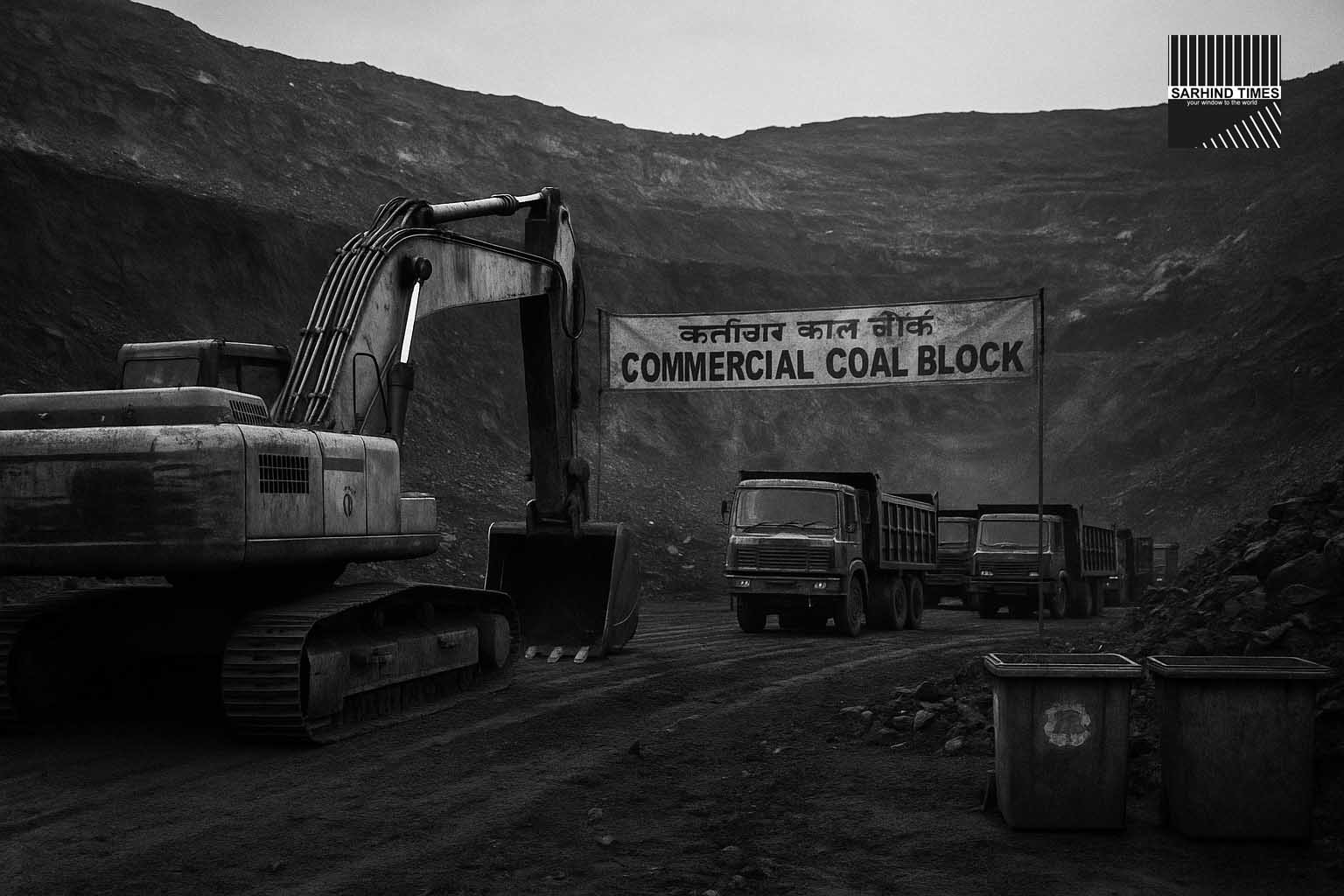
With 41 mines up for bidding—including 21 for underground coal gasification—the government signals fresh momentum in energy infrastructure
Dateline: New Delhi | 23 November 2025, Asia/Kolkata
Summary: The Ministry of Coal has launched the 14th round of commercial coal-mine auctions that puts 41 mines—including 21 earmarked for underground coal gasification (UCG)—on offer across key states. The initiative, coupled with the roll-out of digital platforms such as the CLAMP and Koyla Shakti portals, aims to boost domestic coal production, improve transparency in the sector and accelerate investment. The reform comes amid rising domestic energy demand and a strategic push for self-reliance in fuel supply chains.
The auction framework: What’s on offer
The Ministry of Coal has opened the 14th tranche of commercial mining, comprising 41 mines being offered for bidding—20 conventional coal blocks and 21 blocks designated for underground coal gasification (UCG). These auctions are organised under the liberalised framework introduced in 2020, which allows private firms to mine coal for sale, rather than just for captive use.
Notable features of this round include:
- A open bidding format inviting both established and new-entrant firms to participate.
- Reduced upfront payments and greater flexibility in payment terms to enhance ease of doing business.
- 100 % foreign direct investment (FDI) permitted in these commercial coal blocks.
- Inclusion of UCG technology blocks—aimed at tapping deeper non-mineable reserves and reducing dependence on imported natural gas.
- Launch of two digital platforms: the CLAMP (Coal Land Acquisition, Management & Payment) portal and Koyla Shakti Dashboard to digitise land-acquisition, record-management and integrate mine-to-market logistics for enhanced transparency.
Why this matters: Strategic and economic implications
**Energy security and import-reduction:** India’s manufacturing and power sectors rely on coal as a critical input. By expanding domestic commercial coal mining, the government aims to reduce import dependency and strengthen supply-chain resilience.
**Investment and job creation:** The auction offer is projected to attract significant investment; previous rounds show how commercialisation enables new entrants, infrastructure spending, mine-development and employment. For instance, past rounds have been linked to investment commitments in the tens of thousands of crores.
**Technology shift and clean-energy link:** The inclusion of UCG blocks signals a transition ambition—using deep coal seams that are non-viable by conventional mining and converting them into syngas, offering potential feed-stock for industry and move toward a hydrogen economy.
Where the mines are and state-level role
The blocks span across states including Jharkhand, Chhattisgarh, Odisha, Madhya Pradesh and Andhra Pradesh—the geographic spread taps into India’s coal-belt regions. The state governments will play a key role in clearances, land-acquisition and environment/forest clearance coordination. Thus, while the central auction scheme sets the offer, execution will still depend on state machinery.
Challenges & risk factors ahead
**Land acquisition and R&R delays:** Even with digital portals such as CLAMP, acquiring and rehabilitating land for mining remains complex in coal-belt regions with tribal populations, forest land, and contested rights.
**Environmental & regulatory hurdles:** Coal mining, especially UCG, raises concerns around groundwater intrusion, subsidence, emissions and waste. The environmental-regulation burden may slow down actual mine-opening and production ramp-up.
**Infrastructure, logistics and market linkage:** Mining sites require rail, road, port access and quick dispatch capability. Without robust logistics, mines may struggle to turn investments into production and sale. The Koyla Shakti dashboard aims to integrate mine-to-market data, but physical infrastructure will take time.
**Global coal-demand uncertainty:** While India still relies heavily on coal, global focus on decarbonisation and potential future policy shifts may affect long-term demand and financing of coal assets.
Implications for industry and investors
For investors and energy-sector companies: The 14th round presents a fresh opportunity to secure coal-block allocations, build production capacity and align with India’s energy trajectory. Deep-tech and UCG players may find new investment avenues.
For manufacturing firms reliant on coal (cement, steel, power), the increased domestic supply can mean improved availability and potentially lower input-cost risk. For companies currently importing coal or gasified feed-stocks, domestic supply may reduce exposure to global price volatility.
Policy and governance angles
This auction round reinforces the government’s policy line: moving from captive-coal allotments to full commercialisation; promoting private-participation; digitising workflows; and enabling technology innovation (UCG). It also ties into the broader “Aatmanirbhar Bharat” agenda of self-reliant energy and materials supply-chains.
The digital-portal initiative (CLAMP & Koyla Shakti) is a governance innovation—it reflects a shift to data-driven oversight of land-acquisition, mine-to-market flows and transparency in allocation. If well implemented, it could reduce delays, enhance monitoring and improve investor confidence.
What to watch next
Key upcoming developments to track:
- The list of successful bidders and their committed investments, timelines for first-coal production.
- Environmental/forest clearances and actual mine-development mobilisation in the next 6-12 months.
- Whether UCG blocks attract serious bids or whether conventional mines dominate the interest.
- State-level coordination: how quickly land, water, infrastructure issues are resolved.
- Impact on coal supply, pricing, and logistics costs for downstream industries over the next year.
Conclusion
The launch of the 14th round of commercial coal-mine auctions signals that India is ramping up its infrastructure and resource-capacity agenda. By offering a large set of blocks—spanning conventional and next-gen UCG types—coupled with digital governance tools, the government is aiming not just at production, but at structural reform of the coal-value-chain.
However, the real test will lie in execution: whether mines progress from auction to production, whether land-and-environment complexities are managed, whether logistics and supply-chains deliver, and whether this leads to stable fuel supply for India’s energy and industrial ecosystem. If all goes well, this round could mark a meaningful inflection in India’s coal-sector story. If it stalls, it risks becoming another promising phase on paper. The mining clock is now ticking.


+ There are no comments
Add yours