
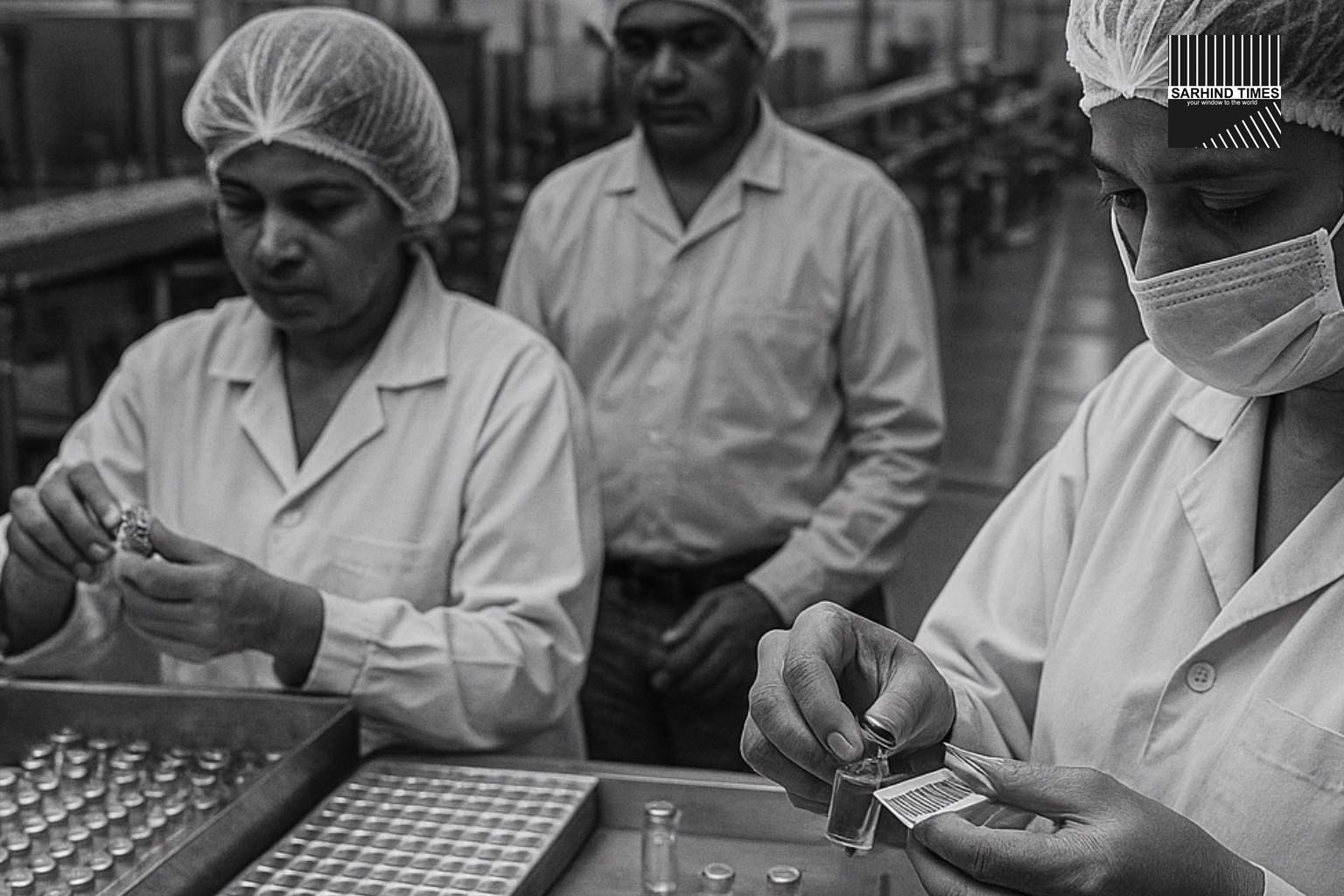
A major regulatory overhaul by Ministry of Health and Family Welfare aims to enhance traceability and consumer safety across critical drug classes
Dateline: New Delhi | 09 November 2025
Summary: India’s health-regulator is set to impose mandatory bar-coding or QR-coding on all vaccines, antimicrobials, anticancer medicines and narcotic/psychotropic drugs under a draft amendment to the Drugs and Cosmetics Act, 1940 and associated rules. The proposal by the Ministry of Health and Family Welfare marks a significant step in strengthening drug supply-chain transparency, combating sub-standard and counterfeit medicines, and aligning India’s pharmaceutical regulations with global best-practices.
Background and motivation
The Indian pharmaceutical and healthcare-ecosystem has long grappled with growing risks of counterfeit drugs, supply-chain opacity, and regulatory complexity. While vaccines, antimicrobials and anticancer drugs are among the most sensitive therapeutic categories, India’s existing labelling and traceability framework has been fragmented, dependent on paper-records and varying across states.
The Ministry’s draft notification—released in late October 2025—would amend the Drugs Rules, 1945 and related schedules to make bar-codes (or QR-codes) mandatory on packaging of all vaccines, all antimicrobials, all narcotic and psychotropic substances, and all anticancer medicines. The aim: strengthen product identity, facilitate recall and tracking, enable digital verification and reduce risks of diversion, counter-feiting or illicit trade.
This move is being hailed by industry analysts as “one of the most sweeping regulatory reforms in Indian pharma supply-chain in years”.
Key provisions of the draft rule
The proposed rule comprises the following notable measures:
- Scope expansion: It covers all vaccines (routine, campaign, adult boosters), all antimicrobials (antibiotics, antifungals, antivirals), all anticancer drugs (chemotherapeutics, targeted therapies) and all narcotic/psychotropic drugs under the Narcotic & Psychotropic Drugs Act.
- Packaging requirement: Manufacturers or importers would be required to affix a unique bar-code or QR-code on each pack (primary, secondary, tertiary levels) that links to a central traceability database.
- Regulatory linkage: The bar-code rule would be enforced via amendments to the Drugs and Cosmetics Act, 1940 and relevant Schedules (Schedule H2 etc). Drugs falling under the new rules must comply within a defined transition window (likely 12-18 months).
- Traceability and data-reporting: The QR/bar-code will enable electronic scans at distribution checkpoints, stocking & dispensing points, and recall alerts. The data will feed into the national drug-monitoring system and link with the digital health stack.
- Enforcement and compliance: Non-compliance could lead to withdrawal of manufacturing licence, penalties or product quarantine. The draft also envisages random audits of supply-chain scanning logs.
Why vaccines and targeted categories?
The selection of vaccines, antimicrobials and anticancer drugs for this overhaul is strategic. Vaccines represent a preventive-care backbone and are procured at very large scale under national immunisation programmes. Any breach in quality, cold-chain integrity or counter-feiting can have wide public-health implications.
Similarly, antimicrobials and anticancer medicines are high-risk categories: antimicrobial resistance (AMR) is a global threat and counterfeit or diverted oncology drugs jeopardise patient lives. Hence the Ministry’s decision to prioritise these categories aligns with both public-health urgency and regulatory imperatives.
Industry implications and reactions
The proposed rule has elicited mixed reactions from India’s pharmaceutical-industry and medical-trade associations.
On the positive side, many manufacturers welcome the move as a necessary upgrade. One industry executive said: “Traceability and bar-coding are table-stakes in global markets. With Indian production scaling up and exports rising, aligning packaging and regulatory standards helps competitiveness.”
At the same time, some smaller manufacturers express concern over implementation cost, required upgrades in packaging lines, data-integration burden and compliance timelines. A trade-association estimated the transition cost across the industry at ₹600-800 crore over 18-24 months.
Distributors and retailers will need to adapt as well: from scanning each pack at receipt, to storing scan-logs, enabling returns via digital portals and managing launches of new-compliance-products. Training and capacity-building at “last-mile” supply-points (rural pharmacies, government stores) will be critical.
Integration with immunisation and public-health programmes
The timing of the rule dovetails with India’s ambitious immunisation agenda: the Universal Immunization Programme and related campaigns have achieved high coverage—Zero-dose children dropped from 0.11 % in 2023 to 0.06 % in 2024. The digital-registration platform (U-WIN) has emerged as a key enabler of this progress. The new bar-coding regime will enhance vaccine accountability further—enabling state-level stock-trace, recall alerts, cold-chain breach notifications, and tamper-evidence. Primary-care centres and immunisation-teams will scan incoming vials for verification.
This strengthens India’s ability not just to deliver vaccines, but also to monitor their integrity and trace outcomes.
Global context and India’s ambitions
Globally, pharma-regulators (US FDA, EU EMA) have long mandated unique-identifier bar-coding or serialization for high-risk drugs. India’s move places it on a trajectory toward regulatory convergence with advanced markets. It also enhances India’s export credentials, given rising international scrutiny on origin-trace, anti-counterfeit measures, export-compliance and supply-chain resilience.
For multinational pharmaceutical companies operating in India, the rule reduces dual-packing and enables single-market packaging-standards. For global health-buyers (UNICEF, GAVI, WHO) purchasing Indian-made vaccines, bar-coding enhances their quality-assurance protocols and may open larger procurement opportunities for Indian manufacturers.
Implementation timeline and key milestones
The Health Ministry’s draft notification gives manufacturers 12 months from final-notification date to comply with existing stock-in-market; newly-manufactured packs would need bar-coding within 6 months of finalisation. State governments and drug-control departments are required to publish compliance-data quarterly. A central-portal will be established to enable scanning and data submission.
Key-milestones include:
- Finalisation of the rule by end of December 2025.
- Industry workshops in Q1 2026.
- Launch of central trace-database and scanner-app by Q2 2026.
- Full compliance deadline, June 2026 (for manufacturers) and December 2026 (for distributors/stock-points).
Risks, challenges and critical success factors
Implementation will not be without hitches. Some of the risks and concerns include:
- Smaller manufacturing units and packaging plants may struggle to upgrade equipment or software for bar-coding/tracking within the deadlines.
- Rural supply-chain nodes may lack scanning-infrastructure or reliable connectivity, reducing effectiveness of trace-data.
- Legacy stock-piles in government immunisation stores may create transitional bottlenecks if older-packs lack bar-codes; authorities will need robust “grand-fathering” rules.
- Enforcement will require co-ordination between central regulator (CDSCO), state drug-controllers and immunisation programmes—across 36 + states/UTs. Poor coordination could delay rollout.
Stakeholder perspectives and preparation advice
Manufacturers: Must audit packaging lines, procure bar-code printers/servers, link to central database, train supply-chain staff.
Distributors/wholesalers: Upgrade inbound SKUs to scanning/verification, manage returns digital-logs, ensure first-in-first-out batches.
Pharmacies/primary care units: Implement scanning at point-of-receipt and link to immunisation registration systems; train health-workers on alert-acknowledgement and cold-chain breach flagging.
Regulators: Develop guidelines clarifying minimum technical standards for bar-codes, ensure affordable scanner-apps for rural sites, monitor compliance via state-modules, and run awareness-campaigns for stakeholders.
Public-health advocates: Use the transparency-gains to monitor vaccination stock-outs, camp-performance and public-trust in immunisation.
Investors in pharma/supply-chain: View the bar-coding rule as a structural shift—investments in packaging-automation, IT-platforms, track-and-trace solutions may accelerate.
Health-start-ups: Opportunities abound in building lightweight scanning-apps, logistics-data-analytics, cold-chain monitoring systems linked to bar-coding infrastructure.
Broader impact on public health
This regulatory reform—though seemingly technical—is destined to have major public-health implications:
- Greater vaccine-integrity assurance in immunisation campaigns, reducing risk of compromised or diverted vials reaching children.
- Improved recall and alert mechanisms: if a vaccine lot is found to be sub-standard or cold-chain-breach, the barcode enables trace-back and quicker containment.
- Supply-chain transparency across antimicrobials and anticancer medicines—critical to curbing antimicrobial resistance (AMR) and ensuring oncology drug-quality for vulnerable patients.
- Strengthened export-readiness of Indian pharma, aligning with global norms and increasing credibility for bulk-supply and contract-manufacturing opportunities.
Conclusion
The Ministry of Health and Family Welfare’s draft bar-coding rule for vaccines, antimicrobials, anticancer and narcotic/psychotropic drugs is a landmark regulatory-shift. It blends public-health urgency, industrial evolution and global conformity. For India to translate this into real-world impact will require impeccable execution—equipment, software, training, policing, and monitoring. The next 12–18 months will test whether the regulatory ambition converts into supply-chain resilience, improved immunisation quality and stronger pharmaceutical credibility.
For stakeholders—industry, regulators, healthcare-providers, start-ups, civil-society and patients—the message is: prepare early, invest smart, and engage actively. Because the shift from “untracked” to “fully traceable” medicine packaging may well be the most significant drug-supply-chain change India witnesses this decade.



+ There are no comments
Add yours