
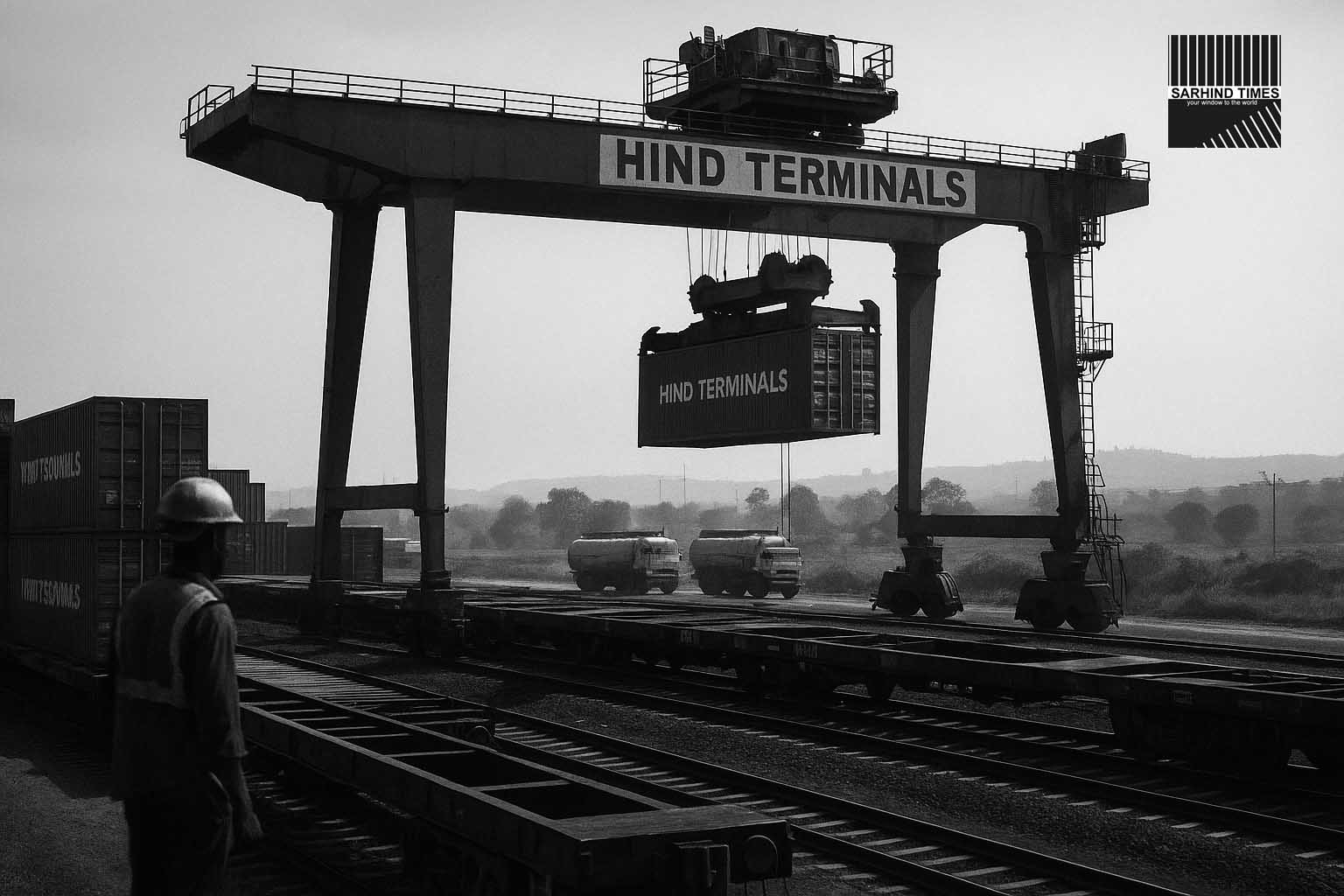
Resilient rural demand and elevated government capital-spending lift growth projections—but deeper questions loom over sustainability and structural strength
Dateline: New Delhi | 17 November 2025
Summary: A poll of economists anticipates the Indian economy grew at around 7.3 % in the second quarter (July-September) of fiscal year 2025-26, driven by a strong rural recovery, elevated government capex and early export momentum. While this underlines India’s status as a high-growth large economy, analysts caution that challenges remain—particularly around private investment, global headwinds and how to translate momentum into durable structural gains.
1. The forecast and its pillars
Recent data and analyst polling show that India’s economy is expected to expand at approximately 7.3 % in the July-September quarter, a figure that would mark a sustained high-growth trajectory among major economies. The survey of twelve economists found estimates ranging from 6.9 % to 7.7 %, with a median figure of 7.3 %. The Reserve Bank of India (RBI) had earlier projected around 7 % for the same quarter. These figures reflect a composite of positive signals: a resilient rural sector, elevated public investment, early export shipments and firming industrial output.
The rural economy has emerged as a notable contributor. After several years of muted growth, agricultural incomes, rural consumption and two-wheeler/tractor sales have shown stronger recovery. The analysis suggests improved harvest outcomes, increased public-spending flows into rural regions and structural tailwinds from rural-oriented programmes have combined. This has helped lift private consumption in areas where growth had stalled.
Meanwhile, government capital expenditure (capex) remains elevated and is being cited as a key stabiliser. Infrastructure projects, road and rail networks, defence procurement and state-led projects continue to absorb large investments. In one of the recent indicators, analysts pointed to elevated government capex as one of the drivers behind the higher growth forecast.
Early export shipments—especially in sectors where India has competitive strength such as textiles, gems & jewellery, and engineering goods—are showing signs of pick-up. While full quarter trade data is yet to be released, the upward revision of growth forecasts partly rests on expectations of export momentum. Analysts are also noting that industrial output and manufacturing growth are firmer than earlier vintage forecasts.
2. Why this matters
For India, achieving and maintaining growth above 7 % places the country in a select group of large-economy outperformers globally. It cements the narrative that India is not just a “growth story” but a structural high-growth economy in motion. The significance also extends beyond pure numbers: investors, governments and global agencies watch such trends for allocation decisions, trade deals, credit-ratings, and global supply-chain positioning.
In the domestic context, sustaining ~7 % growth means macro buffers—such as inflation, current-account deficits and fiscal health—must be managed carefully. With elevated government capex and consumption‐led growth, questions around private investment, productivity gains and structural reform become more salient. The fact that rural demand is playing a leading role is helpful: it spreads the growth base beyond urban services and consumption alone.
3. Digging beneath the surface: Where the growth is coming from
Rural consumption rebound: The rural household narrative is turning more positive. Favorable monsoon rains in recent cycles, higher procurement prices for crops, stronger wage trends in rural job schemes, and rising sales of farm-equipment and rural vehicles have all lent strength to rural demand. Research notes that rural consumption growth is outpacing many urban segments.
Public investment surge: The central and state governments continue to front-load infrastructure spending. Roads, highways, rail links, border connectivity, defence logistics, and smart-city investments are absorbing large sums. This capex shows up quicker in construction, machinery, commodity demand and services tied to infrastructure—providing momentum in the near term.
Export tailwind and global linkages: Though many global headwinds persist, India is witnessing early shipments and increasing engagement with trade blocs and free trade agreement negotiations. While full quarter trade figures are yet to be published, analysts view the export front as contributing positively rather than being a drag.
Industrial and manufacturing revival: Several indicators show manufacturing output gaining traction, capacity utilisation improving, investment decisions beginning to pick up, and supply-chain localisation efforts advancing. These factors hint at underlying improvement beyond surface numbers. That said, analysts caution that manufacturing still lags the service-sector buoyancy and needs further stimulus.
4. The risks and caveats
No high-growth trajectory is risk-free. In fact, the more important question is whether such growth is sustainable, inclusive and structurally sound. Several hedges lie in wait:
- Private investment remains tepid. While government capex is strong, the transmission to private capex and business investment remains uncertain. Unless businesses ramp up capex, the growth may depend heavily on public investment and consumption, which brings its own vulnerabilities.
- External trade and global headwinds. India is not insulated from global shocks: commodity price shocks, geopolitical risks, trade tensions, currency volatility and global demand slowdown could dampen export momentum or raise import bills.
- Inflation-fiscal trade-offs. High growth often brings inflation hazards. The central bank needs to keep a firm eye on inflation while policy remains accommodative. The government must also balance fiscal prudence against growth stimulus.
- Structural reforms still required. Productivity improvements, labour-market reforms, land-and-capital-mobility reforms, boosting manufacturing exports, and strengthening MSMEs remain incomplete. Without these reforms, growth may plateau or weaken.
- Rural growth sustainability. Rural demand appears strong now, but sustaining that depends on crop‐income trends, weather, rural credit and structural links into the non-farm economy. A reversal could undermine growth base diversity.
5. What sectors are benefiting and which need watch
Benefiting sectors: Infrastructure and construction, commodity-related industries (cement, steel), rural‐facing consumption (trucks, tractors, FMCG rural brands), services (trade, hotels, transport), and export-oriented manufacturing are seeing upside impact. The government’s push into manufacturing via production-linked incentive (PLI) schemes and localisation is also starting to feed through.
Flagged sectors: Businesses requiring large fixed-investments (large industrial plants, heavy engineering), capital-goods makers, sectors reliant on global demand (oil‐refining exports, high-end electronics), and financing/leverage-intensive business segments are under greater scrutiny. Credit growth in these segments remains only moderate and banks remain cautious.
6. Implications for households, investors and policymakers
For households, a growth-driven economy means better employment prospects, rising incomes (especially in rural areas) and continued upward mobility across many segments. Rural households may gain disproportionately if growth is maintained, which can reduce urban–rural divides. Consumption themes remain strong: FMCG, consumer durables, two-wheelers, rural vehicles, and housing may benefit.
For investors, India’s positioning as a higher-growth large economy enhances attractiveness for equities, infrastructure, transition themes (renewables, roads), and consumption plays. That said, they should watch for overheating, valuations, and hedge global risks. For asset allocators, a diversified India-exposure may still be justified, but timing and selection matter.
For policymakers, the message is clear: use the current momentum but prepare for next phase. The backbone of continued growth lies in accelerating private investment, upgrading infrastructure quality (not just quantity), improving labour and land productivity, boosting exports and manufacturing, and safeguarding macro stability. The “easy growth” phase may be nearing an end; structural work is now more important than headline numbers.
7. The fiscal and monetary policy tightrope
The interplay between fiscal stimulus and monetary discipline is under heightened focus. While government capex is playing a lead role, maintaining fiscal discipline is required to keep deficits and debt trajectories manageable. The RBI, meanwhile, must balance supporting growth while remaining alert to inflation and financial stability. Some analysts note this phase may require selective support rather than broad brute stimulus, especially given global rate-risks and capital-flow volatility.
Part of the optimism relates to wholesale/retail inflation moving lower, largely due to food-price moderation and base-effects. With inflation moderating, the RBI may have more room to support growth. On the other side, vulnerable segments such as banks’ non-performing assets, real-estate financing, stressed sectors and global funding flows may require closer supervision.
8. Regional and state-level angles</
While national forecasts dominate headlines, state-and-regional heterogeneity matters. States with stronger infrastructure pipelines, richer rural segments and proactive policy frameworks may outperform. The fact that rural consumption is stronger suggests states with agrarian strength may lead. At the same time, states burdened by debt, weak investment climates or limited private-sector linkages may lag.
9. Global context and positioning
In a world where growth is slowing in major economies, India’s anticipated ~7 % growth grants it a competitive edge. It positions India to capture manufacturing-relocation opportunities, global supply-chain shifts, investment diversions from China, and transition finance flows (renewables, infrastructure). At the same time, this makes India more exposed to external disruptions (trade wars, commodity shocks, geopolitical rifts). The interplay between domestic momentum and international linkages will define India’s path.
10. Scenarios: How the year could evolve
Considering current trends, a few plausible paths emerge:
- Base case: Q2 ~7.3 % growth, full-year FY26 around 6.8–7.0 %. Growth remains consumption-and-capex-led; private investment gradually picks up but not strongly.
- Optimistic case:</strong: Private investment accelerates, exports surge, manufacturing edges up, full-year crosses 7 %, India becomes top global large-economy growth for the year.
- Downside risk case:</strong: Rural demand slows, export momentum stalls, global headwinds bite, private capex remains weak—growth falls closer to 6.5 % for FY26.
11. What needs to happen next
1. Stronger signals of private investment: Incentives, business-climate reforms, ease of doing business, enforcement of contracts, land & labour reforms.
“`
2. Manufacturing export lift: Make-in-India must translate into make-for-world, not just make-for India.
3. Infrastructure quality over quantity: Focus on operations, logistics, supply-chains and economic cities.
4. Rural to urban transition management: Ensure rural gains convert into urban incomes, non-farm employment, structural shifts.
5. External sector watch: Monitor trade balance, import growth, currency, commodity price pressures and global cyclical downturns.
6. Macro stability: Keep inflation anchored, maintain fiscal credibility, manage capital flows and banking system health.
7. Inclusive growth: Ensure sectors and states are not left behind, close gaps in human capital, digital access, and regional inclusion.
“`
12. Final take—momentum yes, but caution required
The forecast of ~7.3 % growth in Q2 gives India a strong headline momentum. It validates many policy efforts and structural trends—rural recovery, public investment, early export strength and manufacturing revival. However, a high-growth number is only part of the story. The real challenge for India is translating headline momentum into deeper, sustainable structural change. The next phase must be less about “growth pace” and more about “growth depth”—investments that last, structural reforms that endure and growth that lifts productivity and inclusion.
For India to truly step into the next orbit—where it is not just a fast-growing large economy, but a globally competitive, innovation-led, manufacturing-and-services powerhouse—it needs to turn near-term momentum into medium-term bedrock. The coming months will be telling: whether the public-private investment engine fires, whether global linkages deepen and whether domestic reforms accelerate. In short, the question is less whether India can grow at 7 % and more whether India can *stay* at 7 %+ and lift the baseline upward. That remains the bigger test.



+ There are no comments
Add yours