
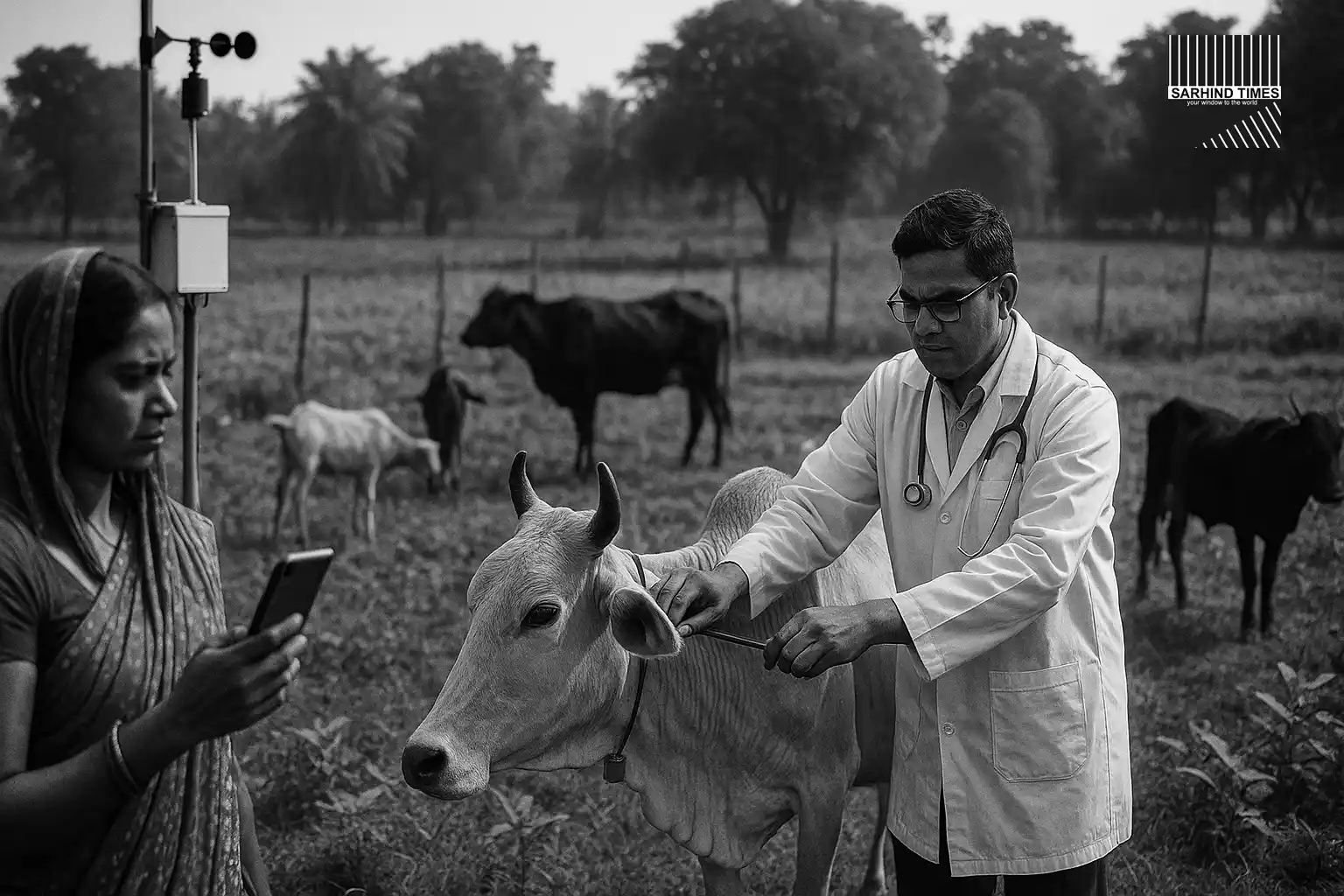
A paradigm-shift policy initiative aims to integrate disease surveillance, ecosystem health and pandemic-preparedness in India
Dateline: New Delhi | 13 November 2025, Asia/Kolkata
Summary: The Indian government has approved and is rolling out the National One Health Mission, a wide-ranging initiative to bring together human health, animal health and environmental science under one framework. The move represents a strategic leap in disease surveillance, pandemic preparedness and ecosystem-health governance in India.
Why India needs a One Health approach
In recent years, India has faced a series of public‐health challenges that cross the traditional boundaries between human health, veterinary health and environmental systems. The Covid-19 pandemic, outbreaks of zoonotic diseases, rising livestock populations, rapid urbanisation and ecosystem degradation have exposed vulnerabilities in the old system where human health, animal health and environment were regulated in silos.
The new National One Health Mission (NOHM) aims to break down those silos. The mission formalises the understanding that human diseases arise in contexts where animal health and ecosystem health are deeply intertwined. With India’s large livestock numbers, high human-animal contact, dense population, and diverse ecosystems, the logic for a unified health framework is strong. Experts say that unless coordination improves across ministries, future outbreaks — viral or bacterial — may catch the system unawares.
What the mission entails and how it is structured
The mission was approved by the Prime Minister’s Science, Technology & Innovation Advisory Council (PM-STIAC), signalling high-level endorsement. The anchor institution will be the Indian Council of Medical Research (ICMR), with a national Institute of One Health to be set up in Nagpur as a hub for research, surveillance, policy and coordination. The mission is built around three critical pillars:
- Disease Surveillance & Early Warning: Linking human health surveillance systems with veterinary and environmental indicators. For instance, animal morbidity/mortality, water or soil pathogen readings and human outpatient trends will feed into a unified dashboard.
- Pandemic Preparedness & Response Capacity: The mission strengthens rapid-response labs, joint drills, data-sharing protocols between ministries (Health & Family Welfare, Agriculture, Environment) and dedicated units for zoonoses and vector-borne diseases.
- Ecosystem & Behavioural Interventions: It addresses upstream risks—deforestation, wildlife trade, livestock density, antibiotic use in animals, waste‐water treatment—recognising these as drivers of emergent diseases.
Context: What triggered immediate action now
The timing of NOHM reflects recent events and long-standing risks. India has experienced repeated outbreaks of zoonotic diseases like avian influenza, joint human–animal vector transmission concerns, and increased antimicrobial resistance in animals and humans. At the same time, global commentary highlighted that gains in disease control globally are at risk unless new models take hold. For example, the World Health Organization reported that global tuberculosis response gains are endangered due to funding shortfalls and that integrated approaches are needed. The launch of NOHM is thus both reactive (to past experience) and proactive (for future epidemics).
Key themes: integration, innovation and equity
The mission emphasises three cross-cutting themes. First, **integration**—ensuring that animal health departments, human health agencies and environmental ministries talk the same language, share data and coordinate operations. Second, **innovation**—deployment of new technologies such as genomics, AI-enabled surveillance, environmental sensors, mobile health tools, and real-time dashboards. Third, **equity**—recognising that many vulnerable communities (tribal, rural livestock-dependent, forest fringe) face higher zoonotic or ecosystem-health risks and must be included in mission design.
Governance and operational model
At the national level, a Mission Steering Committee chaired by a Secretary-level officer will coordinate ministries. At the state level, each state will have a One Health Coordination Cell housed in the existing public health or animal husbandry department. The Nagpur institute will serve as the central research, training and laboratory hub. By 2027, each district is expected to have a One Health rapid-response unit linking district health, veterinary, environment and wildlife departments.
Funding for the mission will come from the central budget, supplemented by state contributions and a new One Health Innovation Fund to support pilots (digital surveillance, community engagement, eco-health mapping). The mission sets milestones for 2026 (national dashboard live, 100 district respondents trained), 2028 (statewide rollout) and 2030 (fully operational integration across 500+ districts and research network active globally).
Implications for disease control and public-health outcomes
The launch of NOHM is likely to strengthen India’s ability to detect and respond to outbreaks earlier. For instance, a zoonotic event in livestock can trigger an alarm before human cases spike; an environmental spill can be flagged for human health. This upstream detection could reduce human casualties, cost of response, and time to containment.
Moreover, the mission may promote cost-effective public health strategies: prevention of zoonotic spillover is much cheaper than treatment later. It also aligns with global health priorities such as the WHO’s One Health agenda and the global strategy on traditional medicine—indicating India’s ambition to align with global norms while addressing local realities.
What this means for stakeholders: government, private sector and communities
For government agencies: Ministries of Health, Agriculture, Environment will need to restructure workflows, build new capabilities (genomics labs, data analytics teams, joint field operations) and adopt cross-sector budget planning.
For industry and research institutions: There is an emerging ecosystem—start-ups, universities and private labs can contribute to sensor networks, modelling platforms, rapid-response kits and digital health tools. The fund allocation for One Health innovation suggests new grant and commercial opportunity.
For communities: People living in proximity to animals (livestock farmers, forest-adjacent communities), workers in wildlife trade, migratory bird routes and urban fringe communities will become participants in the surveillance network. Public health messaging will shift from “human risk” to “shared human-animal-environment risk”, encouraging behavioural change (hygiene around animals, safe food, ecosystem awareness).
Challenges and caution points
While the ambition is strong, delivering an integrated mission at scale poses major hurdles.
- Siloed departments: Historically, health, animal husbandry and environment work in isolation — transforming into a cohesive structure will take more than policy pronouncement.
- Data sharing and privacy: Combining human health data, veterinary data and environmental monitoring raises questions of data governance, privacy, interoperability and analytic capacity.
- Resource constraints: Many states lag in public health infrastructure and veterinary services; building new labs and rapid-response units across districts will require sustained funding and technical capacity.
- Behavioural change: Community engagement will be critical. For example: livestock farmers adopting safe practices, wildlife trade surveillance, environmental protection—all require long-term effort beyond policy launch.
- Metrics and accountability: Setting meaningful performance indicators (number of spillover events caught, joint drills conducted, cross-department response times) and publicly tracking them will be necessary to demonstrate value and maintain political momentum.
Early signs and next steps
The mission framework is already under activation. Initial workshops with states began mere days after announcement. The Nagpur centre is in planning stage, procurement of ‘One Health rapid-response kit’ has been initiated, and a national data‐sharing protocol is being drafted by ICMR. States such as Maharashtra and Karnataka have volunteered to pilot district-level units by mid-2026.
Key next-steps include: formal establishment of the One Health Innovation Fund, calls for proposals for sensor-based ecosystem monitoring, deployment of joint human-animal surveillance training, and public awareness campaigns to educate on zoonotic risk and environmental health links.
Conclusion
The National One Health Mission marks a major evolution in India’s health policy architecture. By recognising that human health cannot be disconnected from animal and environmental health, the initiative reflects a modern, systems-based mindset. If executed effectively, it could be a model for other populous nations facing similar risks.
However, the flip side is that such bold integration is hard to deliver. It will require coordination, capacity-building, funding and sustained political will. As India moves ahead, the next 12-24 months will be critical in proving whether this mission becomes proactive infrastructure for disease control or remains another aspirational banner. For citizens, the promise is real: better early warning systems, faster response to zoonotic outbreaks, and an economy less vulnerable to health shocks. But the promise hinges on execution.



+ There are no comments
Add yours