
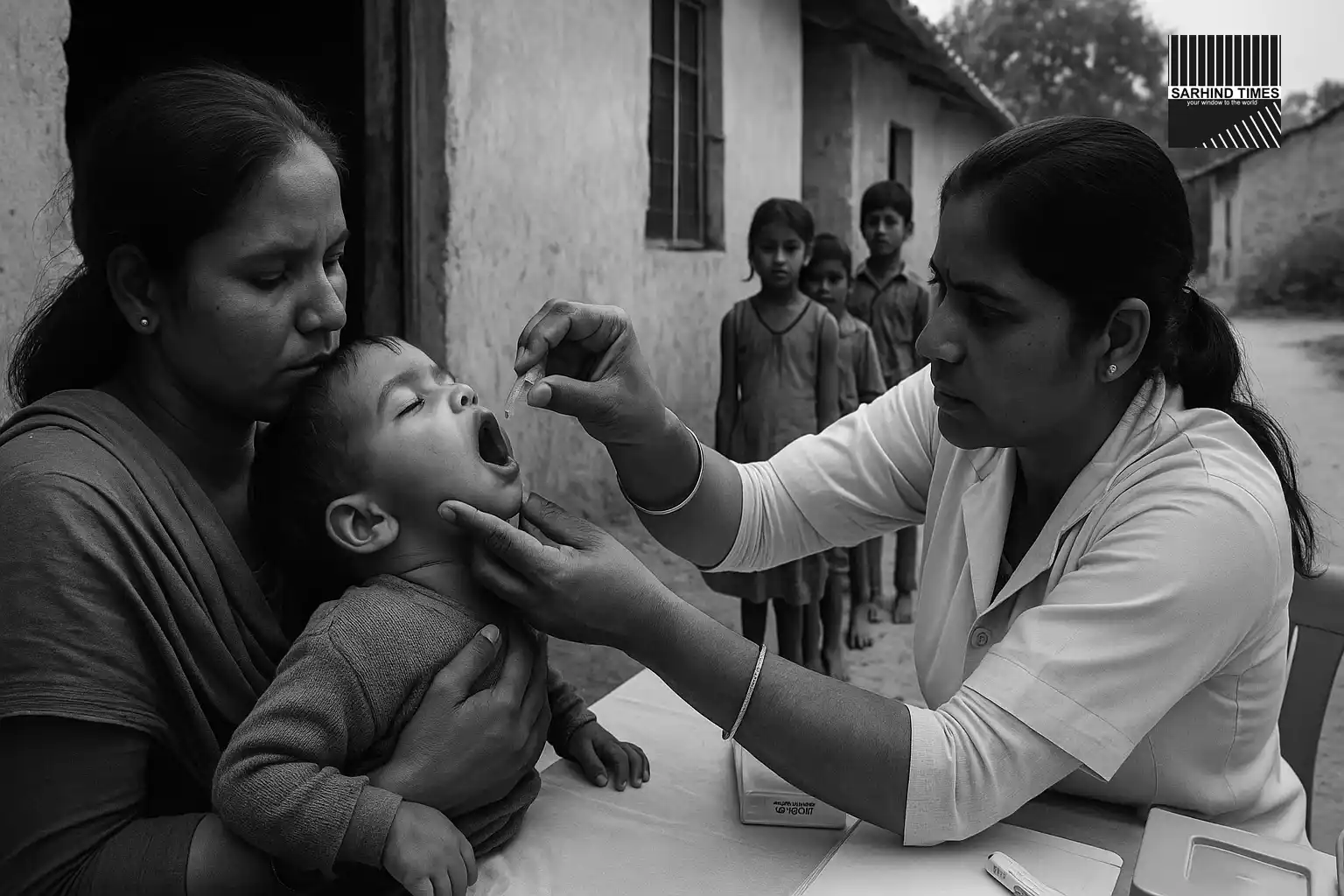
Major operation underway across states as the Universal Immunisation Programme renews focus on closing vaccination-coverage gaps
Dateline: New Delhi | 31 October 2025
Summary: The Indian government has rolled out a large-scale vaccination drive in October 2025, combining the annual “Pulse Polio” campaign and special catch-up sessions under the Universal Immunisation Programme (UIP), aiming to immunise children aged 0–5 years and pregnant women in high-risk areas. The campaign targets remaining coverage gaps and reinforces India’s position as one of the world’s leading immunisation programmes.
Background: India’s immunisation journey
Since its launch in 1985, the Universal Immunisation Programme (UIP) of India has sought to provide free vaccines to all children and pregnant women, covering a broad list of preventable diseases. The country achieved the milestone of being certified polio-free in 2014, thanks to repeated rounds of national immunisation days. Over recent years, as coverage improved, the focus has shifted to reaching the “left-out” and “drop-out” populations — children who missed doses due to geography, migration, or other socio-economic barriers.
The scale of India’s effort is among the largest in the world. According to analysis published in September 2025, India administers vaccines to millions of infants and pregnant women annually. The immunisation drive has been bolstered by digital tools (such as the U-WIN portal) and community-based outreach to strengthen data, logistics and tracking.
What the 2025 campaign involves
The current drive in October 2025 brings together two major strands:
- Pulse Polio National Drive: As part of maintaining polio-free status and preventing importation of poliovirus, a mass immunisation of children aged 0–5 years is being conducted in select states and districts. For example, the government announced a three-day campaign in October targeting over 39 lakh children in 18 districts of Madhya Pradesh.
- Catch-Up / Special Immunisation Sessions: To address vaccination gaps under UIP, special campaigns are being held to cover children and pregnant women who missed routine doses. According to the Ministry of Health & Family Welfare (MoHFW), the campaign aims to intensify coverage via targeted sessions in remote-or underserved areas, using mobile teams, awareness drives and special booths.
In official material, the MoHFW outlined that the campaign is geared to target “children up to five years and pregnant women in low-coverage districts, migrant clusters and hard-to-reach communities”. It will involve outreach, mobile clinics, and tracking on the digital U-WIN platform to ensure every eligible child is covered.
Why now? The urgency behind the push
Several factors have put renewed urgency on the immunisation drive:
- Coverage gaps emerge post-pandemic: The COVID-19 pandemic disrupted routine immunisation sessions globally. In India, this led to pockets of missed vaccinations, making catch-up essential.
- Polio vigilance remains critical: Although India is polio-free, the risk of importation and localised outbreaks remains real. Mass polio campaigns remain integral to sustaining elimination status.
- Equity and inclusiveness focus: With coverage in most urban/rural hubs high, the challenge now is reaching marginalised populations — migratory labour, tribal communities, urban slums and remote villages. Ensuring these groups are covered is key to health equity.
- Enhanced government commitment: The push aligns with national health policy goals of universal health coverage, strengthening primary health care, and reducing childhood mortality from vaccine-preventable diseases. The campaign is also linked to digital health infrastructure (U-WIN), logistics networks and outreach systems.
Operational details and state-level execution
The operational plan has several key components:
- Booth and outreach sessions: Health workers are setting up special immunisation booths in high-traffic spots (markets, railway stations, bus stands) and establishing fixed camps in villages/urban pockets. According to MoHFW data, 54 hospitals, 19 maternity homes and 65 new health centres were enlisted for sessions in one campaign.
- Mobilisation and awareness: Community health workers (ASHA, ANM) are conducting door-to-door messaging, local meetings, loudspeaker announcements, and social-media drives to encourage turnout. The U-WIN portal helps track beneficiaries and generate appointment reminders.
- Logistics and cold-chain management: Vaccine availability and safe storage remain critical. The country uses the Electronic Vaccine Intelligence Network (eVIN) to monitor stocks, ensure minimal wastage and route timely supplies to peripheral centres.
- Digital tracking: The U-WIN portal logs session data, tracks children who missed doses, sends reminders and generates dashboards for district and state officials to monitor progress.
Challenges facing the drive
While the campaign has been well-planned, several challenges persist:
- Hard-to-reach populations: Migrant workers, nomadic groups, urban slum dwellers and tribal communities often miss routine sessions due to mobility, lack of awareness or access. These groups require tailored outreach.
- Vaccine hesitancy and misinformation: Myths, fears and misinformation still hamper uptake in certain pockets. Awareness campaigns must continue to counter these issues.
- Resource constraints and workforce fatigue: Repeated campaigns and logistics place heavy demands on frontline workers and infrastructure. Ensuring motivation, staffing and supervision is vital.
- Geographical and climatic challenges: In remote hilly, tribal or flood-prone zones, maintaining cold-chain, reaching session sites and mobilising beneficiaries pose extra effort.
- Data-quality and tracking lapses: Even with U-WIN, ensuring accurate data entry, preventing duplication/missing records and following up on lost children remains a hurdle. Continuous monitoring is needed.
Expected impact and significance
If executed well, the campaign promises Several positive outcomes:
- Reduction in vaccine-preventable diseases: Diseases like polio, measles, diphtheria, pertussis, tetanus and pneumonia among children can be reduced further. Public health modelling suggests that closing coverage gaps accelerates disease elimination. Athens primary health infrastructure, human resources, logistics and digital data flows — benefits that will carry beyond immunisation missions.
- Health equity and universal coverage: Reaching children who were previously missed helps reduce health-inequality, particularly lower-income or marginalised populations, and contributes to universal health coverage goals.
- Global health credentials: India’s leadership in immunisation — both domestically and via “Vaccine Maitri” exports in past years — receives reinforcement, enhancing international reputation in global health.
Voices from the field
Health officials, community workers and parents have shared mixed feedback:
A district-level immunisation officer remarked: “The strategy to use high-foot-traffic booth sites alongside mobile outreach in remote hamlets is working. But keeping track of children who migrate mid-campaign remains a challenge.”
A parent in a slum-cluster said: “We did not miss the first shots but we changed house mid-year and the call-out missed us. This camp helped bring the child back into the schedule.”
Experts caution that vigilance is needed to avoid fade-out of drive momentum once the campaign ends. One public-health specialist noted: “Catch-up rounds are useful, but the core will always be strong routine immunisation anchored in local primary-care services.”
Financial and policy context
Financing such large campaigns is sizeable. The cost of reaching hard-to-reach populations, running booth sessions, maintaining logistics and monitoring data must be budgeted carefully. Although exact incremental costs for the October drive have not been published, a senior health ministry official indicated that states will receive additional funds under the National Health Mission (NHM) and UIP frameworks.
In policy terms, the campaign aligns with the National Health Mission’s goals, the Government of India’s commitment to Sustainable Development Goal 3 (Good Health & Well-being) and India’s roadmap to becoming a health-resilient nation. For example, integrating immunisation data into the U-WIN portal supports digital-health strategies and strengthens governance.
Looking ahead: What to monitor and review
Several indicators will determine whether the campaign succeeds:
- Reach and coverage: How many children receive the doses they missed? What percentage remains unreached by the end of the drive?
- Drop-out reduction: The proportion of children who had one dose but missed subsequent ones should decline.
- Disease incidence trends: Monitoring of measles, rubella, polio, diphtheria cases will show impact over the next 12-24 months.
- Data integrity: U-WIN and eVIN dashboards should show improved data completeness, real-time tracking and fewer missing records.
- Community awareness and sentiment: Are parents better informed and less hesitant? Are mobile/outreach sessions reaching transient/migrant populations?
Conclusion
India’s October 2025 immunisation drive represents a vital push to close the last mile in childhood vaccination coverage. By combining the tried-and-tested Pulse Polio campaign with targeted catch-up sessions under UIP, the government is aiming to leave no child behind in the race against preventable diseases.
Success will not simply be measured by the number of doses given this month, but by whether those children remain in the routine schedule thereafter, whether their immunity is sustained, and whether the health system uses this campaign to strengthen long-term delivery. The road ahead involves consolidating gains, ensuring robust primary-health linkages and maintaining trust in vaccination. If India succeeds, it not only secures healthier futures for millions of children — it reinforces its role as a global leader in immunisation and public-health innovation.
For parents, the call is clear: check vaccination cards, attend outreach sessions, ask health-workers for missing doses. For policy-makers, the challenge is equally clear: deliver, monitor, sustain. In doing so, the promise of better health for every child moves closer to reality.


+ There are no comments
Add yours