
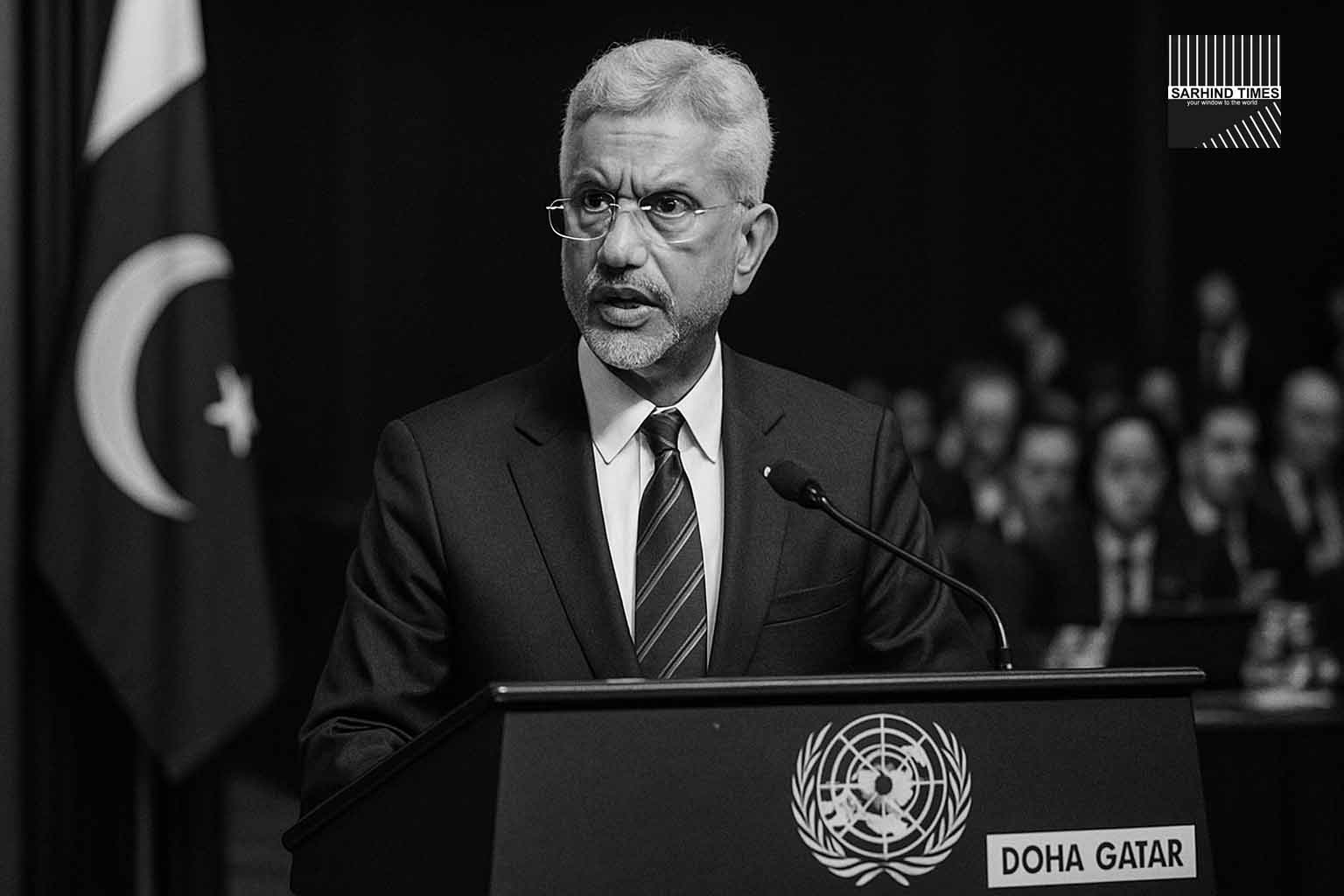
At the social-development summit in Doha, New Delhi contests Islamabad’s narrative and reaffirms its water-rights record
Dateline: New Delhi | November 26 2025
Summary: India has forcefully rejected Pakistani allegations that it is violating the 1960 Indus Waters Treaty, using its address at the international summit in Doha to reaffirm compliance and shift the diplomatic focus. The intervention highlights how water issues are once again becoming a strategic flashpoint in South Asia’s fraught relationship, even as broader conflict remains de-escalated.
Setting the Stage — What Happened in Doha
In early November, the World Summit for Social Development 2025 held in Doha served as the diplomatic platform for a high-stakes water-rights exchange between India and Pakistan. At a plenary session on November 5, Pakistan’s President accused India of “weaponising rivers” flowing into Pakistani territory and failing to adhere to its treaty obligations under the Indus Waters Treaty. In response, India’s minister of external affairs publicly rejected the allegation, characterising it as “baseless propaganda” and reaffirming that all of its water‐management works fully respect the treaty’s provisions. The confrontation underscored a less visible but increasingly strategic domain of bilateral tension — water diplomacy.
The 1960 Indus Waters Treaty — Why It Still Matters
Signed in 1960 under the auspices of the World Bank, the Indus Waters Treaty allocates use of the eastern rivers (Ravi, Beas, Sutlej) to India and the western rivers (Indus, Jhelum, Chenab) to Pakistan — a framework which has survived two wars, numerous skirmishes and dramatic shifts in South Asia’s geopolitics. While India contends the treaty remains robust, Pakistan’s accusations in Doha reflect growing frustration at perceived constraints and slow economic progress tied to water availability. India’s insistence on treaty compliance signals it wishes to maintain legal and diplomatic advantage, even as tensions elsewhere rise.
New Delhi’s Arguments and Rebuttal Strategy
India’s delegation in Doha made several key points to counter Pakistan’s narrative:
- India asserted that all its hydropower, canal and dam programmes are within the treaty’s design limits, and it emphasised that modifications in environment, climate and energy demand justify updates but not treaty violations.
- It accused Pakistan of repeatedly changing its account of “treaty breaches,” for instance by pointing to storage–release events that India says are within normal operational norms under the treaty protocols.
- It called for Pakistan to pursue dispute resolution mechanisms envisaged in the treaty rather than “politicised grandstanding” at international forums.
In the minister’s address, India invited Pakistan to resume bilateral technical dialogue, inspection regimes and joint‐monitoring of flows, rather than engage in high-visibility accusations. The framing was clear: India wants the issue compartmentalised as a technical and legal matter, not a headline political confrontation.
Diplomatic and Strategic Implications
The Indian rebuttal serves multiple strategic purposes: first, it reinforces India’s position as a responsible riparian state operating within international legal frameworks. Second, it signals to global and regional audiences that India is wary of water itself becoming a flashpoint in an already tense relationship. Third, by refusing to accept Pakistan’s accusations quietly, India tries to avoid setting precedent where water infrastructure becomes a singular lever of diplomacy and strategic leverage.
For Pakistan, the move to raise water issues at such a forum reflects growing domestic frustration with infrastructure bottlenecks and climate-driven water stress. It aligns with a broader strategy of pushing India on non-traditional fronts (water, environment, trade) rather than solely through military or cross-border terrorism narratives. India’s strong rejoinder thus indicates an intent to resist being boxed into a reactive posture.
Why Water Matters in South Asia Now
Water is no longer merely a resource question—it is a strategic variable. India’s fast-growing economy, expanding hydropower, agricultural intensification and inter-state river-linking projects require significant water management. Meanwhile Pakistan’s vulnerabilities are rising: reduced river flows, climate stress, high irrigation demand and a large agrarian economy under strain. In this context, any perception of unilateral action triggers political, security and economic alarms.
Analysts observe that while armed conflict remains the headline generator, softer battlefronts such as water rights, energy transition, climate adaptation and infrastructure are emerging as arenas of strategic competition. The India-Pakistan water dialogue may thus foreshadow a broader shift in regional contestation from strictly military postures to inter-dependency and resource governance challenges.
Domestic Reflections: What This Means for India Internally
Back home, India’s water-management narrative is also under transition. Projects such as river-linking, hydropower expansion, and sustainable irrigation are being rolled out under national programmes. India’s external stance reinforces its domestic policy direction: water must be seen not only as a natural resource but also as strategic infrastructure. By defending its treaty compliance publicly, the government signals to domestic constituencies that India will not concede to external pressure on its developmental agenda.
However, critics point out that India’s defensive posture overseas cannot mask internal water-governance weaknesses—states in India still grapple with inter-state disputes, inefficient utilisation, seasonal water shortages and growing demand from population and industry. How New Delhi balances external diplomacy with internal reform will be telling.
Outlook and Next Steps in the Bilateral Relationship
Going forward, several steps will shape whether the water dimension escalates into a broader crisis or remains managed in the diplomatic-legal realm:
- Resumption of joint inspection panels and treaty-statutorily mandated visits across the rivers to reassure Pakistan of transparency. India has indicated willingness to invite Pakistani officials to such visits in the near future.
- Technical dialogue on river-linking, upstream dams, storage timing and monsoon-management to be revived, potentially under the facilitator of a neutral international body. Pakistan is understood to favour incremental modifications to the treaty, while India favours maintaining the existing framework with minimal adjustments.
- Monitoring of how climate-change effects (monsoon variability, glacier melt, sedimentation) impact treaty flows and storage decisions. India may soon argue that new hydrological conditions require treaty interpretation rather than renegotiation.
The question remains whether Pakistan will escalate the issue further—perhaps by raising it at multilateral forums like the United Nations, raising investor concerns about Indian projects that affect upstream flows, or exploring bilateral compensations or mitigation packages. India’s response suggests it is prepared for the dossier to remain active but under control.
Risk and Reward: What Could Happen Next
If the water-flow dispute becomes entrenched, it could have broader knock-on effects: reduced bilateral connectivity, disruption in cross-border trade or expanded proxy conflicts in Kashmir. More immediately, heightened water diplomacy could dampen investor sentiment in infrastructure projects that straddle cross-border zones, particularly river linkage systems and hydropower schemes.
Conversely, if both sides agree to revive the treaty’s mechanisms in a robust manner, the water issue could be contained and may even open pathways for cooperation—shared flood-control structures, cross-border hydropower exports, joint climate‐adaptation zones. India’s public defence of its stance lays the groundwork for both cooperation and deterrence.
Conclusion: A Subtle Shift in India’s Diplomatic Posture
The recent rebuttal at Doha is important not only for what it said but for what it signalled: India is willing to defend its developmental infrastructure publicly, and is prepared for softer-power arenas of dispute with Pakistan to gain equal attention alongside high-intensity military flashpoints. The water-diplomacy front may appear less visible than tanks and missiles, but it carries long-term stakes—economic, strategic and human.
In the years ahead, South Asia’s future may hinge as much on how rivers are shared, water is managed and infrastructure is developed as on treaty clauses and missile siloes. India’s current message is clear: the growth imperative will not be sacrificed, the treaty remains in force, and dialogue must proceed from a position of strength. Whether Pakistan accepts this formula—or chooses another path—remains a key variable in regional stability.



+ There are no comments
Add yours