
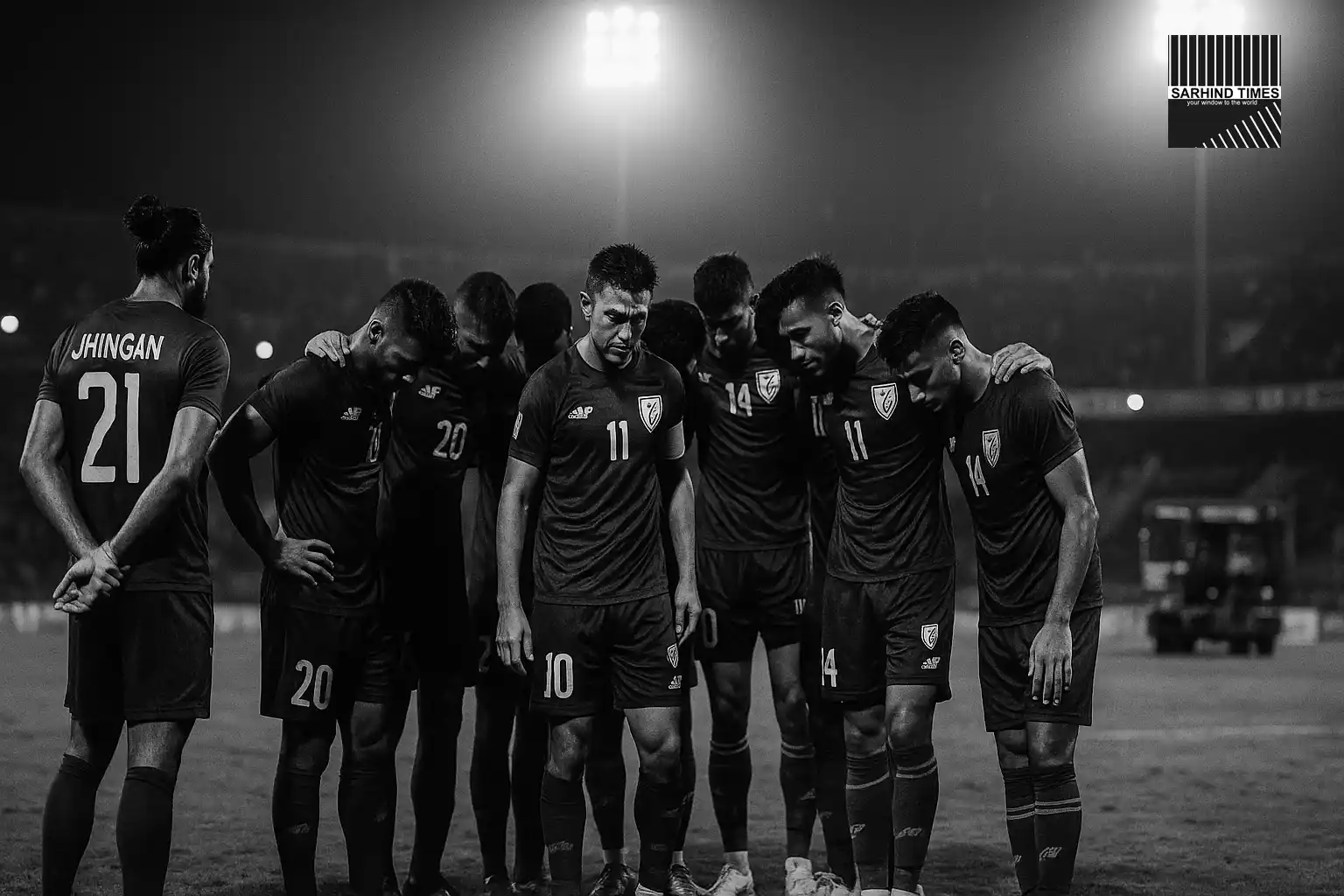
After taking the lead, the Men in Blue lose momentum and hand the decisive blow to their campaign
Dateline: Goa | October 14, 2025
Summary: The India national football team bowed out of contention for the 2027 AFC Asian Cup after a 2-1 defeat at home to Singapore, with the visitors staging a turnaround thanks to a second-half brace from Song Ui‑young. Despite dominating most play, India’s failure to convert chances and defensive lapses proved costly.
Match Recap: A Promising Start, A Harsh Finish
The match, held at the Fatorda Stadium in Margao, Goa, started in favourable fashion for India. They took the lead within the first 15 minutes thanks to a striking effort from Lallianzuala Chhangte. Chhangte’s long-range left-foot finish brought hope to the home side as they seemed poised to control proceedings.
But Singapore responded just before half-time through Song Ui-young, and then delivered the decisive goal in the 58th minute to turn the game on its head. India pressed for an equaliser but could not break through—missed opportunities and gaps in defence sealed their fate.
Statistical Insights: Dominance Without the Reward
Despite the result, India out-shot Singapore and maintained larger possession, yet failed to translate dominance into goals. According to match reports, India had 13 shots compared to Singapore’s five, and more corners.
This disconnect between territorial control and effective finishing is not new—it underlines structural issues in India’s national team setup, particularly when the stakes are high.
What Went Wrong: Tactical & Mental Breakdown
Finishing & composure: India’s attackers repeatedly found themselves in promising positions but failed to capitalise. Chhangte’s chance-creation early on faded as the match wore on. In the 90th minute, Brandon Fernandes missed a clear opportunity, a moment that summed up the frustration.
Defensive vulnerability: Singapore’s first equaliser came due to a momentary lapse in organisation just before half-time; the winner arrived after India’s momentum stalled. The transition from lead to deficit exposed deficiencies in defensive coordination and resilience.
Psychological shift: Leading early, India might have relaxed too much, giving Singapore a foothold. Once behind, India chased the game—but the lack of sharpness when under pressure became apparent. Mental toughness in decisive moments remains a concern.
The Bigger Backdrop: What This Exit Reflects
The failure to qualify for the Asian Cup is a major setback for India’s football ambitions. With the national team missing out of the 2027 edition, the pattern of underperformance on crucial occasions continues.
Analysts say the issue is less about single matches and more about structural gaps: development pathways for talent, coaching continuity, fitness levels, and exposure to high-intensity international football. Despite sporadic bursts of promise, the “next step” remains elusive.
Implications for Stakeholders
For players: The result is painful, but also a clear signal—when opportunities arise, finishing matters. The young squad now has to internalise this experience and demand accountability.
For coaches & management: The tactical blueprint will face scrutiny. Head coach Khali Jamil and his back-room staff will need to review whether their game plans adjust when initial dominance doesn’t yield goal-success, and whether mental-preparation for high-stakes situations is sufficient.
For Indian football governance: This exit raises questions for the All India Football Federation (AIFF). With India’s football infrastructure improving at league and youth levels, the disconnect at senior national team level remains worrisome. Investment must now shift to execution—not just building facilities and leagues, but improving match-day performance.
Looking Ahead: What the Roadmap Must Include
Strengthened domestic competition: Quality league matches, exposure to international style and pace, and fewer administrative interruptions are vital. If the national team isn’t challenged domestically, they won’t perform on tougher international turf.
Mental conditioning and preparation: Overcoming big-match nerves, converting dominance into results, maintaining focus under pressure—these require long-term investment in sports psychology and conditioning.
Talent to performance pipeline: India’s youth and U-23 teams are improving, but the gap to senior competitiveness remains visible. Coaching, technical infrastructure, analytics and scouting must synchronise better.
Reflection: A Moment of Reckoning, Not Closure
This isn’t just about one match—it is a moment of reckoning. India cannot simply reset; they must introspect. The disappointment of the exit should catalyse change: better systems, sharper tactics, deeper preparation. If those elements are addressed effectively, the pain may turn into a turning-point.
But if not, this could become another instance where hope rises only to be dashed. For the players, staff, management and fans, the question isn’t just when India will qualify again—it’s **how** and **with what identity**.



+ There are no comments
Add yours