
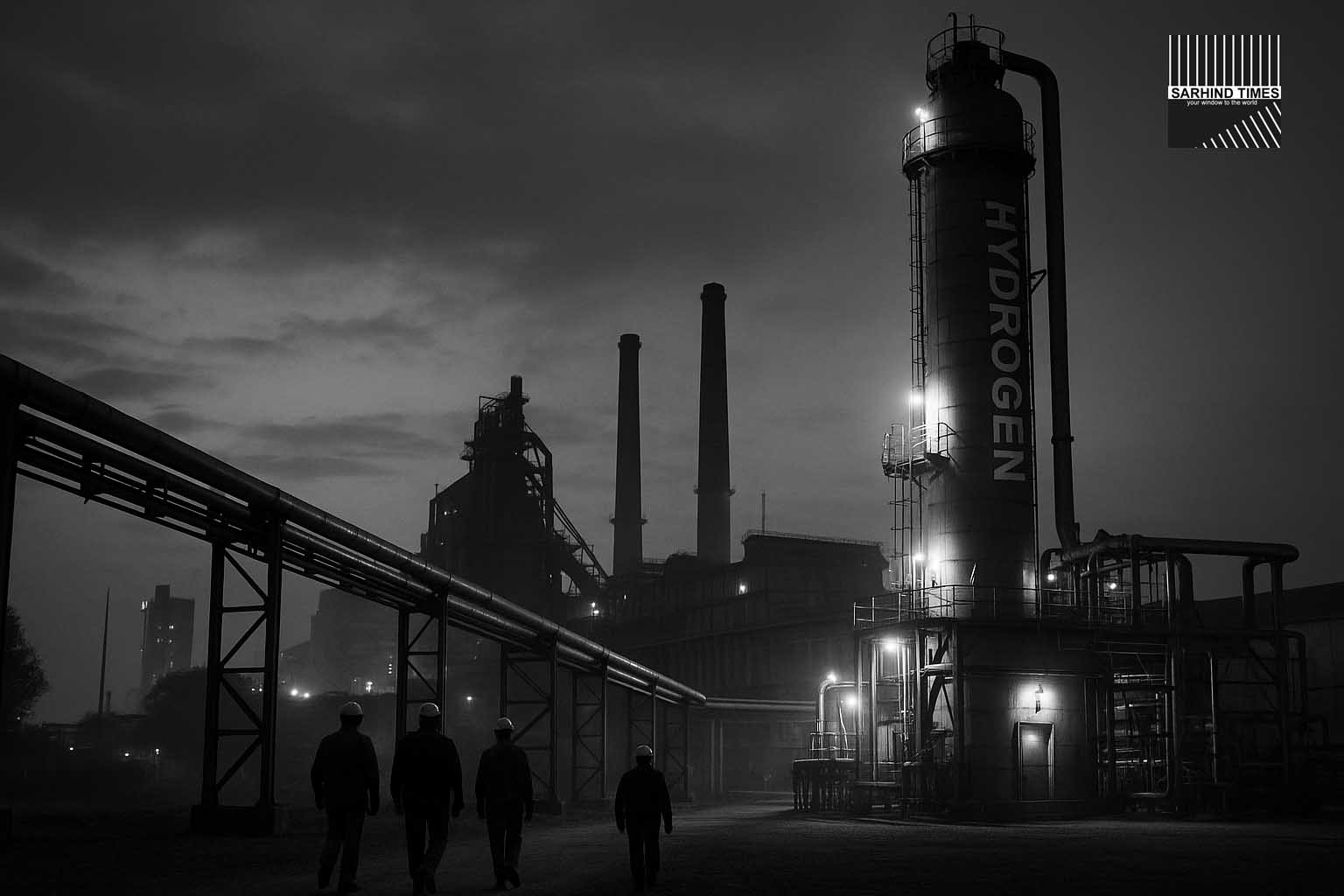
JSW Energy’s new facility in Karnataka signals a strategic leap in India’s green-hydrogen ambitions
Dateline: New Delhi | November 19, 2025
Summary: JSW Energy has commissioned India’s largest green hydrogen manufacturing facility at Vijayanagar, Karnataka, marking a significant milestone in the country’s clean-energy transition. The plant will supply green hydrogen and oxygen to JSW Steel’s DRI unit as part of an extensive decarbonisation effort. The move underscores India’s push to make green hydrogen commercially viable across hard-to-abate sectors and aligns with its 2030 target of producing 5 million tonnes of green hydrogen annually.
What has been commissioned and why it matters
JSW Energy’s newly-commissioned green hydrogen plant at Vijayanagar in Karnataka is being described as a turning point for India’s clean-energy ambitions. Under the government’s National Green Hydrogen Mission and the SIGHT (Strategic Interventions for Green Hydrogen Transition) programme managed by Solar Energy Corporation of India (SECI), this facility will supply 3,800 tonnes per annum (TPA) of green hydrogen and 30,000 TPA of green oxygen to JSW Steel’s Direct-Reduced Iron (DRI) unit, under a seven-year offtake agreement.
The scale of the project may seem moderate when measured against the company’s future plans, but it represents a bold strategic shift. JSW Energy and JSW Steel have signed a memorandum of understanding to scale up to 85,000–90,000 TPA of green hydrogen and 720,000 TPA of green oxygen by 2030.
Why does this matter? For one, the steel industry is one of the most carbon-intensive industrial sectors globally and in India. Transitioning to low-carbon or even green-hydrogen-based steel production is key if India is to meet its net-zero commitments and supply chain expectations from global customers demanding low-carbon materials.
India’s broader green-hydrogen ambition
The commissioning aligns directly with the government’s strategic target: producing 5 million tonnes of green hydrogen per annum by 2030. The new facility at Vijayanagar is one of the early large-scale pieces of this puzzle, signalling that India’s green-hydrogen infrastructure is now moving from pilot to commercial scale.
Green hydrogen, produced by electrolysing water using renewable electricity, offers a pathway to decarbonise hard-to-abate sectors — including steel, fertilisers, refineries, shipping and heavy transport. For India, which is both a large consumer of fossil-fuel-derived hydrogen and a major industrial base, the opportunity is especially large.
Why the steel cycle matters so much
Steel production is a major source of emissions. Traditional blast-furnace steel uses coal and emits significant CO₂. The Direct-Reduced Iron (DRI) route using green hydrogen promises drastically lower emissions. The JSW facility’s direct supply to a DRI unit places India in a competitive position for “green steel” — a material likely to command premium pricing in global supply chains in coming years.
The plant’s location next to JSW Steel’s integrated facility allows for logistical advantages and minimises transport and storage-risk costs. The co-location also exemplifies how industrial ecosystems are adapting to the green-hydrogen future.
Technical dimensions and supply-chain implications
The plant is being built under the Production-Linked Incentive (PLI) Scheme for green hydrogen and is designated under SIGHT. This means it qualifies for central incentives and represents early mover status.
On the supply chain side, this commissioning will stimulate demand for electrolysers, renewable-electricity generation, oxygen separation units, hydrogen storage infrastructure, pipeline distribution and safety systems. India’s green-hydrogen ambition is as much about manufacturing capability as about clean-energy output.
Regional and global implications
Regionally, the Karnataka location underscores that green-hydrogen manufacturing is not confined to coastal mega-hubs but can be embedded within inland industrial clusters. Globally, India’s push establishes itself as a potential hydrogen exporter and global supplier of low-carbon materials. Companies across Europe, Japan and Korea seeking clean-steel inputs will be watching closely.
This project also enhances India’s energy-security profile: by producing hydrogen domestically from renewables, dependency on imported grey hydrogen (derived from natural gas) decreases, strengthening industrial self-reliance.
Challenges ahead: Cost, scale and infrastructure
Despite the milestone, major hurdles remain. Green hydrogen remains significantly costlier than fossil-fuel-derived alternatives. Achieving economic competitiveness requires cost reduction in electrolysis, increased renewable-energy capacity, storage solutions, hydrogen delivery infrastructure and safety regulations.
Scaling from thousands of tonnes per annum to millions will demand massive investment, supply-chain scaling, skilled workforce, and stable policy environment. India’s power‐grid infrastructure must also support large intermittent renewable generation tied to hydrogen production.
Policy and regulatory enablers
The government’s policy framework is crucial. Apart from the National Green Hydrogen Mission, key enablers include:
- Incentives under the PLI scheme for manufacturing of electrolysers and hydrogen production.
- Green-hydrogen blending mandates in refineries, fertilisers, steel and mobility sectors.
- Export incentives for green-hydrogen derivatives and ammonia.
- Clear safety norms and codes for hydrogen production, transport and storage.
The commissioning suggests that the policy regime is delivering early results — something that industry watchers will interpret as a positive signal for investors.
Impact on investment and job creation
Large industrial clusters will benefit. Green-hydrogen projects are capital-intensive and create demand for manufacturing, construction, operations, maintenance, safety personnel and downstream services. The JSW facility is expected to create hundreds of direct jobs and thousands of indirect ones in its ecosystem.
Investment volumes will rise. The announcement could catalyse additional green-hydrogen deals, electrolysis-manufacturing plants and supply-chain hubs in India. As cost curves decline and scale increases, India could attract global firms looking for green-hydrogen components or low-carbon material sourcing.
How India is positioning itself in the global hydrogen race
Countries worldwide are aggressively investing in green hydrogen to decarbonise their heavy industries. Europe has already begun calling for “carbon border adjustment mechanisms,” meaning countries exporting steel and industrial materials to the EU will face levies if their production processes are carbon-intensive. India’s green hydrogen push aligns with this emerging global pressure.
Japan and South Korea are also investing heavily in hydrogen for shipping, mobility, and industrial restructuring. The Middle East is developing ultra-large ammonia-based hydrogen export hubs. China is scaling up electrolyser manufacturing at an unprecedented pace. In this global contest, India’s early commissioning of a commercial-scale plant helps it stake out a strong position.
This matters because the world’s clean-energy map is shifting rapidly. Nations that secure early leadership in hydrogen production, electrolyser manufacturing, and clean-steel output will hold strategic dominance in the next industrial wave.
Hydrogen for India’s energy security and industrial self-reliance
For India, green hydrogen is not only about decarbonisation — it is a geopolitical asset. By generating clean hydrogen domestically, India reduces dependence on imports of petroleum, LNG, and grey hydrogen used in fertilisers and refineries. This strengthens industrial self-reliance and supports the broader Atmanirbhar Bharat vision.
Hydrogen also plays a role in mitigating the volatility of the global energy market. Fluctuations in oil and gas prices can disrupt industrial production. Hydrogen derived from renewable energy stabilises long-term energy planning, especially for sectors like steel and fertilisers that require uninterrupted supply.
The green-steel revolution: What JSW’s move signals
The steel industry contributes nearly 7–8 percent of global carbon emissions. In India, where steel production is a major economic driver, emissions are correspondingly large. Green hydrogen can radically reduce these emissions by replacing coking coal in DRI operations.
The JSW facility is among the first in India to integrate green hydrogen into DRI steel production at a commercial scale. This is a major differentiator because green-steel markets are expected to grow exponentially. Europe is already offering premiums for certified low-carbon steel, and global automotive majors are pledging to shift their supply chains toward green material inputs.
The commissioning could set off a domino effect, encouraging:
- other steel manufacturers (Tata Steel, SAIL, AMNS India) to announce green-hydrogen pilots,
- industrial clusters to co-locate hydrogen facilities,
- renewable power developers to partner with hydrogen producers,
- states to compete for green-hydrogen investment.
Hydrogen clusters: The future of industrial India
Experts believe India will move toward “hydrogen valleys” or “hydrogen corridors,” where production, storage, transport and industrial use are geographically concentrated. Karnataka, Tamil Nadu, Gujarat and Odisha are emerging as preferred hubs due to their industrial bases, ports, and renewable-energy potential.
Soon, green hydrogen infrastructure may extend to:
- steel belts (Bellary, Jamshedpur, Rourkela),
- fertiliser regions (Gujarat, Uttar Pradesh),
- refinery belts (Maharashtra, Tamil Nadu),
- renewable-heavy states (Rajasthan, Karnataka).
Co-location reduces storage and transport losses, improving project viability. It also attracts global investors looking for industrial clusters with integrated hydrogen ecosystems.
Electrolyser manufacturing boom
One silent revolution accompanying hydrogen production is electrolyser manufacturing. India aims to become one of the world’s leading producers of electrolysers, supported by PLI schemes and domestic manufacturing incentives.
Currently, alkaline, PEM (Proton Exchange Membrane), and SOEC (Solid Oxide Electrolyser Cell) technologies are at the forefront. Indian companies, often in partnership with global firms, are setting up factories capable of gigawatt-scale electrolyser output.
Why this matters:
- Electrolysers constitute up to 40–50 percent of the capex of a hydrogen plant.
- Local manufacturing cuts project costs significantly.
- It reduces reliance on imports from China or Europe.
- It opens export markets for Indian-made electrolysers.
The green hydrogen plant’s commissioning will accelerate demand, encouraging faster scale-up in electrolyser factories across India.
Hydrogen storage, pipelines and safety systems
As green-hydrogen production grows, India will require extensive infrastructure — including pipelines, cryogenic storage tanks, compression stations, and refuelling hubs. Safety norms are still evolving, and large-scale deployment requires advanced materials and specialised engineering.
Hydrogen infrastructure also creates opportunities for metallurgy research, welding technologies, safety-sensor manufacturing and high-pressure engineering — areas where India can develop globally competitive expertise.
Hydrogen-powered mobility: Early signs but long road
The automotive sector is exploring hydrogen fuel-cell vehicles, especially for heavy transport. Buses and trucks running on hydrogen fuel cells are already undergoing trials in several Indian cities. However, widespread adoption remains limited by cost, infrastructure gaps, and safety norms.
Still, early experiments show potential for hydrogen in long-haul mobility, where battery-electric vehicles face range and charging-speed limitations. Pilot projects in ports and logistics hubs may lead the way.
Green hydrogen derivatives: Ammonia and methanol
Hydrogen is difficult to store and transport in gaseous form. Converting it into ammonia or methanol makes long-distance shipping and export easier. India is exploring large-scale green-ammonia production for both domestic use and export to Europe and Japan.
Several Indian companies have already announced feasibility studies for ammonia export terminals. If successful, India could become a major player in the global clean-fuel export market.
Job creation: Transforming India’s industrial workforce
The shift to hydrogen will require new skills — from electrolyser maintenance and hydrogen safety engineering to pipeline management and green-steel process operations. Training institutions and technical institutes are preparing to introduce hydrogen-related modules.
This transition could generate:
- high-paying engineering jobs,
- thousands of construction and manufacturing jobs,
- long-term plant operation positions,
- R&D roles for materials science and energy modelling.
States that successfully align skilling pipelines with hydrogen clusters may gain significant economic advantage.
The financial challenge: Making green hydrogen affordable
The biggest challenge remains cost. Green hydrogen currently costs multiple times more than grey hydrogen or fossil alternatives. Cost reduction depends on:
- falling prices of renewable power,
- economies of scale in electrolyser production,
- advances in hydrogen storage and transport,
- lower financing rates and stable policy support.
Industry leaders argue that once production reaches gigawatt scale, green hydrogen could become competitive with fossil hydrogen within the next decade.
Next phase: India’s export ambitions
India is positioning itself to become a global supplier of green hydrogen derivatives. With strong solar and wind potential, India can produce hydrogen at competitive prices over the long term. Export terminals planned in Gujarat, Tamil Nadu and Odisha signal growing confidence in future global demand.
Companies anticipating this demand are already signing memoranda of understanding with European, Japanese and Korean offtakers. As countries enforce stricter emissions norms, demand for green steel, green ammonia and green methanol will rise rapidly.
JSW Energy’s green hydrogen facility marks more than an isolated industrial achievement — it signifies the beginning of India’s industrial-scale hydrogen economy. The project will reshape steel manufacturing, stimulate electrolyser production, attract foreign investment, and push India toward clean-energy self-reliance. The next decade will determine how well India converts early momentum into global leadership.
Environmental implications: A major step toward decarbonisation
The commissioning of the Vijayanagar green hydrogen plant is a significant moment for environmental policy in India. Steel manufacturing is among the world’s highest-emission industrial processes, and India — as the second-largest steel producer — has a substantial responsibility to decarbonise.
Replacing coal-derived energy with renewable hydrogen can cut emissions by as much as 90 percent in the DRI process. This shift is not only about meeting global climate commitments, but also about ensuring the long-term competitiveness of India’s industrial sector.
Environmental experts emphasise that:
- Green hydrogen could eliminate millions of tonnes of CO₂ annually from India’s steel cycle.
- Cleaner steel reduces particulate pollution from coal usage.
- Hydrogen-based steelmaking sets a global template for sustainable heavy industry.
- Green oxygen byproduct enhances overall industrial efficiency.
The Vijayanagar project demonstrates that clean industrial transformation is no longer theoretical — it is commercially achievable.
Community impact and regional development
Large-scale hydrogen projects bring significant benefits to surrounding regions. Vijayanagar and adjoining areas in Karnataka stand to gain from increased employment, supply-chain expansion, improved infrastructure and new business activity. As ancillary industries develop around green hydrogen production, opportunities widen for logistics providers, safety-solutions firms, engineering consultancies and component manufacturers.
Local communities may also benefit indirectly from improved air quality. Steel clusters are traditionally associated with dust, smoke and heavy emissions. Hydrogen-based steel production could change this narrative dramatically, making industrial zones cleaner and healthier for residents.
Hydrogen hubs and future-ready infrastructure
As green hydrogen expands nationwide, India will need a sophisticated network of:
- renewable-energy parks dedicated to hydrogen production,
- pipeline corridors for hydrogen and oxygen transport,
- hydrogen storage tanks and compression stations,
- ammonia terminals and export docks,
- hydrogen refuelling stations for mobility pilots.
These developments will reshape the industrial geography of states like Gujarat, Karnataka, Tamil Nadu, Rajasthan and Odisha. Hydrogen-ready ports could emerge as major export centers, driving global trade links in low-carbon materials.
The private sector’s growing confidence
India’s business community has welcomed JSW Energy’s commissioning as a signal of market readiness. Multiple conglomerates are exploring hydrogen investments — including Reliance, Adani, NTPC, Tata Power, ACME and ReNew.
A competitive hydrogen ecosystem will drive rapid innovation, attract international collaboration and bring down production costs. Financial institutions are already studying hydrogen-linked bonds and green-transition financing models, anticipating rising demand for low-carbon infrastructure loans.
The economic rationale behind hydrogen
The economic case for green hydrogen becomes stronger as carbon regulations tighten globally. Carbon pricing, green-material procurement standards and cross-border levies mean that industries relying on fossil fuels risk losing market access.
India’s export-heavy sectors must adapt quickly. Green hydrogen offers a pathway to maintain competitiveness while reducing exposure to international regulatory risk. Over time, companies that adopt cleaner processes may benefit from premium pricing, lower environmental compliance costs, and stronger brand reputation.
Consumer impact: Will costs rise?
In the short term, hydrogen-based products may cost more than their fossil-derived counterparts. Steel, for instance, could see modest price increases until economies of scale kick in. However, long-term price parity is expected as renewable power becomes cheaper, electrolyser technology advances and global hydrogen demand rises.
Experts argue that the temporary cost premium is a necessary investment in India’s industrial future. Without transitioning to cleaner production methods, Indian manufacturers risk being locked out of regulated international markets in the coming decade.
Government’s role: Policy clarity is key
For India to become a hydrogen superpower, policymakers must ensure:
- consistent subsidies for early hydrogen projects,
- clear safety and quality standards,
- rapid approvals for hydrogen clusters and export terminals,
- long-term contracts enabling investor confidence,
- support for R&D and technology innovation.
The government’s continued support under the National Green Hydrogen Mission will be essential as India scales up production and aims for export capability.
The path to global leadership
The Vijayanagar plant alone does not make India a global hydrogen leader — but it marks the beginning of a large-scale transition that could reshape the country’s industrial economy. India’s natural strengths — abundant solar and wind, large coastline, strong engineering capabilities and booming manufacturing sector — give it a competitive edge.
If India stays on course, it could become:
- a major exporter of green ammonia and methanol,
- a global hub for green-steel production,
- a top-three manufacturer of electrolysers,
- a leader in hydrogen innovation for heavy industries.
Global markets are shifting rapidly toward low-carbon materials. The countries that build capacity early will define the next industrial era.
Conclusion: A milestone with far-reaching consequences
The commissioning of the green hydrogen plant at Vijayanagar is more than a technological achievement — it is a symbol of India’s new industrial direction. It signals that India is serious about decarbonising manufacturing, reducing emissions, strengthening domestic energy security and aligning with global climate expectations.
The coming years will determine how quickly India can scale production, attract investment, build infrastructure and transition its hardest-to-abate sectors to hydrogen. But one thing is clear: the green hydrogen revolution in India has begun, and this milestone will be remembered as a key turning point in the nation’s energy-transition journey.



+ There are no comments
Add yours