
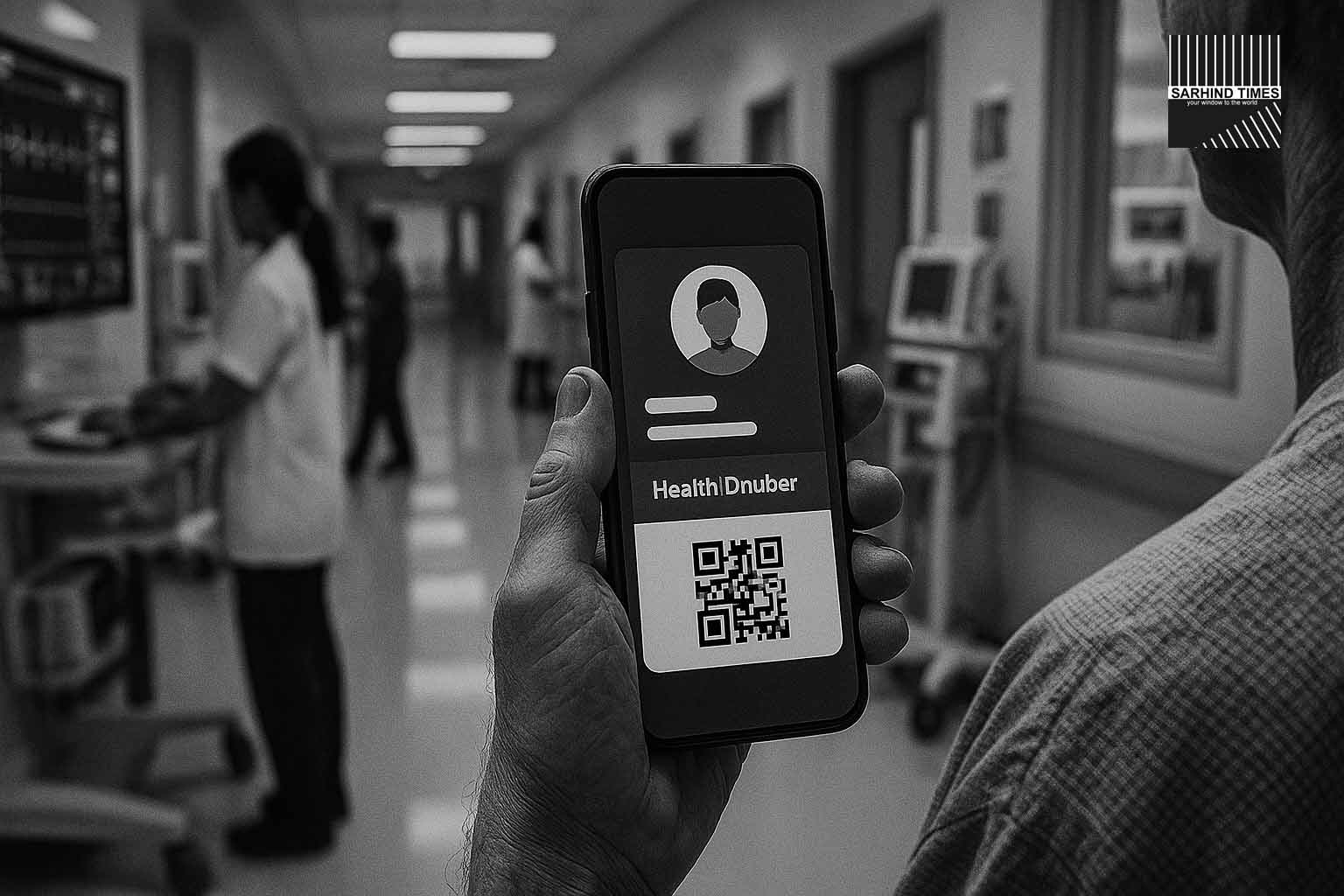
With expansion to 78 crore health IDs, regional digital-health summit and plans to extend mission till 2030, India charts a new phase in digital healthcare
Dateline: New Delhi | November 26 2025
Summary: India’s digital healthcare infrastructure is undergoing a decisive upgrade, driven by the functionality of the Ayushman Bharat Digital Mission (ABDM). With more than 78 crore Ayushman Bharat Health Account (ABHA) health IDs issued and over 50 crore health records linked into the digital system, the next phase emphasises interoperability, AI-enabled diagnostics and open-standards frameworks. The government has moved to extend the mission’s timeline to 2030, signalled by a major Regional Open Digital Health Summit and new financing targets. The pivot marks a shift from foundational build-out to large-scale deployment and global competitiveness in healthtech.
Rapid Growth: The Numbers Tell the Story
The Ministry of Health & Family Welfare reports that as of mid-2025 the ABDM ecosystem has achieved substantial scale: over **78 crore** ABHA IDs issued, more than **50 crore** health records linked and almost **6 lakh** healthcare professionals registered under the mission’s databases. These figures reflect the transition of India’s digital health architecture from pilot mode to national-scale deployment.
With the core infrastructure largely in place, policymakers and technologists are now focused on the next stage: ensuring that digital health records, telemedicine, diagnostics and AI-driven insights actually translate into better access, lower cost, higher quality and equity of care. The government is calling this “ABDM 2.0” — the maturity phase of digital health.
Interoperability, Open Standards and the Regional Agenda
In November 2025 New Delhi hosted the Regional Open Digital Health Summit 2025, bringing together countries across South Asia, global health agencies and tech-enterprises to engage around open digital health architectures. At the event, Health Secretary Punya S. Srivastava emphasised that “digital health must be connected, interoperable & citizen-centric.”
India’s digital health framework emphasises four key registries — ABHA for citizens, Health Professional Registry (HPR), Health Facility Registry (HFR) and Drug Registry — and three gateways for health-data exchange and consent management. The architecture builds upon Free/Libre/Open Source standards such as HL7 FHIR and ensures that health-tech innovations can plug-in rather than remain silos.
What’s New: AI, Expo, Expansion and Focus Areas
Beyond core IDs and registries, three major developments are defining the current phase:
- AI-Powered Diagnostics and Tools: Healthtech start-ups and hospitals are leveraging the digital health backbone to deploy generative-AI diagnostics, personalized care modules and predictive alerts. For instance, the integration of large-scale health records with analytics is allowing early detection of diseases and preventive interventions.
- First-Ever Digital Health Expo: India is preparing to host its inaugural Digital Health Expo, modelled on major trade shows, to showcase 200+ health-tech firms, innovations in telemedicine, AI diagnostics, digital wellness apps and global partnerships. The expo underscores India’s ambition to move from domestic deployment to global marketplace participation.
- Mission Extension & Financing: The original five-year term of the ABDM programme ends March 2026; a cabinet note is being prepared to extend the mission through 2030 with a suggested budget extension of ₹2,000 crore+. This reflects the government’s recognition that digital health is a long-haul structural reform rather than one-off project.
Why It Matters: Healthcare, Equity and Industry Impacts
The digital health push is consequential for multiple reasons:
- Access and inclusion: For remote, rural or peri-urban populations, the ability to store, share and access health records digitally can reduce duplication, speed up diagnostics, avoid repeat tests and support continuity of care. It also enables telemedicine and outreach beyond large cities.
- Quality and efficiency: Digital workflows reduce administrative burden, minimise errors, enable better referral systems and support diagnostics. With connected records, clinicians can make more informed decisions and avoid unnecessary procedures.
- Industry and investment: The health-tech ecosystem is expanding rapidly — from start-ups building AI-diagnostics to firms developing telemedicine platforms, digital wellness, remote-monitoring and enterprise health-software overlays. The expo and mission extension signal fresh opportunity for capital-investment, M&A and global expansion from India.
- Policy and future-proofing health systems: The move makes India’s health-system more resilient, data-driven, and adaptive to future challenges (pandemics, NCDs, aging population). By building interoperable infrastructure now, India is positioning itself for the health challenges of next decade.
Operational Challenges: Not Just Tech, But Delivery
Despite the positive trajectory, several execution-challenges remain:
- On-boarding and usage: Having issued millions of ABHA IDs is one thing, but actual usage of digital records, integration with private clinics, uptake in rural health centres, and meaningful data flows are still ramping up.
- Data-privacy, security and consent: As more health-data is digitised, concerns around interoperability must be matched with governance — consent management, encryption, breach-protection, ethical use of AI, and alignment with global norms.
- Infrastructure & human-capacity gaps: Many smaller hospitals, clinics and rural health centres lack bandwidth, devices, staff training or integration workflows. Without these, digital IDs may become a token number rather than enabling tool.
- Inclusive equity: If digital health systems primarily serve urban centres or bigger hospitals, the rural, tribal or marginalised populations might lag further. Ensuring the mission reaches deep into smaller towns and villages remains critical.
What to Watch in the Next 12–18 Months
Key indicators to follow include:
- Growth in linked health-records and real-time clinical use — how many hospitals actively use ABHA IDs for patient workflows.
- Expansion of AI-driven tools, model validation and regulatory approval for diagnostics backed by the national infrastructure.
- Effectiveness of the upcoming digital health expo — number of participating start-ups, partnerships, global tie-ups and investment announcements.
- Roll-out and execution of “ABDM 2.0” and extension to 2030 — timely cabinet approval, budget release, state-level implementation, monitoring dashboards.
Conclusion: From Infrastructure to Transformation
India’s digital-health journey is shifting gears. What began as the creation of health-IDs and registries is now morphing into a broader, strategic reform of how healthcare is accessed, delivered and managed in the country. With the Ayushman Bharat Digital Mission entering a new phase of interoperability, AI-integration and global vision, India is positioning itself not just as a large healthcare user, but a builder of digital-health infrastructure, platforms and innovation.
The real test ahead is whether these systems translate into improved health-outcomes, reduced cost of care, stronger coverage for underserved populations and new health-tech ecosystems. For policy-makers, providers, entrepreneurs and citizens alike, the message is clear: the digital health era is here, but the work — in usage, scale-up, inclusion and impact — is just beginning.



+ There are no comments
Add yours