
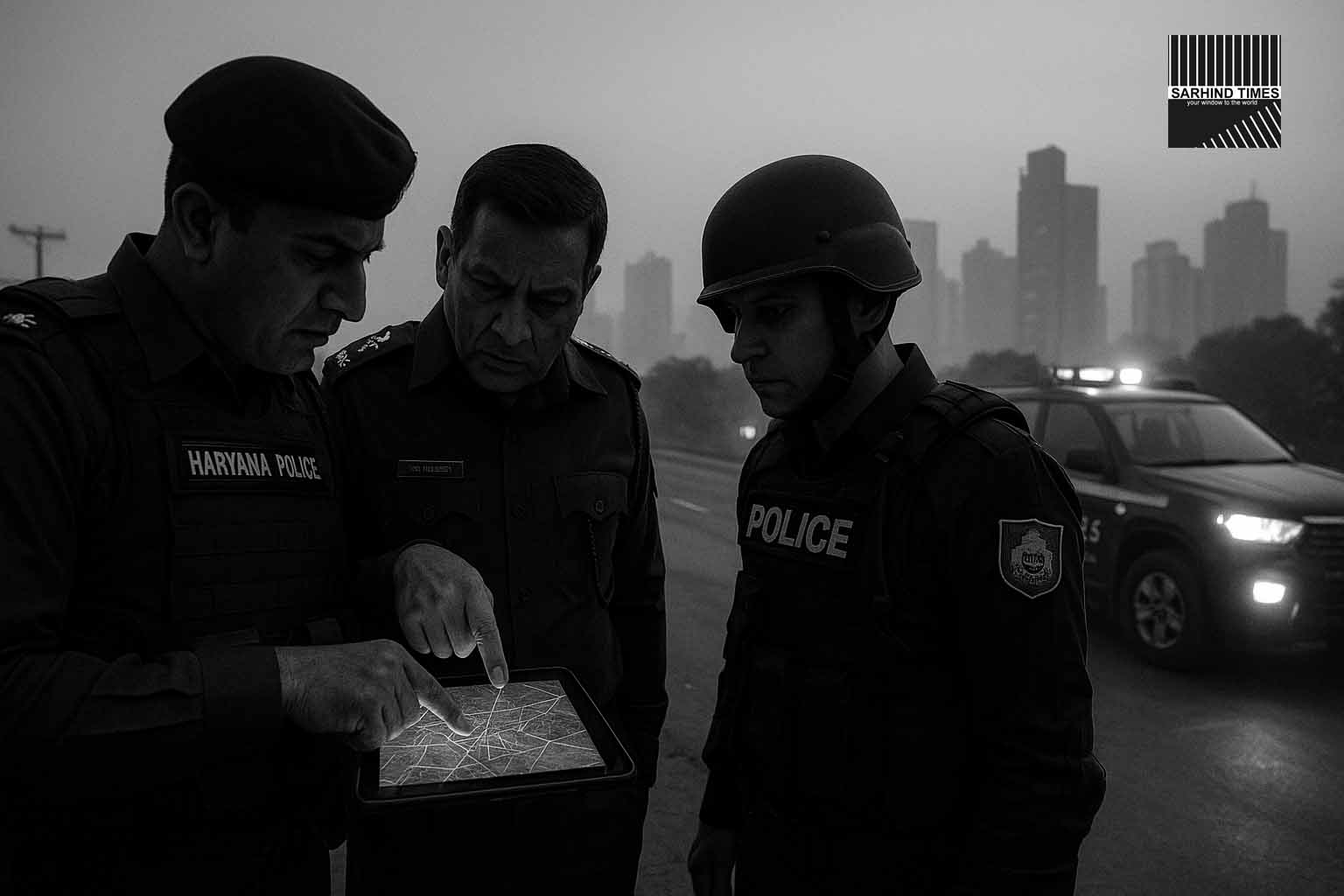
16-day statewide drive targets fugitives, organized networks and inter-state transit in push to restore public safety
Dateline: Gurugram | 11 November 2025
Summary: In a major push to curb gun-enabled crime, the Haryana Police has initiated a 16-day operation—codenamed “Operation Trackdown”—targeting fugitives at large, organised armed crime networks and transit routes through the state, including Gurugram. The campaign underscores intensifying enforcement and political pressure to restore safety in rapidly urbanising districts.
Why now: rising concern over gun violence and fugitive-crime links
The launch of Operation Trackdown comes amid growing concerns over gun-related crime in Haryana, including incidents of retaliatory shootings, targeted ambushes and inter-state fugitive movement. In Gurugram, the challenge is heightened by the district’s rapid urban growth, significant population influx, expanded road-networks and proximity to the National Capital Region, which together amplify transit-crime risks and create enforcement complexities.
Senior state officials noted that the police force has observed an upward drift in firearms-enabled offences over the past 18-24 months. This includes gang-related shootings, truck-stop robberies, extortion with firearms and seizures of illegal arms linked to organised groups across multiple neighbouring states. In response, the state leadership emphasised that conventional policing responses were proving inadequate unless reinforced by structured, time-bound campaigns focused on fugitives and network dismantling.
Structure of the drive: roles, targets and accountability
The operation, which commenced on 5 November 2025 and runs through to 20 November, is being orchestrated from the headquarters of the Haryana Police with oversight by the Director General of Police. Each police station has been instructed to compile a “worst-five” list of fugitives and gun-crime suspects; district and zonal units will compile “worst-ten” lists; at the state level a “worst-twenty” list will be overseen by the Special Task Force.
Key features include:
- Direct accountability: SHOs and DSPs at station level will report weekly on fugitive-arrest progress.
- Legal action escalation: Cases of bail revocation, asset seizures and organised-crime charges are being fast-tracked.
- Inter-state coordination: Collaboration with neighbouring states such as Punjab, Rajasthan, Himachal and Delhi is being strengthened to follow transit routes and arrest offenders who cross state borders.
- Data-driven monitoring: Weekly dashboards will track arrests, charges filed, assets frozen and reduction in shooting incidents.
Implementation in Gurugram: hotspots and enforcement zones
As a key district in the campaign, Gurugram’s policing units have identified several hotspots—expressway-adjacent sectors, large industrial areas, logistics hubs and informal settlement clusters—as priority zones. During evening and night hours, mobile check-posts are being deployed on main transit routes, targeting vehicles and drivers flagged for involvement in gun racking or inter-state movement.
Additionally, Gurugram district command has launched operations targeting arms smugglers who exploit the city’s expressways and border-adjacent highways to transport weapons from neighbouring states. Large-scale verification of heavy-vehicle transit permits and “loitering suspicion” protocols have been instituted to apply pressure on transit-networks.
Why it matters for residents and local business
Gurugram has emerged as one of India’s fastest-growing corporate and residential hubs. While growth has brought employment, infrastructure and real-estate expansion, it has also attracted crime networks leveraging anonymity, vehicular access and rapid population turnover. For residents and businesses, unchecked gun-violence threatens urban liveability, labour-productivity and investment climate.
By targeting fugitive gun-offenders, asset-flows and organised-crime networks, Operation Trackdown attempts to send a signal—both to criminals and to the community—that enforcement is intensifying and criminal routes are narrowing. Firms in the region have welcomed the campaign, as improved public-safety perceptions are critical for talent retention and operational continuity in a competitive urban ecosystem.
Challenges and scepticism: what to watch out for
While the drive is ambitious, analysts and policing experts caution that a time-bound campaign alone will not resolve deeper structural issues. Key challenges include:
- Sustainability: Once the 16-day window closes, the risk is that momentum may fade without institutionalised enforcement routines and community-engagement mechanisms.
- Data-integrity: Effective targeting requires accurate intelligence, inter-agency data-sharing and continuous monitoring. Historically, fugitive-lists and “most-wanted” drives suffer delays, duplication and legal-process bottlenecks.
- Transit-route complexity: Haryana’s interfaces with multiple states, high-speed corridors and logistics networks make enforcement resource-intensive. Smugglers adapt quickly, using small arms, shunted vehicles, alternate routes and sleeper cells.
- Community trust and rehabilitation: Enforcement alone may displace networks into neighbouring zones if local community involvement, arms-surrender incentives and rehabilitation programmes are not integrated.
Broader law-and-order implications
Operation Trackdown reflects a growing trend in Indian policing of “mission-mode campaigns” designed to demonstrate visible enforcement progress. The structured goals, time-bound nature, public-reporting dashboard and emphasis on senior-level accountability signal a shift from ad-hoc enforcement toward outcome-driven policing. For the state of Haryana, this initiative aligns with political imperatives ahead of next year’s Assembly elections and urban-governance imperatives tied to Gurugram’s growth trajectory.
It also opens up discussions about the need for longer-term reform: mapping illegal-arms networks, tackling home-manufacturing of weapons, upgrading intelligence-led policing, and deploying advanced crime-analytics. Without these deeper changes, there is a risk of the campaign becoming symbolic rather than transformative.
What residents and stakeholders can do
For residents, business leaders and civil-society actors, the campaign offers both hope and responsibility:
- Stay informed: Access weekly “public-safety dashboards” released by district police to track enforcement progress and local hotspot updates.
- Report suspect activity: Use the state-police app or hotline to report suspected arms transit, unknown vehicles lingering on roads, or individuals known to be fugitives; provide photographic/video evidence if safe.
- Engage community-groups: Resident-welfare associations in Gurugram can partner with local police stations for “safe-neighbourhood initiatives”, workshop on arms awareness and collaborate on vetting heavy-vehicle movement in their sectors.
- Business security adoption: Firms located near expressways or large logistic zones should review their perimeter security, ensure employee transport routes are vetted for arms-risk and liaise with local police on transit checkpoint alerts.
Signs of early impact to monitor
Over the remainder of the campaign and shortly beyond, the following indicators will offer insight into whether the drive is translating into deeper change:
- Number of fugitives arrested relating to gun-enabled crime in the 16-day period.
- Reduction in reported shooting incidents or gun-violence-related calls in Gurugram and adjacent districts week-on-week.
- Asset-seizure totals: live tracking of value of arms, vehicles and logistics hubs disrupted.
- Inter-state arrests and transit-route disruptions: whether networks crossing into Punjab, Rajasthan or Delhi are being disrupted.
- Follow-on momentum post-20 November: whether local policing units transition into sustained targeted enforcement rather than reverting to business-as-usual.
Conclusion
Operation Trackdown is a major law-enforcement manoeuvre aimed at recalibrating the gun-violence and fugitive-crime landscape in Haryana, with Gurugram as a frontline district. Its ambition—focused lists, time-bound targets, inter-state coordination—marks a departure from reactive policing. For the initiative to succeed, the momentum of arrests must translate into deeper structural disruption of gun-networks and sustained vigilance beyond the campaign window.
For residents, businesses and city-managers in Gurugram, the message is firm: the state is acting—and the local ecosystem must engage, monitor, and participate. Whether this shifts the needle on urban safety depends on execution, persistence and community-police partnership.



+ There are no comments
Add yours