
Dateline: Gurugram | Tuesday, October 14, 2025 (IST)
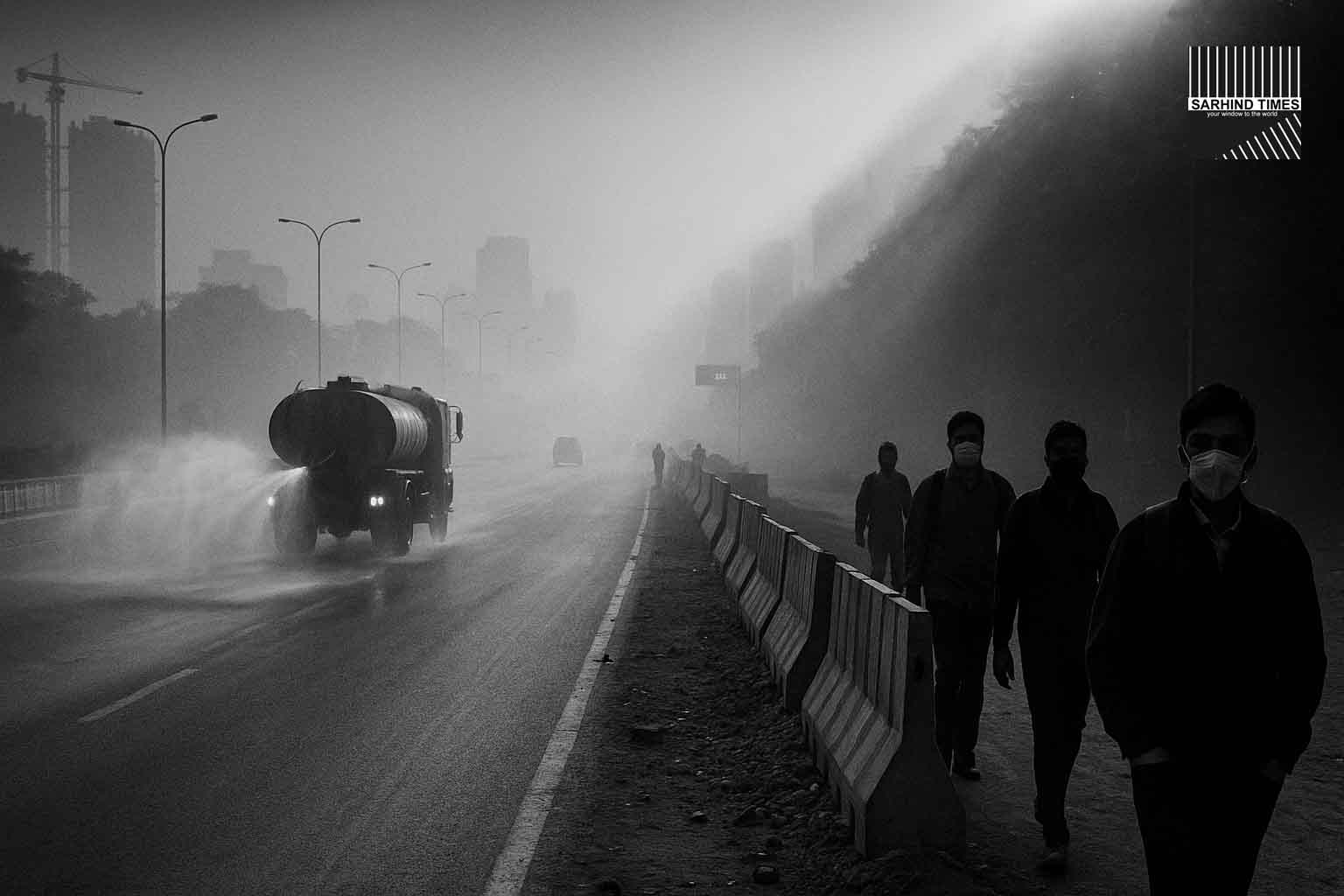
As a thin brown veil hung over the city at daybreak, Gurugram woke to the season’s first decisive slide towards “poor” air—the kind that stings the throat, tightens the chest and keeps school PT classes indoors. By late morning, the city’s widely watched stations told a familiar story: Sector 51 spiked to ~229 (Poor) while Gwalpahari hovered near 154 (Moderate); the citywide average wavered in the 190–200 band—each number a shorthand for the growing queues at respiratory OPDs and the cautious looks behind N95s on morning walks. Local experts blamed PM10-laden road dust and open waste burning, amplified by weak winds and a low ventilation index that trap pollutants close to the ground. Forecasts suggest the AQI will stay “poor” from Oct 14–16 and could tip to “very poor” if emissions persist and dispersion conditions fail to improve.
The Morning After: What Today’s Numbers Mean
The concentration spikes were not a bolt from the blue. Over the past 72 hours, AQI curves in Delhi–NCR inched up with every lull in the wind. On Monday, Delhi’s index crawled from 167 to 189—still “moderate,” but model guidance from the Centre’s Air Quality Early Warning System pointed to a “poor” turn by Tuesday—the first since June 11—with Oct 14–16 flagged as a sustained poor window. Gurugram’s micro-climate typically mirrors this drift with a few points of lag or lead depending on wind direction. This week, westerly to northwesterly flow and low speeds ensured dust from broken carriageways and construction frontages lingered.
On the ground, residents in Sectors 10, 47, 51, 89, 90 and peripheral villages reported the usual suspects: unpaved shoulders, potholes, slow-moving convoys over granular surfaces, and sporadic open burning at garbage points. Enforcement teams have indeed been at work—MCG has been levying fines for littering, debris dumping and bulk-waste violations, and has warned repeat offenders of blacklisting. But as AQI dips, the most visible feedback loop is immediate: more dust equals more coughing fits; weak dispersion makes the city hold its breath longer.
Inside the OPD: What Doctors Are Seeing
Pulmonologists in the city say the mix of coarse dust (PM10), vehicular exhaust and stagnant conditions produces a predictable clinical pattern at this time of year: wheezing in children, exacerbations in seniors with COPD or asthma, and throat–eye irritation in otherwise healthy adults after brief outdoor exposure. Even short, brisk walks can be enough to trigger coughing bouts for those with airway hyper-responsiveness. The advice is plain:
- Mask up outdoors (well-fitted N95/FFP2).
- Time your exposure—avoid dawn and late evening peaks when the boundary layer is shallow.
- Rinse airways/eyes after outdoor activity; maintain hydration.
- Review inhalers/peak-flow plans with your doctor if you have chronic disease.
The city has seen similar spikes after autumnal calm sets in, a pattern recorded across multiple seasons and supported by earlier observational reports linking pollution upticks to OPD surges.
Why Gurugram Chokes: The PM10 Problem
Much of Gurugram’s early-season pollution skew is PM10—coarse particles from road dust, erosion of shoulder material, construction debris, and poor housekeeping at sites. When winds are weak and the ventilation index (a product of mixing height and wind speed) is low, the city becomes a slow-circulating bowl. This week’s modelled ventilation indices—~3000 → 2800 → 2500 m²/s midweek—sit at the lower end of what’s needed for efficient pollutant dispersion, a meteorological setup that makes every shovel of loose aggregate and every open flame at a dump count.
Street-Level Reality: The Civic Enforcement Push
To be fair, the Municipal Corporation of Gurugram (MCG) has intensified actions since August—single-day crackdowns, seizures of vehicles for illegal dumping, and spot fines for violators under Solid Waste Management Rules. In parallel, civic teams have targeted bulk waste generators, penalising lapses in segregation and disposal. The challenge is less in the letter of the law and more in day-to-day compliance at hundreds of micro-sites—from minor civil works to perimeter hoardings that leak dust into traffic. Residents say the city needs a “no gaps, no excuses” dashboard: daily progress logs on mechanised sweeping, sprinkling routes, defect liability repairs, and third-party pavement quality tests on busy corridors.
What the Data Says: Sector 51 & Gwalpahari
Monday’s uptick came with station contrasts. Sector 51—surrounded by dense residential and hospital clusters, with multiple surface disruptions—hit ~229 (“Poor”), while Gwalpahari—a wind-exposed ridge-edge site—held near ~154 (“Moderate”). For residents, this variance often feels like whiplash: two neighbourhoods, two different skies. But the readings are consistent with micro-environmental conditions—surface roughness, traffic patterns, and construction density—seen across the urban fabric. For the next 72 hours, model guidance continues to signal “poor” with potential “very poor” spillovers, particularly during late-night/early-morning stasis if local emissions persist.
Health Playbook: What Schools, RWAs, Offices Can Do Today
Schools
- Reschedule PT & outdoor assemblies to late-morning windows on poor-AQI days.
- Classroom protocols: windows cracked for cross-ventilation when safe, HEPA purifiers in infirmaries/labs where possible.
- Communication: parent alert (SMS/WhatsApp) when AQI >200 for activity modifications; share mask guidance.
RWAs
- Daily mechanised sweeping & targeted sprinkling on internal lanes; cover/secure material heaps.
- Zero tolerance for open burning, including leaf litter—set up monitored collection.
- Contractor clauses: dust screens, wheel-wash for trucks, and penalties for non-compliance.
Offices
- Flexible start times or temporary remote options on “poor/very poor” days for sensitive employees.
- HVAC checks for filters and fresh-air mix; provide onsite N95s and saline eye rinses at first-aid stations.
Individuals
- Track local AQI before outdoor exercise; shorten intensity or move indoors if AQI >200.
- For chronic patients: keep rescue inhalers handy; discuss step-up plans with physicians.
Policy Lens: Beyond Fines—Fixing the Dust Economy
While fines and seizures make headlines, sustained gains come from root-cause engineering:
- Pavement Integrity: Thin overlays fail early. Insist on minimum thickness, proper compaction, and drainage fixes before blacktopping; enforce defect liability rigorously with independent testing.
- Shoulder Hardening: Unpaved margins are dust factories. Stabilise shoulders, plant low-height cover, and enforce no-parking on raw earth.
- Material Logistics: Mandate covered transit, on-site wheel-wash, and fixed unloading bays with dust screens for all large sites.
- Real-Time Transparency: Publish daily work logs, AQI micro-trends and violation maps; reward compliant contractors with faster clearances.
- Open-Burning Zero: Equip waste teams with rapid collection, hotline escalation, and CCTV+patrol loops at known ignition points.
These aren’t moonshots. Cities that persist with these basics see flatter pollution peaks even before regional measures kick in.
Stubble vs. the Street: Keeping Perspective
The Delhi–NCR conversation often swings to stubble burning. This week’s contribution, however, is minimal (sub-1%) in the official split, with the transport sector and local dust doing most of the damage. That picture will change as the harvest window deepens, but today’s smog is mostly homegrown—a hard truth, but one that empowers city-led action.
The Forecast: Three Days Of Caution
- Oct 14–16: “Poor” baseline expected; night–morning windows riskiest.
- Wind & Mixing: Remaining on the low side; ventilation index at the lower band (≈2500–3100 m²/s).
- Risk of Escalation: If open burning and road dust persist, pockets could tip “very poor.”
Public health messaging should stay proactive—don’t wait for “very poor” to sound alarms.
Voices From The Ground
- Parents’ concern: “We’ve moved our child’s football practice indoors this week. The cough started on Sunday,” says a Sector 49 resident.
- Site engineer (Sector 90): “Sprinkling is planned but water tankers get diverted. A fixed schedule with GPS logs would help.”
- Pulmonologist: “This is predictable. Patients whose symptoms were quiet in the rains flare up now. Masks work; use them.”
Quick Guide: How To Read Your Local AQI
- 0–50 (Good): Safe for all.
- 51–100 (Satisfactory): Okay; sensitive folks stay alert.
- 101–200 (Moderate): Limit intense outdoor exertion.
- 201–300 (Poor): Masks advised; shorten outdoor time.
- 301–400 (Very Poor): Avoid outdoor activity; indoor air management.
- 401–500 (Severe): Emergency protocols; medical caution.
Tip: Micro-conditions vary street to street. Check your nearest station and time your day around lower-exposure windows. (Sector 51 and Gwalpahari are popular references for Gurugram.)
Editorial View: Don’t Normalise ‘Poor’
Gurugram has the talent, tools and budgets to prevent a routine slide from “moderate” to “poor.” What it needs is consistency—in engineering standards, in site housekeeping, and in transparent daily reporting. If the city can harden shoulders, seal overlays properly, and stamp out burning, the air will improve even without waiting for regional winds to save the day. The public appetite for clean air has never been higher; civic systems must meet it with visible delivery.
#Gurugram #AirQuality #AQI #PublicHealth #Pollution #CPCB #Haryana #DelhiNCR #CleanAirNow #MCG



+ There are no comments
Add yours