
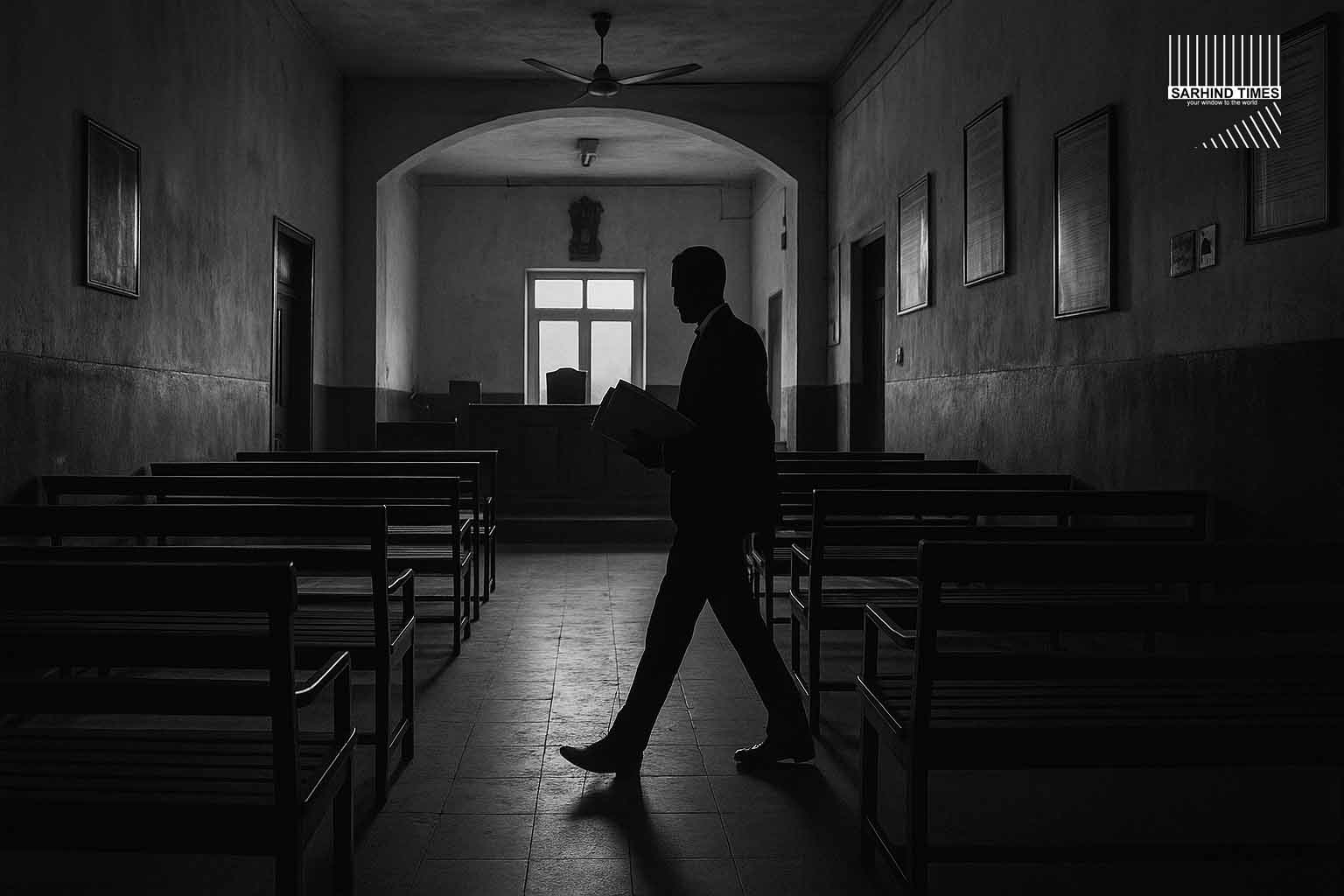
Alleged transfer of sensitive information to suspected Pakistani handlers leads to major police action
Dateline: Gurugram | November 27, 2025
Summary: A lawyer practising in a Gurugram court was arrested by Nuh police on suspicion of spying for Pakistan’s intelligence agency, following evidence of communications with suspected operatives. Authorities say the arrest highlights ongoing cross-border espionage risks in the Delhi-NCR region.
Shock in legal circles as arrest rattles Gurugram’s court community
In an unexpected development that has sent ripples through Gurugram’s legal community, police arrested a lawyer from the city late Wednesday. The man, identified as a resident of Kharkhadi village in Nuh district, has been accused of operating as a spy, allegedly passing sensitive information to a foreign intelligence agency. The unnamed central investigative agency supplied leads that triggered the arrest, according to official sources.
The lawyer, who practices in the Gurugram district court, was taken into custody by Nuh police. Details remain sparse about the specific information he is accused of sharing, but officials said that during the investigation, chats were discovered that “prima facie” show contact between him and individuals suspected of being Pakistani handlers. Over several months, the accused reportedly transmitted data that could compromise national security.
The arrest marks the third such case this year involving alleged Pakistani spies operating in the Mewat region — raising serious concerns about espionage networks reaching into Haryana and the national capital region. Authorities are now reviewing other pending cases and communications to determine if there are more operatives linked to the same network.
Timeline and how events unfolded
According to police sources, the central agency first flagged suspicious messaging traffic originating from the lawyer’s known electronic handles several weeks ago. Subsequent surveillance and data collection reportedly confirmed that the individual had been in regular contact with suspected foreign operatives via encrypted messaging apps. On November 25, an intelligence brief was forwarded to Nuh district authorities, prompting a swift operation.
Authorities executed search orders at the lawyer’s residence in Kharkhadi village and in his Gurugram lodging. Electronic devices, storage media, and other digital equipment were seized for forensic examination. The accused was arrested and formally charged under sections relevant to espionage, unlawful communication with foreign agents, and national security laws. As of Thursday morning, he remains in police custody under judicial remand.
Senior police officials have indicated that further arrests or detentions may follow, pending analysis of data retrieved during the raid. Officials did not rule out the possibility of the arrested lawyer acting as a conduit — passing on information collected from legal proceedings, court filings, or client data to foreign handlers.
Regional significance and growing espionage concerns in NCR
The arrest is seen as particularly serious because it concerns a legal professional — someone with privileged access to court documents, case strategies, and potentially sensitive client information. The implications are grave: if confirmed, this could represent a long-term breach of trust in legal confidentiality and potentially compromise cases involving national security, corporate interests, or high-profile litigations.
In recent years, intelligence agencies have warned about increasing attempts by foreign espionage units to infiltrate professional networks — law, media, academia — to gain strategic leverage. The fact that this operation reportedly targeted a lawyer in Gurugram suggests operatives may be seeking access to corporate litigations, property disputes, or other high-value legal matters prevalent in the Delhi-NCR real estate and business environment.
Local authorities believe the arrest may also be a warning sign of sleeper cells operating under the guise of legal or professional legitimacy. Gurugram, with its rapid growth, mixed population, and proximity to national capital institutions, remains a vulnerable node for such clandestine operations — especially in border-shadowed regions like Nuh and Mewat.
Law enforcement reaction and immediate fallout
The police have stepped up surveillance across the Mewat region and issued advisories to local bar associations and court houses in surrounding districts. In Gurugram, court administration asked for enhanced verification of counsel — particularly those residing outside city limits — and discretionary audit of digital correspondences in sensitive cases.
Senior officials on Thursday reiterated the government’s zero-tolerance policy toward espionage, warning that those found guilty will face the full severity of national security laws. A spokesperson clarified that the case is being treated under anti-terror and national security protocols, given the potential risk to state integrity. The Directorate of Prosecutions has been asked to review all ongoing litigations associated with the accused lawyer to ensure confidentiality is maintained.
Meanwhile, the accused has neither been named publicly nor granted bail. The court has ordered a 14-day judicial custody while forensic analysis of seized material continues. Officials have also begun cross-checking client lists and case files handled by the lawyer — a process that could raise questions within several ongoing high-profile suits.
Legal community reacts — worry, suspicion and calls for reforms
The arrest has drawn mixed reactions from Gurugram’s legal fraternity. Many senior advocates expressed shock at the development, stating that such events undermine public trust in the legal system. “If even a lawyer can be an espionage agent, how does one guarantee confidentiality? This sets a dangerous precedent,” commented a senior counsel requesting anonymity. Others urged bar councils and associations to adopt stricter screening procedures and periodic audits for practitioners.
There are calls for reforms to include mandatory background verification for lawyers — especially those residing outside urban centres, or those whose origin is from border or sensitive districts. Some practitioners hinted at forming a panel to review and recommend security protocols for law firms and solo practitioners operating in NCR.
Critics caution, however, against overgeneralizing the issue to all legal professionals. They argue that the vast majority of lawyers operate ethically, but concede that isolated breaches can tarnish the reputation of the entire community. Efforts are ongoing to prevent stigmatization while instituting structural safeguards.
Wider national security implications and policy review
Security analysts believe the arrest could lead to a broader review of how sensitive information flows within civil domains — including law, real estate, and corporate litigation. With governmental and private-sector cases often intertwined with foreign firms or assets, the potential for misuse of privileged legal access for espionage is being taken more seriously than before.
Given the cross-border stakes, central agencies are reportedly reviewing partnerships and communication protocols involving foreign clients. Law firms with international ties may face increased scrutiny, including mandatory logs of data access, encryption audits, and background checks for foreign-linked personnel.
In addition, the case may prompt government to expand existing national security guidelines to include non-traditional sectors like legal services, consultancy and property litigation — recognizing that espionage today does not only take place through military or diplomatic channels, but can exploit commercial and civil infrastructure.
Community reaction — fear, uncertainty and demand for accountability
In Gurugram’s Kharkhadi village and surrounding areas, news of the arrest has generated unease. Residents described the accused as relatively quiet and not very socially active. However, some admitted to noticing frequent strange visitors and odd delivery parcels in the past few months — information they connected to the police action after media reports.
Local community leaders have urged authorities to ensure a fair, transparent investigation, emphasising that innocent people should not be targeted by association. They also demanded that the police protect the identities of minor or unrelated family members to prevent social ostracization.
Within the bigger urban landscape of Gurugram — already grappling with rapid growth, real estate speculation, and social changes — this incident has triggered anxiety about hidden threats beneath the veneer of legal legitimacy. Residents call for more transparent policing and institutional safeguards to ensure law-abiding professionals are not unfairly suspected while genuine threats are addressed.
What happens next — investigations, trials and institutional response
Over the next few weeks, forensic experts will examine seized digital evidence, including chats, call logs, file transfers, and metadata. Investigators plan to trace back the network — including possible handlers, sources of money, communication channels, and any other professionals or intermediaries involved. Authorities may register more FIRs if new names emerge from the data analysis.
The district court has scheduled a hearing early next week to consider the custody extension of the lawyer. Given the severity of charges, it is likely that the case will eventually be transferred to a special national security court or anti-terror court for trial. Legal experts note that the pace of such trials tends to be slower, given the complexity and sensitivity of evidence — encrypted communication, cross-border linkages, and national security dimensions.
Meanwhile, the state government and the bar council have been asked to jointly frame a policy requiring background verification for legal practitioners in sensitive districts. Proposed reforms include mandatory submission of verified identity proof, periodic security clearances for lawyers handling high-stakes matters, and digital audits of data accessed or shared by practitioners. If implemented nationwide, this could mark a significant expansion of national security frameworks beyond traditional boundaries.
Significance for Gurugram, Haryana and national consciousness
This arrest underlines how fast-growing urban hubs like Gurugram — with their mix of migrant populations, corporate and real estate boom, and proximity to national capitals — can become fertile ground for hidden threats. It calls into question how much civil domains like legal practice need to be insulated from foreign interferences.
For Haryana, the case comes at a time when authorities are already studying ecological, infrastructural and law-and-order challenges in expanding urban belts. The presence of alleged espionage activity adds a new dimension of risk, compelling policymakers to consider security along with development.
At a societal level, this episode could shape public perception about professions that are normally regarded as safe or honorable. Without careful handling, there is a danger of stigmatizing lawful workers; but at the same time, ignoring such threats could leave national security exposed. The coming months — as investigations proceed — will be critical in determining whether this arrest prompts real structural reform or becomes a one-off cautionary tale.
Conclusion: An inflection point for civic trust and institutional vigilance
The arrest of a Gurugram-based lawyer on charges of spying represents more than just a criminal case — it is a wake-up call about hidden vulnerabilities in urban India’s expanding socio-economic matrix. As legal, corporate and civil sectors converge in cities like Gurugram, the lines between professional work and national security blur.
How the state responds — whether by strengthening vetting mechanisms, ensuring transparent investigations, or building civic trust — will determine if this episode becomes a turning point for institutional vigilance or a moment of fear and suspicion. For now, law-abiding professionals, clients, and citizens will watch closely, hoping for accountability, clarity, and a path forward that balances security with civil liberties.



+ There are no comments
Add yours