
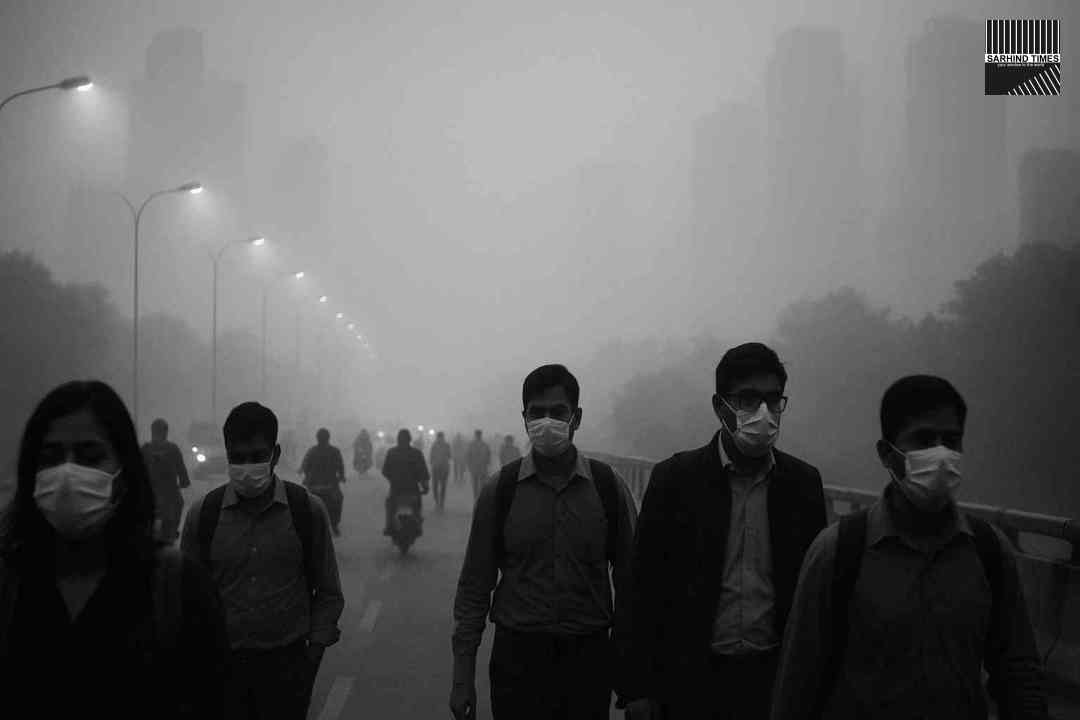
Public health crisis deepens as pollution levels breach ‘severe-plus’ category; hospitals see surge in respiratory cases, visibility drops across multiple sectors.
Dateline: Gurugram | 28 November 2025
Summary: Gurugram woke up to toxic air on Thursday as AQI levels breached 480 in several sectors, forcing district authorities to declare an air emergency. Schools issued immediate health advisories, construction activities were suspended under GRAP-IV guidelines, and residents were urged to stay indoors. NASA satellite images captured a thick smog dome engulfing the entire NCR, igniting public outrage and renewed calls for regional pollution control reforms.
A Morning of Near-Zero Visibility
Residents across Gurugram stepped out to an ashy-grey skyline, eyes burning and throats stinging as the Air Quality Index (AQI) pushed past 480 in several parts of the city. Dense smog hovered over arterial roads such as Golf Course Road, MG Road, Sohna Road, and Cyber City, prompting motorists to drive with headlights on well into the late morning hours.
The thick haze significantly reduced visibility, causing commuters to slow down and resulting in mild traffic congestion across multiple routes. Public transport buses, autos, and cabs struggled with low visibility, while cyclists and pedestrians moved cautiously through the toxic air.
“It felt like walking through smoke,” said a resident of Sector 56. “My eyes started watering within minutes of stepping outside.”
AQI Data Paints a Grim Picture
Real-time monitoring stations recorded AQI levels ranging between 460 and 490 in several areas. The following sectors saw the worst readings:
- Sector 51: AQI 487
- Cyber Hub: AQI 482
- Sector 40: AQI 476
- Udyog Vihar: AQI 469
- Golf Course Road: AQI 472
Even residential pockets that usually report moderate improvement — such as DLF Phase 1 and Palam Vihar — witnessed AQI levels above 450.
According to doctors, AQI levels above 400 fall under the ‘severe’ category, with readings nearing 500 posing “severe-plus” risks that can affect even healthy individuals.
NASA Satellite Images Capture Thick Smog Dome
Adding to public concern, NASA’s Terra and Aqua satellites released early morning images showing a dense smog dome covering Delhi, Gurugram, Noida, Faridabad, and surrounding regions. The imagery highlighted:
- A thick aerosol blanket stretching across nearly 300 km
- High concentration of particulate matter in lower atmosphere
- Wind stagnation causing pollutants to remain trapped
- Multiple hotspots linked to stubble burning in Haryana and Punjab
The images quickly went viral on social media, sparking outrage over the region’s worsening environmental health.
GRAP-IV Activated: Construction and Demolition Banned
Following the spike in pollution levels, Gurugram authorities activated the Graded Response Action Plan Stage IV — the most severe category of emergency measures. As part of the implementation:
- All construction and demolition activities were halted
- Diesel generator use was banned except for essential services
- Mechanical road sweeping and water sprinkling were intensified
- Entry of heavy commercial vehicles into the city was restricted
- Outdoor sports activities were suspended in schools
District officials emphasized that these measures aim to prevent further deterioration, though they acknowledged the limits of temporary fixes.
Schools Issue Health Advisories, Switch to Indoor Classes
Several schools across Gurugram issued advisories urging parents to avoid sending children outdoors. Many institutions switched physical activities to indoor environments, while some reduced school hours for younger classes.
School nurses reported an uptick in children complaining of headaches, coughing, and eye irritation shortly after reaching campus.
Parents expressed concern over prolonged exposure, with some calling for temporary closure of schools until AQI levels improve.
Hospitals See Surge in Respiratory Illness Cases
Local hospitals and clinics witnessed a significant rise in patients suffering from respiratory distress, asthma flare-ups, bronchitis, and allergic attacks. Doctors across multi-specialty hospitals noted:
- A surge in acute asthma cases
- Increased ER visits for breathlessness
- Higher prescription rates for nebulizers and inhalers
- More ICU admissions for elderly patients with COPD
Pediatric ICUs reported multiple cases of wheezing and viral-triggered breathing issues among young children.
One pulmonologist warned, “When AQI crosses 450, it becomes dangerous for everyone — not just those with pre-existing conditions.”
Primary Causes Behind Today’s Smog Spike
Experts list multiple contributing factors behind the sudden pollution spike:
1. Stubble Burning
Satellite readings detected multiple fire-locations in Haryana and Punjab, indicating active stubble burning activity.
2. Vehicular Emissions
Peak-hour vehicular emissions, combined with low wind speeds, intensified the accumulation of pollutants.
3. Industrial Smoke
Cold weather conditions trapped industrial emissions close to the ground.
4. Construction Dust
Though construction was halted today, dust remains suspended in the air from previous activity.
5. Weather and Wind Stagnation
Low temperatures and lack of wind prevented dispersion of pollutants.
Civil Society and RWAs Demand Action
Resident welfare associations across Gurugram condemned authorities for failing to prevent air quality deterioration. Many demanded long-term solutions rather than reactive emergency measures.
Social media saw a surge of posts criticizing temporary GRAP restrictions and demanding aggressive action on crop residue burning, vehicular pollution, and illegal construction dust.
Impact on Outdoor Workers: A Silent Crisis
Delivery agents, security guards, construction laborers, street vendors, and sanitation workers faced the worst exposure due to prolonged time outdoors. Many reported headaches, dry throats, and difficulty breathing.
Carrying masks has become mandatory for these groups, though many complain the masks offer limited relief against such severe pollution levels.
Businesses Hit as Workforce Productivity Dips
Corporate offices in Cyber City, Golf Course Road, and Udyog Vihar reported reduced attendance. HR departments issued advisories recommending work-from-home options for employees with respiratory conditions.
Productivity dips were reported in some IT firms as employees struggled with pollution-induced health issues.
Outdoor logistics companies faced delays due to visibility drops and slow vehicular movement.
Environmentalists Call for Structural Reform
Environmental experts argue that the recurring NCR pollution crisis requires structural, not reactive, solutions. They advocate for:
- Enforced farm-to-fuel crop-residue programs
- Subsidized bio-decomposer solutions for farmers
- Stricter vehicular emission checks
- A city-wide green belt restoration plan
- Micro air-shed management across NCR
One expert emphasized, “Until Delhi-NCR adopts a regional, data-driven approach, each winter will repeat the same story.”
What Residents Can Do to Protect Themselves
Doctors advise residents to:
- Wear N95 masks outdoors
- Use air purifiers indoors
- Avoid early morning walks
- Keep windows closed during peak pollution hours
- Maintain hydration and consume Vitamin C–rich foods
Parents are advised to monitor children with asthma or allergic histories closely.
Will the Situation Improve Soon?
Weather models predict slight improvement over the next 72 hours, but experts warn that recovery may be slow unless wind speeds pick up significantly.
If stubble burning continues at the current pace and temperatures drop further, AQI levels may remain in the ‘severe’ zone through the weekend.
Conclusion: Gurugram Stands at a Critical Crossroads
As the smog thickens and health risks rise, Gurugram faces yet another harsh reminder of the NCR’s chronic air pollution crisis. While immediate emergency measures may provide short-term relief, long-term structural reforms are urgently needed to prevent annual environmental breakdowns.
For now, residents brace themselves for another day of hazardous air — hoping for fresh winds, concrete policy action, and a sustainable path forward.



+ There are no comments
Add yours