
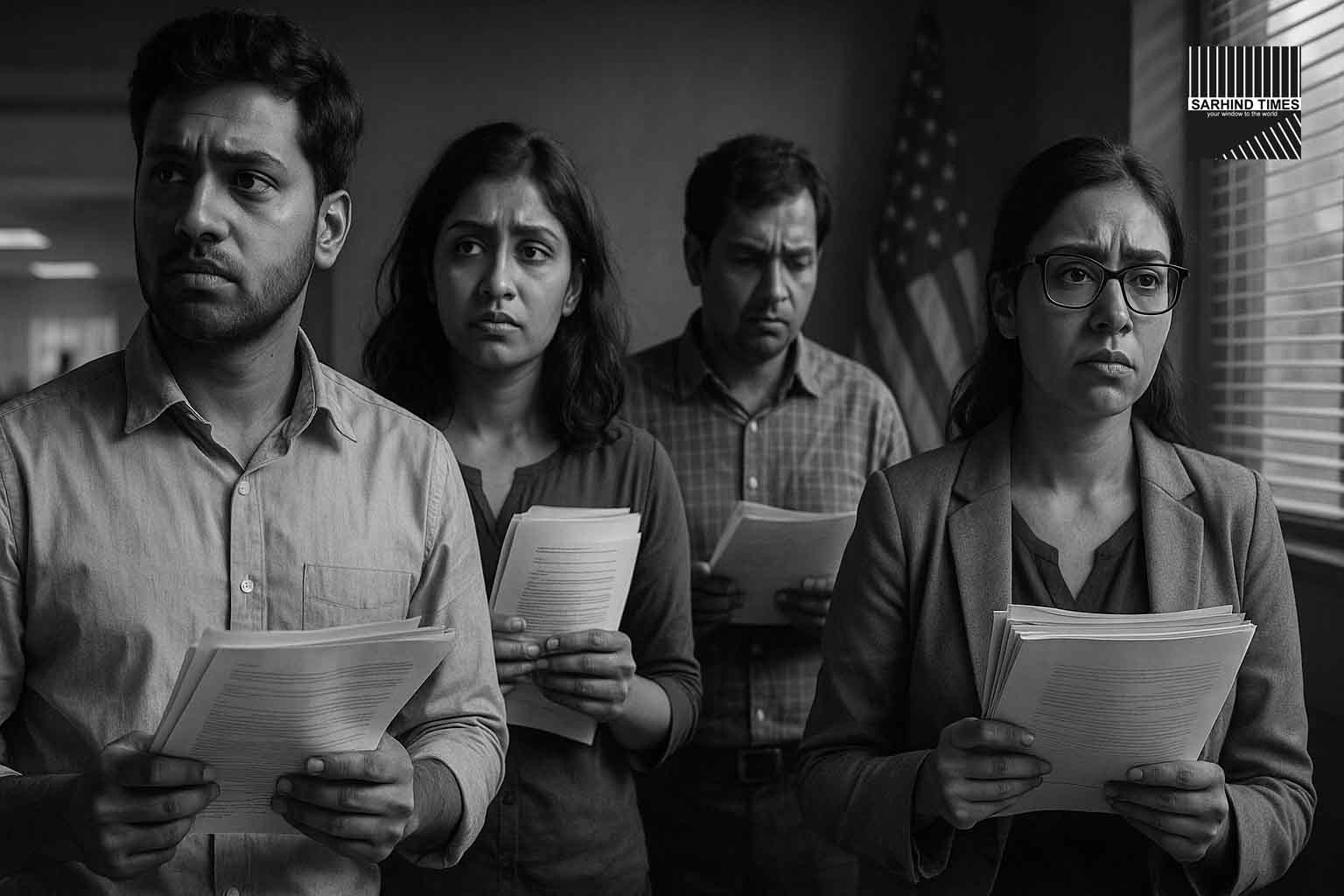
The U.S. halts EB-1 green card processing after meeting its annual quota, leaving thousands—particularly Indian applicants—facing career uncertainty and extended wait times.
Introduction
In a development that has rattled professionals worldwide, the U.S. Citizenship and Immigration Services (USCIS) announced that the EB-1 (Employment-Based, First Preference) green card category has reached its fiscal year 2025 quota, halting further issuance until October 1, 2025.
For thousands of applicants—especially Indian professionals who rely heavily on EB-1 to secure long-term stability—the suspension represents both a career roadblock and a psychological setback. Analysts warn that the pause may exacerbate existing visa backlogs, reshape global talent flows, and spark debates over the fairness of U.S. immigration policy.
Background & Context: What is EB-1?
The EB-1 visa category was designed for “priority workers,” including:
- Individuals of extraordinary ability in sciences, arts, education, business, or athletics.
- Outstanding professors and researchers.
- Certain multinational managers or executives.
It has long been considered one of the fastest employment-based pathways to U.S. permanent residency.
However, the annual numerical limits imposed by Congress mean that once the fiscal year’s allocation is exhausted, no further EB-1 green cards can be issued until the next fiscal cycle begins. For FY 2025, that threshold has already been met months in advance.
The Immediate Impact
On Indian Applicants
Indians have historically made up one of the largest applicant groups in employment-based immigration categories. With domestic demand for skilled talent high, Indian professionals—particularly in technology, healthcare, and academia—depend heavily on EB-1 for career mobility.
The halt means:
- Pending applications will remain frozen until October.
- Applicants in transitional visa statuses (like H-1B) must now extend temporary visas or explore alternative categories.
- Families awaiting permanent residency approvals face uncertainty around stability, schooling, and healthcare access.
On Employers
U.S.-based employers, especially in tech and research, rely on EB-1 to secure long-term talent. The suspension creates:
- Recruitment challenges for firms seeking top-tier global talent.
- Retention risks, as professionals may consider alternate destinations like Canada, the U.K., or Australia.
Voices from the Community
- Immigration Lawyer, Sanjay Patel:
“The EB-1 halt is procedural, but the ripple effects are profound. For Indian applicants stuck in limbo, it’s not just paperwork—it’s their careers, their families, their futures.” - Tech Professional, Bengaluru-born EB-1 Applicant:
“I was weeks away from approval. Now everything is frozen. My kids’ schooling, my job prospects—all feel uncertain again.” - U.S. Policy Analyst:
“This episode highlights the structural flaw in U.S. immigration: a mismatch between the nation’s need for global talent and outdated numerical caps.”
Broader Relevance
Political Dimensions
Immigration has become a flashpoint issue in U.S. politics, with debates intensifying ahead of the 2026 midterms. While business lobbies push for higher visa caps, populist rhetoric emphasizes tighter controls.
Economic Dimensions
- For India: Professionals face delays in remittances, career advancement, and mobility, indirectly affecting India’s economic ties with the U.S.
- For the U.S.: Industries risk a brain drain, as highly skilled workers may divert to more immigration-friendly economies.
Societal Dimensions
Families bear the brunt of uncertainty—unable to plan for housing, education, or long-term security. For many, the American dream is increasingly shadowed by unpredictability.
Global Talent Flows
Countries like Canada and Australia, with point-based immigration systems, may benefit as disillusioned professionals redirect their aspirations.
Policy Critiques & Demands
- Raise or Reallocate Caps: Advocates argue that employment-based visas like EB-1 should expand to reflect modern labor demands.
- Country-Specific Relief: Indian applicants suffer disproportionately due to per-country limits; calls for reform are growing louder.
- Processing Transparency: Community groups demand clearer communication on application timelines and rollover quotas.
Future Outlook
- October 2025 Resumption: USCIS will reopen EB-1 processing with fresh allocations. The immediate backlog, however, may overwhelm the system.
- Long-Term Reforms: Pressure is mounting on Congress to update immigration laws that have remained largely unchanged for decades.
- Indian Strategy: Many Indian professionals are considering dual options—retaining prospects in the U.S. while exploring Canada’s Express Entry or Europe’s Blue Card programs.
Conclusion
The suspension of EB-1 green card issuance until October 2025 is more than a bureaucratic pause—it is a moment that captures the frustrations of global talent in the face of outdated immigration systems. For Indian professionals, it underscores the precarious balance between ambition and policy barriers.
While October may bring relief, the episode adds urgency to calls for comprehensive U.S. immigration reform—reform that aligns the nation’s economic needs with the aspirations of the global workforce it depends on. Until then, thousands wait in limbo—dreams deferred, but not abandoned.
#USVisa #GreenCard #EB1 #ImmigrationDelay #IndiaAbroad #GlobalTalent #VisaBacklog #AmericanDream #ImmigrationPolicy #IndiansInUS




+ There are no comments
Add yours