
Emergency UN discussions, rapid back-channel negotiations, and rising humanitarian concerns mark a rapidly shifting geopolitical landscape
Dateline: New York | 29 November 2025
Summary: Renewed violence in the Middle East has prompted urgent diplomatic engagement at the United Nations and across major capitals. Global powers are scrambling to prevent further escalation, with the region once again standing at a dangerous crossroads. Humanitarian agencies warn of worsening conditions as political actors struggle to reach a temporary ceasefire.
A Rapidly Escalating Situation
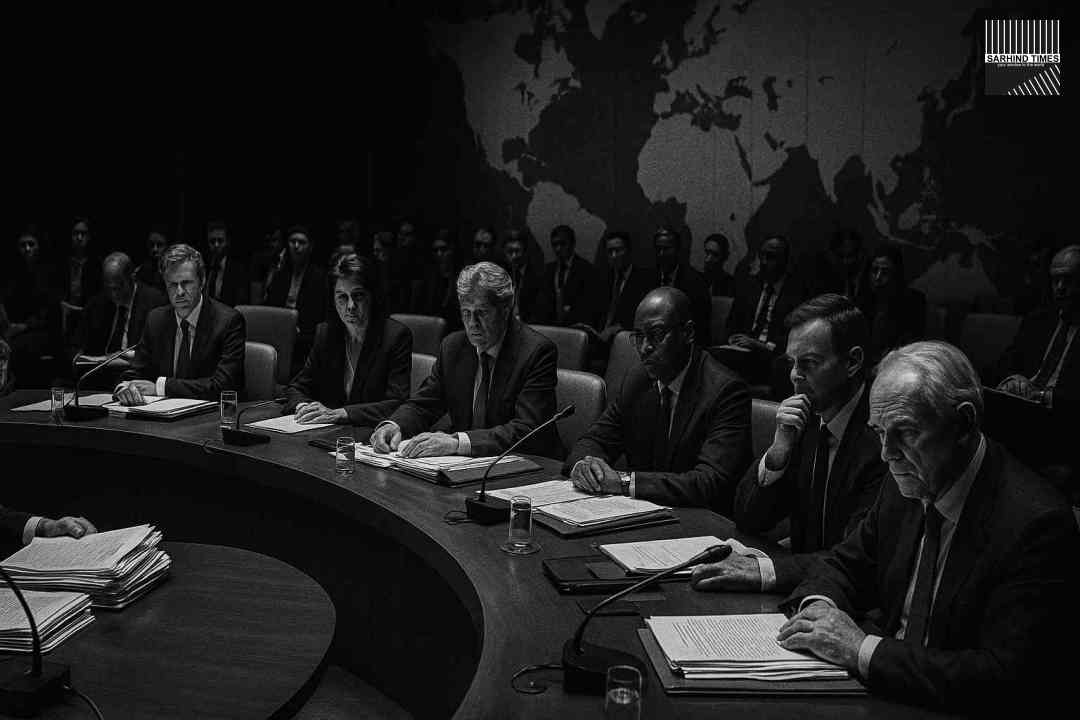
Global attention has shifted sharply back to the Middle East as a fresh wave of violence across several hotspots triggers widespread concern among diplomats, humanitarian agencies, and defense analysts. What began as scattered clashes earlier this week has grown into a broader conflict scenario, prompting urgent calls for de-escalation from world leaders. The United Nations Security Council convened an emergency closed-door meeting in New York, marking one of the most tense diplomatic gatherings of the year.
Senior officials from multiple countries described the situation as “unstable and fluid,” with fears that without immediate intervention, the conflict could expand across borders. Analysts noted that recent developments reflect deeper underlying tensions that have remained unresolved for years, despite numerous ceasefire agreements and international mediation attempts.
UN Security Council Scrambles to Respond
The UNSC session saw intense exchanges, according to officials present at the meeting. Several member states pressed for a unified global message urging restraint, while others sought a more assertive resolution condemning the violence. Diplomats acknowledged, however, that political divisions among powerful nations continue to complicate consensus building. Major global players remain sharply split on both the origins of the current crisis and the path to resolving it.
Despite disagreements, there is broad recognition of the growing humanitarian toll. Preliminary reports from aid agencies indicate rising civilian displacement, shortages of essential supplies, and disruptions in communication networks. The UN’s humanitarian wing warned that if access does not improve soon, relief efforts may fail to reach areas most affected by the violence.
Regional Powers on High Alert
Governments across the Middle East have increased surveillance and mobilized additional security resources. Several leaders held late-night national security meetings to assess the fast-evolving situation. The shifting dynamics have rattled regional markets as well, pushing oil prices higher amid fears of supply disruption.
Neighboring countries have also reinforced border security to prevent the conflict from spilling over. While officials maintained that the steps are precautionary, analysts interpret the moves as a sign of growing concern. “The region has witnessed cycles of instability for decades, but the speed at which tensions escalated this week has taken many by surprise,” one senior Middle East analyst observed.
Back-Channel Negotiations Intensify
While public diplomacy remains complicated, back-channel efforts have accelerated. Envoys from several countries have quietly exchanged messages, hoping to broker at least a temporary cessation of hostilities. This multi-layered diplomatic push involves regional actors, Western powers, and non-aligned nations—all seeking to prevent the situation from pushing the region into further chaos.
According to diplomatic insiders, at least three separate negotiation tracks are currently active, though none has yet produced a breakthrough. There is cautious optimism, however, that sustained pressure from multiple directions may help secure a short-term humanitarian pause—a move seen as essential by relief organizations struggling to navigate conflict zones.
Humanitarian Crisis Deepens
As fighting continues, humanitarian groups warn of an increasingly dire situation. Thousands of families have reportedly been displaced within a matter of days, seeking shelter in makeshift camps or fleeing to nearby towns. Hospitals in several affected areas are overwhelmed, grappling with shortages of medical supplies and fuel for generators.
International NGOs have appealed for safe corridors to deliver aid, but access remains patchy. “We need immediate assurances that humanitarian missions will not be targeted or obstructed,” said the head of one major relief agency. The organization also stressed the need for communication lines to be restored to improve emergency coordination.
Global Powers Walk a Diplomatic Tightrope
Major global players have issued carefully worded statements, urging both sides to show restraint while stopping short of direct intervention. Each country’s messaging reflects its geopolitical interests, alliances, and broader strategic calculations. Experts caution that missteps or miscommunication could worsen the fragile situation.
There is also growing concern that the crisis could influence other global flashpoints. Intelligence assessments suggest that adversarial actors may exploit the moment of turmoil to advance their own agendas, further complicating international security dynamics. “The world is watching closely, not only because of the humanitarian fallout but because of the cascading risks associated with instability in this region,” a senior security strategist noted.
Economic Ripple Effects
The conflict has already begun impacting global markets. Oil prices spiked sharply this week, reflecting concerns about potential disruptions to supply routes. Investors have also turned to safer assets such as gold as uncertainty increases. Economists warn that prolonged instability could place upward pressure on inflation worldwide, particularly in countries that depend heavily on Middle Eastern energy imports.
Regional financial markets experienced volatility as well, with several indices closing lower amid widespread investor caution. Businesses with operations or supply chains connected to the region are assessing potential risks and preparing contingency plans. Experts advise that if the conflict expands, global trade networks could face significant disruptions.
Calls for Dialogue Grow Louder
International leaders continue to emphasize dialogue and de-escalation as the only viable pathway to stability. Many have urged all parties to prioritize civilian safety and humanitarian access. While optimism remains limited, there is a recognition that without diplomacy, the consequences could be long-lasting and far more severe.
Observers say the coming days will be critical. With tensions still rising and diplomatic channels racing against time, the world is bracing for either a fragile breakthrough or a deeper crisis. For now, global leaders and humanitarian agencies remain locked in a collective attempt to prevent the worst-case scenario from unfolding.
Outlook: A Region Caught Between Conflict and Hope
As the situation stands, the Middle East remains at the center of global concern. While conflict dynamics continue to evolve rapidly, diplomatic efforts are intensifying in equal measure. Whether these efforts succeed will determine not only the regional future but also the broader trajectory of global peace and stability. The world is watching closely, hoping that diplomacy succeeds where violence has prevailed for far too long.



+ There are no comments
Add yours