
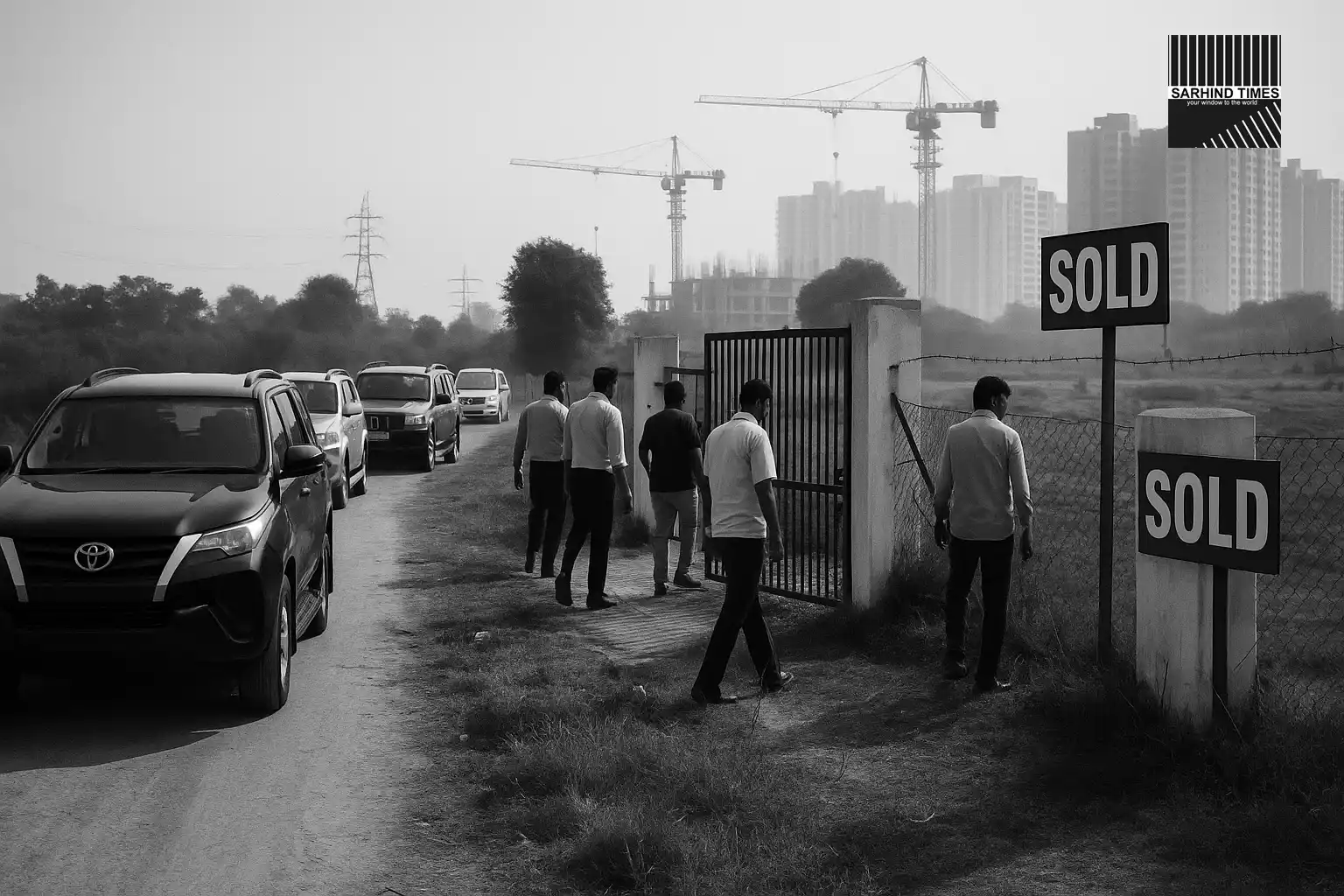
Probe focuses on 2008 Shikohpur transaction in the Manesar-Gurgaon belt, alleged money-laundering and procedural irregularities revisited
Dateline: Gurugram | 29 October 2025
Summary: The Enforcement Directorate (ED) has filed a formal chargesheet implicating Robert Vadra in a suspected money-laundering case involving a 2008 land deal in Gurugram’s Shikohpur area (now Sector 83). The transaction, involving Skylight Hospitality Pvt Ltd, is alleged to have earned around ₹50 crore in unlawful profit and involved senior Congress-party leaders in Haryana. The development adds fresh political heat into land regulation and real-estate governance in the national-capital region.
Background of the land-deal and its key actors
In 2008, Skylight Hospitality Pvt Ltd, associated with Robert Vadra, is alleged to have purchased approximately 3.5 acres of land in the Manesar-Shikohpur belt (now in Gurugram’s Sector 83) for about **₹7.5 crore** and sold it to a major developer (DLF Limited) for about **₹58 crore**, netting a profit of over ₹50 crore. The ED claims these gains emerged from procedural irregularities, improper land-mutation, and suspicious shell-company transfers. The case traces back to the original cancellation of the mutation by senior IAS officer Ashok Khemka in 2012, who flagged it as suspicious and initiated a CBI corruption probe which has now migrated to the ED’s money-laundering framework. ([indiatimes.com]
What the chargesheet alleges and process underway
The ED has alleged that funds from the sale were laundered through shell companies, undisclosed bank transfers and potential collusion by public-officials in the land-registration and mutation process in Gurugram and Haryana. The chargesheet names multiple Congress party leaders from Haryana as accused or witness-respondents; it also lists firms connected to the original transaction. The ED stated that Robert Vadra appeared for questioning and was interrogated for 18 hours on 14 July before the filing. The chargesheet has been filed under sections of the Prevention of Money Laundering Act (PMLA) and includes details of bank records, land-registry anomalies, developer contracts and cross-state transfers. The ED will now publish the charge-sheet to allow for legal defence, freezing of assets, and further raids/seizures in the case.
Political implications in Gurugram and Haryana
Gurugram is a key commercial and real-estate hub of Haryana, and land-deal governance is a recurring political flashpoint. The involvement of Robert Vadra and Congress-leaders raises the stakes for the opposition party, which may now face intensified scrutiny ahead of upcoming local-body or assembly poll seasons. For the ruling Bharatiya Janata Party (BJP) in Haryana, the chargesheet serves as a political tool to assert its anti-corruption credentials and to press electoral-advantage on the issue of land-governance and transparency in the NCR region.
Within Gurugram, local activists and Real-Estate Regulatory Authority (RERA) observers say the deal highlights systemic issues: opaque land-assignments, mutation irregularities, developer-politician-bureaucrat nexus. The local BJP leadership has already called for a full audit of all large-value land deals in Gurugram in the last 15 years and demanded public disclosure of mutational records and developer-political patronage ties — a campaign likely to feature in the next election cycle. The Congress, while defending its leaders as innocent until proven guilty, has indicated plans to file counter-claims of selective targeting. The case may thus polarise local political discourse around real-estate reform, urban-growth governance and accountability.
Impact on real-estate and investor confidence in Gurugram
From a business-perspective, large-scale land-deal probes such as this one carry implications for investor sentiment, especially in the Gurugram/Manesar corridor, which has seen significant township, logistics and industrial-estate growth in recent years. Investors say a credible legal-governance regime supports price-discovery and reduces regulatory-risk—so while some view the probe as a positive long-term signal of cleaning up practices, others caution short-term approval delays or heightened due-diligence may slow take-off of township/delayed projects in the region.
Real-estate trade bodies in Gurugram have flagged developers’ concern that ongoing investigations may reduce bank-financing willingness for new launches, increase compliance-costs for land-acquisition and delay project timelines. However, they also acknowledge that robust land-titling and transparent mutation regimes are a structural positive for the market in the medium term.
Legal-governance and what to watch next
Key steps ahead in the case include:
- Freezing and auctioning of assets linked to the deal — land parcels in Manesar/Gurugram, bank accounts, company shares.
- Summoning of accused Congress-leaders and cross-examination of witnesses, forensic account-trails and DNA of shell companies used in the layering of profits.
- Tracking whether additional land-deals in the NCR region come under the ED’s lens, signalling a potential wider crackdown on high-value real-estate transactions in Gurugram, Faridabad and Delhi-NCR belt.
- Electoral fallout in Gurugram: whether this case becomes a campaign issue in upcoming municipal or assembly-by-elections, driving messaging around land-governance and transparency.
Voices and reactions
A BJP spokesperson in Haryana said: “This case vindicates our repeated demand for cleaning up land-transactions in the NCR. We will take this narrative to voters across Gurugram.” The Congress leader responded: “We will cooperate fully with investigations, but we object to selective smear campaigns ahead of polls.” Local real-estate analysts added: “The clarity on land-mutations, especially around developer-politician connections, is overdue — if this case is handled with transparency it can raise the bar of governance in Gurugram.”
Conclusion
The chargesheet filed by the ED against Robert Vadra in a high-profile Gurugram land deal marks a significant moment in the politics of the NCR region. It intertwines real-estate governance, party politics, legal-enforcement and investor confidence in one narrative. For Gurugram-residents it raises questions about how urban-growth is managed, how land-wealth is created and who is held accountable. How the case proceeds legally, how assets are recovered and how transparency is communicated will determine whether this becomes a turning-point for governance or another headline in the perennial saga of land-deal politics.



+ There are no comments
Add yours