
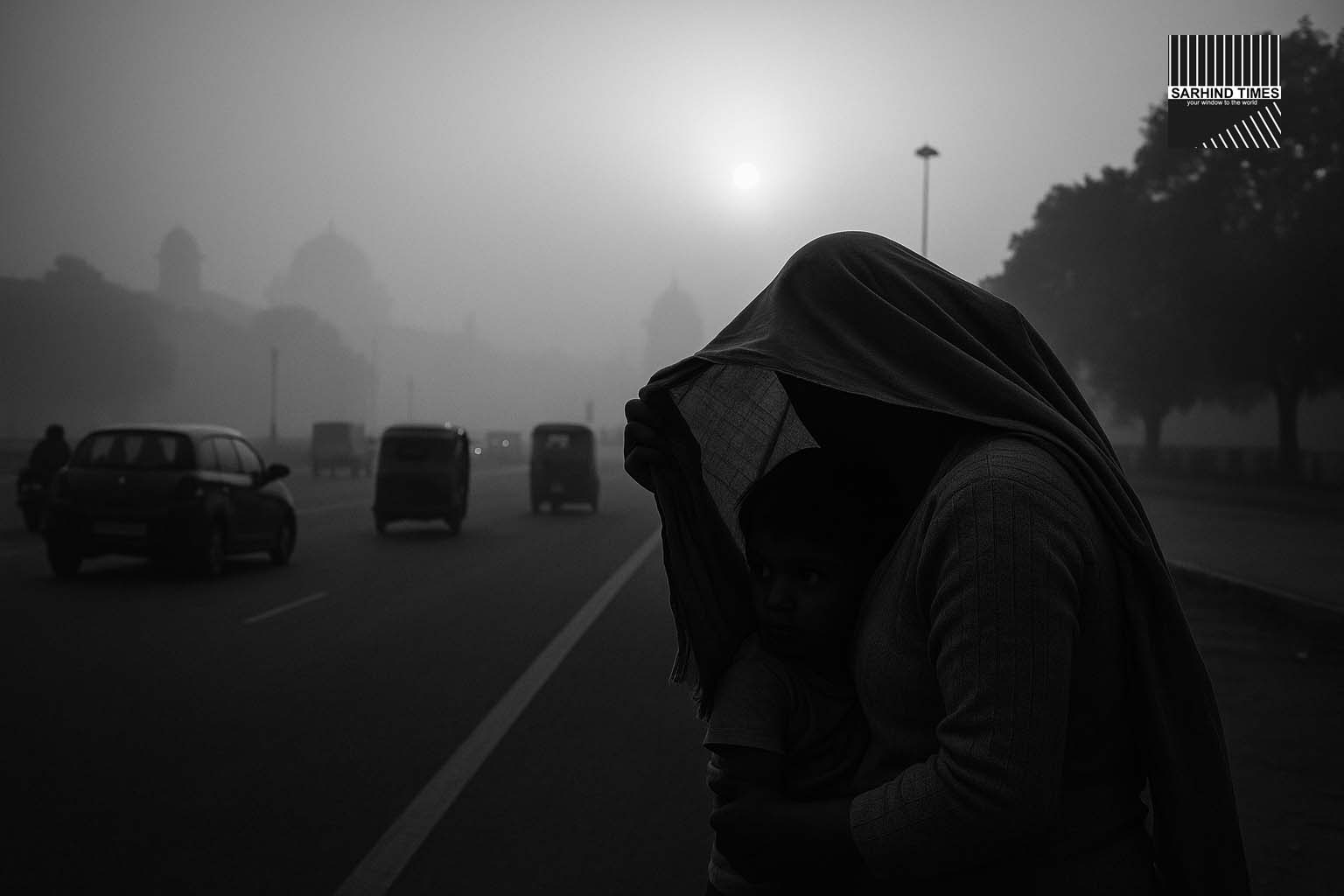
Winter smoke, crop-burning and post-festival emissions combine to create toxic air blanket across the northern plains
Dateline: New Delhi | 10 November 2025, Asia/Kolkata
Summary: The national capital region is once again engulfed in hazardous air, with the Air Quality Index (AQI) surging into the “very poor” to “severe” range. Local emission sources, regional agricultural stubble burning and weather conditions that trap pollutants are all contributing. Citizens, including parents and school-groups, have taken to the streets, demanding urgent action. The episode underscores the deep structural challenge of air-pollution control in fast-growing urban India.
Pollution Trends in Early November
With the onset of colder and stiller weather, the capital region has entered a period that experts warn is typically its worst for air quality. Monitoring data show the overall AQI jumped from around 220 to over 300 in a single day, placing New Delhi firmly within the “very poor” category.
According to the regional pollution control authority, the fortnight between November 1 and November 15 historically records average AQIs above 370. This year the trend appears to be emerging early, even though the peak of agricultural burning in neighbouring states has been slightly delayed.
The city’s data map shows thick haze, low visibility and widespread concern. Across many sectors, the number of days with “severe” or higher pollution levels is increasing — and citizens are beginning to react.
The implications are serious. Evidence shows that chronic exposure to particulate matter (especially PM2.5) significantly reduces life-expectancy, aggravates respiratory and cardiovascular disease risk, and places a heavy burden on health systems. A recent national index estimated that almost half of India lives in areas where even India’s own annual air-quality standards are breached.
Root Causes: Local + Regional + Seasonal Factors
Several overlapping drivers are contributing to the smog crisis:
– **Regional crop residue burning**: In states such as Haryana, Punjab and Uttar Pradesh, post-harvest stubble burning continues to add massive volumes of particulate matter into the atmosphere. These emissions travel into Delhi-NCR via prevailing winter winds.
– **Vehicle emissions and construction dust**: With heavy traffic, ongoing construction, and a lag in emission-control enforcement, the local emission burden remains high. The pollution control committee flagged vehicle and dust as significant contributors despite the lack of visible stubble-burning hotspots.
– **Festive fireworks and private fire-crackers**: The recent Diwali festival (celebrated earlier than usual this year) triggered large bursts of pollution. Fire-cracker-related emissions mixed with stagnant air to intensify the smog layer.
– **Meteorological conditions**: Cold start to winter means lower mixing heights, calm winds and thermal inversion layers — all of which trap pollutants close to the ground and reduce natural dispersion. These seasonal effects magnify pollution even if emission volumes remain constant.
The cumulative effect yields hazardous air quality that is not just a visible haze but a serious public-health event.
Public Reaction & Civic Pressure
As the sky darkened with particulate haze, citizens took action. On 9 November parents and activists gathered at India Gate in New Delhi, demanding urgent redress of the air-pollution crisis. Many held placards, some wearing masks, pointing to children’s health as a major concern.
Their demands included stricter curbs on fire-crackers, tighter emission controls, timely data transparency and real-time warnings for vulnerable groups (children, elders, asthmatics). The protest highlighted growing frustration with repeated annual episodes of ‘smog season’.
The local government, while issuing health advisories and temporary restrictions in some zones, has yet to declare a full “Stage III emergency” (which would impose widespread industrial/traffic curbs). Experts suggest that declaring full curbs may become inevitable if AQI stays above 400 for several days.
Health Impacts: Children, Elderly, Workers at Risk</h3 The toll on public health is already being felt: – Paediatric clinics in the city report rising cases of bronchitis, aggravated asthma and upper-respiratory-infection visits among children in schools. – Outdoor-workers (traffic police, construction labourers, delivery-personnel) face severe exposure risk — hours of inhaling PM2.5 in the range of 300-400 µg/m³ amount to effective smoking of dozens of cigarettes per day. – Long-term studies link similar exposures with reduced lung-function growth in children and increased hospitalisations for chronic obstructive pulmonary disease (COPD) in older adults. – Life-expectancy studies indicate that if pollution were brought down to safe levels, residents of Delhi could gain more than 8 years of life on average. In this context, schools and parents are weighing options such as partial closures, indoor air-filters, and making online class choices — albeit with social and developmental trade-offs.
Government Response & Short-Term Measures
In recent days, the governing authorities have initiated several short-term responses:
– Real-time monitoring and public alerts have been stepped up; mobile-apps and dashboards provide hourly AQI updates and health advisories.
– The government has extended restrictions on diesel-generator sets, imposed limits on construction dust and advised WFH (work-from-home) for non-essential employees in highly affected zones.
– Recognising the persistently high pollution, Delhi government in collaboration with Indian Institute of Technology Kanpur (IIT Kanpur) launched a cloud-seeding experiment to induce artificial rain and wash pollutants out of the air. While the first trial was executed end-October, experts say its efficacy is limited and it does not replace structural emission-reductions.
Authorities emphasise that these are “emergency mitigation” steps, not substitutes for long-term controls. A key challenge is that the pollution-season is predictable (November-Jan), yet each year the city falls into the same trap of reactive measures rather than preventive strategies.
Structural Gaps and Implementation Challenges
The recurring smog-crisis reveals deeper structural issues:
– **Coordination across states**: Crop-residue burning in Haryana and Punjab significantly affects Delhi-NCR air quality, yet inter-state enforcement remains weak. The regional scale of the problem demands joint action.
– **Vehicle emission enforcement**: Older vehicles, high-traffic volumes, diesel generator usage and large construction activity continue to contribute significantly; while regulations exist, enforcement is inconsistent.
– **Industrial emissions and monitoring transparency**: Questions have been raised about the functioning and accuracy of certain monitoring stations; concerns were triggered when water-sprinkling was observed around monitors during Diwali night.
– **Public behaviour and festive emissions**: Despite bans on high-pollution fire-crackers, usage often spikes during festivals and adds significant particulate load to already burdened atmosphere.
– **Green infrastructure and carbon-sink deficits**: Urban greening, dust-control policies and pollutant capture infrastructure have not kept pace with urban growth.
Experts argue that unless these systemic issues are addressed — rather than cycle of shutter-down then reopen — each winter will bring a worse echo of the previous.
Haryana’s Link and the Wider Northern Plains Context
While the story centres on Delhi, the broader northern plains — notably Punjab, Haryana, Uttar Pradesh — are implicated. Haryana plays a dual role: as a source of stubble-burning emissions and as a receptor for dust, industrial and vehicular pollution in its urban centres (such as Gurugram). The implications for Haryana include:
– Pollution from agricultural disposal practices contributing to upstream air quality deterioration.
– Rapid urbanisation (in Gurugram, Manesar) meaning residential, corporate and industrial emissions add to the ambient load.
– The need for Haryana’s state administration to enhance coordination with Delhi and Punjab for air-quality interventions.
For Gurugram residents and businesses the air-quality surge means increased health risks for mobility-dependent corporate employees, higher costs for indoor-air treatment, and possibly reputational risks for companies citing environmental conditions as a constraint for talent retention.
What to Expect and What Must Be Done
As winter deepens, the next few weeks will be critical. Key actions and signals to watch:
– **AQI/PM2.5 levels**: If the 24-hour PM2.5 crosses 400 and remains for multiple days, public health emergency protocols (school closures, traffic curbs) may be triggered.
– **State-level coordination**: Will Haryana, Punjab and Delhi align on crackdown of stubble-burning, enforce alternative disposal options and launch crop-diversification support?
– **Vehicle and construction regulation enforcement**: Are older diesel vehicles being restricted, are high-dust sites being shut and are there meaningful penalties for non-compliance?
– **Public awareness and behaviour change**: Are citizens reducing fire-cracker use, indoor-air filters adoption growing, and are companies offering flexible work options?
– **Long-term infrastructure**: Are air-purification corridors, expanded green belts, cleaner fuel adoption, and increased monitoring capacity being deployed beyond emergency warnings?
Without progress on these fronts, the yearly smog cycle may deepen — with increasing cost to health, economy, and social wellbeing.
Implications for All Stakeholders (Including You)
For residents, workers, students and businesses in the region — the present condition means adaptation is necessary:
– Businesses (including your content/automation operations) may need to factor in health-related absenteeism, reduced employee productivity, and increased indoor-air quality management costs.
– For content creators, the pollution narrative offers opportunities: health-impact stories, technology solutions for clean-air, urban planning content, automation of monitoring/data platforms.
– For parents and students, the air-quality deterioration means reconsideration of outdoor activities, school scheduling and investment in indoor-air filtration.
The broader message: air-pollution is no longer a seasonal inconvenience but a systemic constraint on urban growth and productivity. The pollution episode raises both a social challenge and a business/innovation opportunity (for monitoring, automation, mitigation solutions).
Conclusion
As New Delhi and the surrounding northern plains move into a critical phase of air-quality deterioration, the twin pressures of local emissions and regional pollutants combine to create what may be among the worst episodes of smog in recent years. While behavioural and enforcement responses are underway, the absence of structural fixes — in agriculture, transport, industry, regional governance and urban planning — means the crisis may deepen rather than pass.
For the city’s millions, the health toll rises. For the economy, productivity may come under strain. And for policymakers and stakeholders, this winter may again trigger a recalibration of what it takes to control air pollution in India’s rapidly evolving urban ecosystem. The question is no longer whether pollution will spike — it is how deep and how fast the solutions will follow.



+ There are no comments
Add yours