
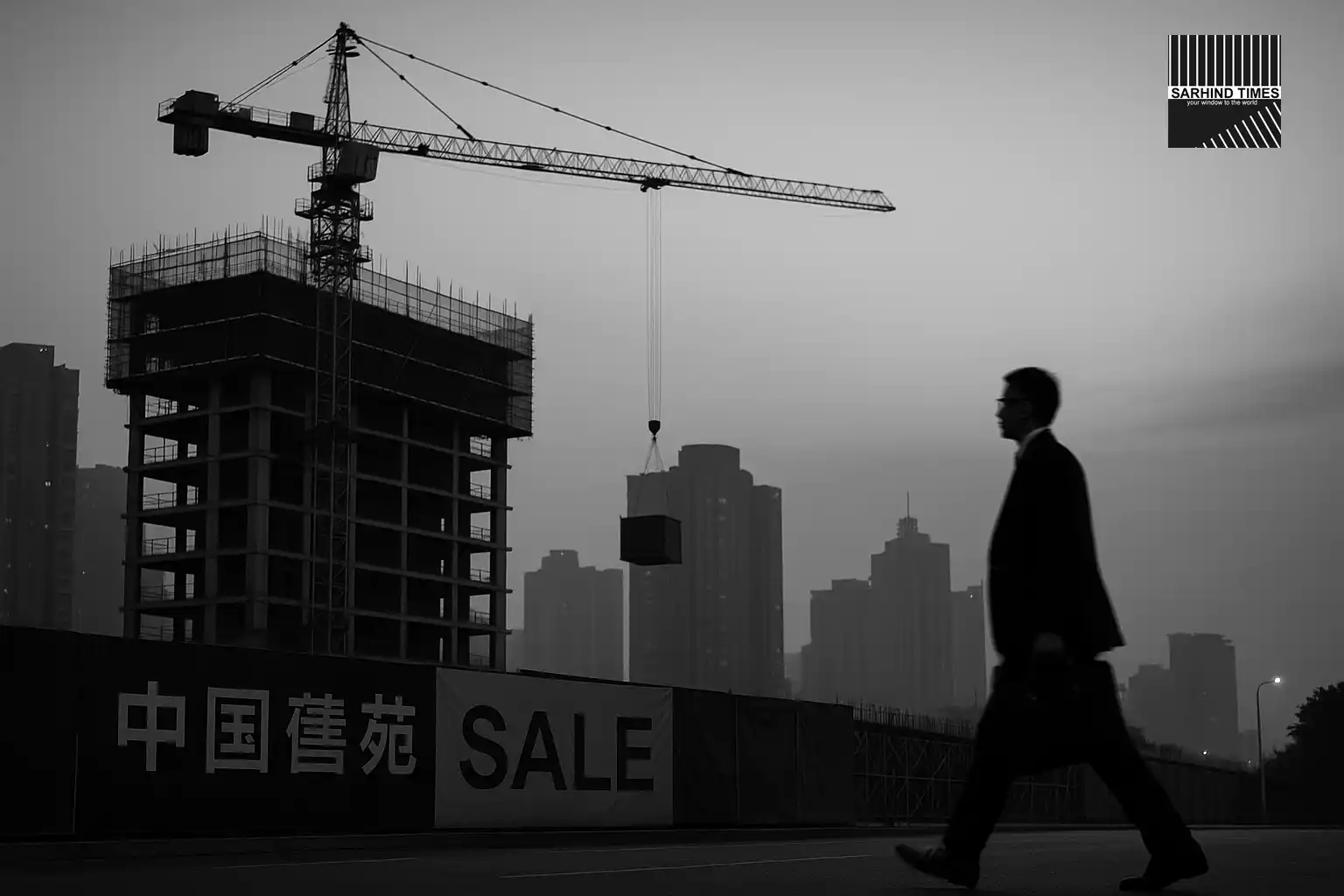
Beijing’s continuing crackdown and debt deluge in the real-estate sector sends ripple effects across Asian financial systems
Dateline: Beijing | October 30, 2025
Summary: One of China’s major real-estate developers has defaulted on its dollar-denominated debt for the second time this year, renewing fears of contagion in the Asian property and banking sectors. Global investors are watching closely as analysts warn that Beijing’s efforts to deleverage the property sector may weigh on growth, credit markets and regional trade flows.
The Event: What Just Happened?
In late October 2025, Evergrande Group (or another large Chinese developer) failed to make an interest payment on its outstanding overseas bonds, thereby triggering a cross-default clause and spurring a formal declaration of default from the rating agencies. This follows an earlier default earlier in the year, making this the second major bond failure by a Chinese real-estate firm in eighteen months.
Although the company has sought to reassure stakeholders that domestic operations remain unaffected, its overseas creditors received notice from administrators yesterday that the default was unavoidable—given the ongoing cash-flow squeeze, unsold inventory, and constrained access to refinancing. Chinese bond spreads shot up, dollar bond yields jumped and Asian equity markets reacted sharply.
Background: China’s Property Bubble and the Crackdown
China’s property economy entered a structural slowdown several years ago, driven by declining home-sales, high developer debt, and the government’s “three red lines” policy which restricted excessive borrowing. Many developers responded by scaling back new launches, reducing construction, and seeking mergers or state-backed take-overs.
However, by 2025 the sector remains under stress: home-sales in many cities are down more than 20 % year-on-year, large inventory overhangs persist, and local government financing vehicles (LGFVs) tied to land-sales are now facing weaker cash-flows. The combination of high leverage and weaker demand means that developers’ refinancing has become a major risk point.
Analysts argue that the default event underscores the challenge of balancing growth with stability in China: the government wants to rein in excesses and shift financial resources to strategic sectors, but the property slowdown brings substantial headwinds to growth, employment, financial-sector health and local-government budgets.
Global and Regional Spill-Over Effects
While the immediate exposure is domestic, the implications extend well beyond China. The following transmission channels are noteworthy:
- Capital markets: Investors globally hold about US $240 billion of offshore Chinese real-estate debt. When defaults occur, creditor exposures rise, and risk premium on other Chinese issuers increases. Emerging-markets investors tend to treat such defaults as signals of broader credit stress in Asia.
- Commodity and supply-chain links: Chinese property construction drives demand for steel, cement, glass, and interior furnishings. A deepening slump can reduce global commodity demand, thereby affecting exporters (including India) and trade flows.
- Regional banking links: Some Asian banks and regional funds provide financing or hold assets related to Chinese property. Risk perception rises, tightening cross-border credit flows and raising cost of borrowing for neighbouring countries.
- Sentiment and growth outlook: For economies in South and Southeast Asia, weakened Chinese demand dampens export growth, tourism (especially Chinese outbound), and foreign direct investment. Given India’s integration in supply-chains and rising expectations of Chinese re-balancing, the news weakens the global mood for investment.
In response, Asian equity markets opened in the red, with risk-assets globally seeing a sell-off. Bond yields on Chinese hard-currency debt widened significantly; CDS spreads for Chinese high-yield corporates rose sharply. India’s benchmark 10-year bond yield also ticked up modestly, reflecting spill-in risk from global credit tightening.
China’s Policy Dilemma: Stimulus vs Discipline
Beijing now faces a difficult balancing act. On the one hand, the property downturn is weighing on GDP growth—official forecasts for 2025 are already trimmed to ~4.5 %. On the other hand, the government remains committed to financial-stability messaging, resisting large bail-outs of the property sector in favour of orderly restructuring.
Earlier in the year, several troubled developers were placed in “special measures” and tasked with gradual completion programmes, asset sales and restructures rather than full state bail-outs. Now, with this new default, pressure is mounting. Some provinces may urge central intervention for employment and construction-recovery; others are likely to emphasise market-based resolution to deter moral-hazard.
The government has already signalled three bridges: (a) allowing local governments to issue special property-support bonds; (b) directing banks to accelerate completion of stalled apartment projects; and (c) easing rules for first-time home-buyers (reducing down-payments, cutting interest rates). But analysts caution that these steps may offer only a partial cushion—structural demand remains weak amidst demographic shifts and affordability constraints.
What This Means for India and Indian Investors
For Indian markets and investors, the default carries several lessons and immediate tactical responses:
- Credit-risk reassessment: Indian real-estate firms with significant dollar-debt or cross-border exposures may face tighter scrutiny by lenders. While Indian exposures to China’s property sector are limited, sentiment is key—and risk premiums on real-estate, construction and commodity-linked sectors may move upward.
- Export & commodity feed-down: India’s steel, cement and imported-mineral sectors may see slower demand from China’s construction slowdown, constraining margins. Companies should review near-term order books, input-cost passes and commodity-price assumptions.
- Global investor flows: A risk-off move by global investors may reduce appetite for emerging-market equities. India’s equity market may temporarily face headwinds from the global backdrop; however, robust domestic fundamentals can buffer the impact.
- Policy impetus: India may benefit if global investors seek alternative hotspots beyond China. Projects in India’s infrastructure, manufacturing, supply-chain “China+1” movement may gather traction—if the country can project policy clarity, ease of doing business and stable regulatory regime.
In sum, while the default by the Chinese developer is not a trigger for immediate crisis in India, it raises the risk-profile for real-estate, construction and credit sectors broadly across Asia—and merits the attention of corporate treasurers, market strategists and policy analysts.
Outlook and Key Watch-Points
In the near term, the key variables to monitor are:
- Whether the default leads to broader cross-default cascade among other developers in China—especially those with similar business-models, geography or dollar-debt exposures.
- Chinese authorities’ response: whether bigger bail-outs, targeted stimulus or sector-wide relief is forthcoming. Markets will interpret this as a signal of regime tolerance for failure vs. expectation of state rescue.
- Commodity demand trajectory: steel, copper, glass, cement prices will reflect turn in China’s construction cycle—watch order books of major mining/industrial firms globally.
- Emerging-market capital flows: whether the risk-off sentiment hits India and other Asian markets in a sustained way or if domestic factors hold up.
- Financial-sector vigilance: Indian banks and NBFCs, while not directly exposed to Chinese property, must guard against indirect spill-in—via investor sentiment, FX flows, import-order slowdown and corporate-credit linkages.
In the medium term (12–24 months), the property downturn in China could anchor a structural shift: a deeper contraction in construction, slower urban-land-sales, weaker local-government revenue from land-assets and more reliance on state-investment rather than private property growth. For India, this means strategising for higher domestic demand-pull, export‐diversification and non-real-estate investment engines.
Conclusion
The latest default by a major Chinese developer is a sobering reminder that the real-estate sector in China remains a key macro-risk not just for the domestic economy but for Asia and global markets. India must watch the development closely—not as a passive observer, but as a potential pivot point. The risk-off environment favours countries that are ready with alternative growth engines, transparent regulation and open-investment regimes.
For global investors, it is a moment for re-calibration: China is no longer the automatic bet for property-linked exposure; instead, diversification, structural reform and governance matter more than ever. And for India, the story is two-fold: the slowdown in China may create headwinds—but also opportunity, if managed well.





+ There are no comments
Add yours