
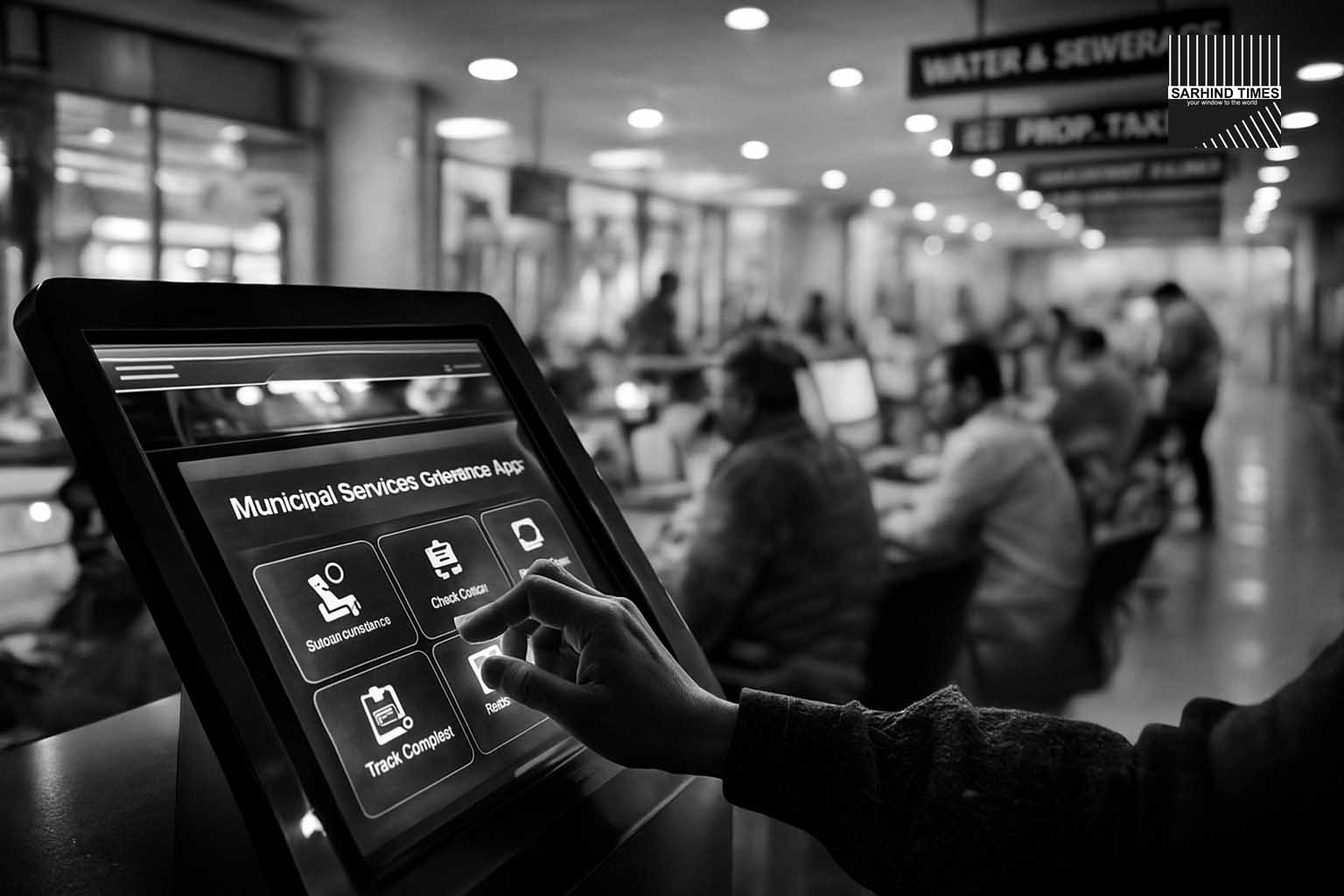
The UT Administration unveils a single-window digital platform bringing all city services under one complaint and tracking system.
Dateline: Chandigarh | (Asia/Kolkata)
Summary: Chandigarh has launched a groundbreaking unified grievance redressal app that integrates all major municipal and civic departments—including water, sanitation, electricity, road maintenance, horticulture, waste management, sewerage, streetlights, and public health—into one seamless digital platform. With a mission to simplify reporting and speed up responses, the UT Administration says the initiative aims to reduce bureaucratic delays, make government services more transparent, and strengthen public trust in city institutions.
1. A major digital leap in Chandigarh’s governance
Chandigarh has taken a bold step towards the future of urban governance with the launch of its first integrated citizen grievance application—a single platform where residents can file complaints and track the status of issues across multiple municipal departments. For years, citizens have struggled with department-wise phone numbers, forms, and office visits. The new app eliminates that maze, offering a unified redressal system with real-time updates, photo uploads, map-based complaint tagging, and automatic routing to the right department.
The UT Administration, in collaboration with the Chandigarh Smart City Limited (CSCL), says this initiative represents a major policy shift toward digital-driven governance, transparency, and accountability.
2. What the new grievance app offers citizens
The mobile app consolidates over 20 urban services into one portal. Key features include:
- One-stop complaint filing: No need to visit multiple offices or search for the right helpline number.
- GPS-enabled tagging: Automatically registers the exact location of an issue.
- Photo and video uploads: Helps departments assess the severity of a complaint quickly.
- Real-time status tracking: Citizens receive instant updates throughout the redressal cycle.
- Auto-routing to relevant departments: The system identifies the correct authority without manual intervention.
- Escalation mechanism: If a complaint remains unresolved, it automatically escalates to higher officials.
- Integrated with WhatsApp notifications: Alerts and updates delivered through familiar messaging channels.
- Dashboard for administrators: Enables real-time monitoring of city-wide issues, bottlenecks, and response performance.
The Administration believes these features will significantly reduce turnaround times and enhance transparency in civic operations.
3. Departments covered under the unified platform
Unlike earlier models where each department maintained its own grievance hotline or portal, the new Chandigarh app integrates all major civic functions, including:
- Municipal Corporation, Chandigarh
- Engineering Department
- Horticulture Wing
- Public Health Department
- Electricity Department
- Water Supply and Sewerage
- Solid Waste Management
- Sanitation and Public Works
- Smart City Mission
This holistic integration marks a major governance milestone, ensuring a common workflow and consistent citizen experience.
4. A long-standing public demand finally addressed
Residents of Chandigarh have long struggled with delays, confusion, and lack of accountability in getting municipal issues resolved. Complaints about overflowing drains, potholes, faulty streetlights, uncollected garbage, or dead trees often required multiple follow-ups across different offices. The lack of an integrated system made it difficult to know whether a complaint was transferred, acted upon, or closed prematurely.
The new app directly addresses these concerns, offering transparency at every stage. Each complaint is assigned a unique ID, timestamp, and department-level responsibility.
5. Faster response times expected
Officials say the app’s workflow automation will improve response times significantly. For example:
- Sanitation issues may be resolved within 24 hours.
- Streetlight repairs can be completed within 48 hours.
- Road repair complaints may take up to 72 hours depending on severity.
- Water leakage or sewer blockage will be acted upon on priority.
Backend teams will work on defined service-level agreements (SLAs), ensuring timely action and measurable outcomes.
6. A digital dashboard for better decision-making
At the administrative level, officials will have access to a live dashboard showing trends, high-complaint zones, service performance, and systemic gaps. The dashboard enables authorities to:
- Identify recurring issues in specific sectors or neighbourhoods
- Evaluate contractor performance
- Allocate resources based on demand patterns
- Review departmental efficiency using data-driven analytics
- Plan preventive maintenance works to reduce future complaints
This is expected to transform decision-making from reactive to proactive.
7. Citizens appreciate the convenience
Residents across Chandigarh have welcomed the new app. Many say it “saves time,” “removes confusion,” and “makes the government more accessible.” Early adopters have praised the easy-to-use interface and the ability to upload photos and videos to give officials clear context.
A resident from Sector 20 shared:
“Earlier we had to call multiple numbers and visit the MC office. Now everything is on one app. It feels like the system finally understands the citizen.”
8. How the app will help senior citizens and Persons with Disabilities (PwDs)
The UT Administration says special attention has been given to residents who face mobility challenges. The app reduces the need for physical visits and enables seniors and PwDs to lodge complaints with ease.
Voice-input support, simplified menu navigation, and integration with WhatsApp are aimed at making the system inclusive for all age groups and abilities.
9. Strengthening accountability and reducing corruption
One of the app’s biggest benefits is the reduction of informal or unauthorized payments often sought for quicker service. With a transparent, trackable, and centrally monitored digital process, there is minimal scope for manipulation.
Officials say each department will be held accountable for its SLA timelines, and delayed or repeated complaints will automatically escalate for administrative review.
10. Integration with Chandigarh Smart City projects
The grievance platform is part of the broader Smart City mission, which includes digital kiosks, CCTV-enabled safety monitoring, automated waste-collection systems, and a growing network of public Wi-Fi hotspots.
Authorities aim to make Chandigarh a benchmark for urban digital governance in India.
11. What’s next: New features planned
The UT Administration plans to add more modules in future updates, including:
- Water consumption dashboards
- Property tax notifications
- Public transport live tracking
- Integration with EV charging stations
- Digital citizen ID for municipal services
- Real-time air quality and pollution alerts
Future versions may also introduce AI-based complaint classification and predictive maintenance tools.
12. A model that other Indian cities may adopt
Urban governance experts say Chandigarh’s unified app sets a strong precedent for other cities. Many large metropolitan areas still run fragmented grievance systems, leading to slow coordination and public frustration.
Several municipalities—including Gurugram, Pune, and Hyderabad—are reportedly studying the Chandigarh model for potential replication.
13. The long-term significance of the reform
The new system positions Chandigarh as one of India’s leading digital governance innovators. As cities grow and demand for quick services increases, structured digital systems become essential. By adopting a citizen-first model, Chandigarh signals its readiness for future urban challenges—from population growth to infrastructure strain and climate-related disruptions.
The integration of people, processes, and technology will likely shape how other Indian cities design their public-service platforms over the next decade.
14. Final outlook: A new era of governance in Chandigarh
The unified grievance redressal app represents more than just a digital convenience—it is a structural governance reform. It gives citizens a stronger voice, empowers departments with data-driven insights, and makes service delivery faster, more accountable, and more transparent.
As Chandigarh continues its journey toward becoming a fully integrated smart city, this platform will serve as the foundation for better planning, improved trust, and stronger civic engagement. The UT Administration says the mission is clear: to deliver services efficiently and create a reliable, responsive city governance ecosystem.


+ There are no comments
Add yours