
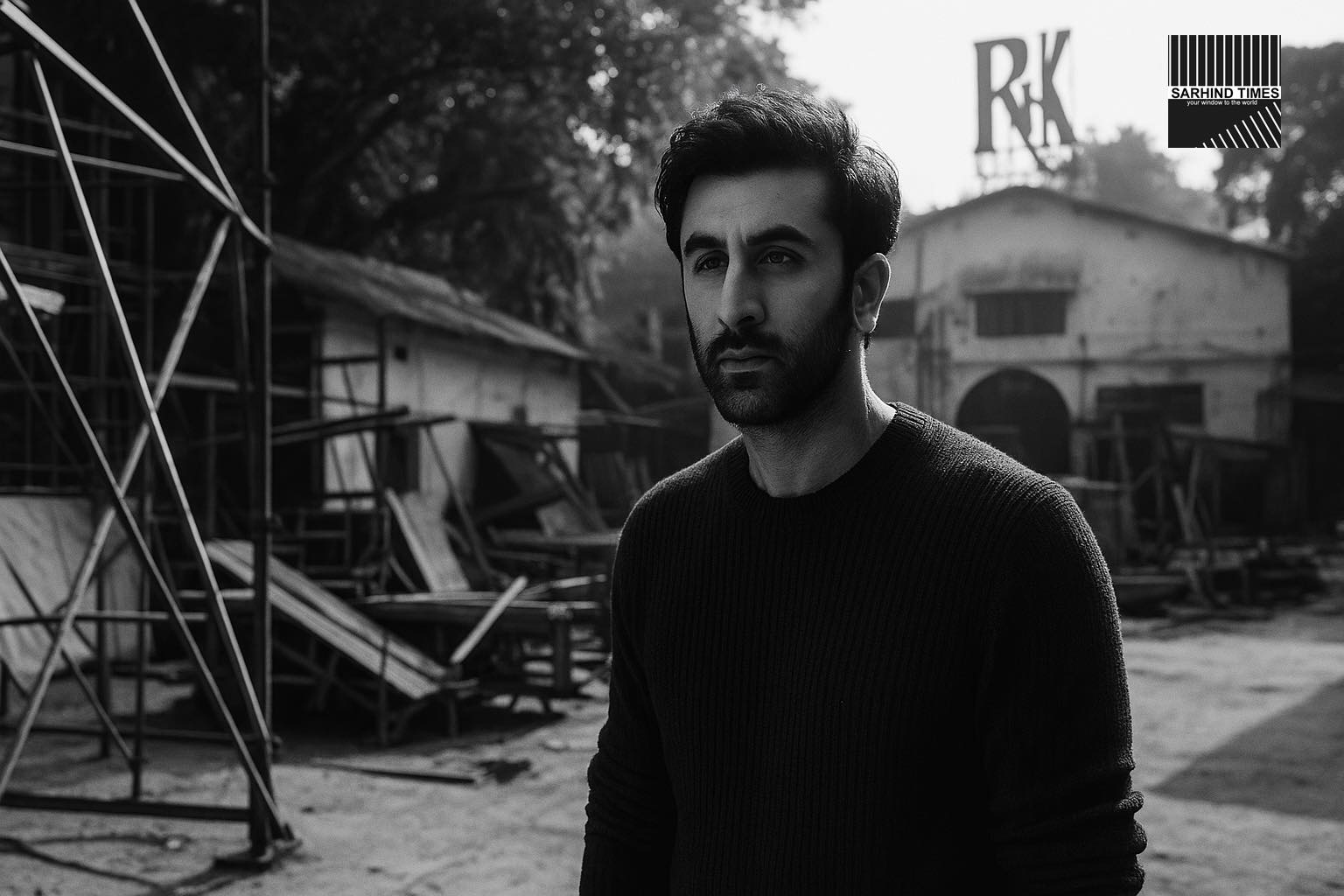
Legacy studio overhaul signals a new chapter for Indian cinema as Kapoor blends heritage with his directorial debut
Dateline: Mumbai | 4 November 2025
Summary: Bollywood actor Ranbir Kapoor is set to restore the historic RK Studios, founded by his grandfather Raj Kapoor, and will direct his first film under its banner—marking a significant moment in Indian cinema that merges family legacy with modern creative ambition.
An historic revival
In a move that blends nostalgia with ambition, Ranbir Kapoor has announced plans to resurrect RK Studios—the iconic film studio originally established by his grandfather, Raj Kapoor, in 1948. Located in Chembur, Mumbai, the studio was the site of numerous classic Bollywood films. However, over the decades it had fallen into disrepair and its role in mainstream production had dwindled.
Kapoors’ announcement signals a relaunch: a full-scale renovation of the studio grounds, updated production infrastructure, sound-stages designed for modern filmmaking (including high-end VFX and hybrid virtual production), and importantly, the studio’s first production under Ranbir’s directorial helm.
Ranbir’s directorial debut and creative vision
Though primarily known for his acting career, Ranbir Kapoor is stepping into the director’s chair for the first time. The project—whose working title remains undisclosed—is being developed under the RK Studios banner and reportedly involves high-profile collaboration with stars like Deepika Padukone and director Ayan Mukerji. This dual focus—reviving a legacy studio and making a directorial entry—marks a turning point in Kapoor’s career.
The production will reportedly blend a traditional narrative sensibility (inspired by the studio’s heritage of family dramas, musicals and epics) with contemporary storytelling, including advanced production techniques, pan-Indian casting and a global release strategy. Studio insiders say they are aiming for an international film-festival premiere as part of positioning RK Studios once again as a creative hub.
Why this matters for Indian cinema
For the Bollywood industry, this revival is emblematic of a larger transition. Legacy studios like RK, Filmistan and Mehboob are symbols of an older production era; many have either closed or shifted to real-estate uses. RK Studios’ reconstruction signals a bet on heritage intersecting with future-oriented production. It may encourage other historic brands to re-invest in infrastructure, talent and hybrid production models.
From a creative-economics standpoint, this move has multiple implications:
- Infrastructure boost: Upgraded sound-stages and virtual-production capability may help reduce India’s dependency on overseas facilities for high-budget films.
- Talent magnet: A high-profile actor-turned-director at the helm of a revived studio may encourage fresh talent—actors, technicians, writers—to converge in Mumbai rather than shift to regional hubs alone.
- Global positioning: With Indian films increasingly targeting overseas markets, the studio’s global ambitions align with broader industry shifts toward pan-Indian and international releases.
Heritage, risk and opportunity
The Kapoor family heritage carries both symbolic weight and commercial risk. On one hand, the name and legacy provide instant credibility, brand recognition, and fan nostalgia. On the other hand, relaunching and directing a major film is a high-stakes move: directorial debuts—even from seasoned actors—can be unpredictable in terms of box-office, critical reception and internal management. Kapoor and his team thus face a confluence of creative expectations and studio-management challenges.
The studio renovation itself is ambitious: plans include multiple live stages, dedicated post-production facilities, a campus for film-education/training, and integration with streaming-production workflows. The financial investment is reportedly substantial, though exact figures have not been publicly disclosed. The success of the initial production and early box-office performance will heavily influence whether RK Studios can re-establish itself as a major production house.
What this means for upcoming film production
The announcement coincides with a busy release calendar in Bollywood. November 2025 features multiple major films—the court-drama “Haq”, the romantic sequel “De De Pyaar De 2”, the war epic “120 Bahadur” —all pointing to a production-rich period. Amid this competitive landscape, the relaunch of RK Studios adds an interesting dimension: it both pays homage to the past and signals a future-oriented approach.
If the new RK Studios production sets benchmarks in production value, pan-Indian reach and export potential, it may catalyse industry peers and deepen Mumbai’s production ecosystem rather than allow hubs in Hyderabad, Bengaluru or Chennai to dominate.
Strategic implications for region and economy
Cinematically, revival of RK Studios reinforces Mumbai’s role as the heart of Hindi-film production. The new infrastructure may spur ancillary industries—studio-services, set-construction, costume fabrication, VFX houses, talent training centres—creating employment and investment linkages. In real-estate terms, the redevelopment of the studio site may also draw new commercial activity, hospitality and creative-campus development.
For global streaming platforms and international co-producers, the project offers increased Indian capacity to handle high-budget production, facilitating export of services and attracting foreign investment in film-infrastructure. This aligns with India’s “creative-economy” growth ambitions, where film, media and entertainment are major contributors.
Looking ahead: timelines and production roadmap
Initial demolition and refurbishment works at the RK Studios site have already commenced. Sound-stage construction, utility-infrastructure upgrade and campus planning are expected to be completed by late 2026. Meanwhile, Kapoor’s directorial production is slated to begin principal photography in mid-2026, with a tentative release target of late 2027. Filming is expected to be pan-Indian (Hindi, Tamil, Telugu versions), with overseas shoots, and multiple language distribution.
The launch of the new production under the regenerated studio will be closely watched by industry watchers: will it reclaim the studio’s past glory? Will it manage production-scale challenges? Will fans reconnect with the RK brand in a new form? Early speculation suggests that if the film is successful, it could usher in a new era for heritage studios in India.
Conclusion: blending legacy with future creativity
In sum, Ranbir Kapoor’s revival of RK Studios is more than a nostalgic gesture—it is a strategic move with wide industry implications. It places family legacy at the centre of modern film-business strategy, injects fresh production infrastructure into Mumbai, and reflects broader trends in Indian cinema: high-value projects, pan-Indian reach, hybrid production models and global ambition. Whether the gamble pays off will be seen in the coming years—but the message is clear: the past remains potent, but the future must be built.



+ There are no comments
Add yours