
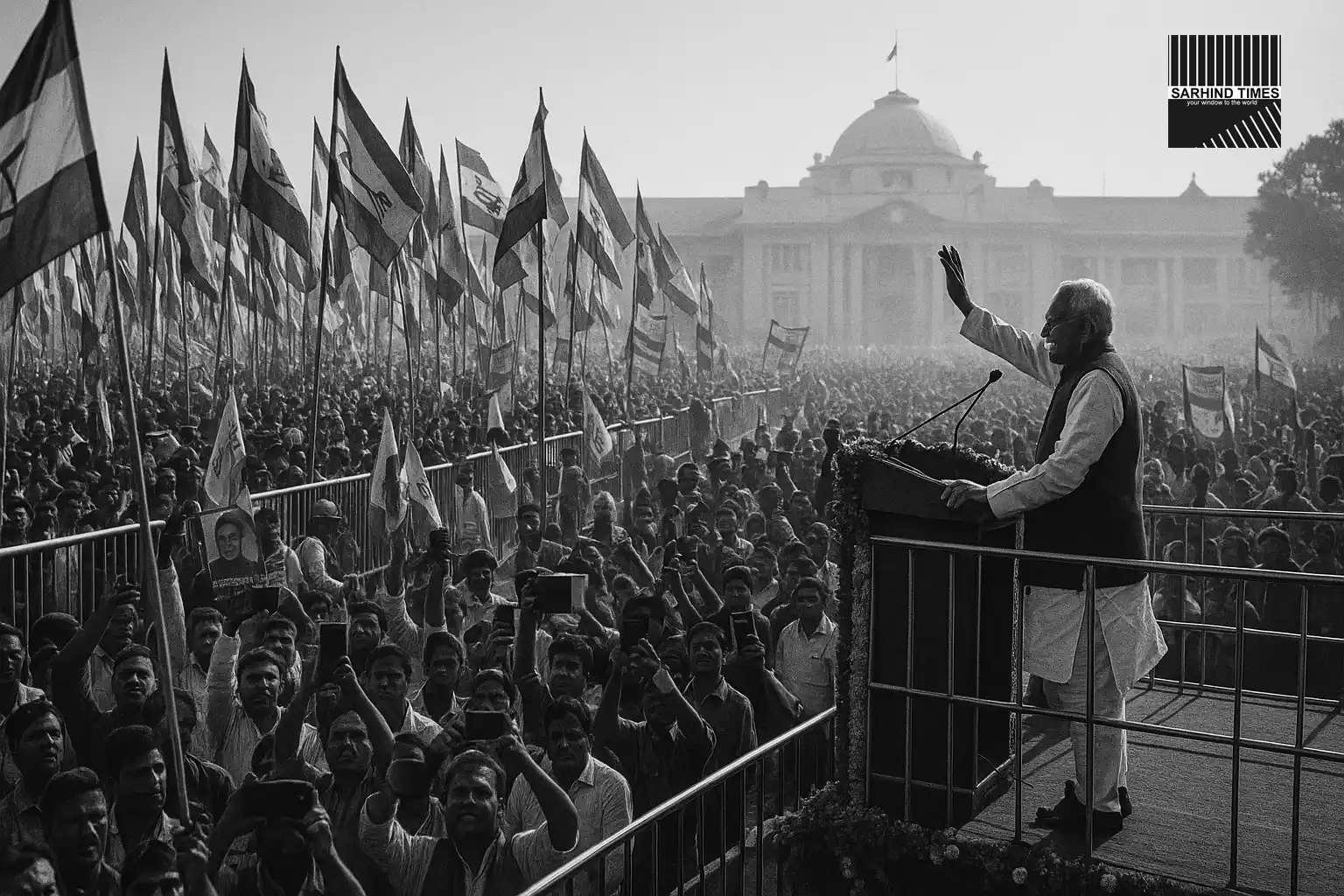
With elections around the corner, Mahagathbandhan unveils “Bihar ka Tejashwi Pran” manifesto and rival National Democratic Alliance ramps up outreach ahead of polling in November.
Dateline: Patna | 29 October 2025
Summary: The Bihar political theatre is heating up as the Mahagathbandhan alliance led by Tejashwi Yadav released its 25-point election manifesto titled “Bihar ka Tejashwi Pran”, pledging one government job per family within 20 days, restoration of old pension scheme and monthly cash transfer for women. Meanwhile the NDA partners have finalised a seat-sharing deal and launched a mass campaign to reach one crore people for inputs ahead of their five-year plan.
Election schedule and alliances in focus
The state of Bihar is gearing up for the 2025 Legislative Assembly elections in a high-stakes contest covering all 243 seats. The Mahagathbandhan, which comprises Rashtriya Janata Dal (RJD), Indian National Congress (INC) and several smaller parties including left-groups, announced Tejashwi Yadav as their chief ministerial face. On the other side, the National Democratic Alliance (NDA) partners—most notably Bharatiya Janata Party (BJP), Janata Dal (United) (JD(U)), Lok Janshakti Party (LJP) and others—finalised their seat-sharing deal: BJP and JD(U) each contesting 101 seats, LJP contesting 29, and smaller partners six each.
Manifesto of the Mahagathbandhan: promises, scope and critique
The Mahagathbandhan’s manifesto, branded as “Bihar ka Tejashwi Pran”, makes headline-grabbing promises:
- One government job member per family within the first 20 days of forming government.
- Restoration of the Old Pension Scheme (OPS) for government employees.
- A monthly cash transfer of ₹2,500 to women under “Mai-Behen Maan” scheme and 200 free units of electricity for households.
During the manifesto event, Tejashwi Yadav attacked the ruling government, accusing it of misgovernance, rising crime and use of central agencies for political ends. He pledged to “end jungle-raj, corruption and misuse of power”.
Analysts point out that the ambitious promises reflect a “poll-mode” blitz but will require heavy fiscal accommodation. Questions raised include how rapidly jobs can be created, how pension commitments will be funded, and whether such pledges are feasible within Bihar’s revenue base and with mounting liabilities. The manifesto also signals a shift from purely caste-based appeals to welfare-and-jobs-centric messaging, though caste and identity politics remain deeply embedded in Bihar politics.
NDA campaign and outreach: strategy and mobilisation
The NDA has reacted proactively: the BJP launched a “one-crore people suggestions” campaign to draw public inputs for its next five-year plan, mobilising digital platforms and ground staff across districts. The seat-sharing accord gives both the BJP and JD(U) 101 seats each—a measure intended to project parity among heavyweight allies and prevent intra-alliance friction.
A challenge for the NDA is balancing intra-alliance demands. The LJP leader Chirag Paswan has emphasised “quality over quantity”, demanding only “winnable” seats and raising his expectations of a possible Chief Ministerial role. This adds another layer of complexity to the coalition arithmetic as the main contest draws near.
In their campaign, the NDA is emphasising governance, development credentials of Chief Minister Nitish Kumar and the BJP’s national narrative of stability and growth, positioning themselves against the what they portray as “empty promises” of the opposition. The ground operation is reportedly aggressive with high-voltage rallies, focused outreach to youth and first-time voters, and social-media amplification.
Key issues framing the election: jobs, migration, governance and caste dynamics
One of the most persistent themes in Bihar is youth unemployment and migration. Many young Biharis migrate to other states for work, often in unskilled jobs. Both alliances have made jobs a central promise—but the Mahagathbandhan’s “one job per family” pledge stands out in scale. The opposition also leverages corruption allegations and law-and-order concerns, charging the government with a deterioration of public safety.
Governance, accountability and regional infrastructure are other battlegrounds. The opposition raises questions about misuse of central agencies and electoral roll revisions; the ruling side counters by pointing to welfare schemes delivered and new industrial investments. Caste remains a salient factor: while welfare promises try to cut across groups, identity mobilization is still active—particularly among backward castes, Dalits and minorities.
Scenario blueprint: What might election outcome look like?
A number of scenarios are in play:
- Status-quo renewal: The NDA retains power, leveraging governance and incumbency advantage. Modi-BJP national connection helps, and internal alliance coherence holds.
- Change via opposition gaining ground: The Mahagathbandhan rides an anti-incumbency wave coupled with the jobs promise to challenge the NDA’s hold.
- Fragmented verdict and king-maker outcome: With a third front such as the Jan Suraaj Party (founded by Prashant Kishor) entering the fray, a fractured mandate is possible, requiring post-poll alliances and bargaining.
Risks, watch-points and electoral mechanics
Several elements will influence the outcome:
- Voter-turnout patterns especially in rural versus urban zones, youth and first-time voters and migrant populations.
- Effectiveness of campaign machinery—logistics, micro-targeting, digital outreach and local-issue resonance.
- Financial-fiscal credibility of the major promises—jobs, pensions, subsidies—and whether the electorate discounts or prioritises feasibility.
- Potential electoral irregularities: opposition has alleged voter-roll revisions (Special Intensive Revision) favouring certain parties, while the Election Commission’s capacity to ensure fairness will be under lens.
- Alliance management: friction within the NDA (e.g., LJP demands) and the cohesion of the Mahagathbandhan (including left parties’ demands for seats) could impact campaign unity.
Conclusion
Bihar’s 2025 Assembly election is shaping up to be one of the most competitive in recent years—marked by bold promises, shifting alliances, and intense campaigning. For voters, the question is increasingly about opportunity, jobs and governance rather than only identity; for parties, the challenge is converting ground operations into credible mandates. The next few weeks will be decisive: announcements will turn into reality checks, political narratives will sharpen, and the state’s future direction will be determined. For the Mahagathbandhan, delivering their promise will require rapid demonstration; for the NDA, maintaining alliance harmony and performance credibility will be key. Bihar watchers should focus not just on numbers but on the post-poll governance model that emerges.

+ There are no comments
Add yours