
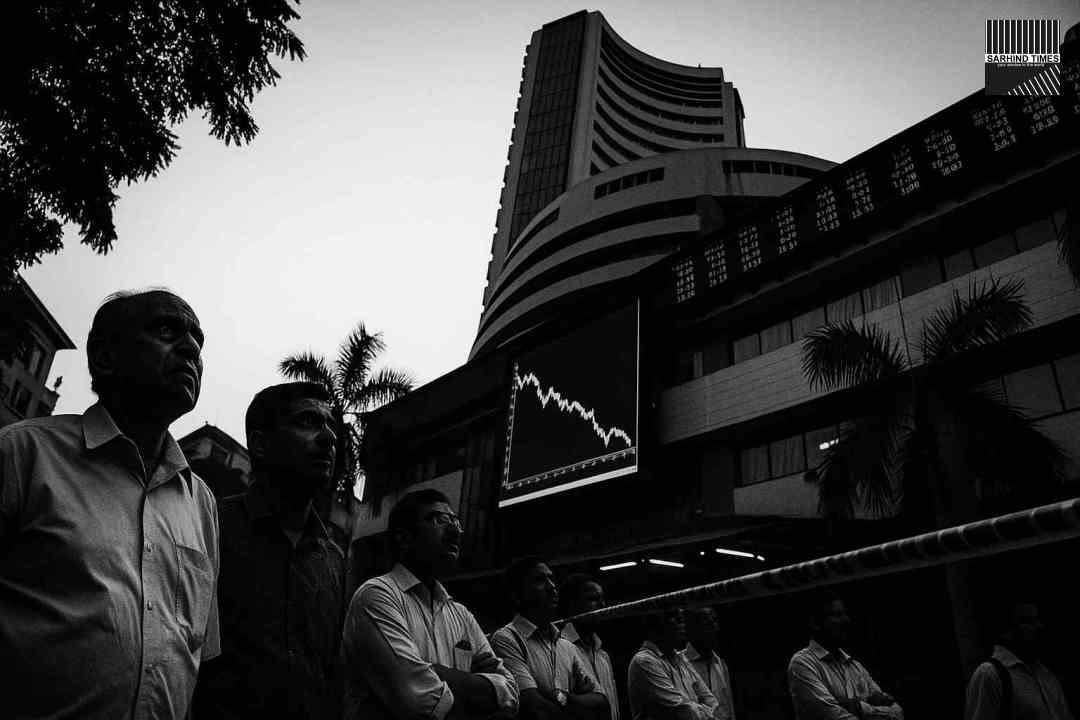
Rupee hits a three-month low, FII selling intensifies, and banking–metal stocks drag indices; Finance Ministry calls urgent market stability review
Dateline: Mumbai | 30 November 2025
Summary: Indian markets witnessed a sharp correction this week as the Sensex logged its steepest intra-day fall of the quarter. Geopolitical tensions, rising crude prices, a weakening rupee, and aggressive foreign institutional investor (FII) outflows created panic across sectors. The sudden volatility prompted the Finance Ministry and SEBI to initiate an internal review amid fears of prolonged instability.
Introduction: A Markets Meltdown Few Saw Coming
In one of the most turbulent sessions of the year, Indian stock markets nosedived this week as a combination of global uncertainties, domestic economic concerns, and risk-off investor sentiment sent the benchmark indices into a free fall. The Sensex dropped 1,430 points in early trade, while the Nifty plunged over 400 points, triggering automated volatility halts in selective derivative positions. Market veterans described the session as “a brutal reality check” after months of record-high optimism and stretched valuations.
The downturn was largely sparked by a sudden escalation in global geopolitical tensions that rattled risk assets worldwide. Rising crude oil prices, a weakening rupee, and sharp FII withdrawals compounded the sell-off, pushing retail investors into panic mode. The volatility heightened so quickly that several brokerages temporarily slowed trade execution to manage system load.
Global Cues: What Triggered the Panic
The global environment has been unstable for weeks, but the last 72 hours witnessed a rapid deterioration. Major markets in the US, Europe, and Asia opened sharply lower after reports indicated renewed military activity in key oil-producing regions. Brent crude prices surged past $101 per barrel, triggering inflation fears for emerging economies heavily dependent on energy imports, including India.
Wall Street’s overnight slump, led by tech and banking stocks, sparked a contagion effect across Asian markets. Japan’s Nikkei, Hong Kong’s Hang Seng, and South Korea’s KOSPI all posted significant losses. India, already battling domestic macroeconomic uncertainties, reacted sharply to the global turbulence.
FII Exodus: The Largest Sell-Off in Weeks
Foreign institutional investors, sensing heightened risk, dumped Indian equities worth over ₹4,200 crore in a single session. This marked the largest one-day FII outflow of the quarter. Analysts say the pull-out was accelerated by two key factors: the strengthening US dollar and rising US bond yields, which made emerging market investments less attractive.
Domestic institutional investors attempted to stabilize the fall by purchasing select banking and FMCG stocks, but their efforts were insufficient to counter the intensity of FII selling. Market strategists warn that if FIIs continue withdrawing capital at this pace, India could witness sustained volatility for several weeks.
Banking and Metal Stocks: The Worst Hit
Banks and metal companies bore the brunt of the sell-off. Banking stocks, often considered the backbone of Indian indices, dropped sharply as investors feared rising bond yields and potential NPAs linked to industrial slowdown. Several PSU banks saw declines between 4% and 7%, while private sector banks also recorded steep losses.
The metals sector collapsed under the weight of falling global demand indicators and rising input costs. Steelmakers, aluminum producers, and mining firms all posted significant dips as commodity traders reacted to slowing economic activity worldwide.
The Rupee’s 3-Month Low: A Fresh Concern
The Indian rupee fell to a three-month low against the US dollar, touching 84.27 during intra-day trade. Currency traders attributed the depreciation to widening trade deficits, higher crude prices, and dollar strength globally. A weaker rupee raises India’s import bills, particularly for crude oil, which can fuel inflation and strain corporate earnings.
The Reserve Bank of India intervened intermittently to stabilize volatility, but avoided aggressive action as part of its calibrated currency management strategy.
Mid-Cap and Small-Cap Carnage
The broader market suffered worse damage than headline indices. Mid-cap and small-cap indices plunged nearly 3.8% and 4.2% respectively, wiping out weeks of gains. Several high-valuation mid-cap stocks fell between 8% and 12% as margin calls were triggered across retail portfolios.
Analysts warn that mid-cap euphoria was already running ahead of fundamentals, and the correction could deepen as liquidity tightens. Brokerage firms have advised investors to exercise caution, particularly in leveraged positions.
Investor Psychology: Panic Selling and Herd Behavior
Market behavior during the crash reflects classic herd psychology. Early-morning volatility triggered fear-driven selling among retail investors, many of whom liquidated positions at steep losses. Social media platforms were flooded with frantic posts, adding to the panic cycle.
Experts note that rapid algorithmic trading intensified the downward spiral, as automated systems executed large sell orders in response to price movements. Several fund managers have emphasized the need for retail investors to maintain discipline during such cycles and avoid emotion-driven trades.
Derivatives Market: Sharp Spikes in VIX
The India VIX — the volatility index — surged nearly 23%, indicating heightened fear in the derivatives market. Nifty futures and options saw massive unwinding, particularly in call positions. Put premiums skyrocketed, reflecting trader expectations of further downside.
Market participants remain divided: some expect a technical rebound once selling pressure eases, while others predict another leg down if global tensions escalate.
Finance Ministry and SEBI Begin Internal Review
As markets plunged, senior Finance Ministry officials and representatives from SEBI held an internal review to assess volatility risks. According to sources, the meeting focused on:
- Liquidity conditions across institutions
- Derivative market stability
- Margin rule effectiveness
- Potential policy measures if volatility worsens
Officials stated that India’s financial ecosystem remains fundamentally strong, but acknowledged that external conditions may necessitate additional policy monitoring.
Corporate Earnings Outlook: Growing Caution
The correction has raised doubts about the upcoming quarterly earnings season. Sectors such as chemicals, IT services, auto ancillaries, and construction materials are expected to report subdued growth. Companies heavily reliant on exports may suffer margin compression due to global demand slowdown.
However, analysts note that domestic consumption, particularly in banking, telecom, and consumer staples, may offer some resilience.
Retail Investors: Opportunities or Traps?
While panic dominated the session, many long-term investors view the correction as an opportunity to accumulate fundamentally strong stocks at discounted valuations. Financial advisors are encouraging systematic investments into large-cap indices but cautioning against aggressive bets in speculative segments.
“Corrections are a part of market cycles,” said one fund manager. “What matters is whether investors remain patient and diversified.”
Global Markets Outlook: Will the Pain Continue?
Market analysts believe the global environment will remain volatile for at least the next two weeks. Factors contributing to uncertainty include:
- Geopolitical tensions in key oil corridors
- Global inflation concerns
- Recession fears in Europe
- US Federal Reserve policy ambiguity
- Volatile commodity prices
India, despite strong fundamentals, is expected to feel the ripple effects of global risk aversion.
Technical Indicators: Where Markets Stand Now
Technical charts show that both Sensex and Nifty have fallen below their 20-day and 50-day moving averages. Analysts believe Nifty could retest the 20,000 mark if selling persists. Key support zones are being monitored closely.
Conclusion: A Test of India’s Market Resilience
The sharp fall in the Sensex marks a defining moment for Indian markets as external shocks collide with domestic uncertainties. While long-term fundamentals remain intact, the immediate path ahead is clouded by volatility, global tensions, and investor nervousness. Experts recommend caution, diversification, and disciplined investing as India navigates one of its most challenging market phases of the year.



+ There are no comments
Add yours