
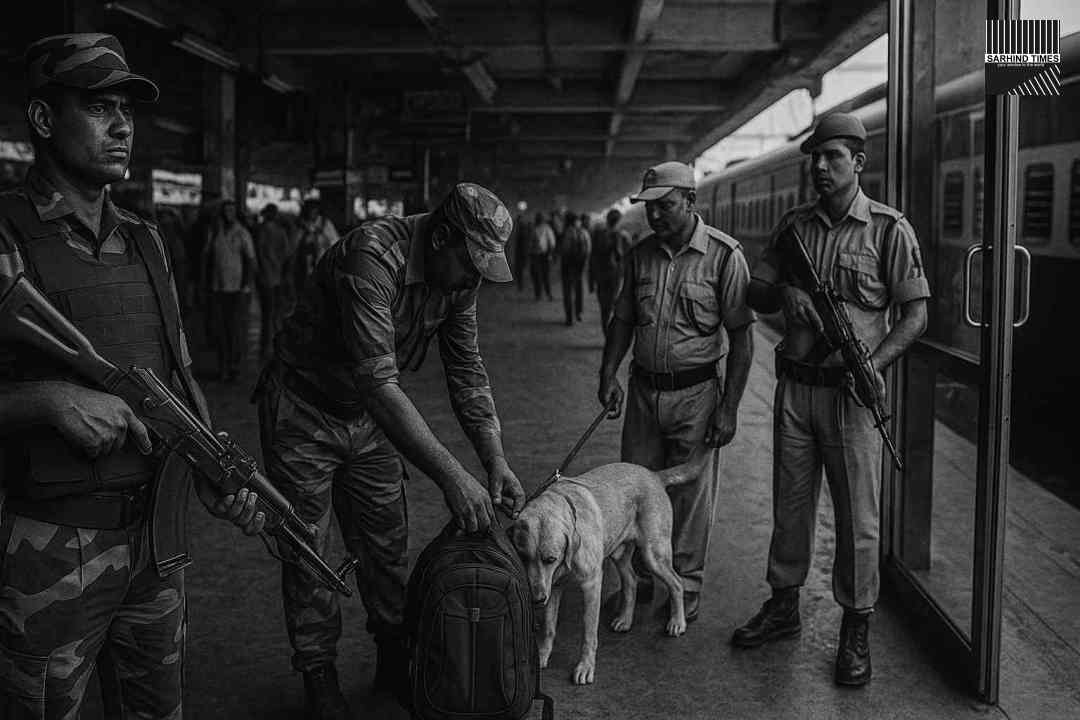
High-security zones placed under reinforced surveillance; major cities increase checkpoints as agencies intensify tracking
Dateline: New Delhi | 29 November 2025
Summary: Central intelligence agencies have issued a high-level nationwide alert following credible inputs about a possible coordinated terror attempt targeting crowded public zones. Major cities, transport hubs, and government establishments have increased security as investigative teams work to verify threat signals.
A Sudden Alert Sparks Nationwide Vigilance
India has been placed on heightened security vigilance after intelligence units flagged potential plans for coordinated terror strikes in multiple metropolitan cities. The alert, issued late Thursday night, was circulated through all state police headquarters, paramilitary units, and central agencies with explicit instructions to strengthen surveillance and step up interrogations of suspicious movements.
Sources indicate that the intelligence input came from ongoing monitoring of cross-border communication channels and intercepted digital activity suggesting reconnaissance of major public locations.
Transport Hubs Under Tight Watch
Railway stations, airports, metro networks, and inter-state bus terminals have been placed under intensified scrutiny. Officers have been asked to conduct continuous patrols, random baggage inspections, and detailed vehicle checks, especially during peak hours.
At New Delhi Railway Station, security personnel deployed additional quick reaction teams (QRTs), bomb disposal squads, and dog units. Similar reinforcement was seen at Mumbai CST, Bengaluru’s Majestic terminal, and Kolkata’s Howrah Station.
Airport authorities across India have upgraded threat levels, introducing stricter entry checks and restricting non-passenger movement around terminals.
Major Cities Increase Checkpoints
Delhi, Mumbai, Bengaluru, Hyderabad, Chennai, and Pune have activated citywide security grids. Vehicular checkpoints have increased across arterial roads, particularly near diplomatic zones, government buildings, IT parks, and marketplaces.
Police advise residents to carry valid identification and remain patient with temporary delays. In Gurugram and Noida, tech campuses implemented additional gate verification procedures and emergency response drills.
Intelligence Inputs Suggest Multiple Targets
While authorities have withheld exact details for security reasons, intelligence assessments suggest that crowded public spaces such as malls, transport hubs, and festival venues may be under reconnaissance. Investigators are analyzing the pattern of intercepted messages to determine whether the threat is imminent or part of a larger misinformation effort.
An official familiar with the inputs described the threat as “credible enough to merit maximum precaution.” Central agencies are coordinating closely with state-level anti-terror units to track digital footprints and cross-check suspects.
Coordination Between Agencies Intensifies
The alert triggered an emergency multi-agency coordination meeting chaired by senior officials from the Intelligence Bureau, Research and Analysis Wing (RAW), National Investigation Agency (NIA), and Ministry of Home Affairs. Representatives from major state police forces joined via secure video link.
Officials discussed the need to strengthen border surveillance, monitor communication networks, and verify recent international arrivals flagged in earlier intelligence reviews. Cyber cells have been instructed to track potential online radicalisation markers, anonymous chat groups, and unusual financial transactions.
State Police Forces on High Readiness
States have activated their respective anti-terror squads (ATS) and increased deployments at sensitive installations such as power plants, refineries, seaports, and military bases. Local police units have been told to conduct surprise checks in hotels, rental accommodations, and warehouses that could potentially be misused for storage or assembly.
Night patrols and highway inspections have also intensified. Border states have been placed under special directives to monitor infiltration risks and track undocumented movement across critical terrain routes.
Public Advisories Issued
Authorities have urged the public to remain alert and avoid spreading rumors. Citizens are advised to immediately report abandoned objects, suspicious behavior, or unclaimed luggage in public spaces.
Emergency helplines, including 112 and city-specific police control numbers, have been reinforced with additional staff. Officials emphasized that public cooperation is crucial in preventing panic and ensuring prompt response.
Security at Religious and Cultural Venues Tightened
Given the large number of festivals, winter events, and public gatherings during this period, religious places and cultural venues have been placed under additional watch. Organizers of concerts, exhibitions, and fairs have been instructed to increase entry checks and ensure that emergency exits are unobstructed.
CCTV monitoring has been strengthened in high-footfall locations such as Connaught Place, Marine Drive, Brigade Road, Charminar, and central markets across tier-1 cities.
Investigation Points Toward Cross-Border Influence
Preliminary analysis of the intercepted communication suggests possible external facilitation. Intelligence teams are examining links with older networks known to operate across borders. If confirmed, this could trigger wider diplomatic and counterterrorism engagement.
Meanwhile, investigators are mapping associates, recent travel patterns, and financial channels of known operatives previously flagged in watchlists.
Political Reactions Across the Spectrum
The government urged unity and caution, emphasizing that national security should remain above political discourse. Leaders across parties expressed support for enhanced vigilance and encouraged citizens to remain calm.
Several state governments requested central assistance to scale up urban surveillance and deploy rapid-response units in crowded districts.
Experts Warn Against Complacency
Security analysts note that heightened alerts must be accompanied by long-term structural improvements. India’s dense urban environments, open-access markets, and high commuter traffic pose continuous risks that require sustainable security planning.
Experts emphasize the importance of community awareness training, early-warning systems, and modern analytics for threat detection.
Conclusion: Nation on Guard, Agencies in Action
While no incident has been reported so far, the credible intelligence warning has placed the nation on alert. Security agencies continue to verify the depth of the threat, and reinforcements across major cities reflect a proactive approach to prevention.
For now, India remains on vigilant footing—strengthened by coordinated intelligence, reinforced security presence, and public awareness. The coming days will be crucial as agencies monitor developments and adapt their strategy based on the evolving threat landscape.



+ There are no comments
Add yours