
Global markets react sharply; allies scramble for stability as the country faces its most serious leadership crisis in two decades.
Dateline: Geneva | 28 November 2025
Summary: One of the world’s leading G20 economies entered an unprecedented political crisis on Thursday after its Prime Minister tendered a surprise resignation amid corruption allegations, forcing the country’s President to dissolve Parliament and appoint an interim emergency cabinet. The sudden collapse of the government sent shockwaves across global capitals, triggered a dramatic stock market slide, disrupted trade expectations, and prompted urgent diplomatic consultations. Analysts warn the crisis could reshape regional alliances, affecting global economic and security dynamics.
A Leadership Collapse Hours in the Making
The political breakdown unfolded rapidly over the past 24 hours, beginning with leaks from top investigative agencies suggesting that senior cabinet members were linked to a multi-billion-dollar infrastructure kickback scheme. The nation’s Prime Minister, who had previously dismissed the allegations as “politically motivated fabrications,” tendered his resignation after an emergency cabinet meeting late Wednesday night.
Within hours, the President invoked constitutional provisions to dissolve the national Parliament, stating in a televised address, “The integrity of the state must be protected. A transitional cabinet is essential to restore stability and public trust.”
Political observers described the move as “dramatic but unavoidable,” given the intensity of public protests, internal defections within the ruling party, and mounting pressure from opposition leaders demanding accountability.
Emergency Cabinet Takes Charge
By early Thursday morning, the President had appointed a seven-member emergency cabinet composed of senior bureaucrats, retired judges, and former military strategists. The interim government has been given sweeping powers to oversee law enforcement, stabilize financial markets, and manage international relations.
The cabinet’s immediate priorities include:
- Maintaining internal security
- Preventing capital flight and banking instability
- Overseeing independent investigations into alleged corruption
- Ensuring continuity in foreign and trade policy
- Preparing the framework for early national elections
Public reaction to the emergency cabinet has been mixed. While some citizens welcome a technocratic administration, others fear authoritarian overreach in the absence of elected representatives.
Opposition Parties Declare Victory, Call for Nationwide Elections
Opposition parties hailed the resignation as a “moral and political victory,” accusing the outgoing government of orchestrating one of the largest financial scandals in the nation’s history. Several opposition leaders held press conferences demanding immediate elections rather than waiting for the interim government to implement reform measures.
One opposition figure said, “The people must decide the future — not committees, not bureaucrats. We demand nationwide elections within 90 days.”
However, constitutional experts note that elections cannot be held until the country’s Election Commission certifies that the political environment is stable and free of intimidation.
Global Markets React with Sharp Volatility
The sudden political vacuum triggered steep declines across global financial markets. The country’s benchmark stock index fell over 7% in intraday trading before stabilizing slightly toward the close.
International markets reacted with:
- Sharp drops in currency valuation
- Fallout in emerging market indices
- Repricing of government bonds and credit default swaps
- Immediate suspension of negotiations on new trade deals
- Temporary halts in foreign investment flows
Global investors expressed concern about the uncertainty surrounding the country’s fiscal governance and long-term debt commitments.
International Community Expresses Concern
Governments across North America, Europe, and Asia issued statements expressing concern over the political instability and urging all parties to maintain constitutional order.
Diplomatic missions in the affected country advised their citizens to exercise caution and avoid government buildings until the situation stabilizes.
A senior European diplomat noted, “This crisis has implications far beyond domestic politics. It impacts trade routes, supply chains, and security partnerships across continents.”
Investigation Into Corruption Allegations Intensifies
Investigative agencies revealed that corruption inquiries had been underway for months, involving alleged kickbacks linked to high-speed rail, defense procurement, and energy infrastructure contracts worth over $40 billion.
Sources indicated that newly discovered documents suggest:
- Large unreported offshore accounts held by senior ministers
- Falsified bidding processes for mega infrastructure projects
- Evidence of forged land acquisition documents
- Encrypted communications allegedly linking officials to contractors
- Misuse of intelligence agencies for political surveillance
Prosecutors say they are preparing charges that could result in long-term prison sentences for several high-ranking officials.
Street Protests and Public Outrage
Thousands of citizens took to the streets in major cities, demanding transparency, accountability, and immediate democratic elections. Protesters waved national flags, carried placards accusing the government of betrayal, and chanted slogans calling for a complete overhaul of the political establishment.
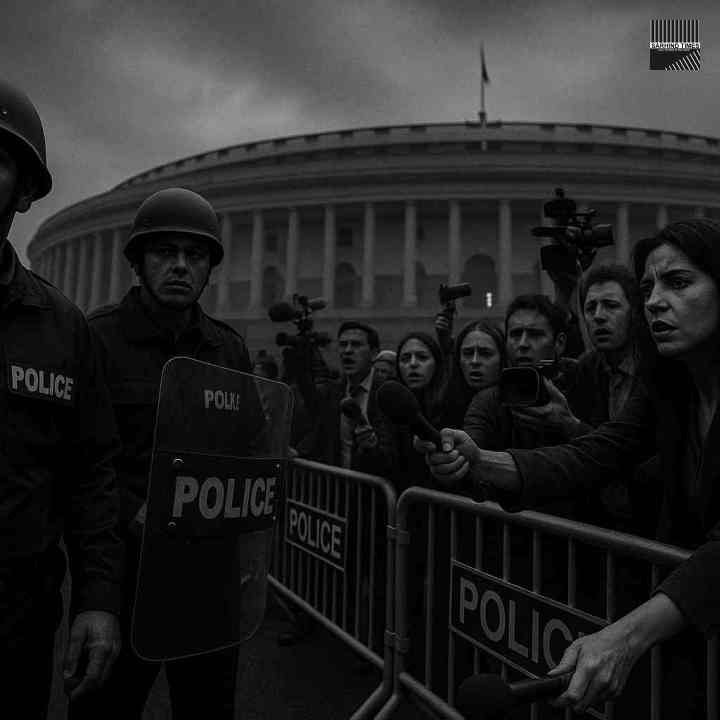
Police used barricades to prevent demonstrators from approaching Parliament, though the protests remained largely peaceful. Civil society groups are organizing nationwide rallies this weekend.
Business Community Seeks Stability
Corporate leaders expressed concern that extended political instability may disrupt supply chains, delay industrial projects, and hamper foreign investment. Business chambers urged the emergency government to prioritize economic continuity and regulatory stability.
Industries such as technology, manufacturing, and pharmaceuticals — heavily dependent on export markets and international partnerships — warned that uncertainty could affect global contract renewals.
Regional Impact: A Potential Geopolitical Shift
The crisis is reshaping regional political dynamics. Neighboring countries are monitoring the situation closely, especially regarding defense cooperation, border security, and shared economic corridors.
Security analysts warn that adversarial nations may attempt to exploit the momentary instability to push territorial or diplomatic advantage.
One analyst wrote, “Any instability in a major G20 nation creates ripple effects across the geopolitical spectrum.”
The Emergency Cabinet’s First Decisions
In its first 12 hours, the interim cabinet issued several emergency orders:
- Deployment of additional security forces to government districts
- Audit of all ongoing contract tenders
- Freeze on financial disbursement for new projects
- Creation of a crisis management task force
- Direct communication channels with international allies
Senior bureaucrats emphasized that these measures aim to ensure “professional governance without political interference.”
Experts Warn of Constitutional Tensions
Constitutional lawyers warned that dissolving Parliament and forming an emergency cabinet may face legal challenges if political parties argue that constitutional authority was misused.
The Supreme Court of the nation may be asked to clarify whether the President acted within the permitted framework or overstepped to prevent political instability.
Election Commission Prepares for Possible Snap Polls
The national Election Commission has begun preliminary planning for potential early elections. However, officials stopped short of announcing a timeline, stating that the country must reach a “minimum threshold of stability” before polls can be scheduled.
Logistical challenges include updating voter rolls, securing polling machines, and ensuring that political parties can campaign safely.
Citizens Divide Over Interim Government
Public opinion remains sharply divided:
- Some see the emergency cabinet as a necessary measure to prevent collapse.
- Others fear it could set a precedent for bypassing democratic processes.
- Younger voters demand direct elections and transparent investigations.
- Older citizens prioritize economic stability and security.
Social media platforms are flooded with debates, trending hashtags, and videos of protest marches.
International Financial Institutions Monitor Risks
Global financial institutions, including major development banks and credit rating agencies, are evaluating economic risks. A downgrade, experts warn, could push the country into a recession and affect global markets linked to its economy.
Trade analysts predict that ongoing negotiations for major trade agreements may be paused until political clarity returns.
Conclusion: A Defining Moment for Global Politics
The political crisis in this G20 nation marks one of the most consequential international developments of the year. The rapid collapse of its government, combined with the formation of an emergency cabinet and market instability, has created a volatile mix of constitutional, economic, and geopolitical challenges.
The coming weeks will determine whether the country transitions smoothly to democratic stability or descends into prolonged uncertainty — a scenario that would have far-reaching consequences across the world.



+ There are no comments
Add yours