
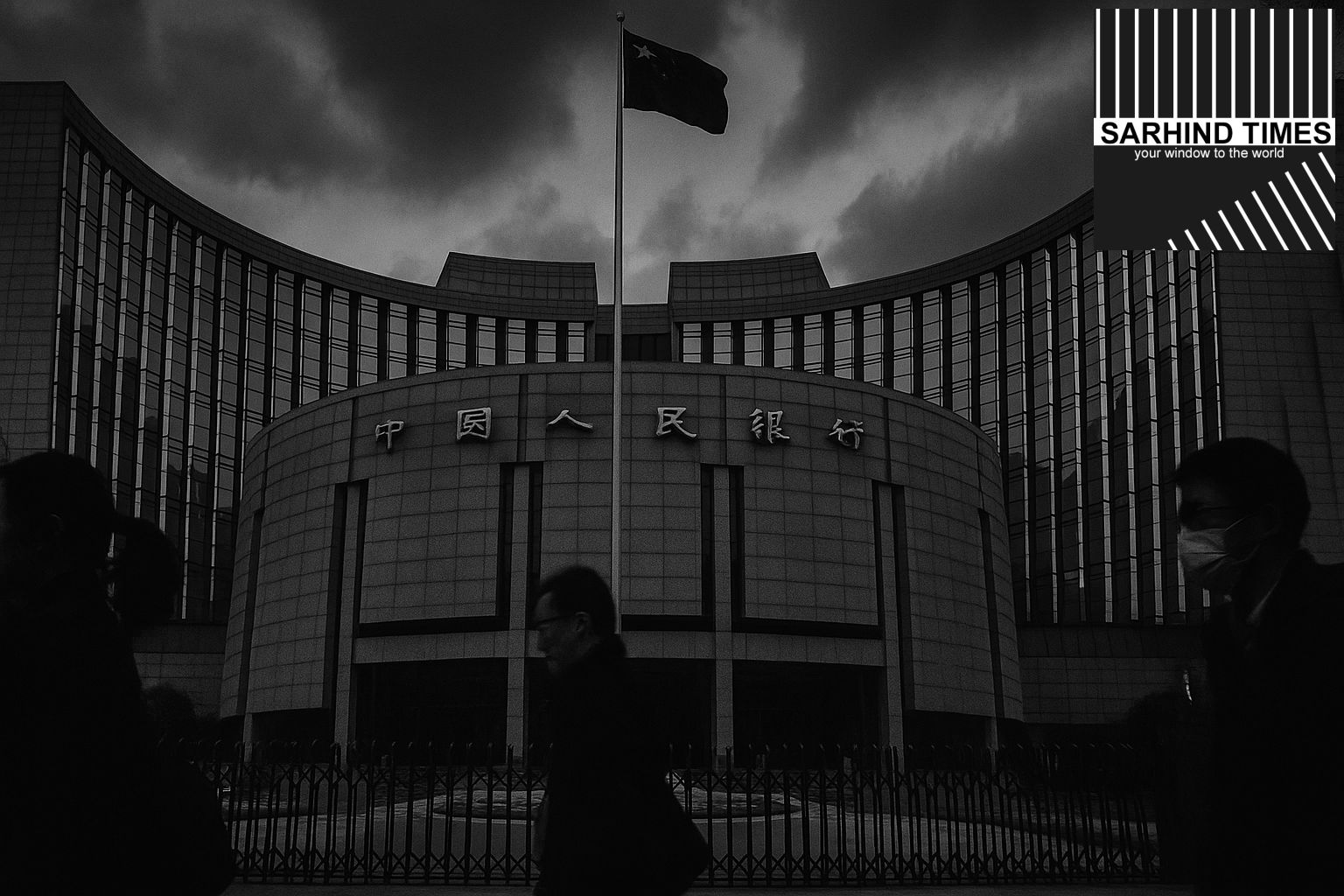
Move triggers worldwide currency volatility, rattles stock markets, and heightens U.S.–China economic tensions
Dateline: Beijing | November 28, 2025
Summary: China shocked the global financial system by announcing a sharp devaluation of the yuan to counter slowing exports. The move triggered immediate market turbulence, weakened several Asian currencies, and reignited geopolitical tensions over trade and monetary policy.
A sudden move with global consequences
In a decision that stunned international markets, the People’s Bank of China (PBOC) announced a significant downward adjustment of the yuan’s reference rate, marking the steepest one-day devaluation in recent years. Authorities said the move was necessary to boost export competitiveness amid slowing global demand and weakened domestic manufacturing performance.
The shock announcement triggered immediate reactions across global currency markets, with several major currencies weakening against the U.S. dollar and Asian stock markets plunging sharply. Financial analysts called the devaluation a “geopolitical tremor” with far-reaching economic implications.
Why China devalued the yuan
China’s decision comes amid declining export orders, weakening manufacturing data, and rising pressure on domestic industries. Over the past six months, export volumes dropped considerably due to sluggish demand in Europe and supply-chain reconfigurations by multinational companies diversifying away from China.
Economists say the devaluation aims to:
• Make Chinese exports cheaper and more competitive
• Support struggling manufacturers
• Stimulate domestic employment in export-heavy regions
• Counterbalance rising production costs
• Protect China’s economic growth targets ahead of 2026
Immediate market reaction: Asian currencies fall
Regional currencies including the Japanese yen, South Korean won, Indonesian rupiah, and Indian rupee all showed immediate depreciation pressure against the U.S. dollar. Investors moved aggressively toward safe-haven assets such as gold and U.S. Treasury bonds.
Stock markets across Tokyo, Seoul, Hong Kong, Mumbai, and Singapore opened with steep declines as traders priced in the ripple effects of the surprise devaluation.
U.S.–China tensions flare once again
Washington reacted sharply, accusing Beijing of engaging in “non-transparent monetary manoeuvres” to artificially strengthen its trade position. U.S. lawmakers demanded closer scrutiny of Chinese trade practices and urged American companies to expedite supply-chain diversification.
Diplomatic sources confirmed that the U.S. Treasury is evaluating whether China’s action constitutes deliberate currency manipulation — a label that could escalate already tense economic relations.
Eurozone expresses concern over export competitiveness
European leaders voiced anxiety over the impact of China’s move on their own export sectors, particularly Germany’s machinery and automotive industries. Analysts say that cheaper Chinese products could further challenge already fragile European manufacturers struggling with energy costs and slowing global demand.
Global inflation worries return
A weaker yuan typically makes Chinese goods cheaper globally — a relief for importers but a challenge for domestic producers competing with China. However, economists warn that if the devaluation leads to retaliatory currency moves in emerging markets, global inflation could re-accelerate due to currency volatility and commodity price swings.
Impact on India: mixed but significant
India, China’s major regional competitor and a large importer of Chinese goods, faces both opportunities and risks. A weaker yuan may make imported electronics, machinery, and industrial components cheaper for Indian businesses. But it also threatens India’s export competitiveness in textiles, chemicals, pharmaceuticals, and engineering goods.
Indian markets responded with volatility: the rupee weakened, IT and export-oriented stocks declined, while import-heavy sectors gained modestly.
Indian government monitors macro impact
The Ministry of Finance and the Reserve Bank of India held emergency consultations to assess the situation. Officials emphasised that India has strong foreign exchange reserves to manage short-term volatility but acknowledged that prolonged yuan weakness could shift trade dynamics.
Trade experts say the government may consider targeted incentives to protect vulnerable export sectors if the devaluation persists.
Global supply chains brace for disruption
The devaluation has immediate implications for multinational supply chains. Companies relying on Chinese components may gain cost advantages but face uncertainty regarding pricing stability and contractual obligations.
Manufacturers in Vietnam, India, Mexico, and Eastern Europe — all beneficiaries of diversification away from China — may face renewed price competition, potentially slowing recent momentum.
Financial markets face turbulence
Currency traders reported heavy speculative activity as hedge funds attempted to price in the longer-term effects of the devaluation. Commodity markets saw temporary dips in industrial metals such as copper and aluminum, reflecting expectations of higher Chinese exports.
Bond markets hardened as global investors sought safe assets, pushing yields lower in the U.S. and Japan.
Domestic reaction inside China
Chinese officials defended the move, stating that the devaluation was a “calibrated adjustment” reflecting market fundamentals and global economic conditions. State media emphasised that the decision would help stabilise employment and ensure China meets its annual growth targets.
Some Chinese economists, however, privately expressed concerns about potential capital outflows if investors view the devaluation as a sign of deeper economic weakness.
Will this trigger a currency war?
Analysts caution that if neighbouring countries respond with their own currency adjustments, the world could enter a competitive devaluation spiral — a scenario reminiscent of past global downturns. Such currency wars can destabilise global trade and hurt developing economies disproportionally.
So far, major central banks have refrained from reactive moves, but analysts warn that prolonged yuan weakness may force policy responses elsewhere.
Historical parallels and key differences
Experts point to similarities between the current situation and China’s 2015 devaluation, which rattled global markets. However, they emphasise key differences today:
• Global debt levels are higher
• Monetary policy space is limited
• Supply chains are more decentralised
• Geopolitical tensions are at historic highs
These factors could amplify the impact beyond traditional economic channels.
Corporate world reacts
Global corporations issued cautious statements, noting that the devaluation could alter investment plans, supply contracts, and pricing strategies. Several multinational firms are reassessing their 2026 financial outlooks to incorporate currency fluctuation risks.
What happens next: key indicators to watch
Economists say the next one to two weeks will clarify whether this is a temporary adjustment or the beginning of a broader monetary strategy. Key indicators include:
• Yuan stability over coming days
• Global central bank responses
• Export data from Asia
• Bond market volatility
• Capital flows into and out of China
• Statements from the U.S. Treasury and EU regulators
Conclusion: a global financial landscape on edge
China’s surprise yuan devaluation has unleashed a new wave of uncertainty across global markets. With stock indices falling, currencies swinging, and geopolitical tensions rising, the world is entering a phase of financial and diplomatic turbulence. Whether the shock stabilises or escalates into a broader economic confrontation will depend on coordinated policy responses and the resilience of global markets.
For now, investors, governments, and businesses are bracing for volatility as the implications of China’s bold monetary move unfold across the world.



+ There are no comments
Add yours