
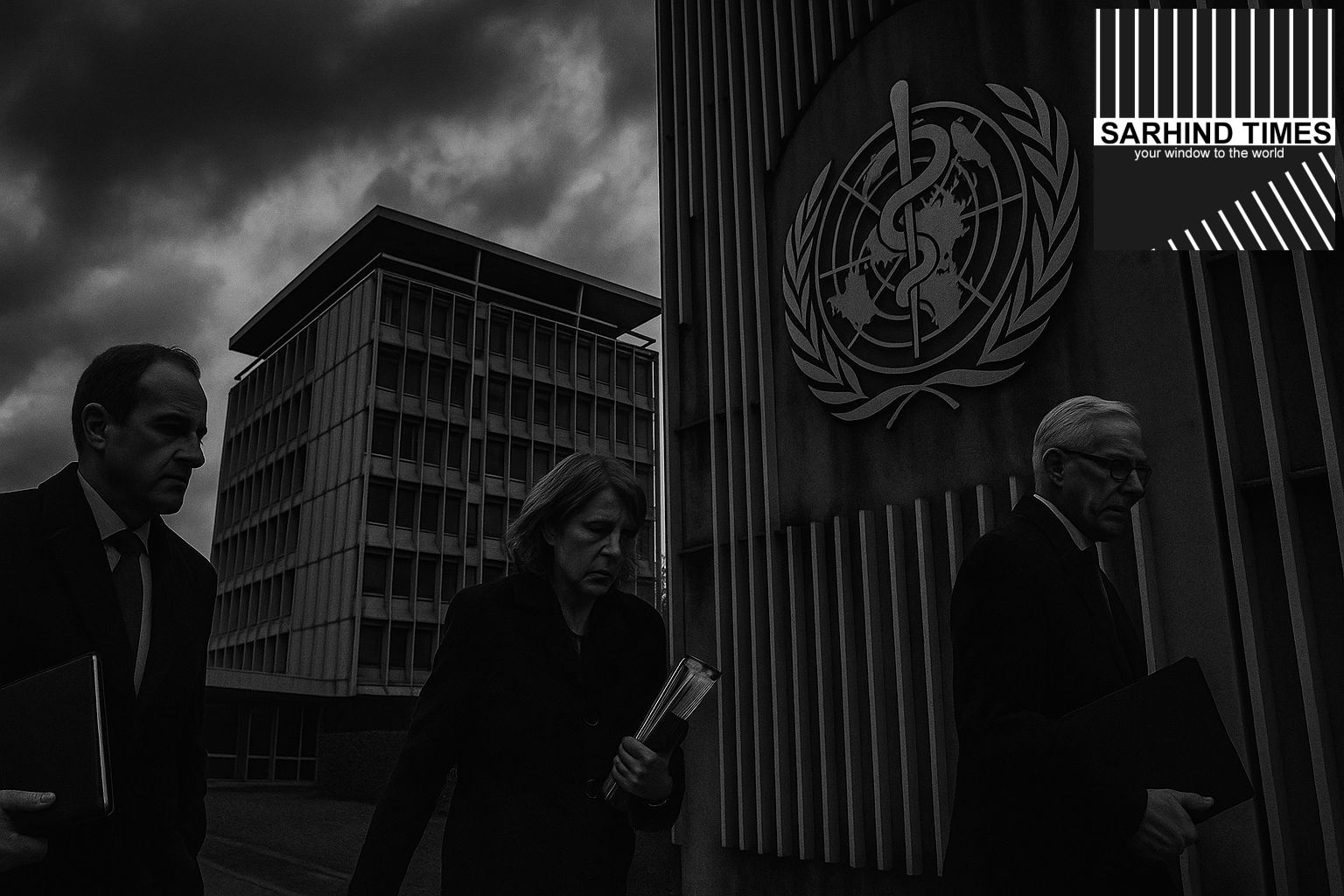
Early reports show rapid transmissibility; nations activate emergency surveillance and border screening
Dateline: Geneva | November 28, 2025
Summary: The World Health Organization issued an urgent global alert after a newly identified, highly mutated respiratory virus was detected in multiple countries within a short span. While investigations are underway, initial data indicates fast human-to-human transmission, triggering worldwide surveillance measures.
A new virus raises international alarm
In a development that has sent shockwaves through global health systems, the World Health Organization (WHO) issued an emergency alert late Wednesday after identifying a highly mutated respiratory virus spreading across several countries. The pathogen, detected almost simultaneously in Europe, Asia, and parts of South America, has shown unusual transmission patterns that epidemiologists describe as “concerning and atypical.”
Though still under investigation, the virus — temporarily classified as RV-25 — carries genetic features not seen in common seasonal respiratory pathogens. Preliminary studies suggest faster spread but currently low hospitalization rates. However, scientists caution that viral behaviour can change rapidly, especially in the early stages of detection.
How the virus was first detected
The first alerts emerged when clinicians in three different countries reported clusters of patients with rapid-onset respiratory symptoms that did not match influenza, RSV, or COVID-19 strains. Genomic sequencing teams quickly identified shared mutations across samples, prompting a coordinated investigation.
Within 72 hours, similar cases were reported in airports and metropolitan hospitals across five continents, indicating the virus may have already spread internationally before detection.
WHO’s emergency briefing: what we know so far
WHO officials revealed several key observations from early data:
• **High transmissibility** observed in family clusters and workplaces
• **Short incubation period**, possibly 24–48 hours
• **Symptoms** include cough, fever, throat irritation, body aches, and — unusually — short episodes of dizziness
• **Hospitalization rate** currently low but under close monitoring
• **Mutations** found in areas of the genome linked to immune evasion
• **Diagnostic gaps** as existing tests show inconsistent detection
WHO emphasised that it is too early to determine severity or long-term impact, but warned that underestimation at this stage could lead to rapid global spread.
Countries activate heightened surveillance
Following WHO’s alert, several nations activated emergency monitoring systems. Airports in Asia, Europe, and the Middle East quickly issued new health advisories, deploying thermal scanners, symptom questionnaires, and isolation protocols for symptomatic travellers.
Hospitals were instructed to report unexplained clusters of respiratory illness. Research labs began urgent work to develop targeted PCR assays capable of identifying RV-25 with greater accuracy.
India responds with multi-layer strategy
India’s Ministry of Health convened an emergency review meeting on Thursday morning. Officials directed airports in Delhi, Mumbai, Bengaluru, Kochi, and Hyderabad to begin enhanced screening.
State governments have been advised to strengthen district-level disease surveillance units. Genome sequencing labs under INSACOG were instructed to prioritise any unusual samples from hospitals.
While authorities stressed that no domestic outbreak has been confirmed, they urged citizens to remain cautious, particularly in high-density urban areas.
Travel advisories begin to tighten
Some countries issued fresh travel advisories, especially for regions where early clusters were detected. A few airlines reinstated optional masking protocols on long-haul flights.
Health experts warn that early restrictions may help slow spread while scientific understanding catches up, but also caution against panic-driven policy decisions.
Scientific community races to decode the virus
Labs across the world are analysing viral samples to understand how RV-25 interacts with the human immune system. Researchers are particularly focused on whether its mutations allow it to bypass immunity developed through previous respiratory infections.
Early modelling suggests the virus spreads efficiently in indoor spaces with poor ventilation — a concern as several regions enter winter months.
Economic implications: markets react nervously
Global stock markets showed early signs of stress after the WHO announcement. Aviation and hospitality stocks dipped, while pharmaceutical and biotechnology companies saw modest gains. Analysts say that while market reactions remain muted compared to past crises, uncertainty could grow if RV-25 spreads rapidly.
Oil prices also fluctuated, with traders anticipating potential disruptions in travel patterns and global mobility.
Public anxiety rising worldwide
News of a potential new global health threat quickly trended across social media platforms. While health agencies urged calm, misinformation began to spread online, prompting WHO to activate its digital crisis communication unit.
Many people expressed fear of returning to harsh pandemic-era restrictions. Mental health organisations urged governments to provide transparent updates to prevent panic and speculation.
Comparisons to past outbreaks
Experts caution against drawing premature parallels to previous pandemics. RV-25 currently shows lower severity indicators, but scientists warn that early-stage clusters rarely reveal the full behaviour of new pathogens.
What makes RV-25 notable is the speed at which it surfaced in multiple countries — suggesting silent community transmission may have been ongoing for weeks.
Humanitarian concerns: fragile health systems at risk
Low-income countries with limited diagnostic capacity are considered most vulnerable. WHO has begun coordinating emergency support for regions lacking lab infrastructure, medical supplies, and trained personnel.
NGOs fear that refugee camps, conflict zones, and disaster-hit regions could face rapid outbreaks if the virus proves highly transmissible.
Governments urge calm, prepare for worst-case scenarios
Several health ministries emphasised that preparedness is key. Governments are reviewing oxygen reserves, ICU capacities, and public health guidelines. Many have begun updating emergency medical distribution networks created during previous outbreaks.
No nation has declared a public health emergency yet, but several are in “heightened readiness mode.”
What happens next: key indicators to watch
Scientists say the next 10–14 days will be critical. Factors being closely monitored include:
• Rate of hospitalization
• Severity among the elderly and immunocompromised
• Geographic expansion of confirmed cases
• Mutation patterns over time
• Diagnostic accuracy improvements
Hopeful signs amid uncertainty
Despite concerns, experts note that the world is far better prepared today. Diagnostic networks, genomic sequencing capacity, vaccine platforms, and international coordination mechanisms have improved dramatically since the previous global health crises.
Pharmaceutical companies have already begun early-stage assessments of potential candidate vaccines using rapid mRNA platforms.
Conclusion: a world on alert — but not in panic
The emergence of RV-25 is a stark reminder of the ever-present threat of new infectious diseases in a hyperconnected world. WHO’s early alert aims to spur rapid scientific action, coordinated government response, and public awareness — without triggering unnecessary fear.
As nations mobilise surveillance networks and researchers study the virus intensively, the global community enters a delicate period of vigilance. The coming weeks will determine whether RV-25 becomes a contained episode — or evolves into a broader public health challenge.



+ There are no comments
Add yours