
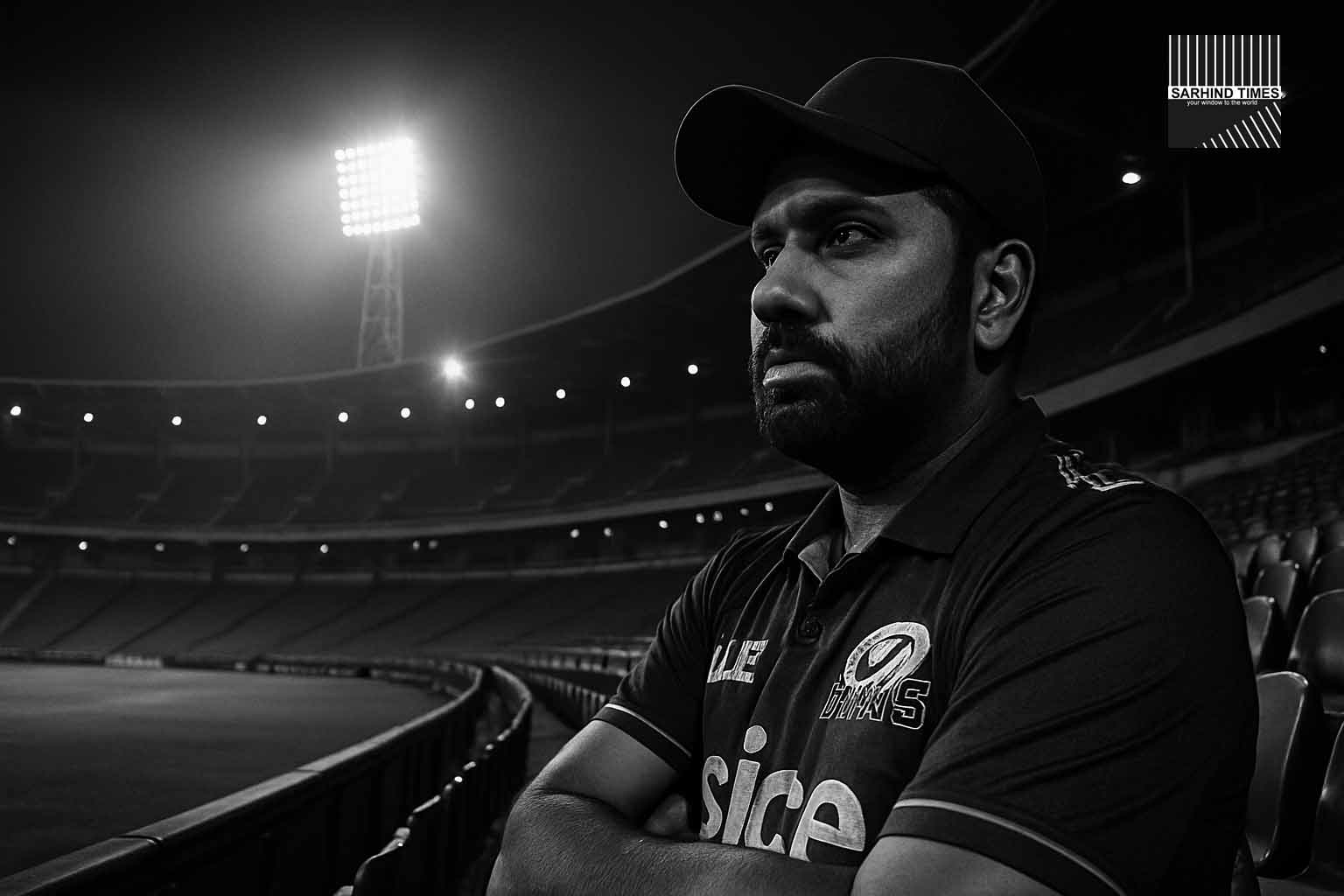
As the senior statesman steps out of T20 action, India begins a transition phase ahead of the 2026 global tournament
Dateline: New Delhi | November 26 2025
Summary: Veteran cricketer Rohit Sharma, having concluded his T20 international career, has been appointed ambassador for the upcoming 2026 T20 World Cup. His shift to a strategic mentorship role comes as the Indian cricket team enters a new phase of leadership renewal and tactical re-alignment under the oversight of the Board of Control for Cricket in India. The development signals a substantial change in Indian cricket’s approach, blending experience and emerging talent as it gears up for a crucial international assignment.
From Pitches to Patrons: Rohit Sharma’s New Chapter
For the last two decades, Rohit Sharma commanded the Indian white-ball batting line-up, collected titles, and formed the backbone of India’s cricketing identity. This week, he admitted the shift in his career has begun in earnest. Having already stepped back from T20 internationals, he acknowledged with quiet candour: “Watching the next World Cup on television…” is a new reality for him. His status has shifted from central player to elder statesman.
The middle of this transition was neatly timed. With the 2026 T20 World Cup on the horizon, the BCCI moved swiftly to appoint him ambassador for the tournament. Although the official announcement is yet to filter into every corner of the cricketing ecosystem, senior officials confirmed to media that this step symbolises how Indian cricket intends to capitalise on the legacy of star performers while building the next generation.
For Rohit, the new role offers a blend of prestige and challenge. He has expressed a certain wistfulness — “It’s strange seeing the tournament as a viewer,” he said — but also an acceptance that his leadership can continue off the field. His responsibilities will reportedly include mentorship programmes, talent-camp visits, and serving as the public face of India’s World Cup campaign. If his on-field presence defined an era, his off-field institutional role may shape the next.
The Team in Transition: What India is Planning
While the ambassador appointment made the headlines, a more consequential story is unfolding quietly. India’s senior players are gradually giving way to a younger generation, and management is visibly recalibrating the squad for the 2026 cycle. The high-stakes nature of the World Cup demands that India not only maintain its global competitiveness but also ensure depth, adaptability and longevity in its roster.
Senior off-spinner Ashwin, hard-hitting middle-order batsman Kohli, and veteran all-rounders may find themselves drawing closer to end of their international arcs as younger talent like Yashasvi Jaiswal and Sai Sudharsan are given more responsibility. Match situations such as the recent home Test series versus South Africa — where India were on the back foot and ended up conceding the series — have highlighted the need for renewal. The series loss has been described by players like Ravindra Jadeja as a learning step rather than a crisis.
The selection committee is expected to introduce new leadership options: a young vice-captain, youngsters groomed for pressure moments, and interstate talent given earlier exposure. The message from within the BCCI is clear: legacy matters, but the clock is ticking toward February 2026 — when the T20 World Cup begins. The ambassador role for Rohit is as much about continuity as it is about handing off the baton.
Why the Timing Matters: Context of T20 Indian Strategy
There are several reasons why this transition, and Rohit’s new role, matters. First, the T20 format evolves quickly — tactics, fitness requirements, and power-hitting trends shift over short cycles. India cannot afford to rely simply on past success models. Second, younger opponents are growing in profile — associate nations are increasingly competitive, and India must stay ahead of innovation. Third, India’s global image as a cricket powerhouse comes with expectations. From a business, broadcast and fan-engagement standpoint, the tournament is a major asset. An ambassador with Rohit’s stature signals both respect for tradition and readiness for change.
The early positioning of Rohit in this ambassador role serves multiple strategic purposes: it leverages his brand value, it eases his own transition and it gives incoming talent a visible institutional safety net. It also allows the team management to send a clear signal to stakeholders — fans, sponsors, broadcasters — that the Indian team’s upcoming cycle is being planned, and not left to chance.
Ambassadorial Responsibilities: More Than Ceremonial
The ambassador title may sound ceremonial, but according to insiders it carries tangible mandates. Rohit will be involved in talent identification camps, grassroots outreach across India’s cricket academies, and public-relations initiatives tied to the World Cup. He will attend federation meetings, help shape training modules and potentially act as a liaison between players and management.
One of the key areas of focus will be mentoring power-hitting batsmen, given Rohit’s record in the format. The national batting coach and batting group reportedly view him as a “mind-set consultant” — helping younger players understand the rigour and mind-games of global tournaments. He may also play a role in off-field strategy around mental conditioning, international exposure trips and partnership culture. For someone who piled up thousands of T20 and ODI runs worldwide, this is a pivot from “centuries” to “legacy”.[turn0search6]
The BCCI is also said to have negotiated a branding deal in which Rohit will appear in promotional campaigns tied to the World Cup and domestic feeder tournaments. This reinforces the dual role of legacy and commercial brand ambassadors. Analysts believe that for Indian cricket, using a well-known former star sends confidence signals to sponsors, broadcasters and domestic cricket associations alike, at a time when commercial deals and fan engagement remain vital revenue streams.
Challenges Ahead: Not All Smooth Sailing
Despite the well-timed transition and carefully laid out plans, several challenges loom. The most immediate is the performance output of the senior team in the build-up to the World Cup. A tournament ambassador cannot compensate for on-field failures. The home Test series defeat against South Africa revealed gaps in batting resilience and spin defence-turnover. Jadeja’s comment that drawing the second Test would feel like a win underscores the seriousness of the challenge.
Domestically, the depth of India’s T20 pool is still under scrutiny. Emerging names may have raw talent but limited experience under intense match pressure. In a World Cup scenario, mistakes at crunch moments can be severe. The management must decide how to balance experience and freshness. There is also the commercial pressure of fielding a strong team given the broadcast deals and brand value of Indian cricket.
Another issue is messaging and moral capital. What message does the appointment of a retired player as ambassador send to the current squad? Some commentators argue that the focus must shift from ex-glory to present performance and future readiness. If India’s current team does not deliver, the ambassador role may look symbolic rather than strategic.
Fan Perspective and the Commercial Angle
For fans and brands, Rohit’s transition offers a mix of nostalgia and hope. He remains one of the most popular athletes in India and globally. His image moving into an ambassador role allows him to represent Indian cricket’s values — professionalism, calm under pressure, big-match temperament — while the team transitions. For brands, this is gold: a familiar face tied to a global event gives continuity at a time of change.
Commercially, the 2026 T20 World Cup will be a major event: broadcast deals, sponsorships, digital engagement, fan zones and corporate tie-ups. Having Rohit as ambassador signals to the market that India is fully committed to the tournament’s success, both on and off the field. It also offers opportunities to build youth outreach – academies branded under his influenced “legacy mentorship” theme – helping link grassroots investment with brand value.
What to Watch in the Coming Months
With approximately 12–14 months until the tournament, a few key developments will serve as bellwethers for Indian cricket’s readiness:
- **Squad Selection Movement**: How many senior players are phased out? Which young talent enters? When are leadership appointments made?
- **Domestic T20 Performance**: The upcoming domestic T20 season will serve as the main proving ground. Performance here will influence selection and confidence.
- **Pre-tournament Tours and Warm-Ups**: Building tournament temperament matters. The team’s preparation trips, practice matches and wilderness camps will indicate seriousness of planning.
- **Brand and Fan Engagement**: How the ambassador role leverages youth outreach, new fan segments, digital engagement and grassroots marketing. Will Rohit’s face be part of visible campaigns or will this remain symbolic?
- **Commercial Structuring**: Sponsorship deals, digital streaming rights, fan merchandise tie-ups and domestic visibility will shape the business side of the tournament. India must tie in fans, brands and performance to maintain momentum.
Final Reflection: Legacy Meets Renewal
In cricketing terms, this development marks a hinge moment. The era that Rohit, Virat, Ashwin and others defined is winding down; the next era must be built rather than inherited. Appointing Rohit as ambassador provides a visible bridge. But the real bridge must be built with substance — squad transition, performance consistency, youth development and fan engagement.
Indian cricket stands at a crossroads: the world changes rapidly, formats shift, global leagues proliferate, and young talent demands faster progression. The ambassador role offers continuity; the squad rebuild offers the future. If India navigates this transition well, it may be remembered as the moment the team paced itself not just for a tournament, but for a next-generation era of sustained competitiveness.
For Rohit Sharma, the switch from match-finisher to mentor-brand-ambassador may feel odd. For Indian cricket, the moment is inevitable. What matters is whether both embrace it with clarity. The 2026 T20 World Cup will not only test India’s performances on the field, but also whether the foundational decisions off the field—from leadership to branding—have been made wisely. If they have, then Rohit’s role may turn out to be far more than ceremonial. It may well have been catalytic.



+ There are no comments
Add yours