
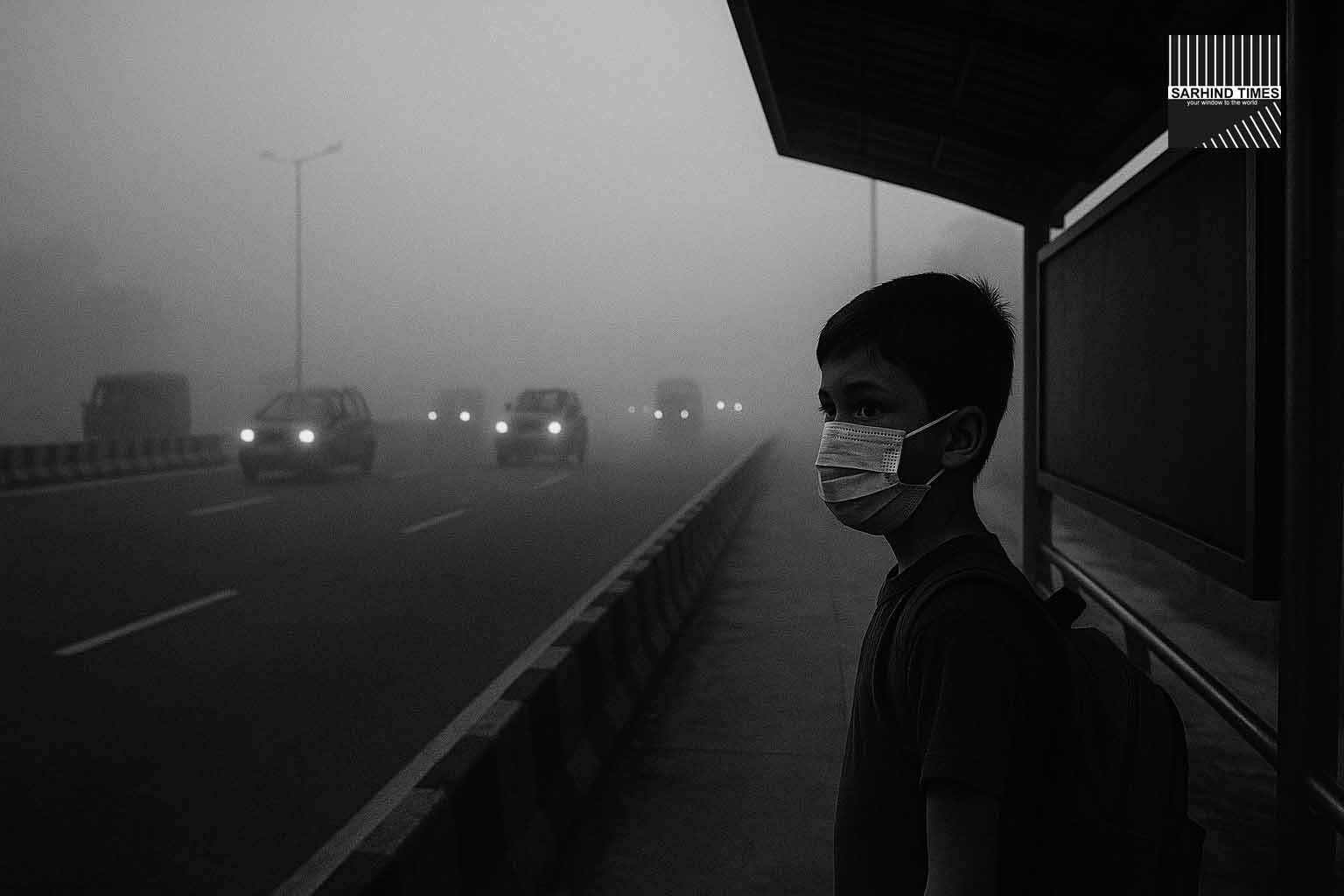
New satellite-based study reveals every district in Haryana exceeds safe air-quality norms, spotlighting acute environmental and public-health risks in the region
Dateline: Gurugram | November 26 2025
Summary: According to a recent comprehensive study, the state of Haryana — including the rapidly expanding district of Gurugram — now features among India’s top three most polluted states, with average annual PM2.5 concentrations in several districts nearly three times the national safety limit. The findings raise serious concerns over health, infrastructure and policy readiness in one of India’s fastest-urbanising zones.
The Study and Its Findings
A satellite-based air-quality analysis by the Centre for Research on Energy and Clean Air (CREA) covering the year 2024 has found that the entire state of Haryana has breached the national annual standard for fine particulate matter (PM2.5) of 40 µg/m³. Every district in the state recorded levels well above that threshold. Among the worst-affected are seven districts in the National Capital Region (NCR) belt, including Gurugram (formerly Gurgaon) which registered an annual average of 81.3 µg/m³, almost **double** the permitted limit.
The specific figures for the NCR-adjacent districts are: Gurugram at ~81.3 µg/m³; Faridabad ~80.7; Jhajjar ~77.0; Sonipat ~69.9; Charkhi Dadri ~66.7; Rohtak ~66.0; Rewari ~64.7. These places join a list of India’s 50 most polluted districts.
What stands out is the consistency of the exceedance: not only are annual averages high, but the report emphasises there is “no safe period” during the year in many districts of Haryana, meaning air-quality levels remain dangerous year-round rather than only during the winter smog season.
Why Are These Levels So High – Causes in Focus
Experts cite a combination of industrial emissions, heavy transport corridors, waste-burning practices, diesel usage and energy-sector pollution as major contributors. The report specifically notes that weather or seasonal wind patterns are **not** the primary reason for the high levels — instead, persistent emissions are the key driver.
For Gurugram and nearby districts, additional factors intensify the problem. The district has experienced rapid urbanisation, dense construction activity, growth of logistics hubs and heavy vehicular traffic along the KMP Expressway and Southern Peripheral Road. Each of these adds to particulate generation. Moreover, peripheral villages and industrial pockets often lack sufficient emission-monitoring infrastructure and are not covered by routine enforcement mechanisms. This urban-fringe scenario—where construction, industry and rural practices collide—is now emerging as a major pollutant source in the NCR-Haryana belt.
Health, Economic and Social Ramifications
From a health perspective, the implications are severe. Fine particles (PM2.5) are known to penetrate deep into lungs, enter the bloodstream and contribute to respiratory illnesses, cardiovascular diseases, strokes and early mortality. For a district like Gurugram, which combines high incomes with significant migrant workforce populations, the human toll may be substantial though under-recognised.
The economic impact is also worth noting. Poor air quality affects labour productivity through illness, absenteeism and cognitive impairment among children and workers alike. It places pressure on hospital systems, impedes outdoor construction and infrastructure work (which states like Haryana depend on), and may deter investment and talent attraction in areas that promote themselves as globally competitive hubs.
Socially, the burden often falls disproportionately on vulnerable communities: low-income households, informal-sector workers, construction labourers, and children. In peri–urban villages and migrant colonies around Gurugram, where ambient air-conditioning or filtration is absent, exposure is especially high. The perception of “clean modern living” in Gurugram belies an invisible environmental risk that can undermine social equity and long-term quality of life.
Policy Response: Where Haryana Stands and What Must Happen
The findings arrive at a critical time. India’s flagship air-quality initiative, the National Clean Air Programme (NCAP), aims to reduce particulate pollution by 20-30% in non-attainment cities by 2030. But reports such as this indicate that states like Haryana need to adopt **district-level strategies**, tighten monitoring and introduce accountability mechanisms tied to measurable PM2.5 reductions. CREA has urged such direction.
In Haryana’s industrial corridors—and especially in Gurugram—the state pollution control board, industrial employment units and local municipal authorities will need to collaborate on several fronts: emission-source mapping, real-time monitoring, construction-dust control, waste-burning bans, transport-emissions MITIGATIONS, and expanded air-monitoring infrastructure. The study’s authors emphasise that without this, annual averages will not budge significantly.
There is also a governance dimension. The absence of robust ambient-air measurement in many districts, patchy enforcement, overlapping jurisdiction between town municipalities, pollution control boards and industrial zones has slowed progress. For Haryana to meaningfully tackle pollution, a coordinated architecture across departments is essential. Monitoring must shift from city-centred to district-wide coverage, and enforcement must be consistent, visible and outcome-oriented.
Gurugram in Focus: A Strategic Zone under Strain
Gurugram’s position as a globalised city, and its identification with high-end real-estate, IT and corporate services, may mask the environmental stress at its fringes. The study’s figure of 81.3 µg/m³ for Gurugram places the district among the top polluted in India, which is particularly concerning because income levels and expectations of livability are high. The contrast between “modern city” imagery and the reality of heavy pollution is stark.
The urban fringe and peri-urban belt are particularly vulnerable: villages near construction sites, landfill peripheries, industrial estates and logistic parks. While premium parts of Gurugram may have air-conditioning and filtration, the spread of exposure is uneven—meaning the air-quality crisis is also a social justice issue. Migrant workers living in low-cost clusters often commute through high-pollution zones and work in outdoor or semi-outdoor environments, amplifying their exposure.
Bridging Research and Action: Steps for Local Stakeholders
Local authorities in Gurugram and Haryana should consider the following action plan:
- **Expand sensor network**: Deploy low-cost PM2.5 monitors in every ward, industrial estate, village and service road corridor. Data should be public-facing and near-real-time to drive community awareness and expedite response.
- **Issue targeted alerts**: When short-term spikes exceed safe thresholds, issue alerts to schools, construction sites and outdoor labour units; provide masks, encourage indoor shifts or breaks, and adjust work-rosters accordingly.
- **Map emission hotspots**: Use satellite / drone surveillance to identify high-emission zones—construction zones, waste-burning patches, diesel idling areas—and impose enhanced monitoring or conditional operating licences.
- **Promote public awareness and health support**: Undertake community-level campaigns in Hindi/Haryanvi highlighting air-quality risks, steps for protection, and support available for vulnerable groups such as children and workers.
- **Link to health data**: Track admissions for respiratory diseases, occupational-exposure data and school absence trends to create micro-level exposure-health loops; use this to prioritise interventions in high-impact zones.
- **Embed accountability**: The state should set district-level PM2.5 reduction targets (not just city-level), publish progress annually, and link performance to inspectorate action or funding incentives for clean-air projects.
Opportunities and Silver Linings
Despite the scale of the problem, there are reasons for cautious optimism. Haryana has the industrial base, state-capacity and neighbouring Delhi-NCR infrastructure to mount serious clean-air interventions. Firms in Gurugram’s premium sectors are becoming increasingly environmentally conscious; corporate ESG commitments may push more clean-manufacturing investments, green logistics and electrified vehicle fleets. There is also growing citizen pressure, especially from parent-teacher bodies, resident welfare associations and civil society, which can accelerate action.
Moreover, the clarity of the data in the CREA report may serve as a wake-up call to both government and industry that incremental “business-as-usual” will not suffice. The fact that every district is out of compliance could galvanise broader mandates for structural reform—covering land-use, vehicle emissions, industrial zoning and waste-management strategies simultaneously. If harnessed, this confluence of factors offers Haryana a chance to become a replicable model of urban-fringe air-quality management rather than a cautionary example.
What To Watch Next
In the coming months, there are several signals to monitor which will indicate whether this moment leads to meaningful change or just more reports. Key items include:
- Whether the Haryana government publishes district-wise action plans under NCAP with clear timelines and resource allocations.
- How many new sensors and monitoring stations are deployed—and how quickly their data is made public and responsive to emergency spikes.
- Whether pollution-related complaints increase (and are processed) from residential areas close to industrial estates and expressway corridors in Gurugram.
- Whether industrial units, logistics parks and construction firms in Gurugram adopt zero-dust controls, emission-reductions, equipment upgrades and switch to cleaner fuels or electrified fleets.
Conclusion: A Problem Demanding Urgent Action
This year’s study acts as a sobering diagnosis for Haryana and particularly for Gurugram. The air that residents are breathing is significantly more polluted than regulatory limits allow—and the issue spans every district, not just the obvious industrial hubs. The scale, persistence and breadth of exposure mean that it cannot be ignored or treated as seasonal inconvenience. It must become a core public-health and urban-planning priority.
For Gurugram, the narrative of high-rise offices, gleaming malls and luxury developments must reconcile with the stark fact that the air remains among the most polluted in the country. That contradiction makes tackling the issue both urgent and complex: it is not just an environmental challenge but one that touches health, labour rights, economic competitiveness and social equity.
If Haryana’s policymakers, industry stakeholders and citizens rise to meet this challenge, the state may shift from the headline of “pollution hotspot” to “clean-air innovation destination.” If they don’t, the gap between appearance and reality will continue to widen—and the cost will be borne by the most vulnerable residents and the state’s long-term economic prospects.



+ There are no comments
Add yours