
Move signals India’s emergence as a global hub for AI development and enterprise adoption; government welcomes investment as regulation roadmap takes shape
Dateline: Bengaluru | 25 November 2025
Summary: OpenAI unveiled its largest India expansion to date, announcing a new research and enterprise solutions office in Bengaluru, strategic partnerships with top Indian companies, and a nationwide talent initiative. The move positions India as a central player in the global AI race, with startups, enterprises and public-sector agencies preparing for accelerated adoption of generative AI systems. Policymakers simultaneously advance work on an AI governance framework tailored to India’s scale, data ecosystem and economic priorities.
A Landmark Move in India’s Technology Landscape
In a major development for India’s technology ecosystem, OpenAI announced the launch of a dedicated office and innovation hub in Bengaluru, marking the company’s most significant step into the Indian market. The expansion includes enterprise partnerships, developer programs, university collaborations and a strategic hiring plan targeting AI researchers, safety experts, regulatory specialists and machine-learning engineers.
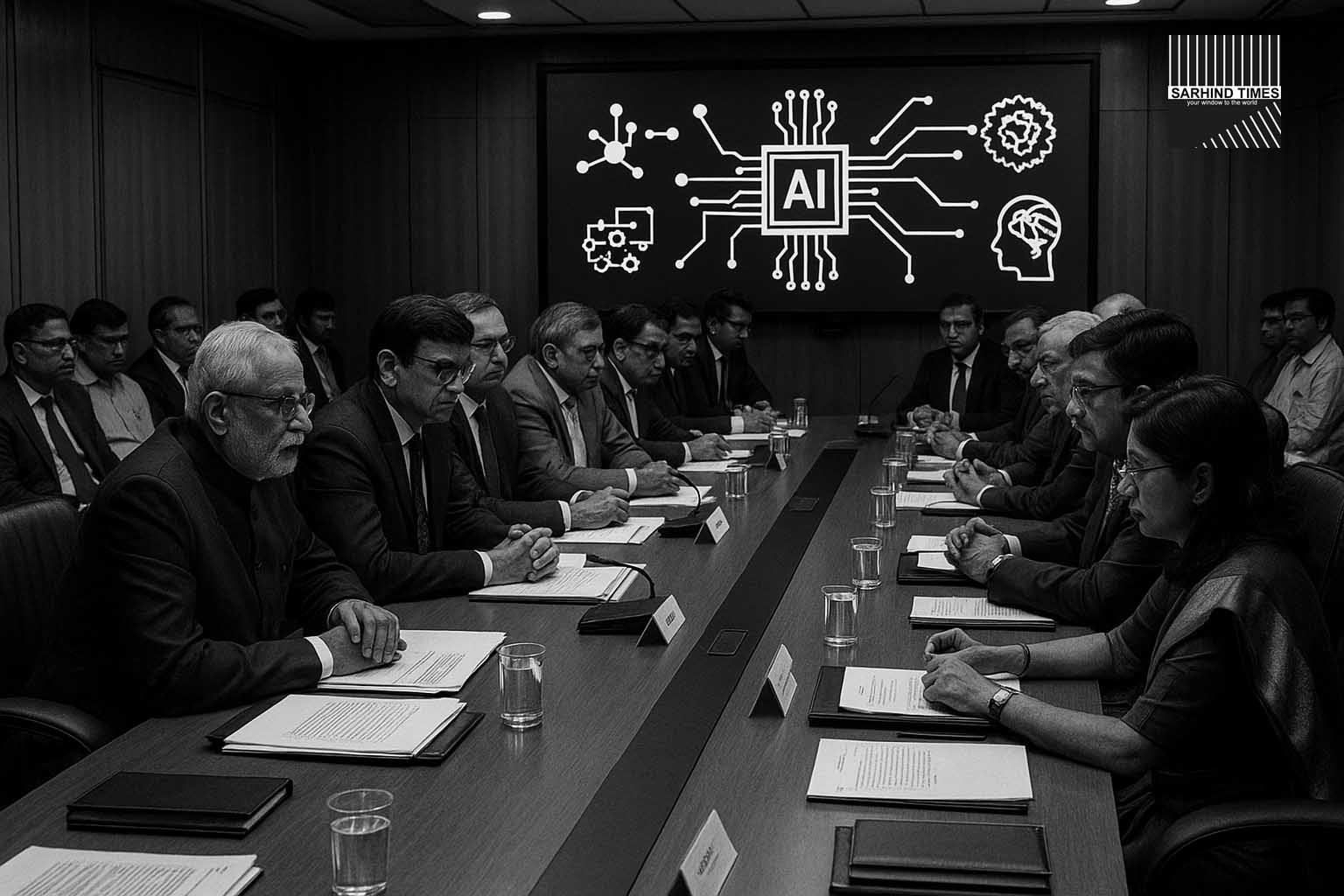
The announcement was made during a high-profile event attended by industry leaders, startup founders, academic researchers and senior government officials. The Bengaluru office — located in the city’s fast-growing Outer Ring Road tech corridor — is set to become a centre for enterprise AI deployments, research collaborations and AI-safety engagements with Indian policymakers.
OpenAI’s leadership emphasized that the company views India as “central to the future of global AI development” given its massive developer population, highly active startup ecosystem and rapidly digitizing economy.
Why India? The Strategic Significance
India represents one of the fastest-growing AI markets in the world. With more than 7 million developers, a thriving tech-services industry and millions of digitally connected small businesses, the country offers both scale and diversity of use cases unmatched by most global markets.
Enterprise adoption of generative AI has accelerated sharply over the last 18 months. Banks, telecom companies, e-commerce giants, logistics firms and healthcare networks are deploying AI-driven automation and decision-support systems to reshape operations.
OpenAI’s India expansion focuses on delivering:
- Enterprise solutions for banking, retail, logistics, healthcare and manufacturing.
- Developer APIs for India-first applications in regional languages.
- Safety and governance engagement with regulatory bodies and think tanks.
- Start-up accelerator programs to support Indian AI innovators.
- University partnerships to cultivate long-term research talent.
India’s unique multilingual landscape is expected to play a major role in OpenAI’s upcoming speech, translation and reasoning tools built around Indic languages.
Bengaluru Chosen as AI Innovation Hub
Bengaluru’s strong engineering talent, thriving startup ecosystem, and established global R&D centres made it the natural choice for OpenAI’s Indian headquarters. The city’s reputation as the “Silicon Valley of Asia” continues to grow with major tech firms expanding AI investments in the region.
OpenAI’s new office includes:
- AI-lab workspaces for model experimentation
- Data-privacy and AI-safety units
- Enterprise-solution development labs
- A dedicated Indic-language AI research room
The company plans to hire cross-disciplinary teams, including machine-learning researchers, cognitive scientists, safety auditors, policy analysts and multilingual data specialists. Nearly 45% of the first-year hiring is expected to come from Indian talent pools.
Enterprise Partnerships: Major Indian Companies Sign Up
OpenAI confirmed new enterprise partnerships with several leading Indian companies — though it did not publicly list all names due to ongoing negotiations. Early partners include firms from:
- Banking and financial services (fraud detection, customer automation)
- Retail and e-commerce (product-tagging, customer chat automation)
- Telecom (network analytics, customer-service agent augmentation)
- Manufacturing (predictive maintenance, supply-chain automation)
- Education (curriculum generation, student-personalization engines)
A senior executive from one of India’s largest banks described the partnership as “a structural shift toward AI-driven decision-making systems that can scale across millions of customers.”
Startups too are expected to benefit. OpenAI’s India program includes subsidized API credits for early-stage founders working in healthcare, agriculture tech, rural commerce, financial inclusion and education.
Government Welcomes the Move, Signals AI Regulatory Framework
The Indian government welcomed OpenAI’s expansion, highlighting that global confidence in India’s digital potential continues to rise. Officials noted that India aims to develop a regulatory framework that balances innovation with safety, ethical design and accountability.
The Ministry of Electronics and IT (MeitY) is working on a comprehensive AI governance document focusing on:
- Algorithmic transparency
- Responsible model deployment
- Local data-protection compliance
- Bias detection and removal
- Safety in high-stakes sectors like finance and healthcare
OpenAI executives indicated willingness to collaborate with policymakers on safety audits, guardrail design, impact assessments and mitigation frameworks.
India’s AI Workforce Boom: The Talent Equation
OpenAI’s arrival intensifies competition in India’s AI job market—already among the hottest globally. Indian engineers have been central to global AI development, contributing to cutting-edge research at major firms. The company’s hiring push is expected to attract both early-career and senior AI talent.
Universities, meanwhile, see an opportunity. OpenAI has proposed joint research labs in collaboration with institutions such as IISc Bengaluru, IIT Bombay, IIT Madras and IIIT Hyderabad. These labs are expected to work on foundational AI, multilingual speech processing, robotics and AI-safety testing.
The India office also plans to run nationwide “AI Innovation Fellowships” to train 5,000 young developers in advanced generative models by 2026.
Startups and Investors: A Surge in Momentum
India’s startup ecosystem is poised for accelerated AI innovation following the announcement. Venture capital firms have signalled interest in backing generative AI companies, especially those building Indian-language AI, agriculture analytics, healthcare diagnostics, law-tech, logistics optimization and MSME automation tools.
Several founders attending the launch event noted that access to OpenAI’s latest APIs — including multi-modal tools and enterprise-grade safety features — will level the playing field for Indian startups seeking to build global products.
AI and the Indian Public Sector: Early Pilots Emerge
Beyond private companies, OpenAI is in discussions with several Indian public-sector agencies exploring the use of AI for:
- Citizen-service automation
- Tax analytics and fraud detection
- Healthcare triage systems for government hospitals
- Agriculture yield forecasting
- Urban governance and planning analytics
While these pilots remain at early stages, they signal the government’s growing interest in leveraging AI to solve structural challenges in public administration.
AI Safety and Ethics: A Key Priority
AI safety is an area of deep focus for OpenAI’s India strategy. The company emphasized that the India office will house a specialized safety and red-team unit responsible for:
- Testing high-risk use-cases
- Evaluating model vulnerabilities
- Identifying harmful outputs
- Building culturally aligned guardrails for Indian contexts
- Collaborating with Indian regulators on compliance frameworks
Experts say India’s diversity — linguistic, cultural and socioeconomic — offers a powerful testing ground for safety behavior of AI systems.
Challenges Ahead: Regulation, Data and Localisation
Despite the optimism, several challenges remain:
- Clear regulation on high-risk AI systems
- Uncertainties around data-sharing and localisation requirements
- Infrastructure constraints for large-scale deployment in tier-2 and tier-3 regions
- Cost of enterprise transition for legacy systems
- AI literacy gaps among end-users
Experts caution that the impact of AI adoption will depend on how well Indian companies manage change, retraining and ethical deployment.
A Defining Moment in India’s AI Journey
OpenAI’s India expansion signals a new chapter in the country’s technological evolution. With global interest, a strong internal talent base and growing enterprise appetite, India stands poised to become one of the most dynamic AI markets in the world.
The next two years will determine how effectively India can harness the power of generative AI—balancing innovation with safety, growth with regulation, and global integration with local impact.
For now, Bengaluru’s rise as a global AI powerhouse seems not just inevitable, but already underway.



+ There are no comments
Add yours