
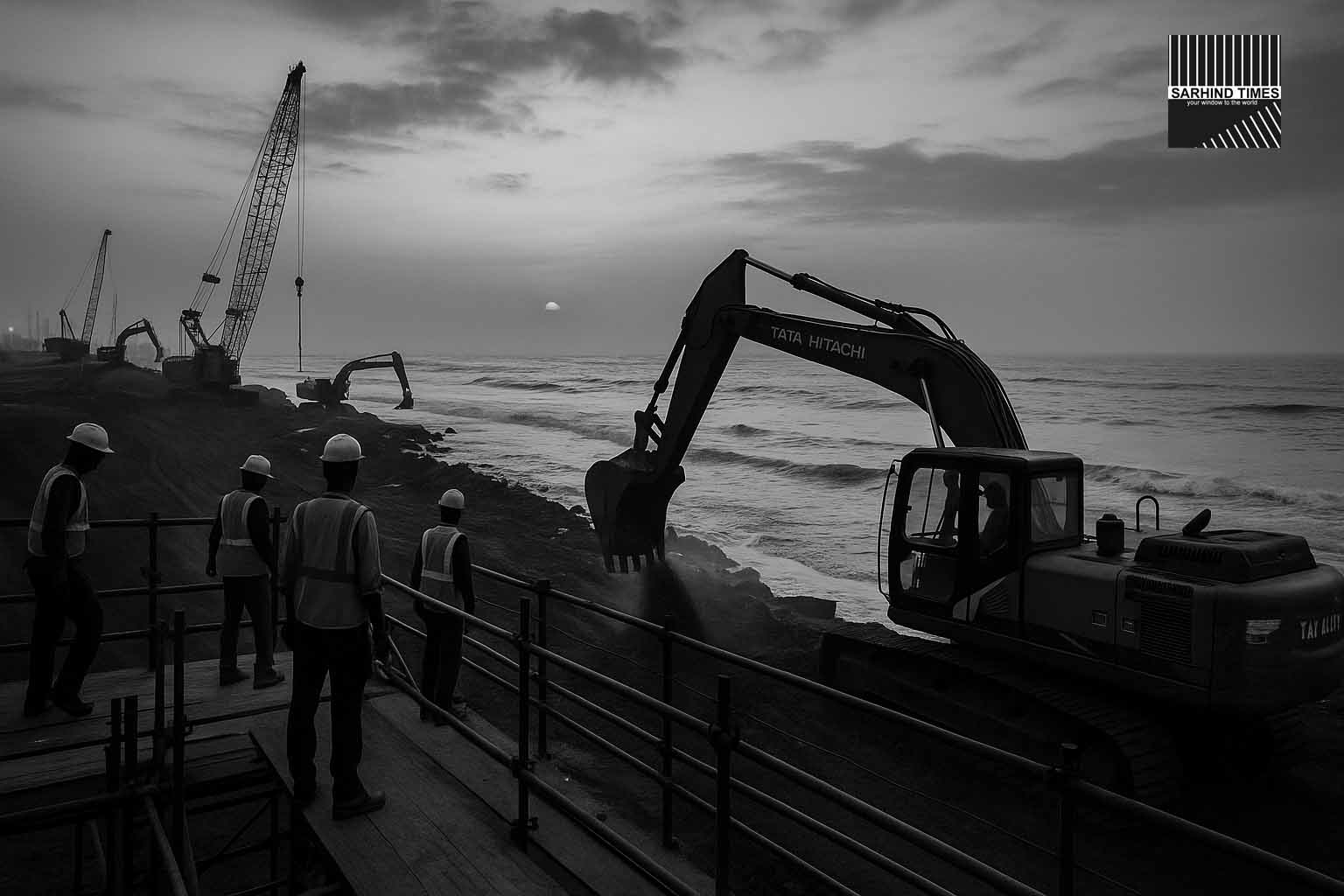
City’s landmark transport project enters crucial testing stage; engineers conduct road deck inspections, ventilation trials, and marine protection reviews
Dateline: Mumbai | 24 November 2025
Summary: The ambitious Mumbai Coastal Road project has entered its final phase of construction, with over 90 percent of civil work completed and large-scale testing underway. The Brihanmumbai Municipal Corporation (BMC) has announced that final deck laying, tunnel ventilation checks, and marine safety certification are in progress. The project, set to transform commuting between South Mumbai and Worli, is expected to reduce travel time dramatically while reshaping the city’s urban mobility landscape.
Introduction: A Long-Awaited Transformation Inches Closer
Mumbai’s long-awaited Coastal Road project is on the brink of completion as the BMC pushes its final construction and testing phase towards the 2025 commissioning deadline. After years of delays due to environmental litigation, monsoon disruptions, and complex marine engineering challenges, the project is now in its most crucial stage—where technical accuracy, safety validation, and logistical precision will determine the outcome.
For millions of Mumbaikars, the project represents more than an engineering feat: it promises a fundamental shift in how the city moves, breathes, and manages congestion.
Current Progress: What Has Been Completed?
According to BMC officials, nearly 91 percent of the Coastal Road infrastructure is complete. Achievements in the last quarter include:
- Completion of both underground tunnels between Priyadarshini Park and Marine Drive,
- Installation of ventilation ducts, emergency evacuation pathways, and lighting systems,
- Final deck casting over multiple sea-linked sections,
- Pavement preparation, waterproofing, and barrier installations,
- Advanced drainage and sea-wave deflector systems near Haji Ali stretch.
With these milestones reached, engineers are now conducting integrated safety trials.
Final-Phase Testing: What’s Happening Now?
The final phase includes a mix of engineering, environmental, and operational trials:
1. Tunnel Ventilation & Fire Systems Testing
The Coastal Road features one of India’s most advanced tunnel ventilation systems, designed to maintain clean air and enable rapid smoke extraction in emergencies. Fire safety sensors, sprinklers, and monitoring panels are undergoing multi-level testing.
2. Road Deck Strength & Durability Tests
Engineers are simulating heavy vehicular loads, conducting waterproofing checks, and performing stress tests using calibrated equipment to ensure longevity against Mumbai’s harsh monsoon climate.
3. Marine Protection Compliance
The project required extensive coastal regulatory approvals. Marine biome experts are inspecting sea walls, tidal flow pathways, coral rehabilitation areas, and fishing zones to verify compliance.
4. Traffic Integration Trials
Traffic police and BMC teams are reviewing entry/exit points, lane merging patterns, and signal synchronization for seamless vehicular movement once operational.
Why the Tunnel Section Matters Most
One of the Coastal Road’s most iconic components is the twin-tunnel system beneath Malabar Hill. At over 2 km in length, it is Mumbai’s longest road tunnel and a benchmark for urban engineering in India.
The tunnel includes:
- Six-lane vehicular capacity,
- Emergency side passageways,
- Real-time CCTV and monitoring stations,
- Heat and smoke detection sensors,
- Digital speed regulation mechanisms.
Ensuring its structural integrity and air-quality performance is central to the project’s safety clearance.
Projected Benefits Once Fully Operational
Urban mobility experts estimate transformative benefits:
- Travel time between Marine Drive and Worli to drop from 45–60 minutes to just 8–12 minutes,
- Reduction of traffic pressure on Peddar Road, Haji Ali, and Worli Naka,
- Cleaner vehicular emissions due to smoother, decongested flow,
- Creation of new recreational spaces, promenades, cycling lanes, and landscaped zones.
Mumbai’s Coastal Road could serve as a template for future urban expressways across India’s coastline cities.
Environmental Concerns and Ongoing Monitoring
The project faced intense legal battles from environmental groups, fishermen’s associations, and coastal ecology experts. Critics argued that land reclamation and breakwater construction could alter tidal patterns and harm marine life.
As part of court-mandated conditions, the BMC must:
- Regularly monitor tidal behaviour,
- Preserve and rehabilitate marine ecosystems,
- Maintain corridors for fishermen’s boats,
- Ensure minimal interference with natural sea flow.
Several rounds of environmental audits will continue even after the road opens.
Economic Impact: A Catalyst for Real Estate and Business
Real estate consultants note significant increases in market value along the project’s influence zone, including Worli, Haji Ali, Breach Candy, and Marine Drive. Businesses anticipate:
- Shorter commute times attracting companies back to South Mumbai,
- Tourism boost from improved waterfront access,
- New hospitality and retail opportunities along the stretch.
Cost Escalation and Transparency Concerns
The Coastal Road’s cost has increased due to inflation, litigation delays, equipment import challenges, and COVID-era disruptions.
Opposition parties have demanded a detailed cost audit, arguing for public scrutiny of escalation metrics.
Public Response: Excitement and Anxiety
While many residents are enthusiastic about the project’s nearing completion, concerns persist regarding:
- Potential bottlenecks at entry/exit points,
- Traffic redistribution into South Mumbai’s narrow lanes,
- Long-term ecological impact,
- Equitable public access to promenades and open spaces.
Will the Deadline Be Met?
BMC maintains confidence that the project will be fully functional by mid-2025.
Engineers, however, caution that monsoon unpredictability, final marine audits, and technical testing timelines could pose challenges.
Conclusion: A Defining Chapter in Mumbai’s Urban Evolution
As the Mumbai Coastal Road moves into its final stage, the project stands at the intersection of engineering ambition, environmental responsibility, and urban necessity.
Whether the 2025 deadline is met or not, the Coastal Road promises to reshape mobility, redefine the waterfront, and mark a turning point in how Mumbai navigates its geographical constraints and future growth ambitions.


+ There are no comments
Add yours